
Protecting Clean Water
Fish. Water. People.
California Trout was started by a group of activist anglers who realized the need for focused local activism on the state level to protect and thoughtfully manage California’s wild trout resources and waterways. Throughout the early years, the organization grew its presence and influence in Sacramento to help pass legislation to Protect the Best.
CA Wild and Scenic Rivers Act
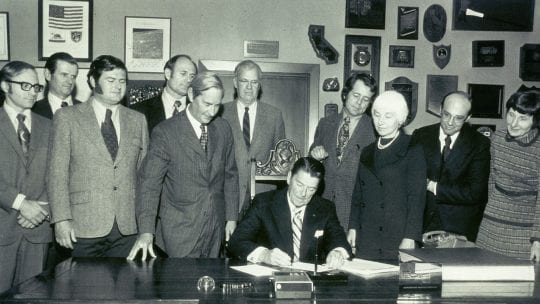
In 1972, CalTrout leaders and volunteers led the successful battle to enact The California Wild and Scenic Rivers Act, putting an end to the efforts to build a dam on the Eel River. The bill was signed into law by Governor Ronald Reagan on December 20, 1972.
This legislation made it state policy that these wild and scenic rivers be persevered in their free-flowing states along with their surrounding environments. Wild and scenic rivers include segments of the American River, Eel River, Klamath River and its tributaries, Mokelumne River. Salmon River, Scott River, Smith River and its tributaries, Trinity River, and Van Duzen River.
Wild Trout Waters
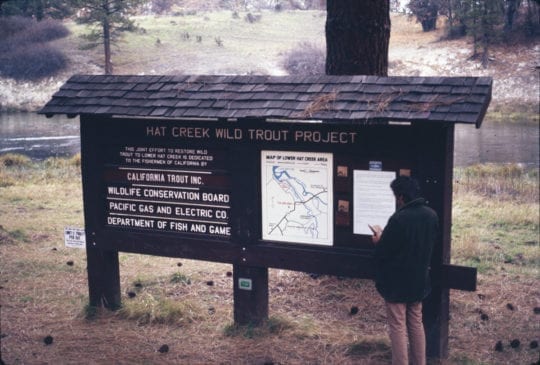
In 1971, CalTrout spearheaded a campaign to establish the Fish and Game Commission’s Wild Trout Program (now the Heritage and Wild Trout Program) to “protect and enhance quality trout fisheries sustained by natural reproduction.”
As a result, the Wild Trout policy identified and called for special management of at least 10 quality trout waters, including restoration plans and increasing angling restrictions. Hat Creek was the state’s first designated Wild Trout Water, there are now 63 designated Heritage and Wild Trout Waters in California.
Defending the Clean Water Act
Today however, decades of environmental protection is threatened to be undone by the recent Trump Administration Executive Order to roll back regulations from the Clean Water Act to speed up energy projects. The proceeding EPA rule-making procedures make it easier for owners of hydroelectric dam projects to bypass state-designated oversight and environmental accountability. Without legislative protection, our waterways are under threat.
The Problem
The ability of every state to enforce Clean Water Act protections on their own rivers and waterways is under major threat.
Under the new EPA rule, there is a one-year deadline for states to make decisions to review water quality issues for pipeline and hydropower plant projects. Therefore, if a state misses the one-year deadline to issue a permit, the requirements for certification under the Clean Water Act would be waived.
Before issuing permits for projects such as pipelines, dams and other energy proposals, states typically consider a wider range of impacts beyond the concentration of pollutants in water. They sometimes also take into consideration water levels, potential damage to aquatic life from dredge and fill activities, downstream impacts and climate change. This rulemaking removes state’s ability to conduct a full review of a hydro or natural gas project’s effect on our clean water.
Section 401
Before the Federal Energy Regulatory Commission can issue a new hydropower license, the Clean Water Act requires a state to certify that the project complies to its own water quality standards.
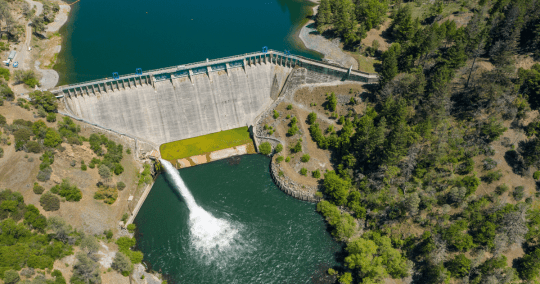
Section 401 of the Clean Water Act (CWA) gives states the sole power to enforce water quality standards on federal projects within state borders—projects including the creation, operation, or removal of hydroelectric dams and natural gas pipelines.
The catch is that the statute requires states to act within one year of the application. However, in most cases, one year is not adequate time to perform the studies necessary to assess project impacts on water quality and establish required conditions for complying with a state’s water quality standards.
A procedural workaround evolved. Applicants frequently withdraw and re-submit their applications before the one-year deadline, in order to “reset the clock.” This procedure has been used by states and license applicants around the country and endorsed by FERC, the U.S. Environmental Protection Agency (EPA), and federal courts.
However, the D.C. Circuit court decision in Hoopa Valley Tribe v. FERC has negated this “withdraw and submit” process, and has quickly become a major threat to rivers across the country. Already, we have seen states’ rights waived on rivers in California, North Carolina, and New York. CalTrout along with several NGOs tried to challenge this case, but our appeal to the supreme court was not accepted.
Failure to meet the one-year timeframe results in waiver of a state’s right to issue a water quality certification under section 401 of the CWA.
The Trump administration issued an Executive Order rewriting the CWA 401 regulations to undermine state’s authority to enforce their own environmental laws. These regulations went into effect on June 1, 2020.
Section 401 of the Clean Water Act protects fish, water, and people providing important regulatory controls on dams and hydropower projects.
CalTrout remains committed to protecting the Clean Water Act and the health of our watersheds for now and future generations.
More information
Roll Call. “States los some Clean Water Act authority under new EPA rule”. June 1, 2020
California Trout. “Tight Lines – A History of California Trout.” 2016