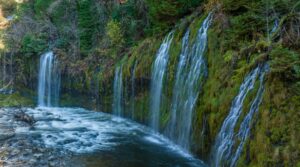
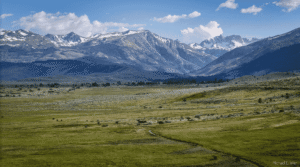
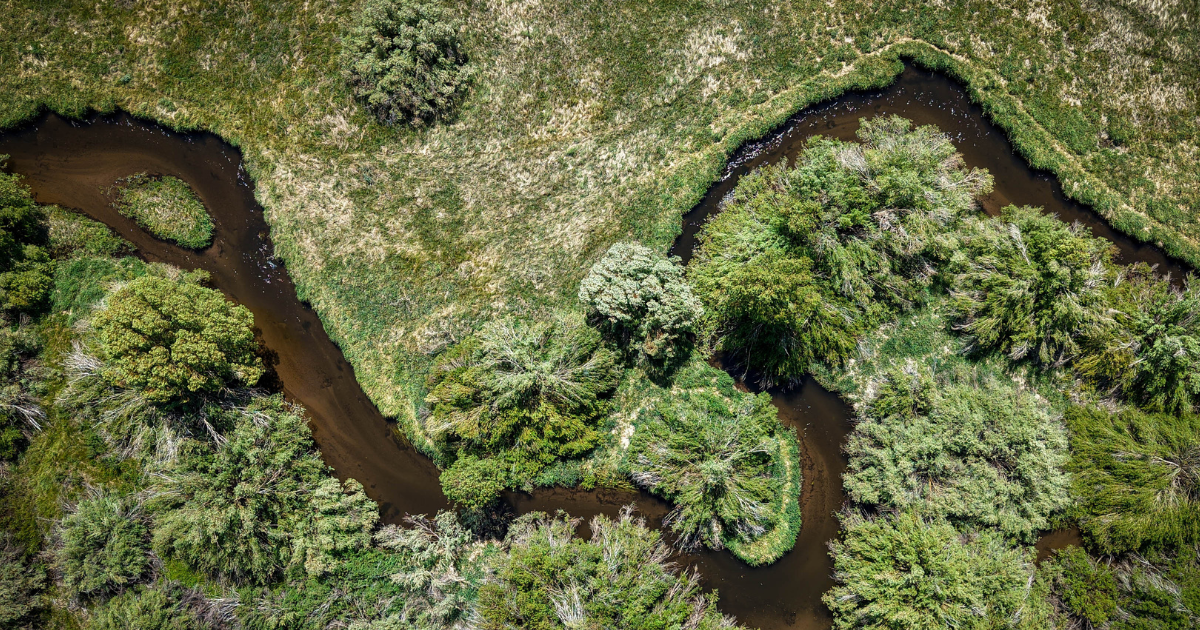
Tucked between the town of Mammoth Lakes and the upper Owens River basin in the Eastern Sierra Nevada, Lower Mammoth Creek flows through one of the world’s most stunning landscapes. People travel far and wide to visit, and the landscape is an engine that helps power California’s thriving outdoor recreation economy. However, beneath the beauty there’s a stretch of creek that has been carrying the weight of a century of man-made change and degradation.
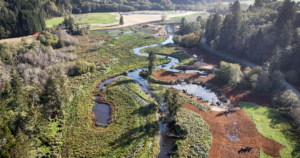
Channel straightening, historic grazing, road and trail encroachment, and unmanaged recreation have left it incised three to four feet in places, cut off from the meadows and groundwater it once nourished and leaving it increasingly vulnerable to wildfire. It is no longer functioning as a thriving piece of the global biodiversity powerhouse that is the Eastern Sierra. The good news is that research has demonstrated that this ecosystem is highly redeemable, and CalTrout and partners are committed to making that happen.
A 2009 technical assessment by Stillwater Sciences pinpointed nearly thirty high-potential restoration sites along Mammoth Creek, and CalTrout has spent years since building the relationships and groundwork needed to act on that science. Now, with strong momentum and committed partners, we have a rare chance to restore fluvial, meadow, riparian, and recreational function in one integrated effort — rather than piecing it together site by site. The scale of this project is huge. With the potential to touch over 100 acres of the Mammoth Creek watershed, this is one of the most ambitious integrated restoration efforts CalTrout has taken on in the region.
What We’re Building Toward
The Lower Mammoth Creek Habitat Restoration and Community Improvement Project represents our vision for everything this place can become. We’re sure, if you close your eyes, you can picture it too! A reconnected, resilient watershed that supports healthy trout habitat, thriving wet meadows, and a community that gets to experience all the benefits.
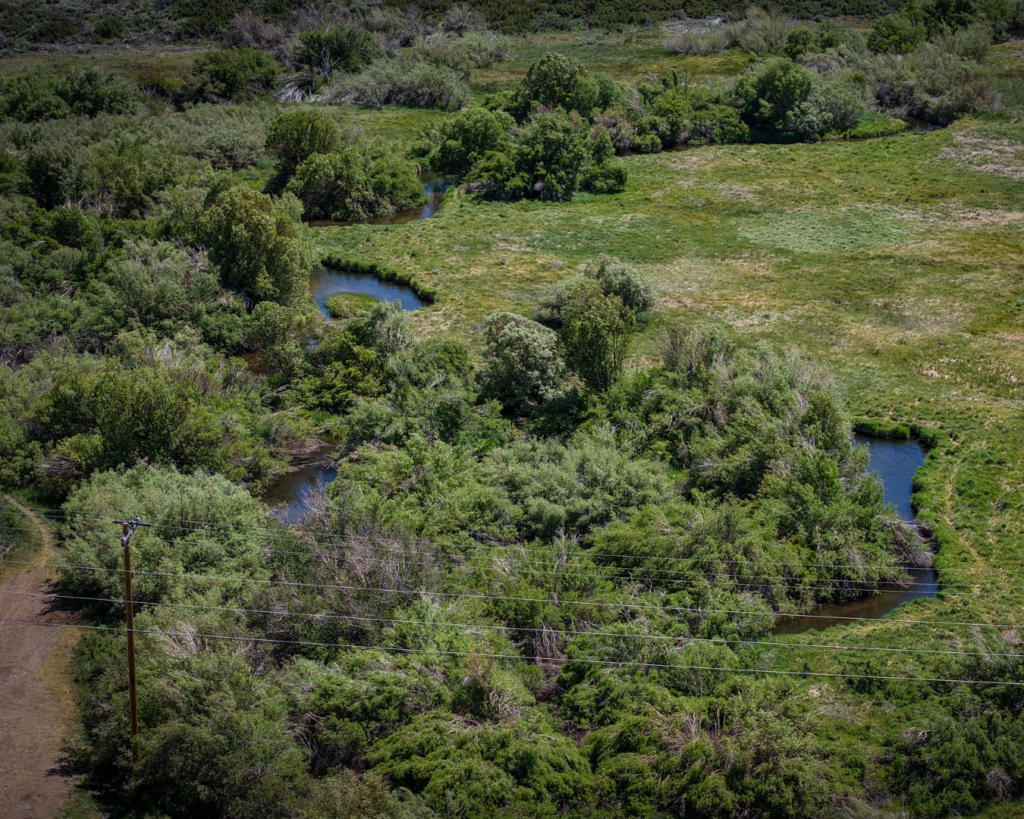
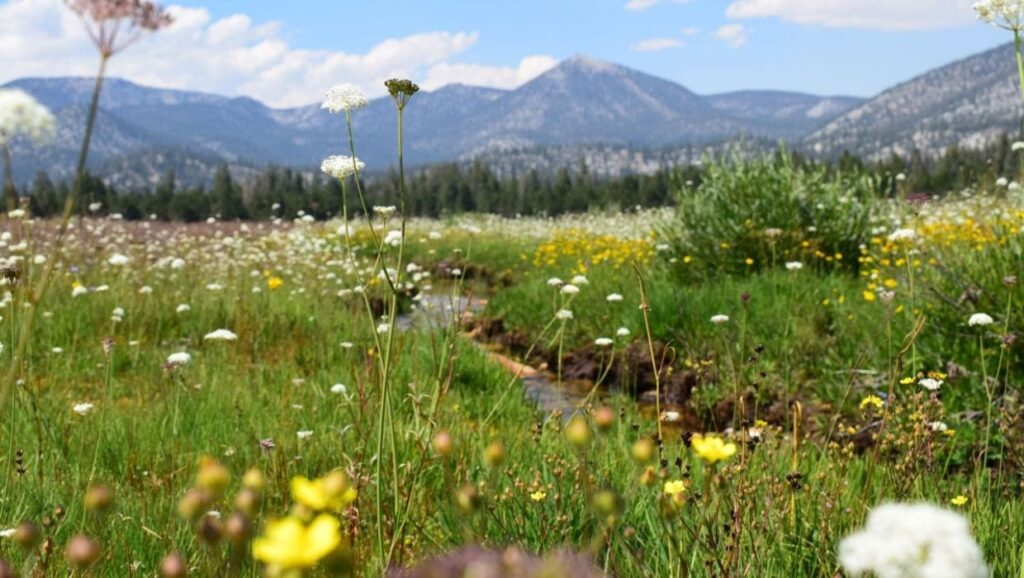
Our nature-driven methods will restore the system so it can do what healthy watersheds are meant to do: slow water down, recharge groundwater, buffer against drought and wildfire, and support a rich mix of native fish, birds, pollinators, and plants.
Over the life of this project, we’re working toward:
- Reconnecting the creek to its floodplain: restoring roughly 64 acres of wet meadow, 22 acres of riparian corridor, and over a mile of stream channel to their natural hydrology, as part of a broader footprint reaching more than 100 acres across the watershed.
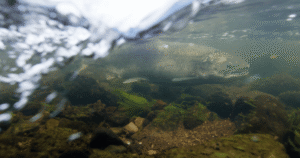
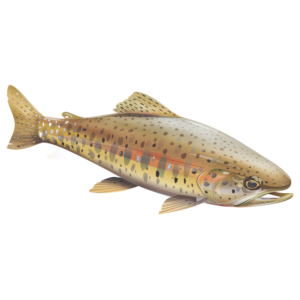
- Rebuilding habitat complexity: using large wood, boulders, and process-based restoration techniques to bring back cold pools, riffles, and side channels that trout and other wildlife depend on.
- Reducing wildfire risk: by addressing the dead, degraded riparian vegetation that currently fuels fire danger along the corridor.
- Creating a living outdoor classroom: with interpretive signage, community science opportunities, and sustainable trail and angling access that welcomes the community in rather than shutting it out.
- Developing a basin-wide Watershed Restoration Action Plan (WRAP): to guide smart, science-based restoration priorities across the entire Mammoth Lakes Basin for decades to come.
A Project Built on Partnership
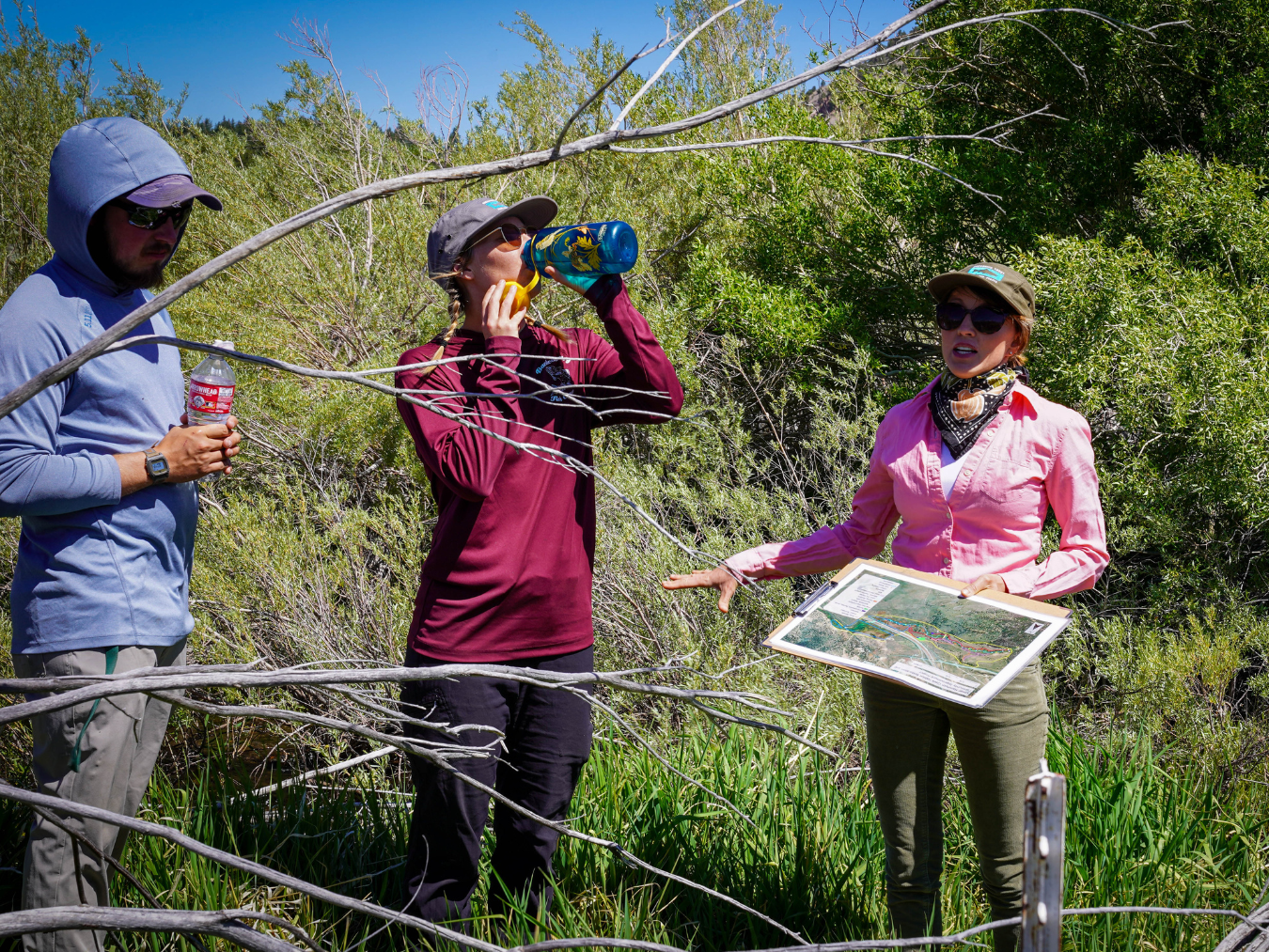
Watershed restoration never happens alone, and this project reflects that. CalTrout is leading the effort, but it’s being shaped alongside Inyo National Forest and the Town of Mammoth Lakes Recreation Department. The Mammoth Community Water District has already committed mitigation funding specific to this reach, and CalTrout has been invited by the Sierra Nevada Conservancy to submit a funding proposal for planning support. Regulatory partners including CDFW will help ensure the work meets the highest environmental standards.
Just as importantly, this project is being built with space for local Tribal Nations to lead, learn, and share knowledge. By sharing Tribal Ecological Knowledge, offering apprenticeship opportunities, and working together to steward these lands, we can ensure that the people who have lived on this land since time immemorial are centered in efforts to revitalize it.
The Path Ahead
This is a multi-year effort, with planning and design work ramping up this year, field surveys and engineering design through 2027, and a target of breaking ground in spring 2028. Like any big vision, we’ve got a long road ahead, and we’re committed to getting it right. This entails taking the time to understand the system, nurturing the partnerships to do it right, and committing to seeing it through.
When this work is complete, Lower Mammoth Creek will function as nature intended. Water will move across the landscape the way it’s meant to. Meadows will hold water later into the summer. Trout will have the cold, complex habitat they need to thrive. And the Mammoth Lakes community will have a restored, accessible creek corridor to explore, learn from, and care for.