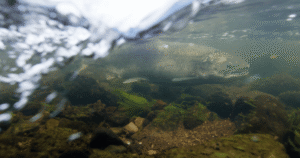
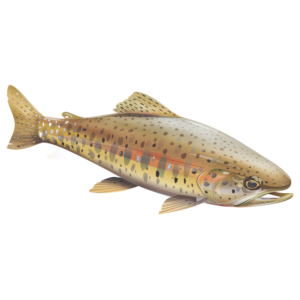
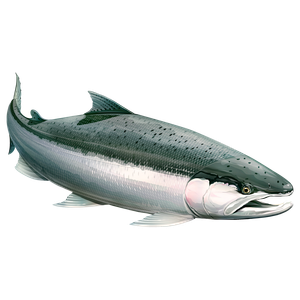
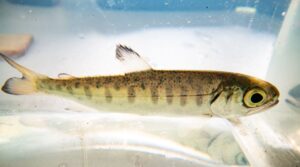
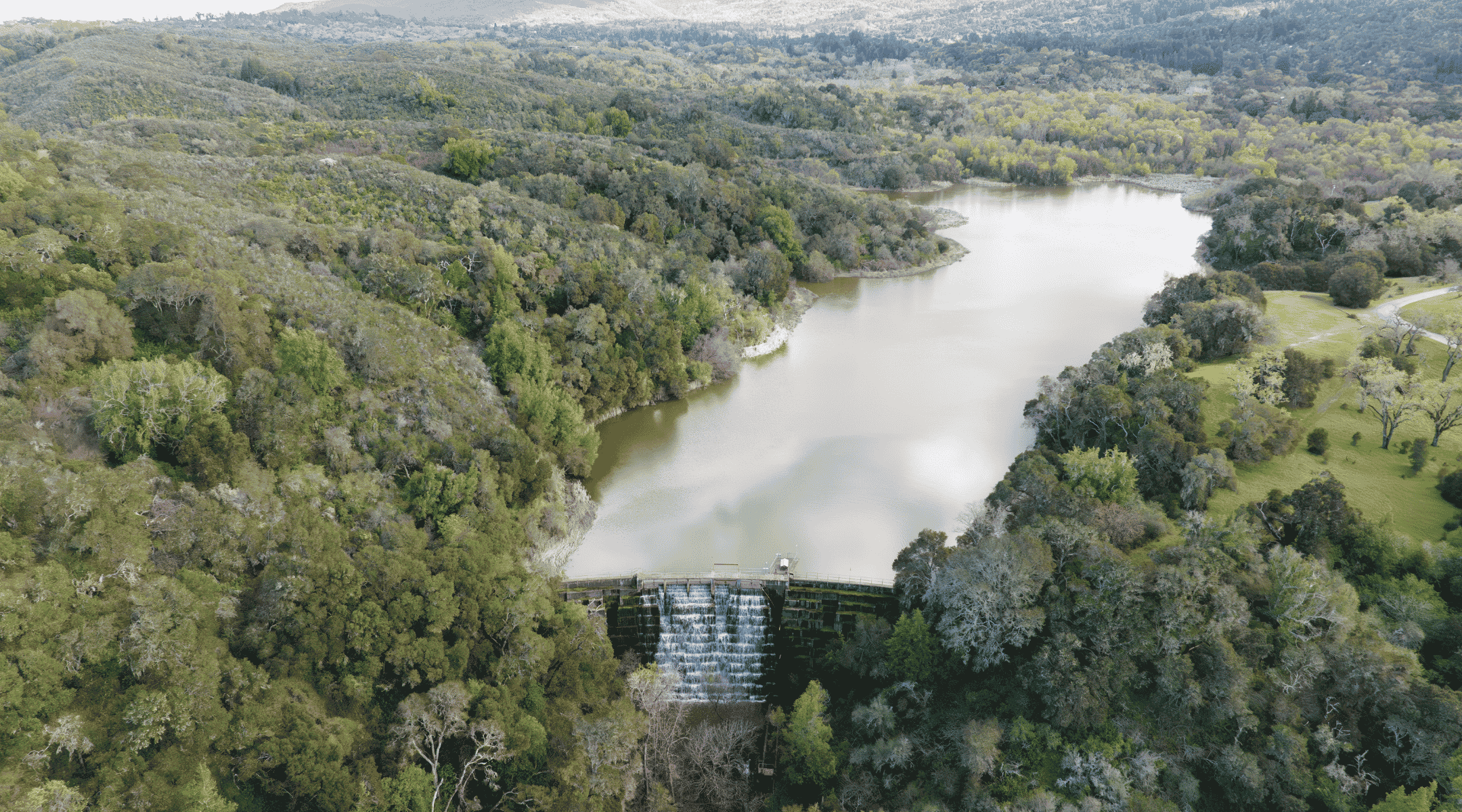
Located in the San Francisquito Creek watershed in Portola Valley on Stanford University’s campus, Searsville Dam blocks wildlife migration and critical sediment between the headwaters and San Francisco Bay, harming threatened Central California Coast steelhead populations and reducing sediment that is needed to protect sediment-starved San Francisco Bay wetlands, a crucial buffer for communities from sea level rise. For over two decades, CalTrout, along with dozens of partners in the Beyond Searsville Dam coalition, has been advocating for the removal of Searsville Dam. We are committed to working with Stanford and community stakeholders to find a solution for the watershed that creates safe, long-term sustainability and ecological productivity for the benefit of both fish and people.
In February 2023, following years of community working groups we participated in, Stanford University launched the “Searsville Watershed Restoration Project” in a formal Notice of Preparation (NOP) to work with the California Department of Water Resources and US Army Corps of Engineers to develop a joint draft environmental impact report (EIR) for the project. Following the release of this NOP, we shared their public comment opportunity with you, as we collectively pushed for dam removal, better flood protection, and sustainable water solutions, including construction of offstream flood attenuation and groundwater recharge basins on land Stanford already owns. Just days ago, an updated NOP has been released with dam removal included as one of the alternatives and plans for offstream flood attenuation, indicating our voices have been heard and our expertise incorporated into their planning. Stanford announced that the draft EIR will be released in November 2026, and we look forward to partnering with Stanford University and others on the removal of this antiquated, deadbeat dam.
Searsville Dam was built over a century ago. In the years since, the dam has lost over 90% of its original water storage capacity to sedimentation in the reservoir. The dam does not currently provide potable water or hydropower. Its primary use is to provide irrigation water to the Stanford University campus and golf course. Without intervention, sediment will soon completely fill the reservoir and continue to cause flooding problems to downstream neighbors, leaving behind a seismically and structurally questionable liability that is classified by the US Army Corps as a “High Hazard” dam.
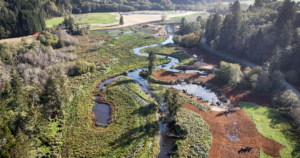
In addition to blocking one of the last wild San Francisco Bay steelhead runs from reaching their headwaters, Searsville Dam and Reservoir evaporate critical summer flows needed downstream, produce harmful algae blooms that degrade water quality, produce potent methane gas harming our climate, and have flooded an ecologically unique valley where five creeks once flowed together among wetland ponds and extensive riparian forests. This ‘Confluence Valley’ can be restored within Stanford’s Jasper Ridge Biological Preserve as watershed health, carbon capturing forests, and wildlife recover. In order to fully recover steelhead in the South Bay, San Francisquito Creek must be able to sustain the essential independent population of steelhead that it once did.
While simply removing the dam and letting all the sediment move downstream could compromise existing flood control features in a heavily urbanized and modified watershed, leaving the dam in place with a hole in it (as one alternative proposes) will also increase existing flood risks. Flood risks could increase if more water is stored in this nearly 150-year-old dam that has known cracks and lies near the San Andreas Fault. If the dam fails, it could cause significant flooding in downstream communities, as outlined in the San Mateo County Searsville Dam Failure Inundation Area scenario.
Fortunately, there is a better way forward. It is crucial that a carefully developed solution that both reduces the risk of catastrophic flooding for communities downstream of Stanford’s campus and allows the creek to flow freely again is implemented. We are advocating for a common sense and phased approach, where offstream basins capture storm flows and sediment is metered out of the dam with winter flows in a controlled way to reach downstream bay wetlands over the course of several adequate flow years. Dam removal would only take place after flood attenuation basins and other necessary bridge and infrastructure upgrades underway have been completed by watershed stakeholders.
In preparation for the eventual draft EIR release and public comment period, we are working with coalition partners and consultants to conduct studies to help us better understand and articulate the myriad safety and sustainability benefits of offstream stormwater capture, groundwater recharge, and phased dam removal. We are confident that dam removal is necessary and remains the best option for this watershed, its communities, and Stanford University based on the best scientific information available. We are working to collect further updated data to support this vision and generational opportunity. These studies will assess nature-based flood risk reduction benefits, water reliability alternatives, evaporation rates, climate impacts, water use, wildlife passage, and more.
Stanford University has an unprecedented opportunity to implement the sustainability and water resiliency practices that it teaches by collaborating with the local community to find a safe solution to remove Searsville Dam in a way that that restores ecological function and does not endanger downstream neighbors. The research opportunities for studying a watershed-scale restoration project on a major university campus are unprecedented. We look forward to working with our coalition partners, resource agencies, and Stanford, its faculty, students, and supporters, to realize this vision for a healthy, restored San Francisquito Creek watershed that protects and enriches the surrounding community.
With the newly released NOP, there was another opportunity to provide public comment and raise your concerns directly with Stanford. Thank you to everyone who used their voice to help seize this incredible opportunity right here in Bay Area backyards to showcase that we can and must balance the needs of wild fish and people for future generations!
There will also be a series of virtual scoping meetings associated with the project. For more information on how to attend those meetings, click here.