The South Fork Eel River is a salmon and steelhead stronghold and represents one of the best opportunities to restore wild fish abundance. This stretch of river has been impacted by excessive water diversions in many of its tributaries. Improving stream flows is critical to protecting key life-stages for coho salmon and steelhead survival.
To inform our conservation work on the Eel, CalTrout works with the California Department of Fish and Wildlife (CDFW) to try to answer the question: how many salmon and steelhead are there in the South Fork Eel River? In the 2022-2023 season, we estimated almost 5000 fish passing through the system. Although 5000 may sound like a lot, these populations are well below the level needed to recover these species.
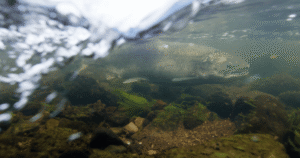
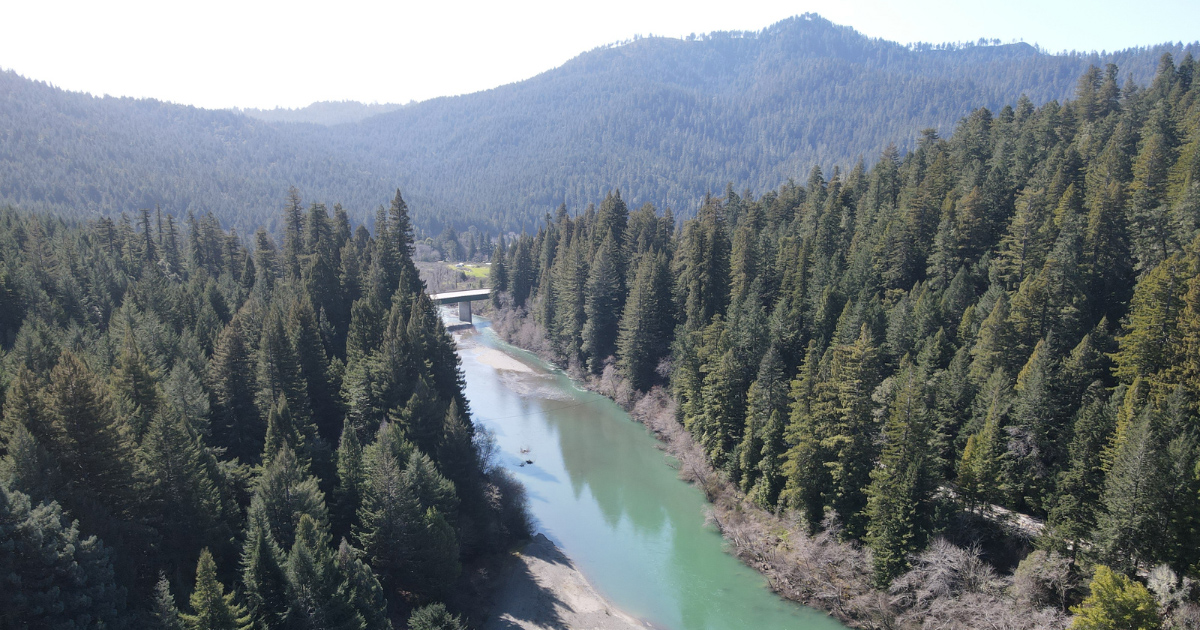
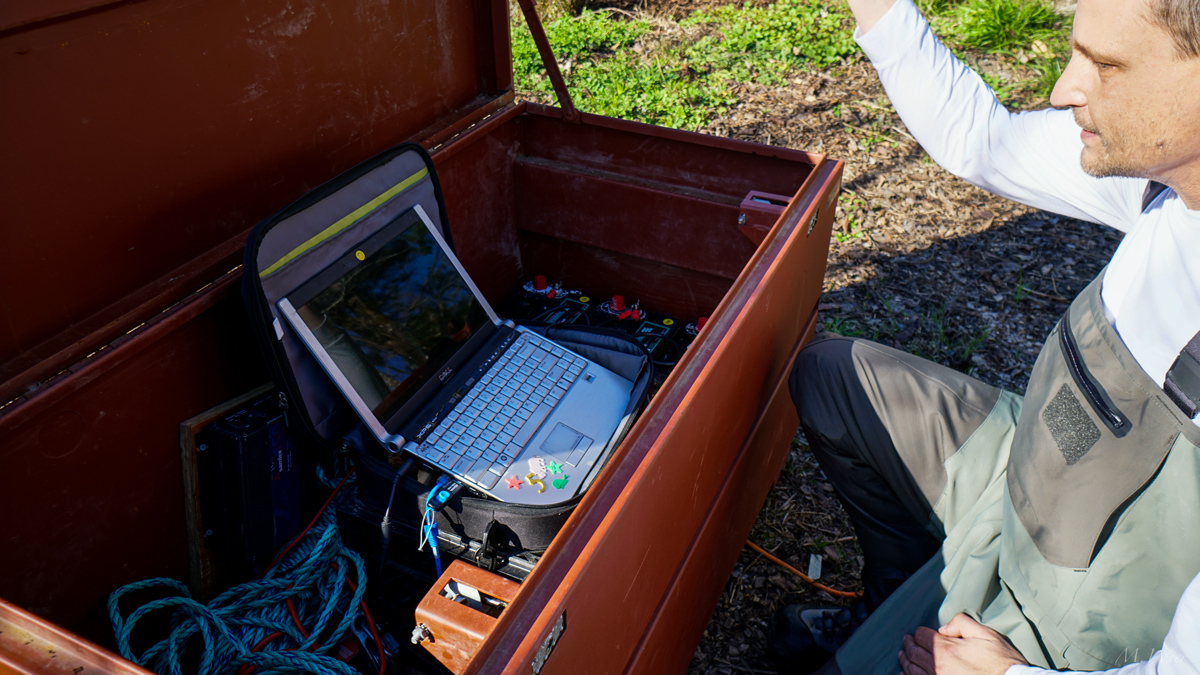
We estimated this number using a Sound Metrics Dual Frequency Identification Sonar (DIDSON) camera system. The sonar camera is located at Meyers Flat, ten miles above the South Fork Eel River confluence with the Eel River, and it records video of fish as they migrate upstream to their spawning grounds. Providing a cross section view of the river, the camera records 24 hours a day, except during hazardous flows. These videos help us estimate the abundance of spawning Chinook salmon, coho salmon, and steelhead in the watershed.
Salmon and steelhead often spawn in muddy and turbid reaches which make it impossible to count fish using traditional spawner surveys. Sonar technology allows us to more accurately monitor salmon which under past survey techniques may have been un-detectable.
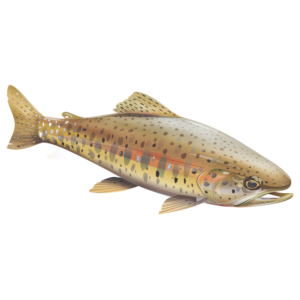
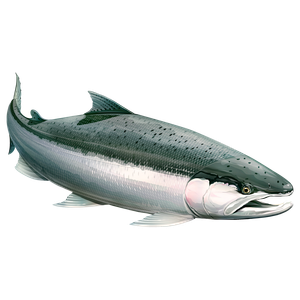
An estimated 4857 fish passed the counting station at Meyers Flat between October 31, 2022 and March 31, 2023. Based on typical run times for the South Fork Eel River and fish measurements, we can estimate the number of Chinook salmon versus coho salmon and steelhead. We estimated 3,878 fish over 40 cm passing the sonar in November and December to be Chinook salmon, and 980 fish over 40 cm passing the sonar from January through March to be a mixture of coho salmon and steelhead. View the team’s full 2022-2023 update here.
This population status information is invaluable to threatened species recovery planning and helps us to know what restoration practices have been most effective.
Counting fish using this system has many advantages. Our team counting DIDSON fish images can slow down, replay, and even stop the video if they are fatigued or lose their place, which cannot be done using traditional counting methods. Imaging sonars can produce high-resolution video images of fish, in part because it uses high-frequency sound waves that enable it to detect the entire surface of the fish. Using DIDSON, field scientists can better distinguish between fish that are swimming side-by-side or head-to-tail and determine which direction fish are swimming.
Mathew Metheny, CalTrout’s North Coast Program Manager, organized and obtained funding for the South Fork Eel River monitoring effort. With support from project partners and CalTrout Field Technician Jason Shaffer, he operates the system each year to piece together a larger narrative around annual salmon numbers in the watershed. The monitoring effort is funded by California Department of Fish and Wildlife, a key project partner.
Support CalTrout’s work to monitor and recover salmonids.
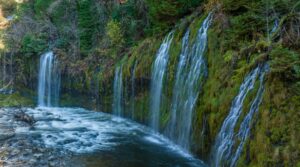
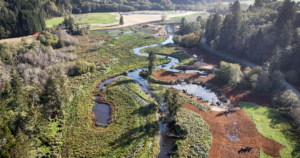
Cover Photo: Aerial view of South Fork Eel River near Meyers Flat by Matt Metheny