As you may have seen by now, the California Department of Fish & Wildlife has updated the inland trout fishing regulation as part of their years-long effort to simplify regulations and increase fishing opportunities in California.
We worked hand in hand with partners at Trout Unlimited over two years to provide input into this process to balance the desire to increase fishing opportunities, allow for harvest of trout where the resource and/or stocking can sustain it, and to appropriately protect sensitive wild trout and native/heritage trout populations. Read our previous joint statement with Trout Unlimited announcing the new regulations.
California Trout is committed to continuing to work with our partners to ensure that regulations statewide protect the state’s extraordinary wild trout populations. Climate change threatens our legacy waters and the genetic diversity needed to sustain population dynamics into the future. Spring-fed streams like the Fall River and Hat Creek are more important now than ever for providing refuge from extreme drought for naturally sustaining wild fish.
Consequently, CalTrout will continue to work with all of our public-private partners to advocate for common-sense, science-based protection of our last, best cold-water fisheries such as Fall River by advocating for use of barbless hooks and catch-and-release angling to protect the genetically distinct Bear Creek population.
Highlights From New Regulations
In general, here are some highlights from the new regulations:
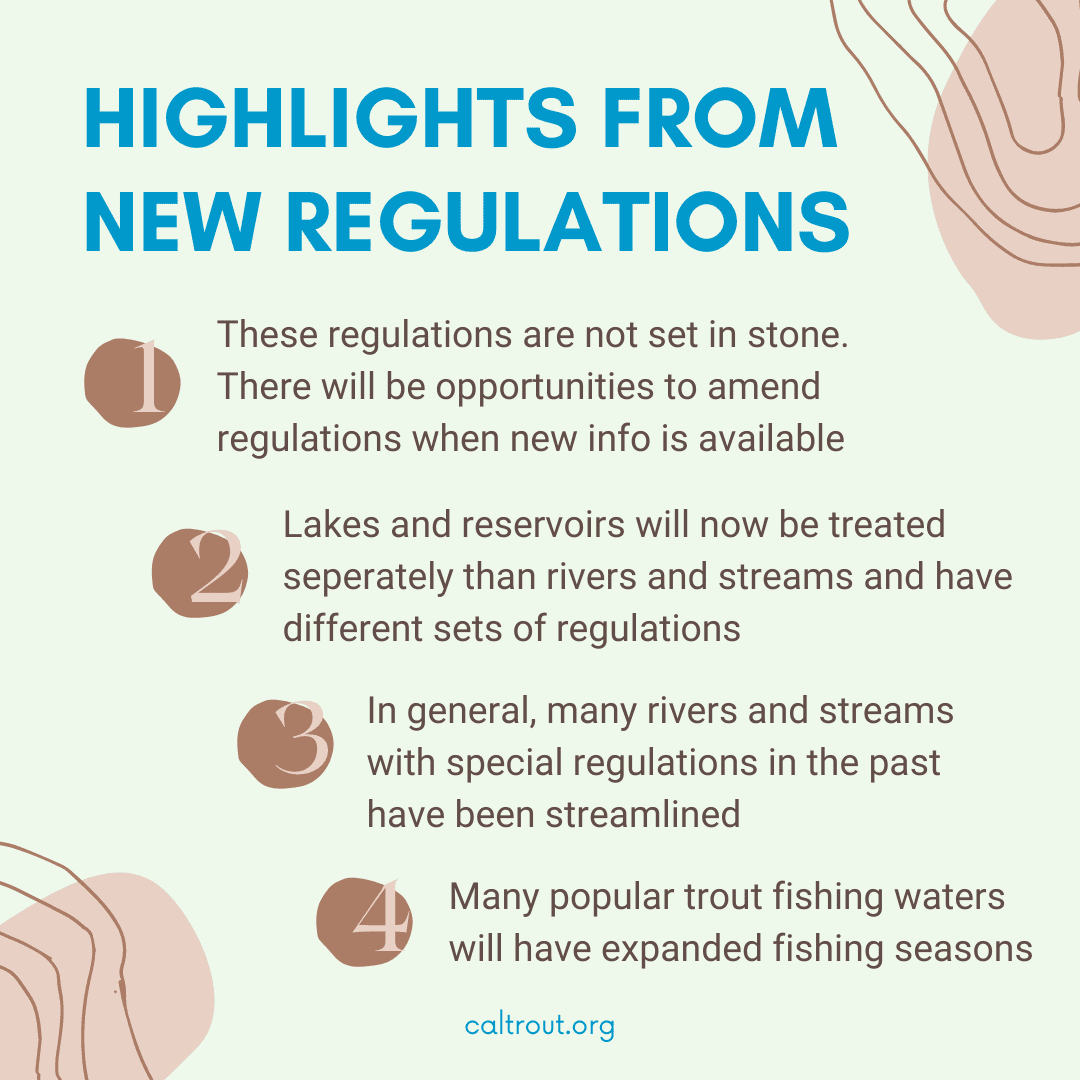
These regulations are not set in stone. monitoring of popular trout fishing waters and revisiting these changes with angler surveys and other methods will continue and changes may be made in the coming years with new information.
Lakes and reservoirs will now be treated separately than rivers and streams and have different sets of regulations. In general, still waters will allow more harvest and have less restrictive regulations than flowing waters.
In general, many rivers and streams with special regulations in the past have been streamlined to fit into a few different categories to reduce complexity and confusion.
Many popular trout fishing waters will have expanded fishing seasons. In general, during the fall and winter when trout fishing was traditionally closed, fishing will be allowed but harvesting trout will be forbidden and the types of gear allowed will be restrictive. During the traditional trout fishing season of spring and summer, fishing will be allowed and there will be less restrictive gear limitations and limited harvest.
6 Ways You Can Help Protect Our Waters
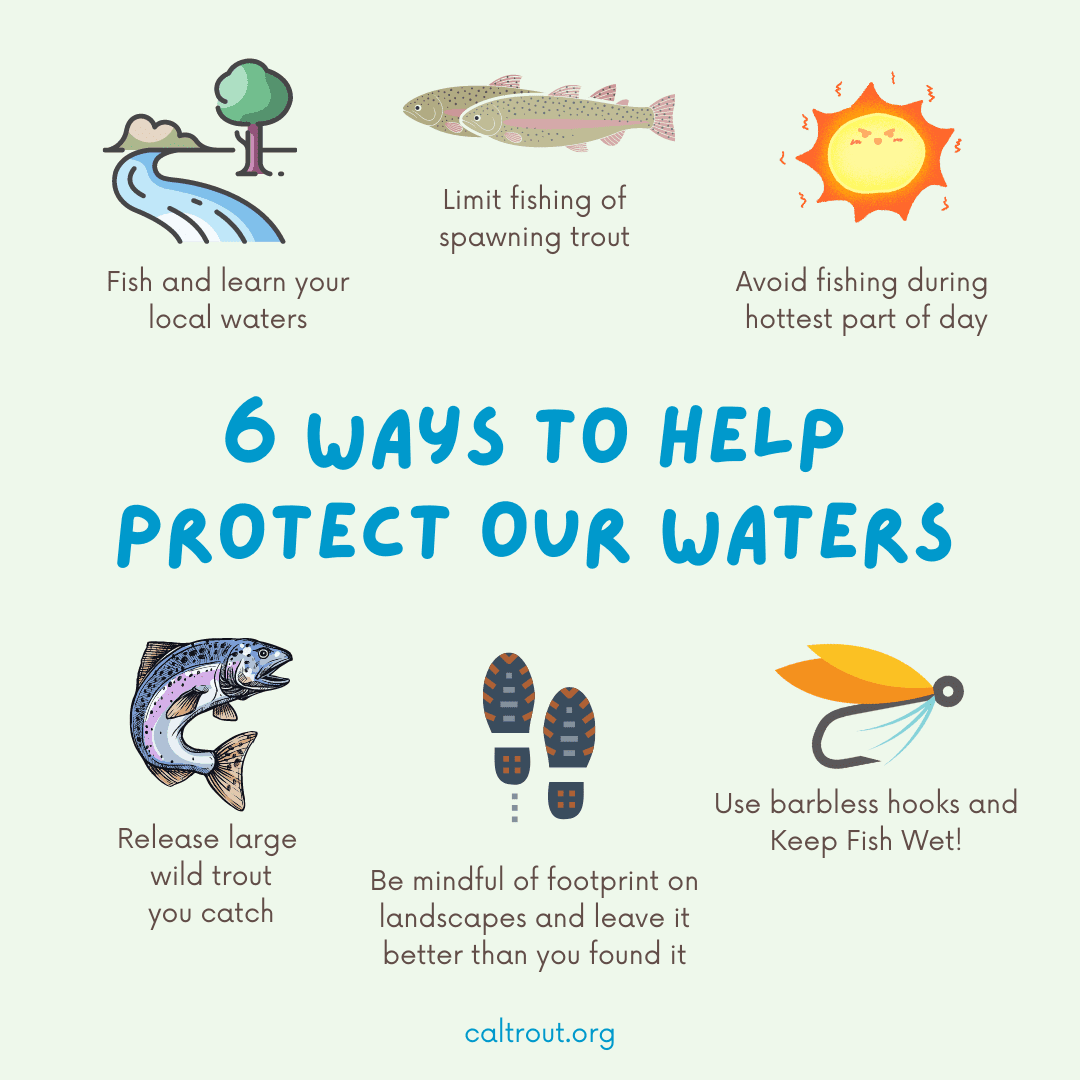
With these changes in mind, we are encouraging our members and conservation-minded anglers to consider the following guidelines when planning a trip this season. While certain fishing practices will now be allowed under the new regulations, we encourage anglers to continue to use discretion to help protect our native wild trout waters for now and for future generations:
- Consider fishing and learning local waters while abiding by regional travel restrictions associated with Covid-19.
- Limit fishing of spawning trout. Rainbows, redbands, and other native trout species are spring-spawning species that tend to aggregate in small tributaries to larger rivers or reservoirs and can easily be disturbed while spawning.
- Avoid trout fishing during the hottest parts of the day in the summer and fall months when streamflows are lowest and water temperatures are the highest. High water temperatures can significantly stress fish.
- Consider releasing large trout you catch. Large trout are the broodstock that represents some of the most successful spawners in the population. Releasing trophy trout can ensure the future health of our fisheries and increase the trophy angling experience for other anglers. Large fish also tend to accumulate heavy metals and toxins; keeping and eating mid-size trout comes with less health concerns.
- Be aware of your footprint on the landscape, and try to leave it better than you found it by properly disposing of all waste and trying to pick up after those who may have forgotten.
- Consider using barbless hooks and a net to keep fish in the water while unhooking and quickly releasing them with minimal exposure to air. Keep ‘em wet!
Before planning a trip this season, be sure to consult the final regulations found here.
Thank you for your continued support, and tight lines in 2021.