The Women of CalTrout
March is Women’s History Month, and all month long we are celebrating the historical and contemporary accomplishments of women around the world. Within our own organization, we are continually encouraged by the women of CalTrout who are creating real, lasting change. They are leading, discovering, exploring, lobbying, advocating, healing, nurturing, building relationships, and making their own mark on history each day they step into the office or the field. Follow our Women of CalTrout profile series as these women share their own stories and experiences as women in conservation, science, and intertwined fields at CalTrout.
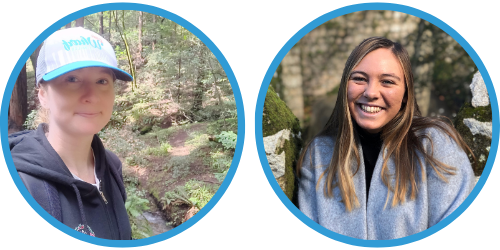
Malinda Baker, Grants Associate, and Kara Glenwright, Communications Manager
KG: What inspired you to pursue a career in conservation and a career at CalTrout?
MB: I felt the drive to work in conservation from a very young age. I was a kid with an insatiable curiosity and a voracious appetite for books who checked out every science book at the school library and was enthralled by documentaries by Jacques Cousteau and Sylvia Earle which inspired me to create posters and talk to anyone who would listen about saving the whales. In my mind, science and conservation naturally went hand in hand. Why wouldn’t we want to protect these amazing creatures and places that we are so captivated by?
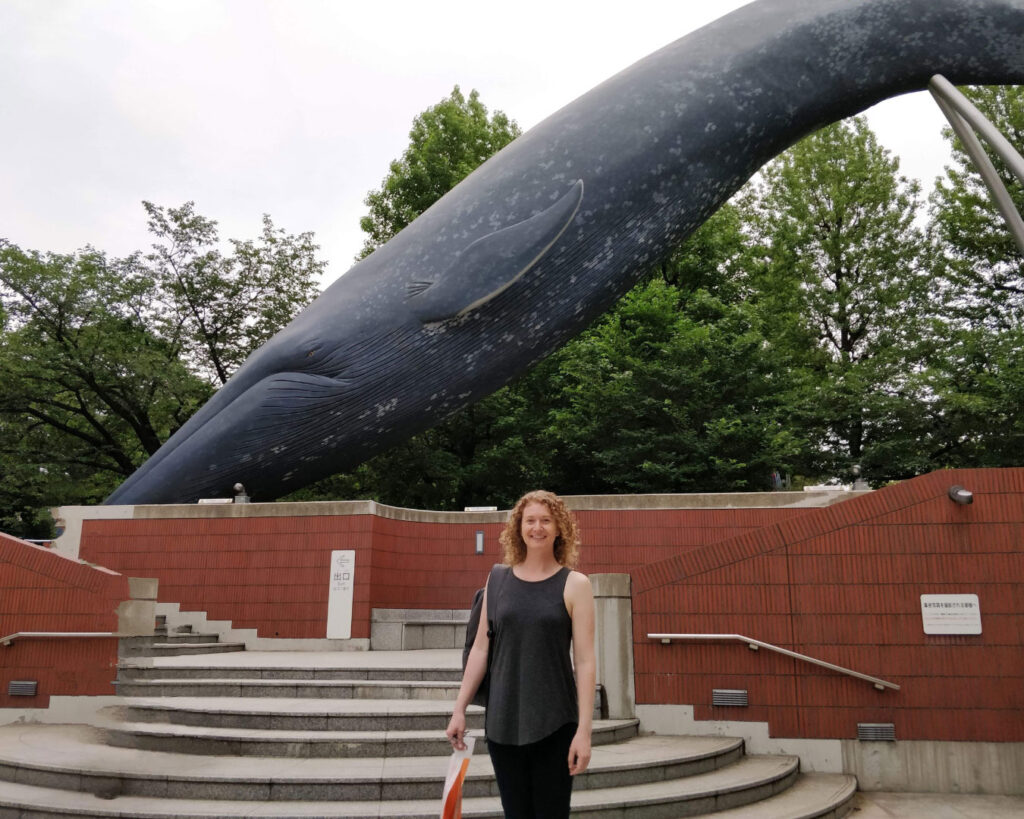
Malinda with a whale.
KG: What is your favorite part of your job? Could you share with me some of the most rewarding moments of your work?
MB: I love being surrounded by the most incredible collection of intelligent, passionate, and talented individuals that make up this organization. Every team and individual at CalTrout has an important role that contributes to the success of the work both in office and in the field, and everyone genuinely cares about and believes in the work being done. It is so rewarding to see the results and advances in research and the multitude of ways it can be applied to approaches to conservation and restoration. I think the intersection between science, education, and community inclusion is where significant and lasting change occurs, and I love seeing so many of CalTrout’s projects place importance on this.
KG: What does it mean to you to be a woman in this field?
MB: Women have contributed to science for a very long time, but for so much of history they had to work twice as hard to be taken seriously, and they often did not receive the credit they deserved. I am continually inspired by all of the women who have followed their curiosity and passion over many hurdles into science and conservation. In K-12, I struggled to find teachers who encouraged my love of science and was often spurred to focus on language arts, even though I excelled at both. But by the time I reached university, while I was often one of few women in my science classes, I fortunately had amazing professors who were supportive and encouraging, even far beyond graduation. I am grateful for those who paved the way and for those who are now mentors to the next generation of women in the field.
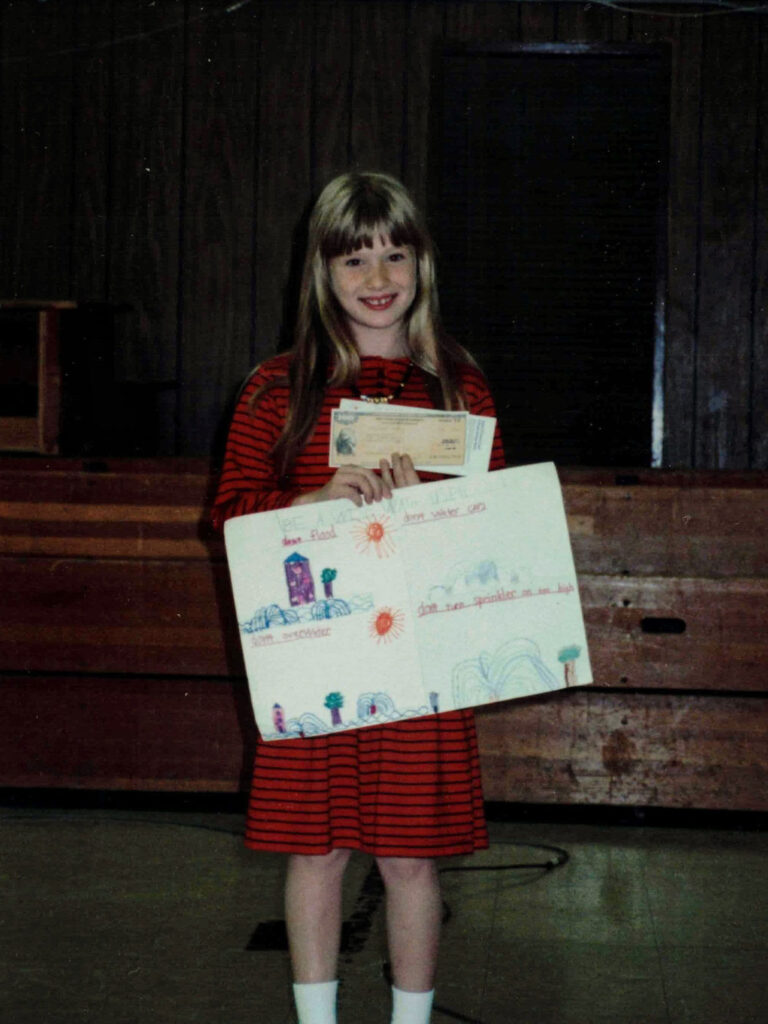
7 year old Malinda won a Los Angeles County District-wide water conservation poster contest!
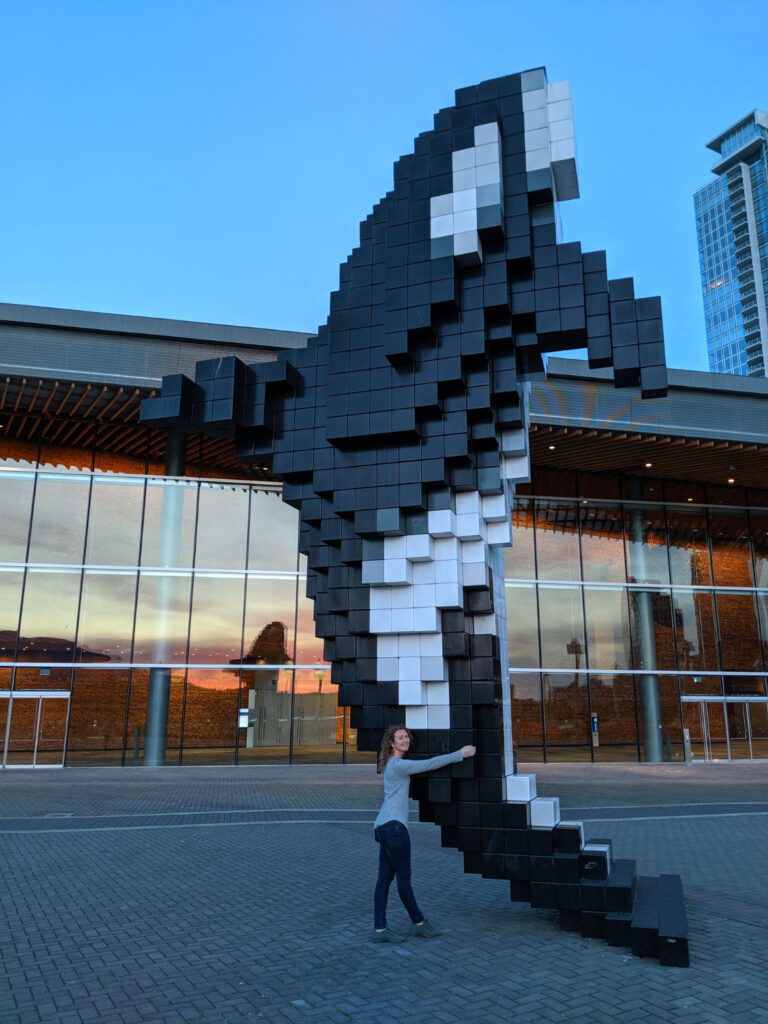
Malinda embracing a model of her favorite animal: the Southern Resident Killer Whale.
KG: To celebrate the “history” part of Women’s History Month—is there a woman from history that you find especially inspiring? Or perhaps someone from your own life?
MB: Rachel Carson. Her story shows that one doesn’t have to follow a traditional path to make meaningful change. The power of the written word – communication – backed by science can be a great force for good.
KG: Looking to future generations of women — what message would you share with younger women who hope to pursue a career in conservation someday?
MB: Connect with those in the field you look up to and find your mentors. Surround yourself with those who spark your curiosity and excitement in the field you are passionate about, and respectfully avoid those who dampen it. Don’t get discouraged if your path turns out to look different than you envisioned. My intended path was to continue through grad school, but life threw me a few curve balls and that got put on hold. Opportunities to contribute to my passion and work in related fields were still there, even if I didn’t arrive how I thought I would. Our dreams have a way of finding us when we listen to that voice inside and allow it to guide us toward our purpose.
KG: Last! Do you have a favorite body of water or fish in California?
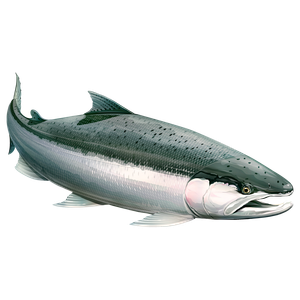
MB: My favorite body of water is our beautiful Monterey Bay! My favorite fish is the Chinook salmon because they are the lifeblood of my favorite animals in the whole wide world: the Southern Resident Killer Whales.