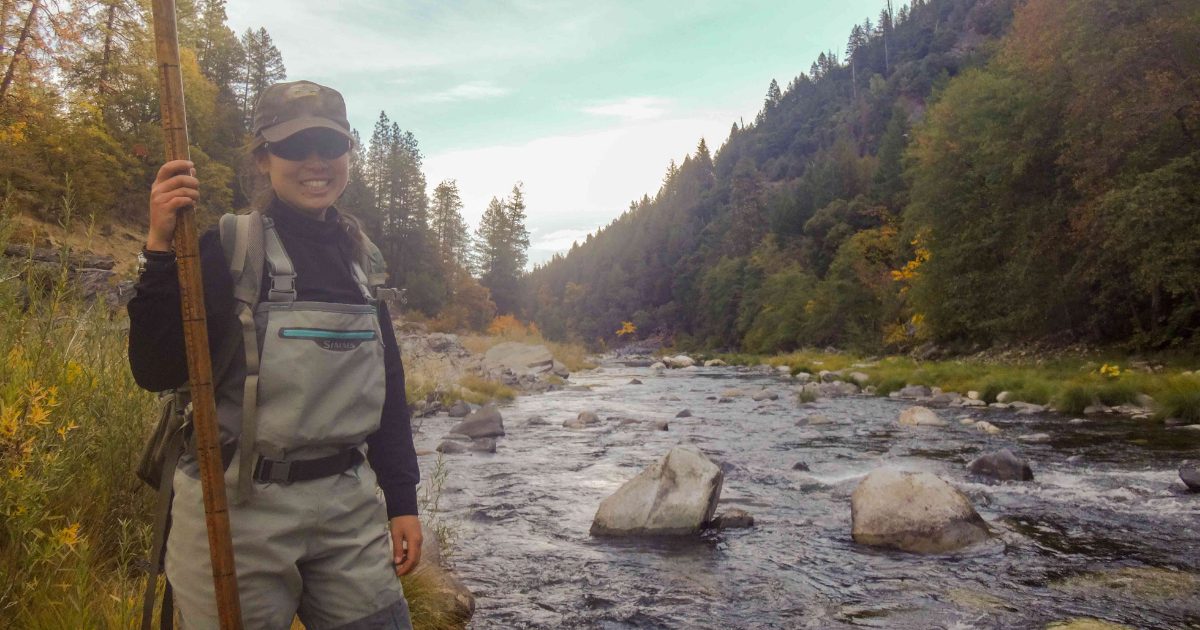
The Women of CalTrout
In this new series, our Communications Associate, Kara Glenwright, sits down for conversations with the women on our Conservation and Policy/Legal teams. Follow along as these women share their own stories and experiences as women in conservation and science at CalTrout.
Serena Doose, Mt. Shasta-Klamath Region Project Manager, and Kara Glenwright, Communications Associate
KG: What is your position at CalTrout and what communities in California do you work most closely with?
SD: I am one of the Mt. Shasta-Klamath region project managers. I primarily work on the Scott River, a tributary to the Klamath River.
KG: How did you come into this position at CalTrout?
SD: Prior to coming to CalTrout, I was working for the US Fish and Wildlife Service in Yreka, CA. I’ve been in the federal system for a long time having started my career when I was 19. I always really enjoyed working with CalTrout on different projects, and had a lot of trust and belief in their ability to carry out projects. I also really liked the culture of the organization and had always been curious about working for a non-profit. In the end, I think the timing just worked out where I was ready to make a career move, had just moved to Mt. Shasta, and, at the same time, CalTrout was hiring.
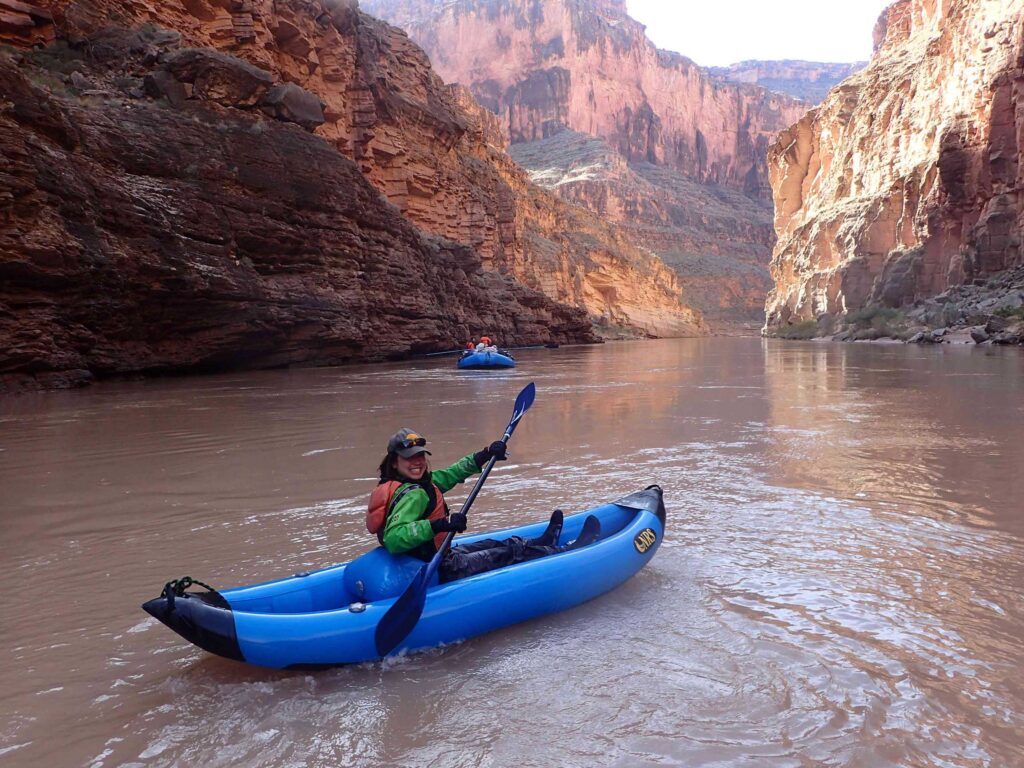
Serena on a trip down the Grand Canyon.
KG: What inspired you to pursue a career in conservation?
SD: I’m one of those people who never knew what they wanted to be when they grew up. I still don’t! But at some point, I did know that I wanted to work outside. In college, I got an internship with the Student Conservation Association. My first job was working with birds in northern Maine and it was really hard work. It definitely had me questioning whether that was the type of job I wanted. But then I got a job working with fish, also in Maine, and I just kind of fell into that work. I loved the perks of being outside and being connected to the environment.
KG: What is your favorite part of your job? Could you share with me some of the most rewarding moments of your work?
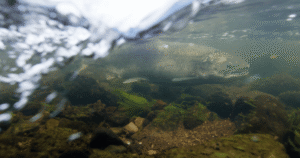
SD: Seeing the fish, or other aquatic organisms, in their habitats. Going to a project site and seeing how the fish are utilizing the area now versus how they might change their behavior or preferences once restoration is completed. There’s something really awesome about looking at a stream and just seeing water, then taking a peek with a snorkel and finding a whole world under there, sometimes in just a foot of water.
KG: Could you share with me any historical or contemporary women figures in conservation (or outside of conservation!) that you feel particularly inspired by?
SD: For me, it’s the women that I work with every day. It’s the women that we partner with and the women that are out there doing the work on the ground and the management. In these typically male dominated fields, it’s inspiring to see other women claiming their place at the table.
KG: What does it mean to you to be a woman in this field?
SD: I think a lot about trying to uplift other women and mentoring those who are just entering this field. It can be really tough if you’re the only woman on the team to feel heard and validated, or to break down other people’s expectations of how a woman “should act.” I hope I can show other women interested in this field that it’s possible and to continue to help them feel supported.
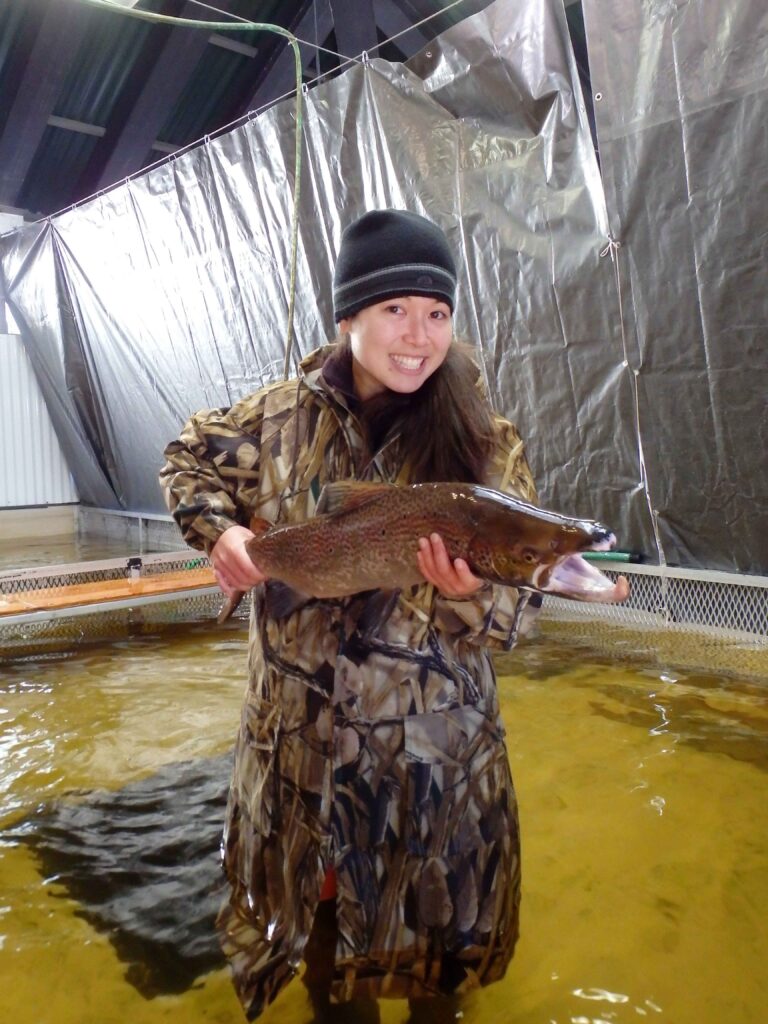
Serena preparing a male adult Atlantic Salmon for spawning.
KG: What message would you share with younger women who hope to pursue a career in conservation someday?
SD: I have so many answers to this question! First, I would say that you should just say yes to opportunities, even if you doubt your qualifications, or you’re worried you don’t belong, or you don’t have the same background as others around you. If it’s in a general direction that you think would be interesting, pursue it and see where it goes. Second, it’s okay to figure things out. There’s a first time for everything, and it’s okay to make mistakes. Better to make mistakes than to not try at all! And third- you are the only person who knows what you are capable of. Don’t let other people define this for you. Surround yourself with people who lift you up and do the same for others.
KG: Do you have a favorite river or fish?
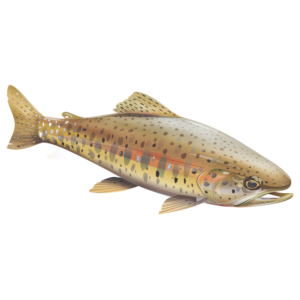
SD: My favorite fish for nostalgic reasons is the (native) eastern brook trout. It was the first fish I ever worked with on the East Coast and they’re just so beautiful. They’re not native in California but I still appreciate them. It’s really hard to pick a favorite river, but the first one that comes to mind is probably the Smith River. Fabulous swimming, surrounded by redwoods in some places, endemic serpentine plants in others- what’s not to love?
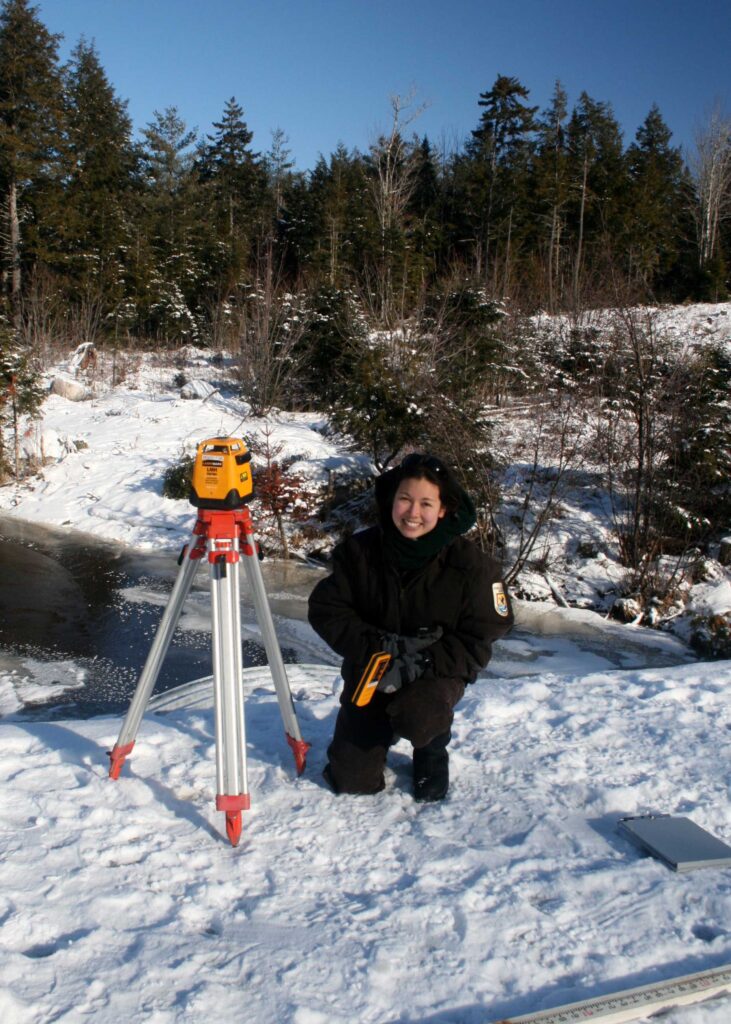
First winter doing stream surveys in Maine before the rivers iced over.
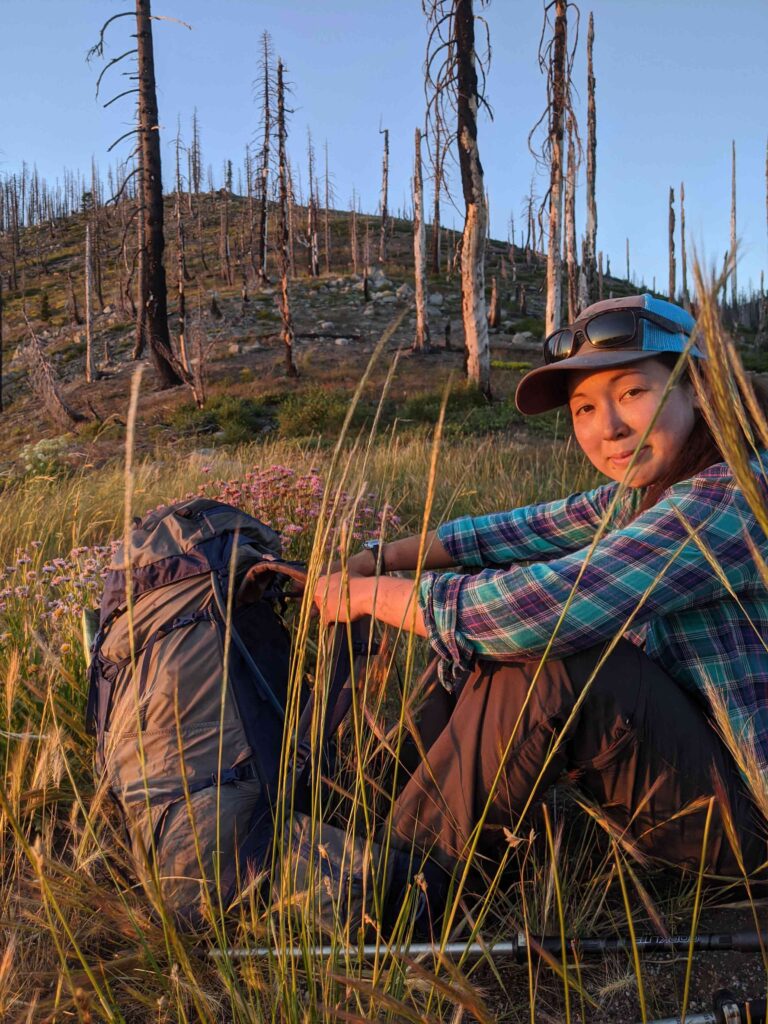
Somewhere on a ridge in the Marble Mountain wilderness.