California Trout and Trout Unlimited today launched a joint outreach campaign to advocate for a science-based approach to managing the Central Valley’s flood protection system including connected floodplains required for salmon recovery. The groups came together in response to FloodSAFE, a California Department of Water Resources (DWR) initiative designed to improve the state’s integrated flood management plan.
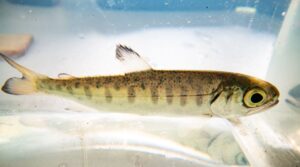
FloodSAFE is a result of 2007 legislation that called for a comprehensive approach to flood and land use management. One aspect of FloodSAFE is the Central Valley Floodplain Evaluation and Delineation Program. The program is charged with developing a comprehensive Central Valley Flood Protection Plan to promote integrated flood management. Scientific research increasingly supports the value of floodplain-connected rivers for general watershed health. Research has also demonstrated that salmon reared in such environments grower larger and faster and have increased odds of survival and return.
Improving Public Safety, Environment
“California’s move to overhaul its floodplain management approach creates a tremendous opportunity to reverse some of the damage that we have done through mismanagement of our Central Valley rivers,” said Brian Johnson, California Director and senior attorney for Trout Unlimited. “It is possible to protect the natural environment and public safety, while at the same time protecting private economic interests. If the state does this right, we will see benefits for farmers, commercial fishermen, the general public and iconic fish like Chinook salmon.”
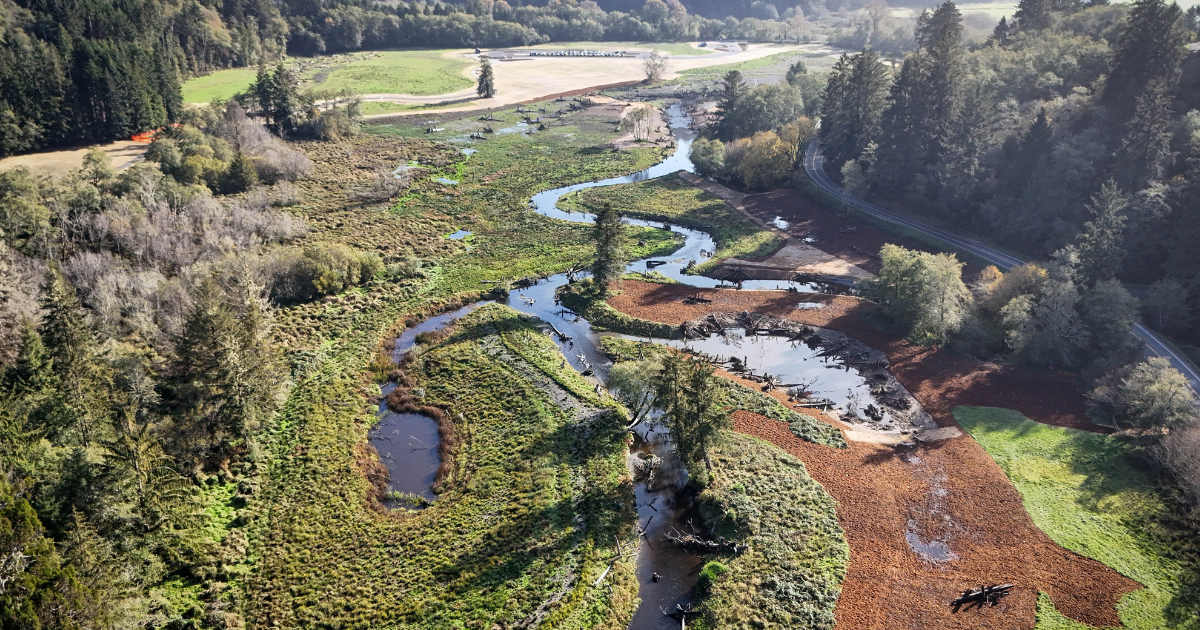
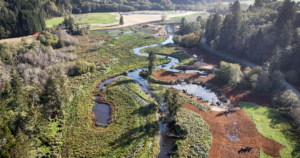
The state’s updated approach to flood management will likely include reconnecting the Sacramento and San Joaquin Rivers to some of their historic floodplains. These connections can reduce the risk of catastrophic floods in occupied areas and create important salmon habitat in rivers. The newly-formed TU-Cal Trout coalition is working to ensure that the approach the State ultimately takes to manage flood risk reflects the best and most current conservation science.
With an extensive system of levees and dams, the Central Valley’s two major rivers – the Sacramento and San Joaquin – have long been disconnected from their traditional floodplains. Since these river management systems were first designed more than 100 years ago, research has shown that disconnecting rivers from floodplains increases risks to public safety and causes significant environmental damage, including damage to native fish populations.
“Particularly with regard to migratory fish like salmon and steelhead, recent studies suggest that access to floodplains would be integral to creating a sustainable recovery for these species,” says California Trout executive director Jeffrey Thompson. “We know that areas that allow managed flooding, like the Yolo Bypass, benefit both fish and agriculture. And rivers that have regular access to floodplains do a better job of recharging groundwater supplies and protecting the built environment from extensive damage when major floods occur.”
Floodplain Connection Benefits Entire Watershed
California Trout and Trout Unlimited are united around the importance of returning the Sacramento and San Joaquin Rivers to a more natural state for the benefit of the entire watershed ecosystem.
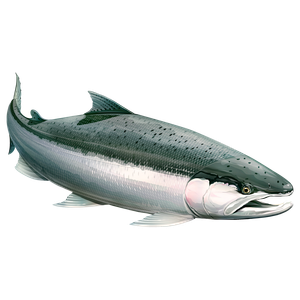
Central Valley Chinook salmon and steelhead have long been an important economic driver for both commercial and recreational fishing in California. Research out of the UC Davis Center for Watershed Sciences indicates that when juvenile salmon are given access to floodplains they grow significantly larger, increasing their chances of survival. Rivers that have access to floodplains also help restore native plants, which in turn support native fauna of all types and benefit native species in the fight against invasive species.
“I want my grandchildren to know the joy of catching a steelhead, and of grilling up a fresh salmon,” says Johnson. “This is a rare moment of opportunity for California to improve the survival prospects of these species and to create a more sustainable future for everyone who lives near or depends on water from the Sacramento and San Joaquin Rivers.”
The draft Central Valley Flood Protection Plan is expected to be released for public comment by the end of the year.
About California Trout (www.www.caltrout.org)
California Trout works to protect and restore wild trout, steelhead, salmon and their waters throughout California. The group has been active for four decades, working to ensure the continued viability and health of California’s watersheds for generations to come.
About Trout Unlimited (www.tu.org and www.tucalifornia.org)
Trout Unlimited has been working to conserve, protect, and restore North America’s trout and salmon fisheries and their watersheds since 1959. It has 140,000 members nationwide, including more than 10,000 in California.