My trip to the zoo
A word from CalTrout’s ED, Curtis Knight

I recently took a trip to the National Zoo in Washington, D.C. with my wife and two young daughters. While most may look forward to a trip to the zoo, I had some reservations. Zoos depress me. Standing there observing animals in captivity, I can only focus on how miserable they must be, how they’d rather be in the wild. I was intrigued, however, when our guide, Jessie, began talking to the kids about biodiversity.
Biodiversity, Jessie explained, is the variety of life on earth, plant and animal, which is vital to the health of all living things on the planet. She asked our group what the greatest threats to biodiversity were. Hands shot up. “Loss of habitat,” answered one. “Not enough species,” said another. They struggled with the third, “genetic degradation,” filled in Jessie.
I couldn’t help but draw the obvious parallels to what California’s native, wild fish face. These species are confronted with a long, daunting list of threats that, when looked at collectively, would be easy to throw up one’s hands and give up—habitat degradation, invasive species and genetic degradation through hatcheries and the homogenization of the gene pool.
But true conservationists know that you have to start somewhere. The words of Margaret Mead ring true, “never doubt that a small group of thoughtful, committed citizens can change the world; indeed, it’s the only thing that ever has.”
At CalTrout, we’re committed to confronting, head on, the threats facing our wild fish. We focus our resources in areas where wild fish influence communities and where we can use our local presence to solve complex resource issues that balance the needs of wild fish and people. In the broadest sense our statewide work can be categorized in three core areas:
- Protect Strongholds
It’s easier to protect what’s working than to repair what’s not. We’re focused on maintaining the long-term integrity and productivity of our healthiest wild-salmon rivers like our full scale headwaters-to-the-sea efforts on the Eel River and beating back the nickel mine threat on the Smith River. - Restore Source Waters
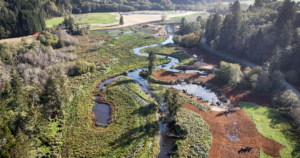
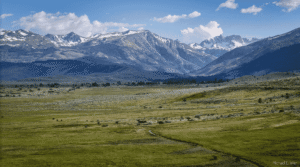
Restore meadows, springs and headwaters to sustain downstream habitat through drought and climate change. Our large scale, partner rich effort to restore 30,000 acres of meadow habitat in the Sierra is a good example of this. - Promote Reconciliation Ecology
Redesign the many ways we manage natural resources so that wild species can support themselves in our cities and on our farms. See our work with rice farmers in the Central Valley and ranchers in the Shasta Valley for ways we’re advancing reconciliation ecology.
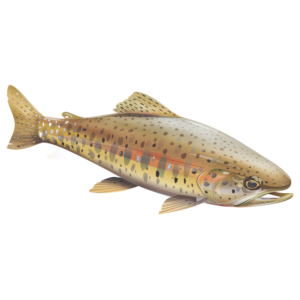
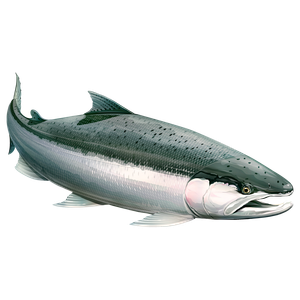
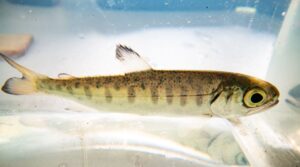
As Californians, we are all proud of our natural heritage. I refuse to accept that my daughters may have to go to a zoo to see California salmonids, as they may no longer exist in the wild – which is looking increasingly likely for winter-run Chinook and is already the case for the extinct McCloud bull trout. These wild fish indicate the health of our waters and health of California. Considering these alternatives, we’ll continue to charge ahead with our work to ensure resilient wild fish populations are thriving in California’s cold water streams for future generations.