The Trap and Haul Debate
A word from CalTrout’s ED, Curtis Knight

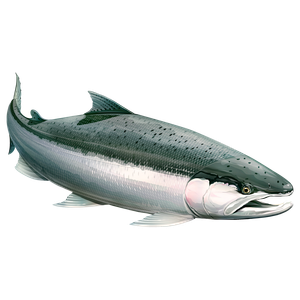
A recent article in the Sacramento Bee reports on the National Marine Fisheries Services and Bureau of Reclamation’s plans to truck winter-run Chinook above Shasta Dam in an attempt to create population redundancy and improve adult returns.
On Thursday, federal fisheries officials laid out an ambitious and complex plan to provide emergency habitat for the Sacramento Valley’s population of winter-run Chinook, whose numbers have plummeted to critical levels during California’s four-year drought.
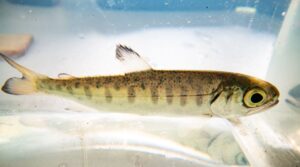
Under the plan, biologists in 2017 would begin trucking the offspring of winter-run Chinook raised at Livingston Stone National Fish Hatchery at the base of Shasta Dam to the cold waters of the McCloud River.
(Click here to read the full article.)
CalTrout has followed the development of the plan closely and, in general, has been supportive of National Marine Fisheries Service (NMFS) and the Bureau of Reclamation (BoR) efforts to investigate the potential for reintroduction of salmon above Shasta Dam. We remain skeptical, however, of the ultimate feasibility of a trap and haul operation to create a self-sustaining population above the dam. Trap and haul operations are expensive to sustain and often don’t meet fish abundance and protection objectives.
While trap and haul of juvenile salmon below dams has been used somewhat successfully in the Columbia River basin, there are far fewer examples of successful two-way trap and haul programs (i.e., moving both juvenile and adults around dams) and the viability of such a method to sustain or even increase the relative population density of winter-run Chinook from the Sacramento River is questionable. The most successful operations are able to move abundant adult salmon above dams and then efficiently capture large numbers of juveniles in reservoirs as they migrate downstream. Capturing juvenile out-migrants, however, has proven to be extremely difficult.
Important questions remain about reintroduction methods including the short and long-term costs of those methods, the ecological conditions of recipient habitats and their ability to support winter-run Chinook, potential ecological changes to recipient habitats associated with such a program, and the effects to donor winter-run Chinook populations.
We feel strongly that the cost and feasibility of reintroduction efforts should be compared to other potential projects to benefit these species. Further, two-way trap and haul should not move forward exclusive of other projects aimed at improving other integral parts of winter-run Chinook life history. Examples of other projects include:
Improving Habitat Conditions on the Sacramento River
We recommend examining current limiting factors on adult and juvenile winter-run on the mainstem Sacramento River below Shasta Reservoir. Spending the time, effort and money to trap-and-haul will be wasted if conditions below the dam are not conducive to the juvenile salmon making it to the Pacific and/or the returning salmon making it back to Shasta Dam.
- Minimize adult mortality
Adult straying issues are especially important in Yolo Bypass and the Colusa Basin drain which have attracted migrating winter run into the dead-end canals for decades. In 2013, an estimated 600 winter run salmon strayed into the Yolo and Colusa Basin canals, representing approximately 10% of the total winter run escapement. Strategic investment to upgrade century-old water infrastructure would block fish passage into the canals and realign attraction flows so that salmon can be routed back to the river.
- Restore Floodplain Rearing Habitat
Over 95% of floodplain habitat has been lost. Through CalTrout’s Nigiri Project we’ve been able to show that by spreading water out and slowing it down on floodplains dense populations of bugs (zooplankton and aquatic insects) are produced, which in turn are consumed by birds and fish. Winter-run gaining access to high quality floodplain rearing habitat are likely to become more robust and increase their chance of successful outmigration and improve adult returns. Successful implementation of a Yolo Bypass project, which allows greater connectivity between the Sacramento River and its largest floodplain, has the potential to allow a large portion of out-migrating winter-run to access floodplain rearing habitat. Ultimately, this could substantially increase winter-run recruitment and improve overall population growth rates.
- Mimic Natural Flows
Current flow regimes below Shasta Dam are based on archaic, outmoded models that harm fish and do little to benefit downstream water users. For example, Shasta Reservoir flows could be better managed for juvenile fish by providing a better balance between fall drawdown and winter runoff. New models suggest water yield and timing of release of flows to benefit fish could be improved through more rigorous hydrologic models. A modification to Shasta Dam’s spillway would deliver a sizable increase in water holding capacity. Flows that better mimic natural cycles will benefit the Sacramento’s fisheries.
Restoring Battle Creek
Winter-run were extirpated from all spawning sites within their historical range. All of the approximately 200 miles of historical winter-run spawning habitat in the Upper Sacramento, McCloud and Pit rivers are cut off behind Shasta Dam. The only independent Central Valley population downstream of Shasta Dam was Battle Creek. Accordingly the NMFS 2014 recovery plan states, “watershed restoration actions associated with the Battle Creek Salmon and Steelhead Restoration Project are expected to restore conditions that will allow for successful reintroduction of winter-run Chinook salmon to Battle Creek.” Dam removal and restoration of Battle Creek should be the highest priority action for winter-run Chinook.
There is no question winter-run Chinook salmon are in a tough spot. CalTrout will continue to work with the agencies to find creative ways to maintain the long-term survivability of this unique run of salmon. Critical to such a plan is a holistic restoration vision that encompasses the entire life cycle of winter-run Chinook.