Voices of Malibu Creek Watershed: Russell Marlow

Based on an interview between Russell Marlow, CalTrout South Coast Project Manager, and Alisan Theodossiou, CalTrout Senior Communications Manager
Russell wears the hat of Project Manager for CalTrout’s Ventura office in our South Coast Region. He’s been with the CalTrout organization for a little over 4 years, focused on the recovery of federally endangered Southern California steelhead within the northern part of their native range.
“One of the first big watershed moments for Malibu Creek Watershed was in the 1920s with the construction of Rindge Dam. It completely blocked the flow of sediment, water, energy, and created the landscape of Malibu Creek canyon and that of Malibu town, which grew up in the shadow of that dam— this is the landscape that we know of today, the Southern California post-war development era. And now, the next big change for the watershed will be the removal of Rindge Dam,” explains Russell.
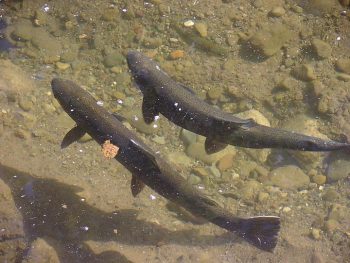
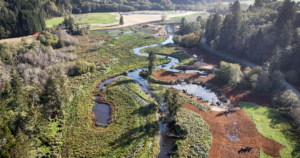
Malibu Creek watershed has been identified as a prime habitat restoration opportunity for Southern steelhead. Russell remarks, “it’s a smaller watershed (in the scope of California watersheds) that’s located in the Santa Monica Mountain range area, seated between Ventura and the greater metropolitan area of Los Angeles, really in the heart of Southern California. Big moments for the watershed include the landscape-scale restoration of Malibu Lagoon, [where Malibu Creek watershed drains into]. That project created the pathway and emphasized the need to restore the watershed at the actual watershed scale. We have that potential now with the removal of Rindge Dam and other upstream barriers to fish migration.”
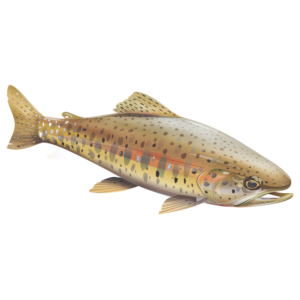
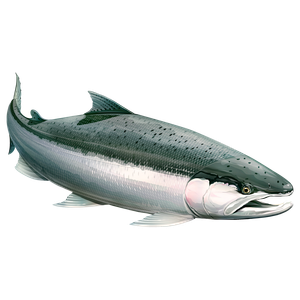
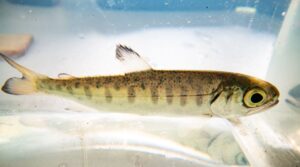
These endeavors are incredibly important for creating the high-quality habitat that is needed for federally-endangered steelhead to express their full life cycle from native rainbow trout in the headwaters then to smolts and then out to the ocean to reach maturity and become steelhead.
“And for Malibu Creek Watershed, many portions of this are held in public trust within State Parks land, so we know this habitat for steelhead will remain available to them in the future, which is important when we are considering watershed-level restoration,” says Marlow.

Rindge dam, and this is true for all dams, completely disrupts the natural processes for ecological systems. How a creek flows naturally through the system is important for maintaining proper habitat downstream.
Russell explains: “At CalTrout, we’ve seen the legacy of a connected watershed system and we want that for Malibu Creek. With a reconnected system, we can finally also restore the ecologic function that maintains all the downstream habitats for wildlife and downstream communities for everyone else. Everything downstream is driven by the headwaters upstream.”
Public communications and outreach surrounding the Rindge Dam removal project is important since this needs to be a community-supported and community-driven project. We were pleased to recently welcome in a new team member: Derek Berlin as CalTrout’s South Coast Public Engagement Specialist who will be serving the Rindge Dam project among others.
Future landscape and river restoration projects are impacted by the work that we’re doing today. CalTrout is optimistic about this future. “With collaborative, solution-focused decision-making, the modernization of technology, and application of the best-available science, CalTrout is able to properly balance the needs of people and communities and that of wildlife,” Marlow states.
The final scene for Malibu Creek Watershed will be when the stream naturally flows through the canyon where the dam previously stood.