Redwood Creek Watershed
A narrow, steep, undammed watershed flowing through Redwood National Park and Yurok Tribe ancestral territory to the Pacific — one of California’s rare, free-flowing streams.
Understanding the history
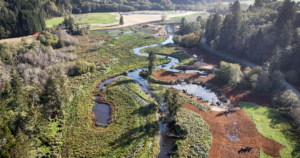
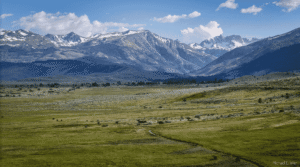
Redwood Creek flows 60 miles from the crest of the Coast Range through a narrow, steep, undammed watershed.
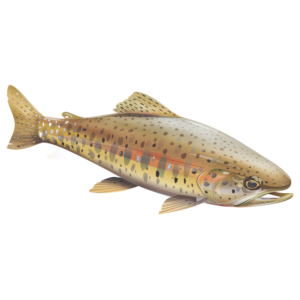
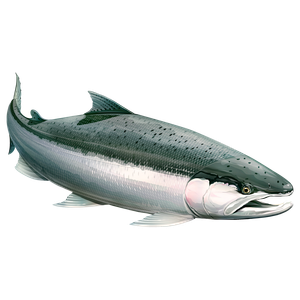
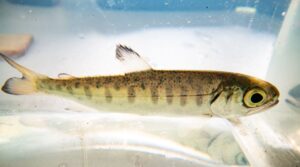
It originates in a mix of federal and private timber property before descending in the lower third through Redwood National Park and lastly through the town of Orick and the heart of Yurok Tribe ancestral territory in Humboldt County before it meets the Pacific Ocean. The 282-square-mile watershed is one of California’s rare, free-flowing streams and is critical habitat for populations of California Coast Chinook salmon, Southern Oregon/Northern California Coast coho salmon, Northern California steelhead, and coastal cutthroat trout.
Similar to the Eel River, Elk River and other North Coast watersheds, historically, there was significant logging of old growth redwoods that impacted Redwood Creek and its largest tributary, Prairie Creek. Redwood National Park was established in 1968 and expanded in 1978 with the unique Congressional mandate to “…conduct erosion and sedimentation studies in the Redwood Creek basin.” The studies documented as much as twenty-five feet of gravel and sand accumulating in the creek basin, causing major disruptions to salmon and steelhead habitat. The sediment accumulation pushed the creek to the margins of the valley bottom and more erosion continued.
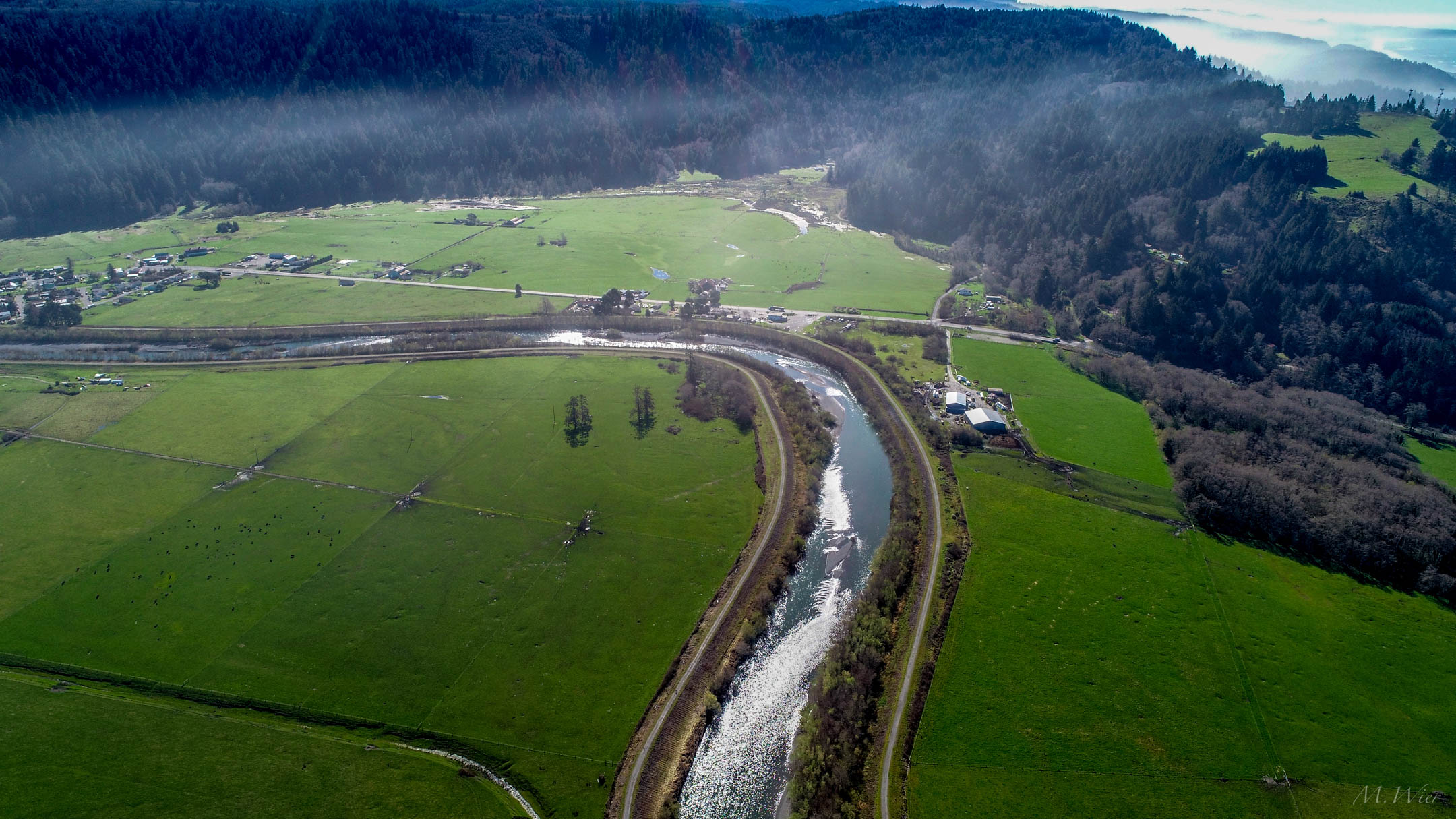
As early as 1977, Redwood National Park staff developed a watershed restoration program and has since removed over 255 miles of abandoned logging roads resulting in reduced erosion and sediment delivery. In addition to the National Park’s work, a coalition comprised of Redwood National and State Parks and with Save the Redwoods League developed in 2018 as an ambitious landscape-scale project to restore areas damaged by historical logging in the forests of Redwood National and State Parks.
REDWOOD CREEK, HUMBOLDT COUNTY
Redwood Creek by the numbers:
One of California’s rare, free-flowing streams — and a watershed still healing from a century of logging.
60 mi
From the crest of the Coast Range to the Pacific
282 mi²
One of California’s rare, free-flowing watersheds
255+ mi
Of abandoned logging roads removed since 1977
125 acres
Former mill site returned to Yurok Tribe stewardship
Part 1 | Prairie Creek
Restoring Redwood Creek’s Largest Tributary: Prairie Creek
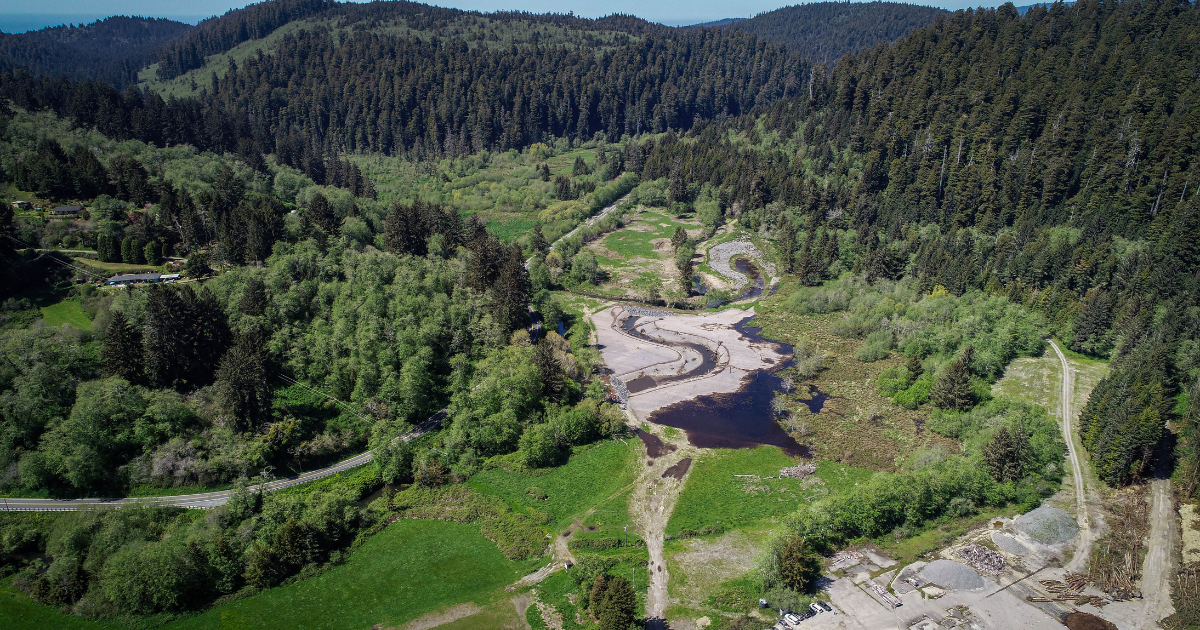
As the largest tributary to Redwood Creek, Prairie Creek’s importance is paramount — 98 percent of this sub-watershed is in public ownership — and its cold, pristine upper reaches remain some of the best salmon habitat left on the West Coast, alone supporting roughly 80 percent of the coho salmon spawning in the entire Redwood Creek watershed. One property of the remaining 2 percent that, until recently, was not under agency ownership was a lumber mill built in the late 1950s that had paved and graded 125 acres of historic floodplain. Highway 101 and Bald Hills Road constrained the creek’s flow under narrow bridges and legacy sediment from upstream logging had carved 6- to 10-foot banks that cut the creek off from the floodplain it once relied on to support young fish.
CalTrout began working to reverse that damage in 2014, partnering with Save the Redwoods League, the Yurok Tribe, NOAA Fisheries, and a wide coalition of state and federal agencies on the Prairie Creek Floodplain Restoration Project. Over more than a decade, the $33 million effort removed over 20 acres of asphalt and concrete, restored roughly a mile of creek channel and 50 acres of floodplain and upland habitat, carved new off-channel ponds and side channels for juvenile salmon and steelhead, and planted more than 420,000 native plants. Construction wrapped in November 2025 — and on August 1, 2026, the site reopened to the public as the ‘O Rew Redwoods Gateway, formally returning the 125-acre property to the Yurok Tribe for their stewardship of the site after generations. Since restoration completion, researchers have documented record coho salmon returns to the site — a hopeful finding for coho salmon populations that continue to face the threat of extinction.
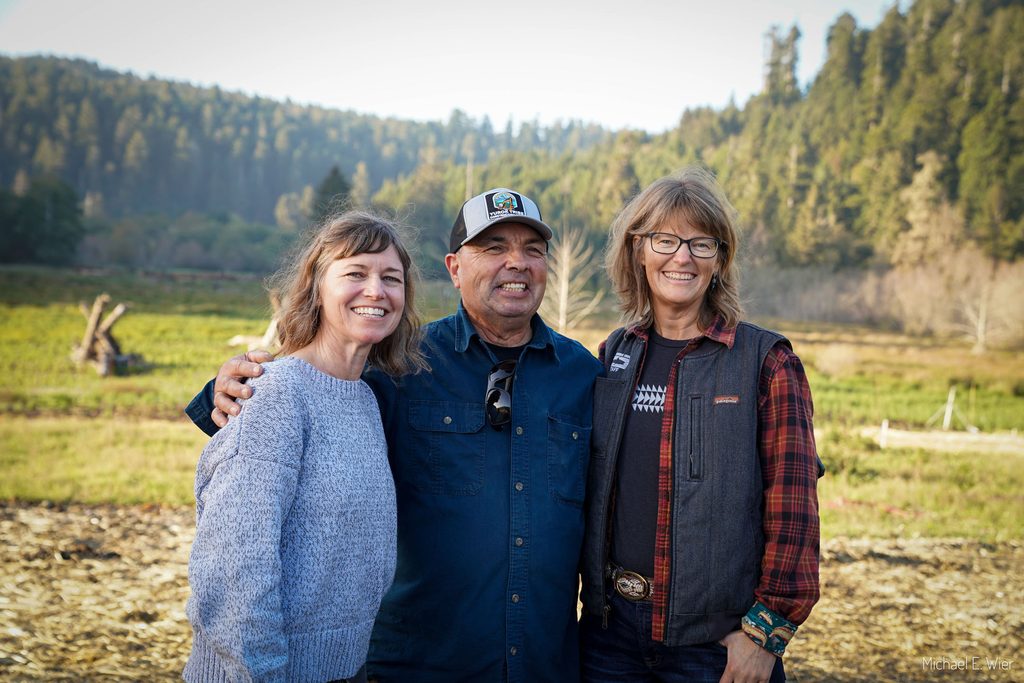
“Watching fish thrive in Prairie Creek at ‘O Rew is testament to what can happen when we invest in restoration and work together toward a shared goal. We’re proud of the incredible collaboration that powered this project and grateful to every partner who helped restore this landscape. By stewarding rivers and forests, we are restoring ecological function, and we are rebuilding our relationship with the land and water that sustain us.”
Mary Burke, California Trout North Coast Regional Manager
“This project has meant so much more than the ecological wins, which are already extraordinary. Watching this public investment move through the local community — providing job opportunities, exciting scientific discoveries, and a sense of trust in collective action — I’ll always carry it with me. We built something together, and now it can be experienced by everyone.”
Ashley Shannon, CalTrout North Coast Project Manager
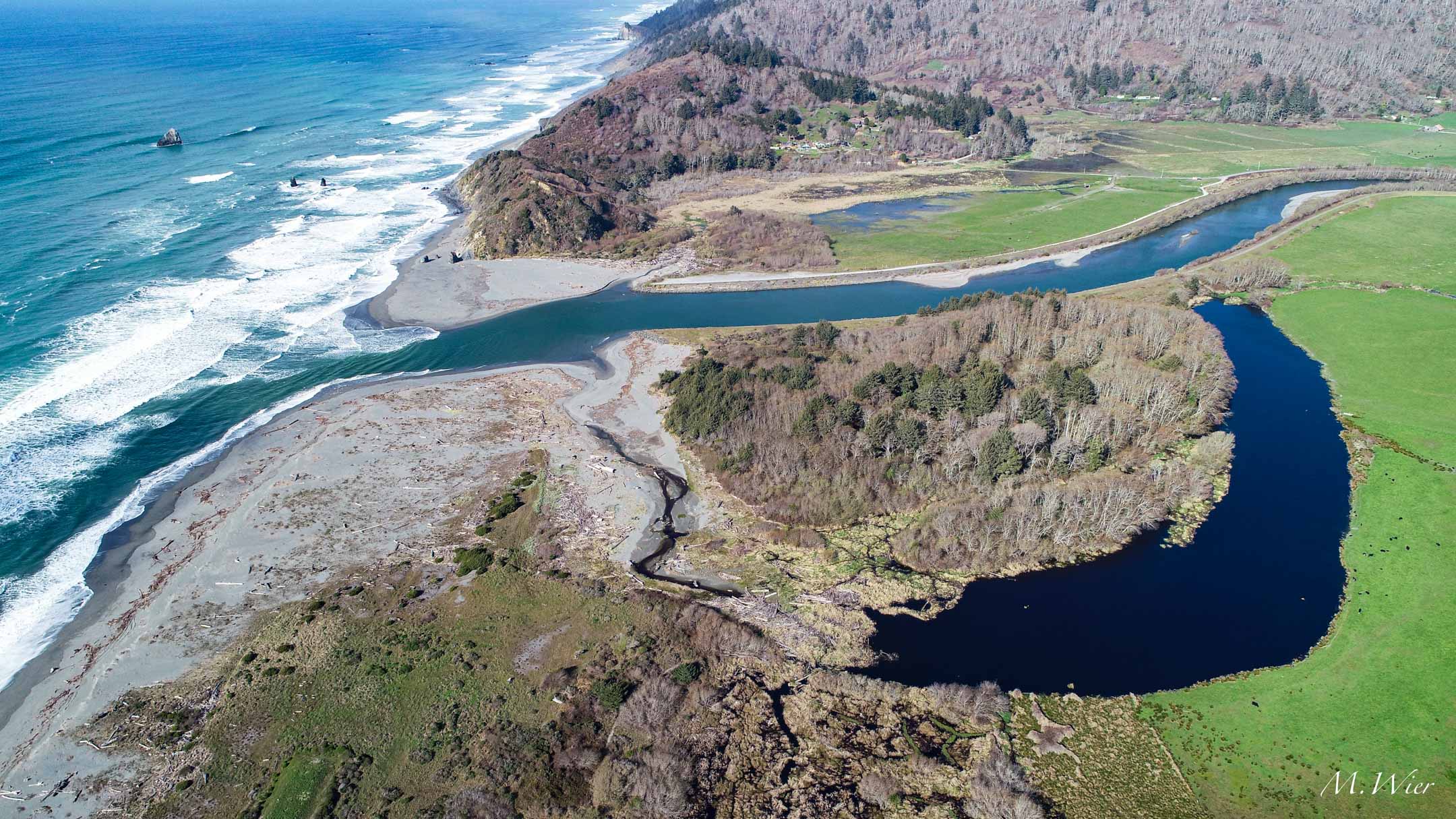
Restoring Prairie Creek is one of the most significant salmon recovery projects completed on California’s North Coast in years, but it’s only one piece of a watershed still working to heal. Near the mouth of Redwood Creek, decades-old flood control levees continue to cut off the estuary from critical floodplains and small tributaries. CalTrout and our partners are now developing plans to restore the natural processes that historic infrastructure disrupted.
WATCH the film
Prairie Creek Restoration
Part 2 | ‘O Rew Gateway
‘O Rew Comes Home: Returning Land to the Yurok Tribe
For generations, and long before it became a mill site, the land at the confluence of Prairie Creek and Redwood Creek was home to the Yurok people. Its return to the Tribe as the ‘O Rew Redwoods Gateway is about more than habitat — it’s about restoring a relationship between the Yurok Tribe and a place central to its history. The Gateway now includes accessible trails, storytelling exhibits, a pedestrian plaza, and a new segment of the California Coastal Trail connecting visitors to old-growth redwoods beyond.
The project also built lasting economic opportunity for the Yurok community: construction employed Yurok Tribe Construction Corporation crews and Yurok Tribe fisheries revegetation crews over five construction seasons. Recently, the Yurok Tribe established a new job training center in partnership with the National Park Service. As Yurok Tribe Chairman Joseph L. James put it, the project “advances ecological restoration while honoring Tribal stewardship and improving community well-being” — a model that inspires CalTrout’s future restoration work across the North Coast.
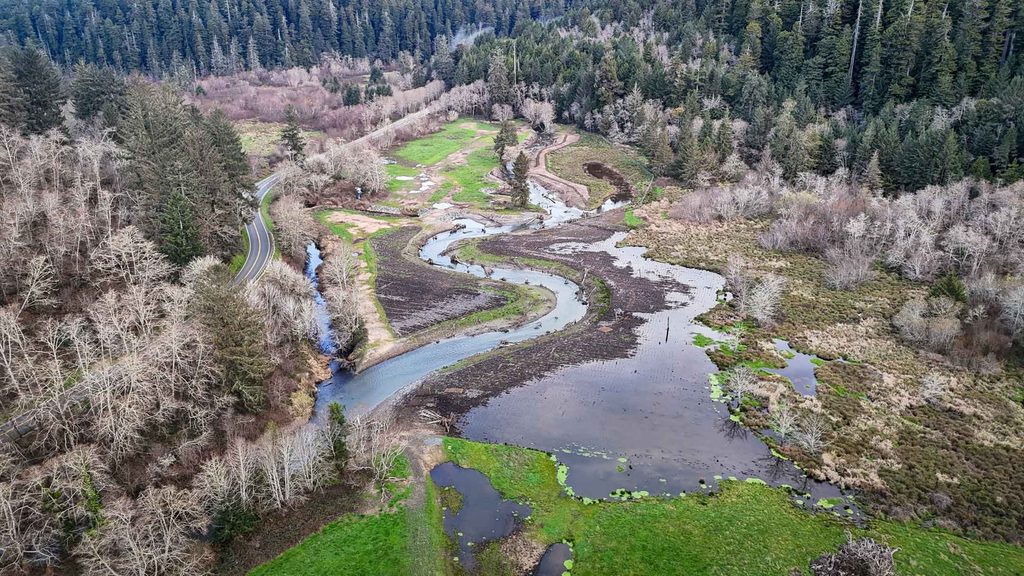
Before. The former lumber mill site — 125 acres of paved, graded historic floodplain.
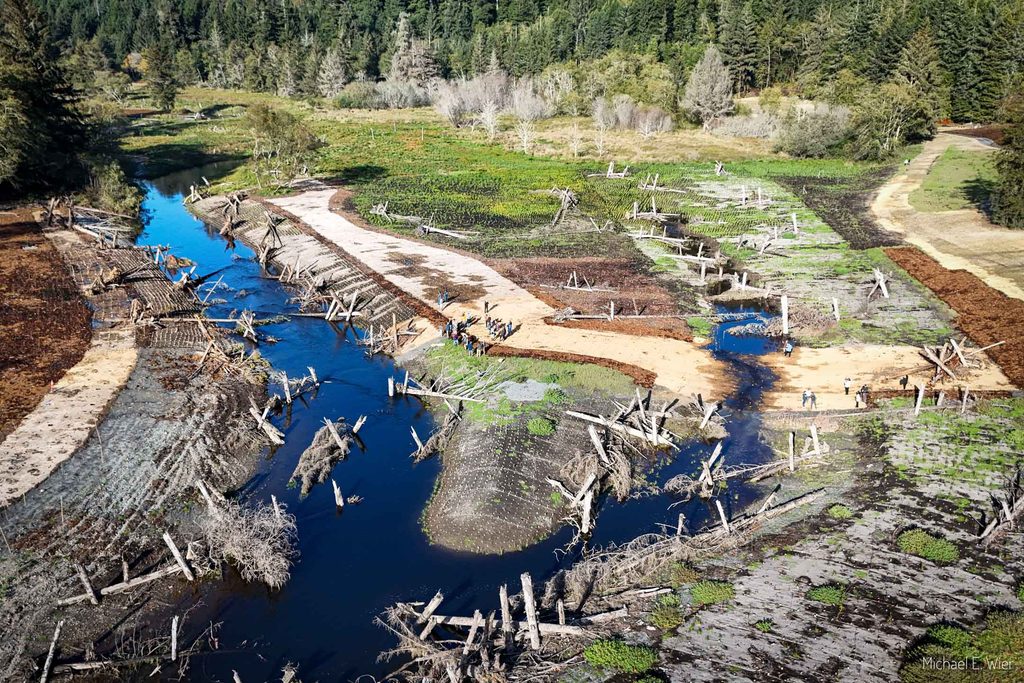
Restoration underway. Removing asphalt and concrete, carving new off-channel ponds and side channels.
‘O Rew Redwoods Gateway. Reopened to the public August 1, 2026, under Yurok Tribe stewardship.
Part 3 | Estuary
Restoring the Redwood Creek Estuary
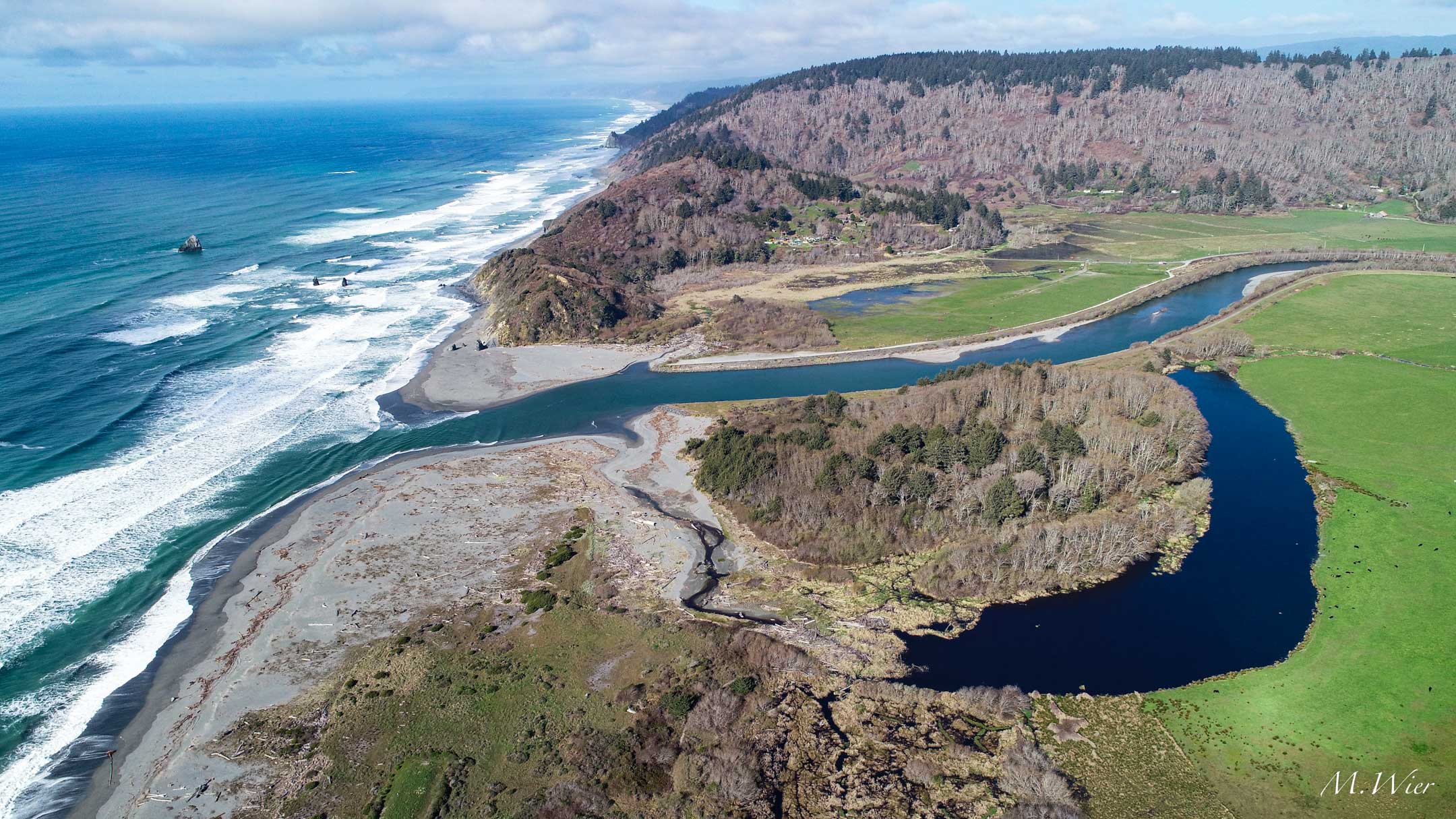
A few miles downstream from Prairie Creek, the lower Redwood Creek estuary tells a similar story of disruption — and an earlier stage of recovery. In 1968, the U.S. Army Corps of Engineers built levees and channelized the creek to protect the town of Orick from flooding. Those changes cut the estuary off from its floodplain and tributary connections. Today, roughly half of the lower estuary has filled in with ocean-derived sediment. The combined levee system and accumulated sediment block young salmon and steelhead from reaching the freshwater tributaries where they find the critical habitat to grow before heading out to sea.
CalTrout is working with the Yurok Tribe, the National Park Service, Humboldt County, U.S. Army Corps of Engineers, NOAA Fisheries, and local landowners to reestablish the estuary’s natural hydrology, sediment transport, and floodplain function — planning work that, once complete, will reconnect one of the North Coast’s most important salmon estuaries while continuing to support the agricultural land nearby.
The Redwood Creek watershed shows what patient, collaborative restoration can achieve — from a former mill site now returned to the Yurok Tribe and alive with young salmon, to an estuary still waiting for its turn. Together, these projects are rebuilding one of California’s last great salmon strongholds, from the redwoods to the sea.
CALTROUT IN ACTION
Stories from the Redwood Creek watershed.
-

Funding for Prairie Creek Restoration Ramps Up
Read more →: Funding for Prairie Creek Restoration Ramps Up -
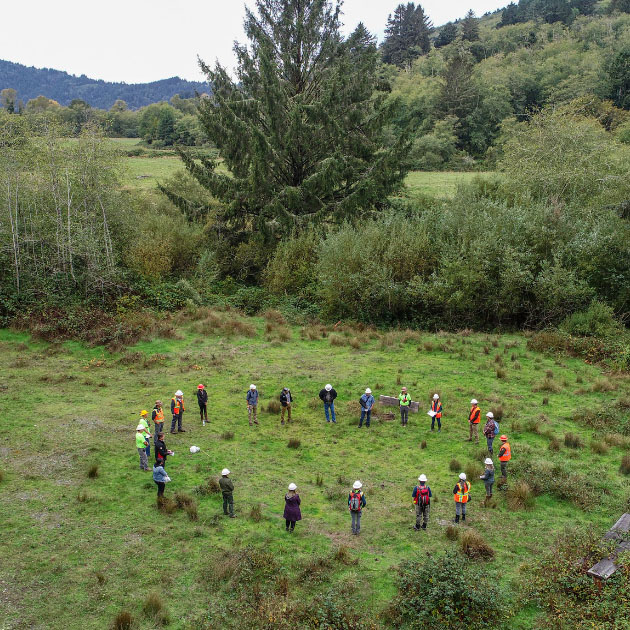
Prairie Creek Project Site Land Will be Returned to Yurok Tribe in Historic Agreement
Read more →: Prairie Creek Project Site Land Will be Returned to Yurok Tribe in Historic Agreement -
Major Funding Milestone Reached for Prairie Creek Restoration
Read more →: Major Funding Milestone Reached for Prairie Creek Restoration
Support caltrout
Support projects like Redwood Creek
There’s more work ahead to finish reconnecting Redwood Creek, from restoring the estuary and private lands in the watershed to monitoring how salmon and steelhead respond to newly restored habitat. Your support helps CalTrout carry this work forward — funding the science, restoration, and partnerships needed to keep this rare, free-flowing river healthy for generations to come.