Decisions,
grounded in data.
60 active projects across California. Every one of them rooted in data — not guesswork.
Why this matters now
You can’t protect what you don’t measure.
California’s freshwater ecosystems face growing pressures from climate change, prolonged drought, habitat loss, and increasing demands on water resources. At the same time, shifting national environmental priorities make it even more important to stay grounded in credible, independent science.
Our commitment is clear: use the best available science to protect and restore California’s freshwater ecosystems. Restoration without science isn’t restoration — it’s guesswork.
32
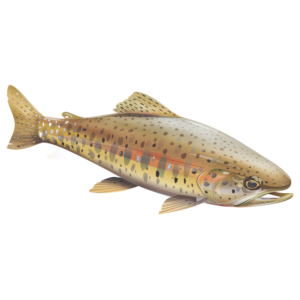
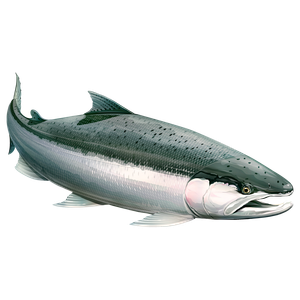
Native salmon, steelhead & trout species, sub-species, and ecotypes assessed in State of the Salmonids (SOS)
2
Once-a-decade SOS reports published
50+
Peer-reviewed scientific publications
20+
Coalition partners on the Klamath River Salmon & Steelhead Monitoring Program
Dedicated Science Program
A program built for the next decade of California water.
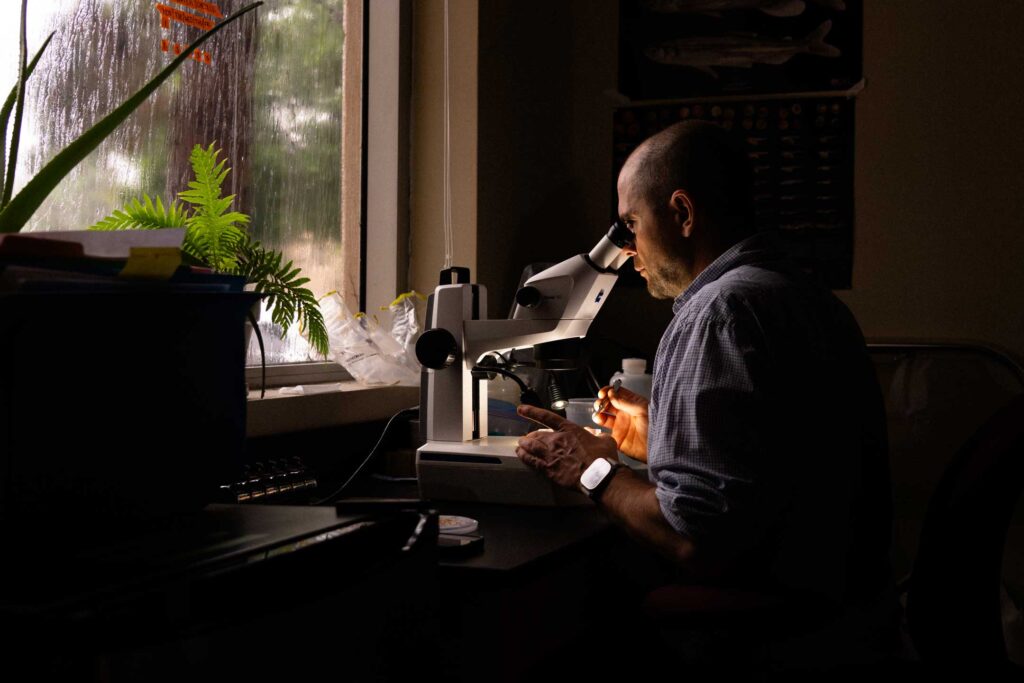
In 2025, CalTrout launched a dedicated Science Program. The initiative builds our conservation, restoration, and policy work on a strong scientific foundation — a commitment that fortifies our mission to revitalize waters for resilient wild fish and a better California.
CalTrout already has a strong foundation of scientific monitoring and science-informed restoration in place across the state. The Science Program dedicates further resources to enhance every project in the portfolio.
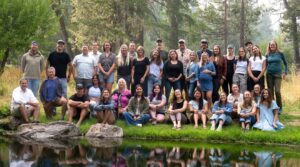
Meet the Science Program team
-
Darren Mierau
-
Patrick Samuel
-

Emily Chen
SOS · A ONCE-A-DECADE REPORT
The only statewide assessment
of California’s native salmon,
steelhead, and trout.
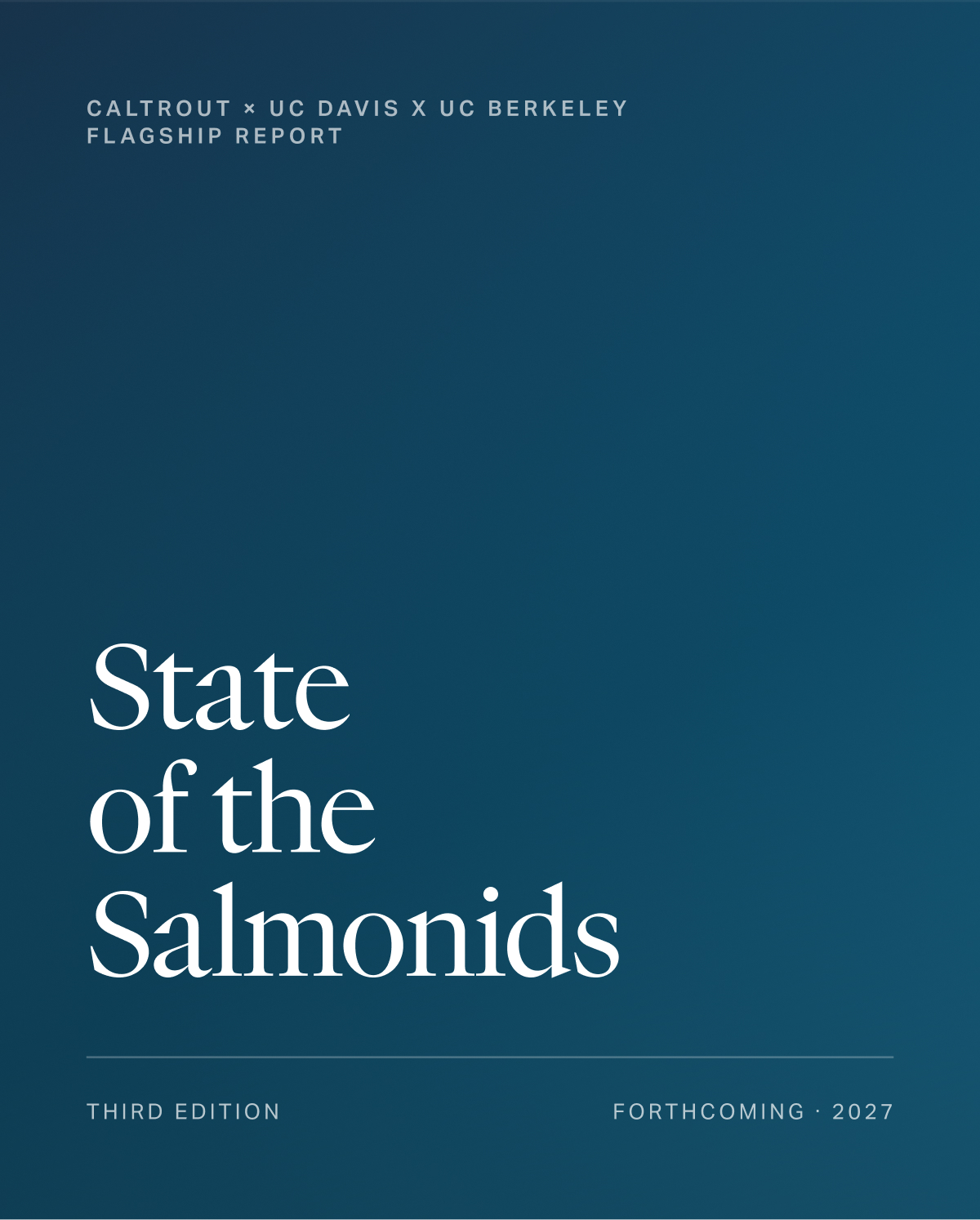
CalTrout, in collaboration with academic partners, has produced two decadal State of the Salmonids reports — comprehensive scientific assessments of all 32 native salmon, steelhead, and trout species in California.
These reports are the only analyses of their kind. Their message is clear: without action, California risks losing its wild fish.
In 2027, CalTrout will release SOS III, building on assessments from 2008 and 2017 to track trends over time using a proven, peer-informed methodology trusted by agencies and academic institutions.
32
Species Assessed
45%
Of California salmonids likely to be extinct in next 50 years if current trends persist
160
Citations by academics, legislators, policymakers, foundations, and nonprofits
from our team
“The State of the Salmonids has become the gold standard for understanding the condition of California’s native salmon, steelhead, and trout. At a moment when our rivers are changing faster than ever, SOS III will give decision makers, communities, and partners the clear-eyed science they need to focus resources where they can still make the biggest difference.”
Curtis Knight/Executive Director of California Trout
from our team
“SOS III is about turning data into direction. By compiling the most current science and applying a transparent, repeatable methodology, we can track long-term trends, identify where species are most vulnerable, and highlight where our conservation work can turn the trajectory toward species recovery.”
Darren Mierau/Director of Science
Publications • Leading the way with science
We don’t walk away
after the ribbon cutting.
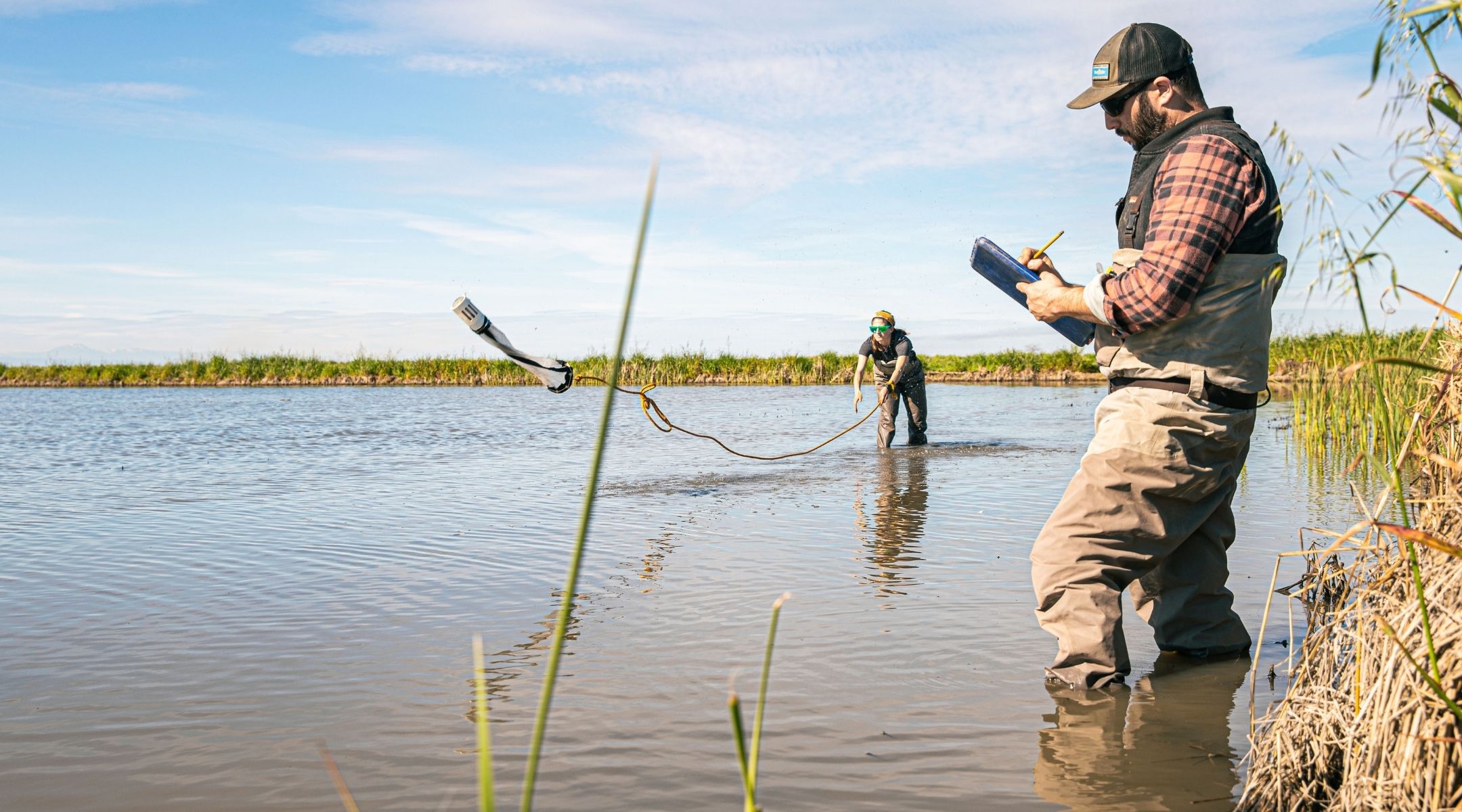
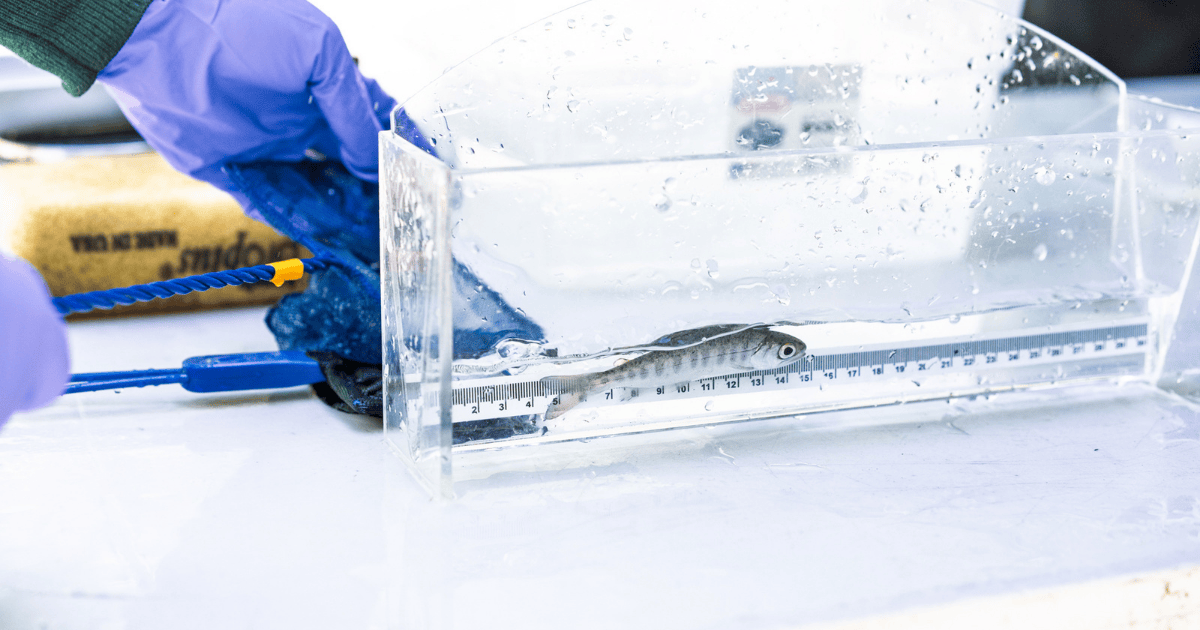
As we implement restoration projects across the state, our work does not end once on-the-ground restoration work wraps up. We study them to see how restoration actions perform and how rivers and fish respond.
When our findings are novel, we pursue publication to share our key takeaways with the broader scientific community.
25
publications in progress or planned through the end of 2027 — CalTrout as lead-author or co-author
Peer-reviewed
Case study · Klamath River Monitoring Program
One of the most comprehensive salmon monitoring programs in the West.
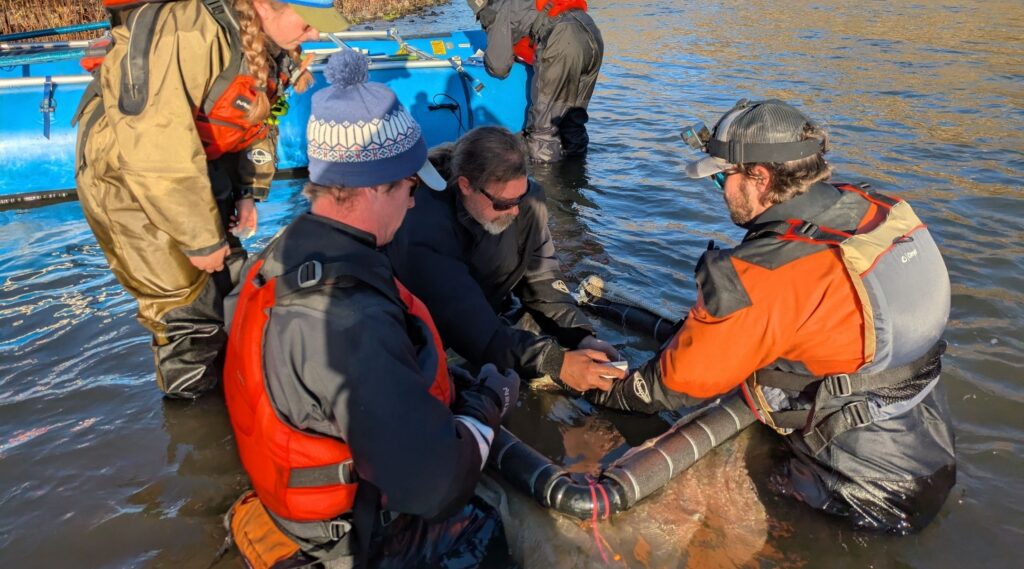
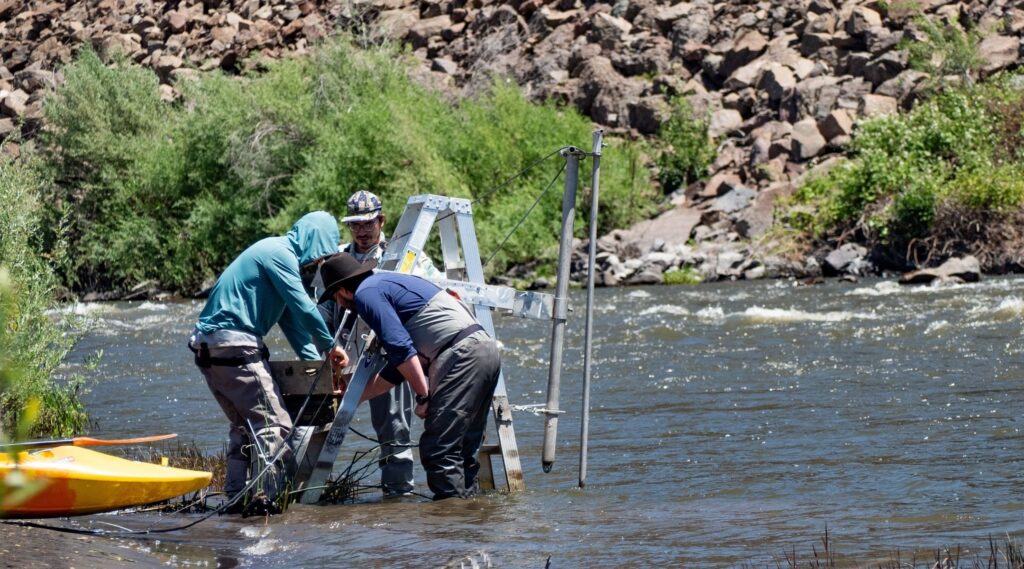
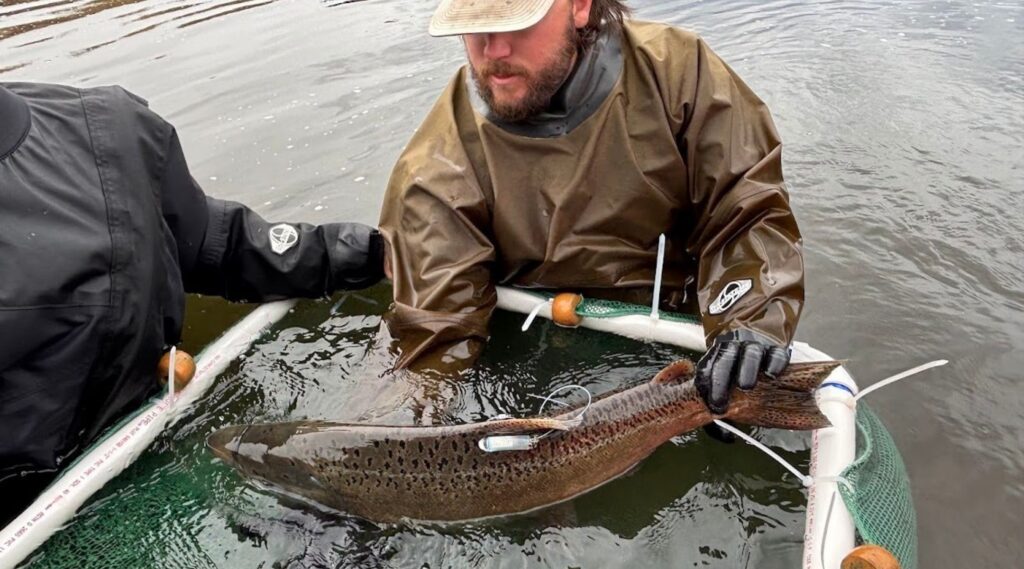
As the Klamath River dams came out, a gap in the plan emerged: to understand whether a project of this scale was actually working, someone needed to study and monitor the river and the fish’s response. That’s where CalTrout came in — bringing together a large team of partners to quickly secure funding and build a plan to track the salmon as they returned home.
20+Coalition partners
13,310Salmon tracked and counted above former Iron Gate Dam, one year after removal
2xFaster fish counting time with application of AI model developed by iNaturalist founder and academic team
The Problem
The Klamath dam removals reopened hundreds of miles of habitat — but how do fish actually repopulate it? How do they recover from landscape-level restoration? Where should the next restoration dollars go?
CalTrout’s Role
With CalTrout at the helm, a coalition of over 20 partners — including the Karuk Tribe, Yurok Tribe, The Klamath Tribes, ODFW, CDFW, university researchers, and nonprofits — runs sonar imaging, netting, radio telemetry, and spawner surveys in concert. A partnership with the Fisheye Project (Caltech, MIT, UMass Amherst) deploys AI to dramatically improve the speed and accuracy of salmon counts at the sonar stations.
The Result
The Klamath Monitoring Program is now the foundation for understanding how fish respond to the largest dam removal in U.S. history, and a template for monitoring future restoration across the West. And the results from the Klamath salmon have surpassed even the wildest of expectations, with over 13,000 salmon tracked returning just over a year after dam removal, reoccupying 88% of their documented historical range above the former dams.
Our science in action
No single tool fits every river.
Different watersheds, different species, different questions. We pick the method that gets the cleanest answer for the place. Explore our portfolio of scientific work across the state.
-
Klamath River Salmon & Steelhead Monitoring Program
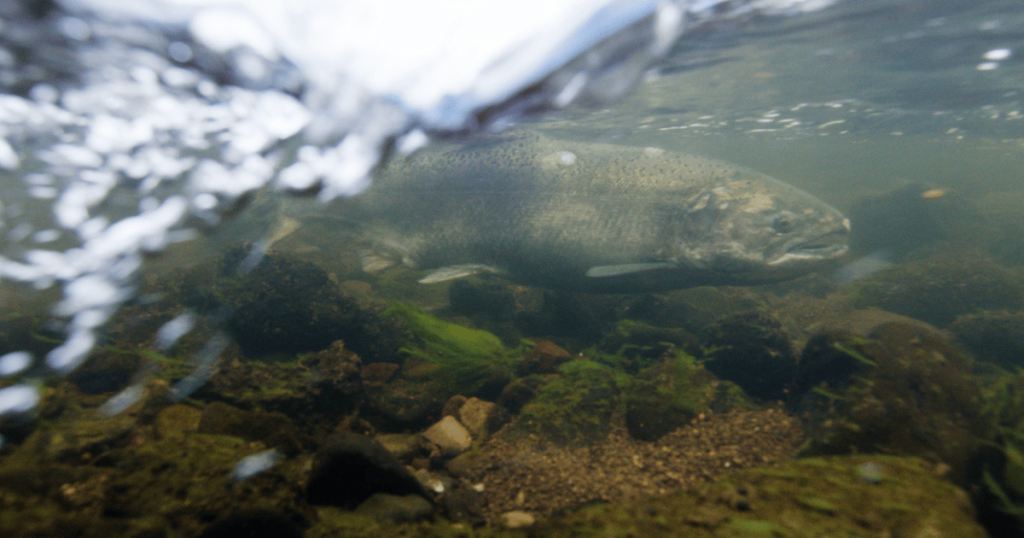
Read more →: Klamath River Salmon & Steelhead Monitoring ProgramMonitoring how salmon and steelhead are reclaiming 400 miles of habitat reopened by the world’s largest dam removal…
-
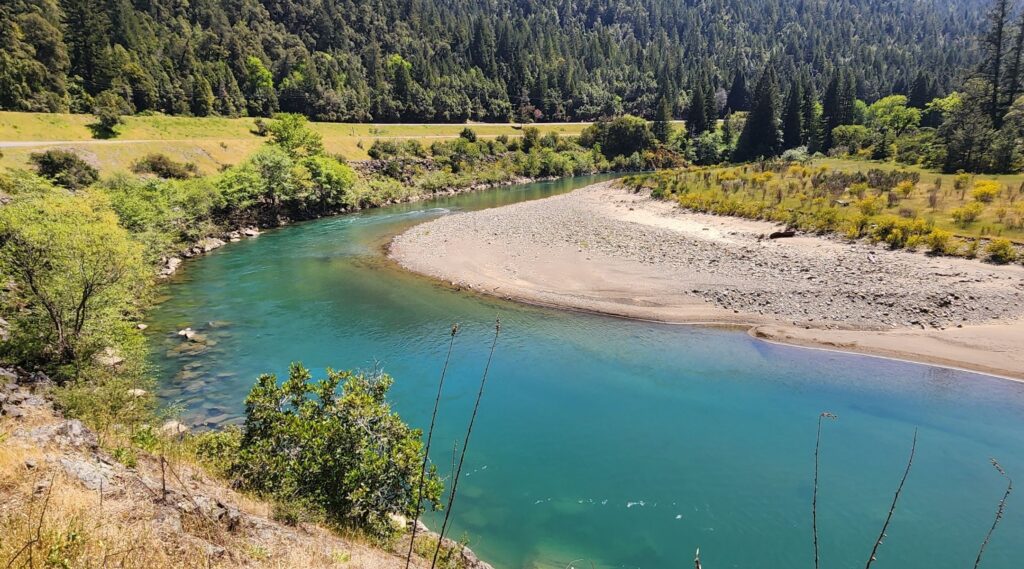
South Fork Eel River Science & Monitoring Program
Read more →: South Fork Eel River Science & Monitoring ProgramMonitoring juvenile salmon and steelhead on the South Fork Eel River to understand what’s working, and studying an…
-
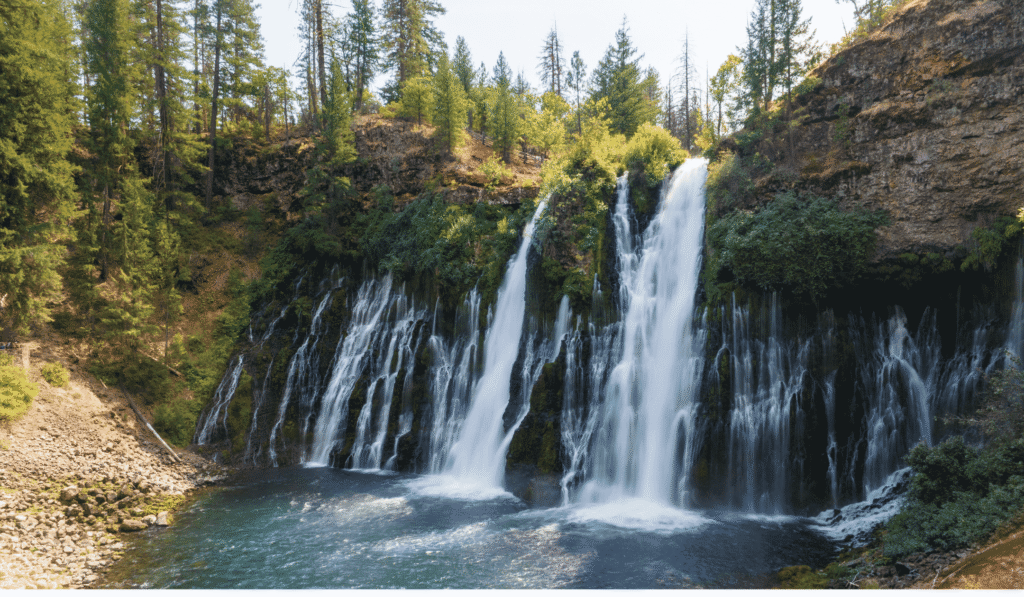
Upper Sacramento Basin Source Waters Science Study
Read more →: Upper Sacramento Basin Source Waters Science StudyBuilding the science needed to understand and protect the cold spring waters that sustain the Upper Sacramento Basin’s…
-
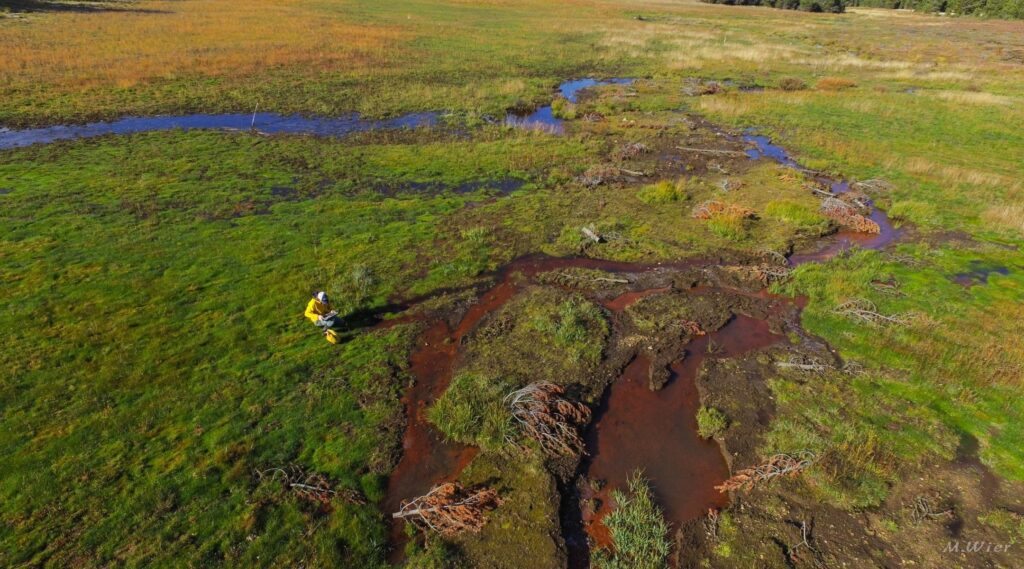
Sierra Meadow Wetland Riparian Area Monitoring Plan
Read more →: Sierra Meadow Wetland Riparian Area Monitoring PlanA standardized monitoring program tracking meadow health before and after restoration across the Sierra Nevada headwaters that supply…
-
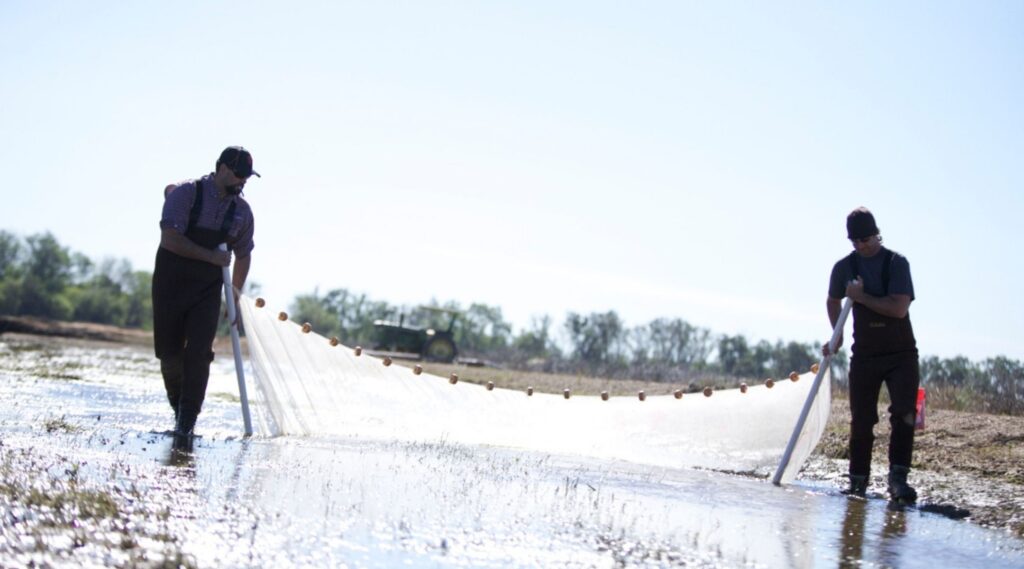
Nigiri Project
Read more →: Nigiri ProjectTesting whether winter-flooded rice fields can recreate the floodplain nurseries that once helped Central Valley salmon grow fast…
-
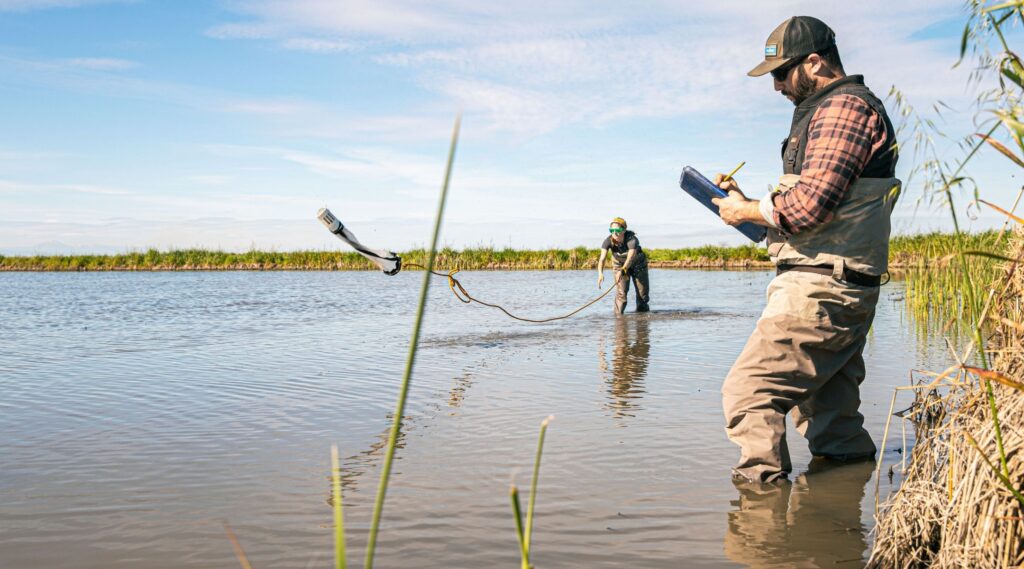
Fish Food on Floodplain Farm Fields
Read more →: Fish Food on Floodplain Farm FieldsFlooding winter rice fields in the Sacramento Valley to grow food for salmon, then releasing it into the…
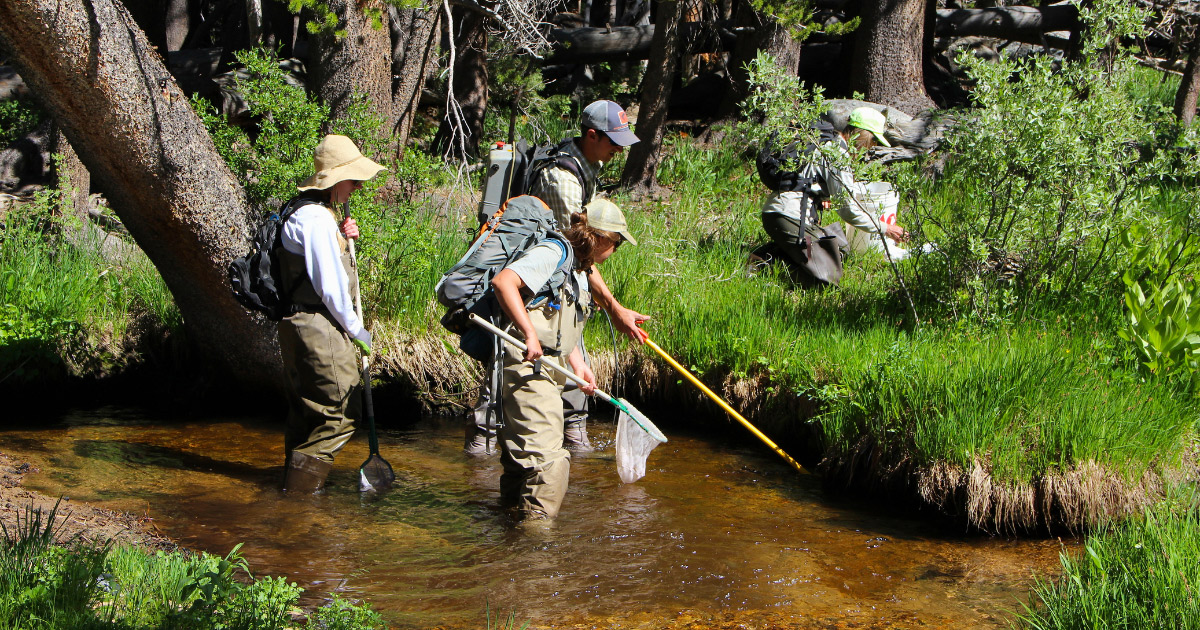
Support Science
Science-backed restoration is crucial — yet the science is often underfunded.
Private donations help us lay the groundwork for data collection in watersheds where knowledge gaps exist. They help us leverage larger public investments. And they help keep CalTrout’s science independent of the political winds.