

Endangered and threatened species need our help.
Recently the Trump administration unveiled a proposal that would strip the Endangered Species Act of key provisions which will weaken a law enacted 45 years ago to keep plant and animal species in decline from going extinct. The proposal would end the practice of extending similar protections to species regardless of whether they are listed as endangered or threatened.
1. The rollbacks will allow officials to devalue science and consider economic impacts when determining how wildlife should be protected.
The ESA requires listing decisions to be made “solely on the basis of the best scientific and commercial data available” and “without reference to possible economic or other impacts of such determination.” The new proposal would eliminate the latter phrase. Referencing costs and other impacts “could undermine best available science” if it causes federal officials to think twice about protecting a species. Rollbacks also remove scientific and wildlife agency consultations before approving permits for ventures such as oil and gas drilling and logging.
2. A mass killing of species in the event of an anthropogenic catastrophic event would no longer be punished or held accountable.
Catastrophic events, such as the Deepwater Horizon oil spill that destroyed or injured up to a million birds, would no longer be punished or held accountable under weakened regulations.
3. Currently listed species will remain, but rollbacks will make it easier for officials to delist species and harder to list new species faced with the consequences of a changing climate.
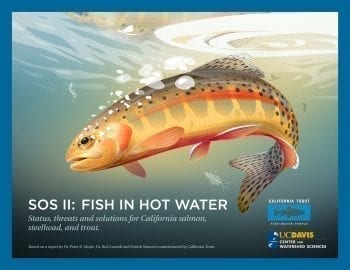
Climate change is the single, overarching factor affecting California’s salmon, steelhead and trout ranking as a critical or high threat to 84% of the species (SOS II). The ESA defines a threatened species as one “that is likely to become an endangered species within the foreseeable future throughout all or a significant portion of its range.” Rather than specifying a certain number of years, the new proposal states that agencies “will describe the foreseeable future on a case-by-case basis.” The lack of a clear definition and ambiguous language does not leave room for potential impacts induced by climate change.
TAKE ACTION
2 things you can do to STOP this.
Submit your comments about the ESA proposal to the government before the comment period ends on September 24, 2018. Use the sample below or write your own.
As a Californian who values the vitality of native fish species and healthy waters, I do NOT support the revisions of regulations for prohibitions to threatened wildlife. There are 11 native salmonids that are listed as federally threatened. If present trends continue, 45% of California’s native salmon, steelhead, and trout are likely to be extinct in 50 years and 74% in 100 years. We cannot let things get worse. I urge you to keep our Endangered Species Act strong and protect our currently endangered and threatened species – as originally intended – and protect those who may face the consequences of climate change in the future.
As a Californian who values the vitality of native fish species and healthy waters, I do NOT support the revisions of regulations for prohibitions to threatened wildlife.
There are 11 native salmonids that are listed as federally threatened. If present trends continue, 45% of California’s native salmon, steelhead, and trout are likely to be extinct in 50 years and 74% in 100 years. We cannot let things get worse.
I urge you to keep our Endangered Species Act strong and protect our currently endangered and threatened species – as originally intended – and protect those who may face the consequences of climate change in the future.
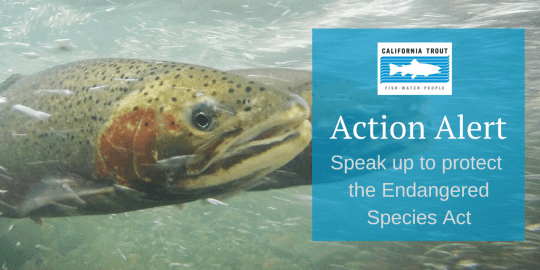
Let your Senators and Representative know you oppose this plan. Endangered and threatened species need our help.
More information:
Save Our Salmonids II: Fish in Hot Water
“Endangered Species Act stripped of key provisions in Trump Administration proposal,” The Washington Post
“ENDANGERED SPECIES: 4 things to know about Trump’s ESA overhaul,” E&E news