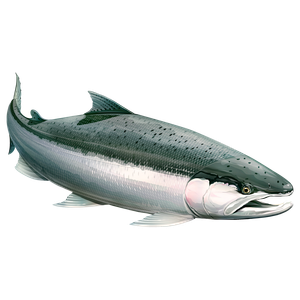
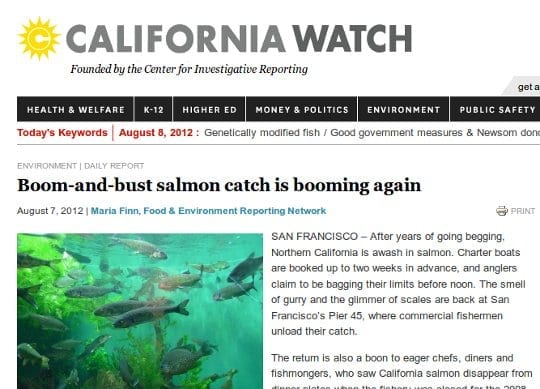
In a year which will see the highest salmon returns to some of California rivers since 1978, some are pronouncing California’s salmon woes cured.
Yet the boom and bust cycles typifying California’s salmon runs in recent years (record low returns followed by record highs) suggest things are far from wonderful. In fact, in this California Watch article, scientists like Peter Moyle of UC Davis point a finger at California’s hatchery system as a driver of the boom and bust cycle:
A certain amount of fluctuation in the annual salmon yield is natural, but some scientists think that the collapse in ’08 and ’09 was part of a more dramatic, and unpredictable, boom-and-bust cycle — and that the fishery could be in for more of the same. The problem, they say, stems from the fact so much of the catch – a full 90 percent — originates in state hatcheries.
A certain amount of fluctuation in the annual salmon yield is natural, but some scientists think that the collapse in ’08 and ’09 was part of a more dramatic, and unpredictable, boom-and-bust cycle — and that the fishery could be in for more of the same. The problem, they say, stems from the fact so much of the catch – a full 90 percent — originates in state hatcheries.
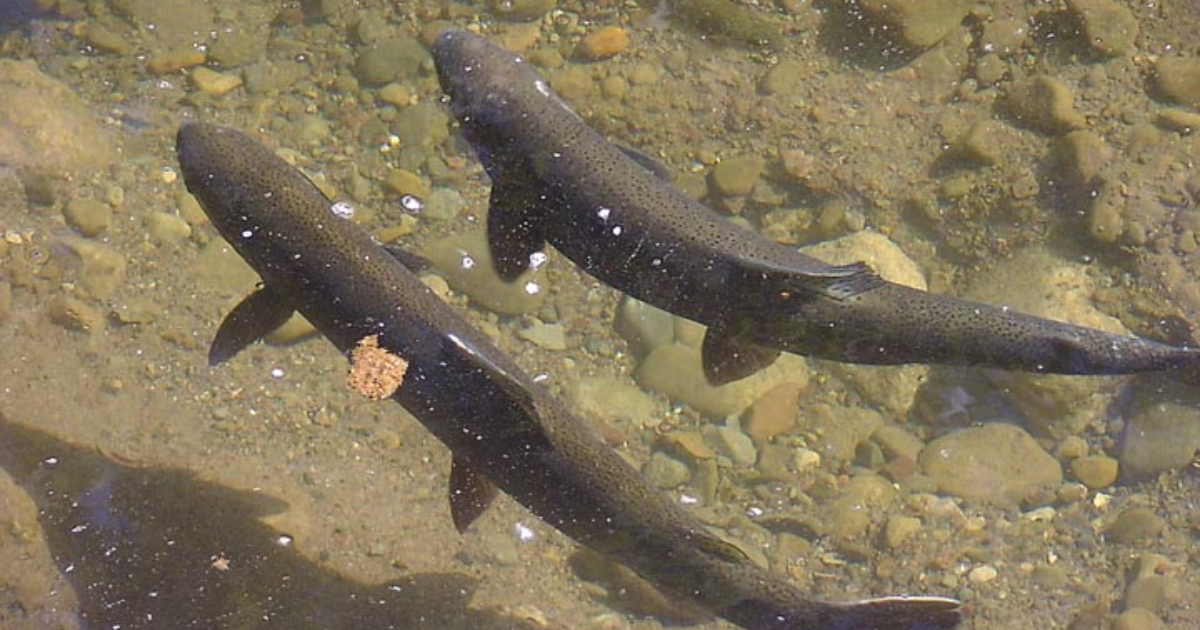
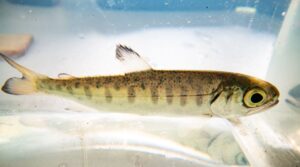
It turns out natural selection has its way with fish even in unnatural settings; hatchery fish are protected from predators and fed on a regular basis, so when released they enjoy a size advantage over wild fish.
They displace (and suppress) wild fish, yet they’re ultimately less suited for life in the wild.

Other field studies have shown that hatchery steelhead trout can dramatically reduce fertility of “wild” fish in as little as one generation.
Eliminating hatchery fish isn’t a viable solution — at least as long as spawning habitat remains locked away behind dams:
Peter Moyle, a fish expert at UC Davis, has been sounding the alarm about California salmon for some time, and he points out that hatcheries are only part of the problem. “Fixing this for a healthier fishery requires a two-pronged approach,” he said. Moyle wants to relocate the hatcheries, or at least release the hatchery fish down river, so they don’t compete with river-spawning salmon. He also thinks the state needs to restore the rivers and estuaries so the wild fish can thrive. The best possible scenario for salmon, environmentalists say, would be to remove major dams in California that block the salmon migration. “There are some dams that have outlasted their usefulness,” said Curtis Knight, Mt. Shasta regional manager of the environmental group California Trout. He points to dams on the Klamath River, four of which are scheduled to be removed in 2020 in California and Oregon if current plans get the green light. These dams don’t generate much hydroelectric power, irrigate many farms or help with flood control, he said. But they block more than 300 miles of salmon habitat. Independent scientific reviews show that the adult salmon population in the Klamath basin would rise by 80 percent once the dams are removed.
Peter Moyle, a fish expert at UC Davis, has been sounding the alarm about California salmon for some time, and he points out that hatcheries are only part of the problem.
“Fixing this for a healthier fishery requires a two-pronged approach,” he said.
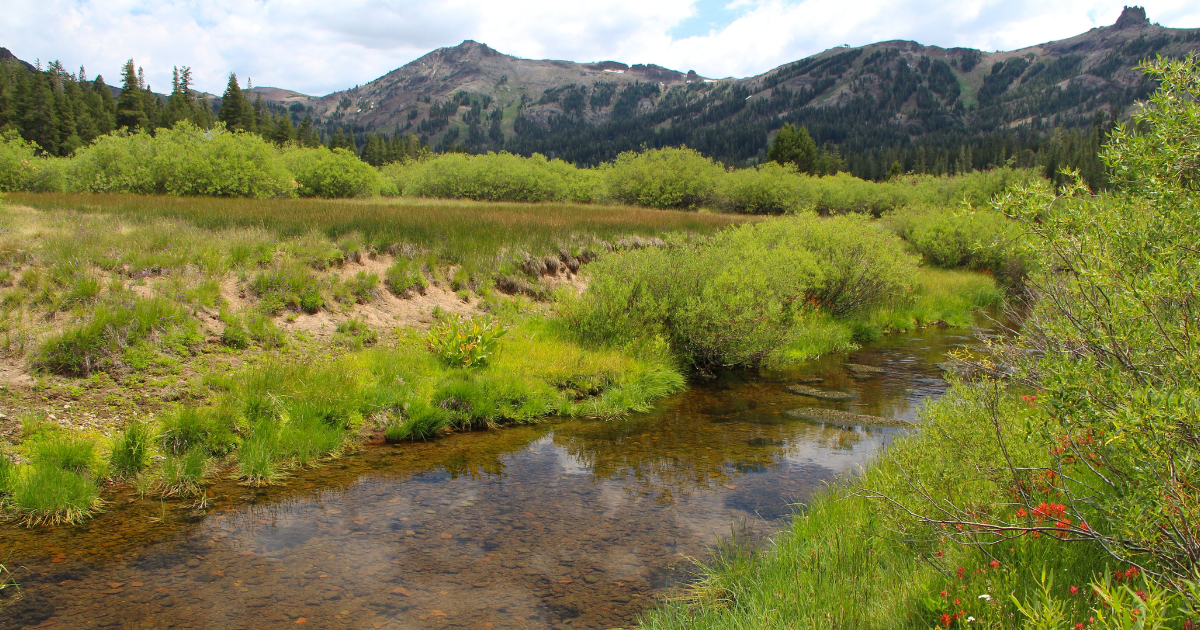
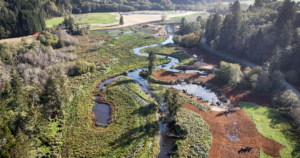
Moyle wants to relocate the hatcheries, or at least release the hatchery fish down river, so they don’t compete with river-spawning salmon. He also thinks the state needs to restore the rivers and estuaries so the wild fish can thrive.
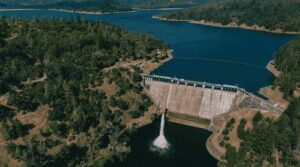
The best possible scenario for salmon, environmentalists say, would be to remove major dams in California that block the salmon migration.
“There are some dams that have outlasted their usefulness,” said Curtis Knight, Mt. Shasta regional manager of the environmental group California Trout.
He points to dams on the Klamath River, four of which are scheduled to be removed in 2020 in California and Oregon if current plans get the green light. These dams don’t generate much hydroelectric power, irrigate many farms or help with flood control, he said. But they block more than 300 miles of salmon habitat. Independent scientific reviews show that the adult salmon population in the Klamath basin would rise by 80 percent once the dams are removed.
In other words, until California solves its hatchery and dam issues, we can expect continued boom and bust cycles.