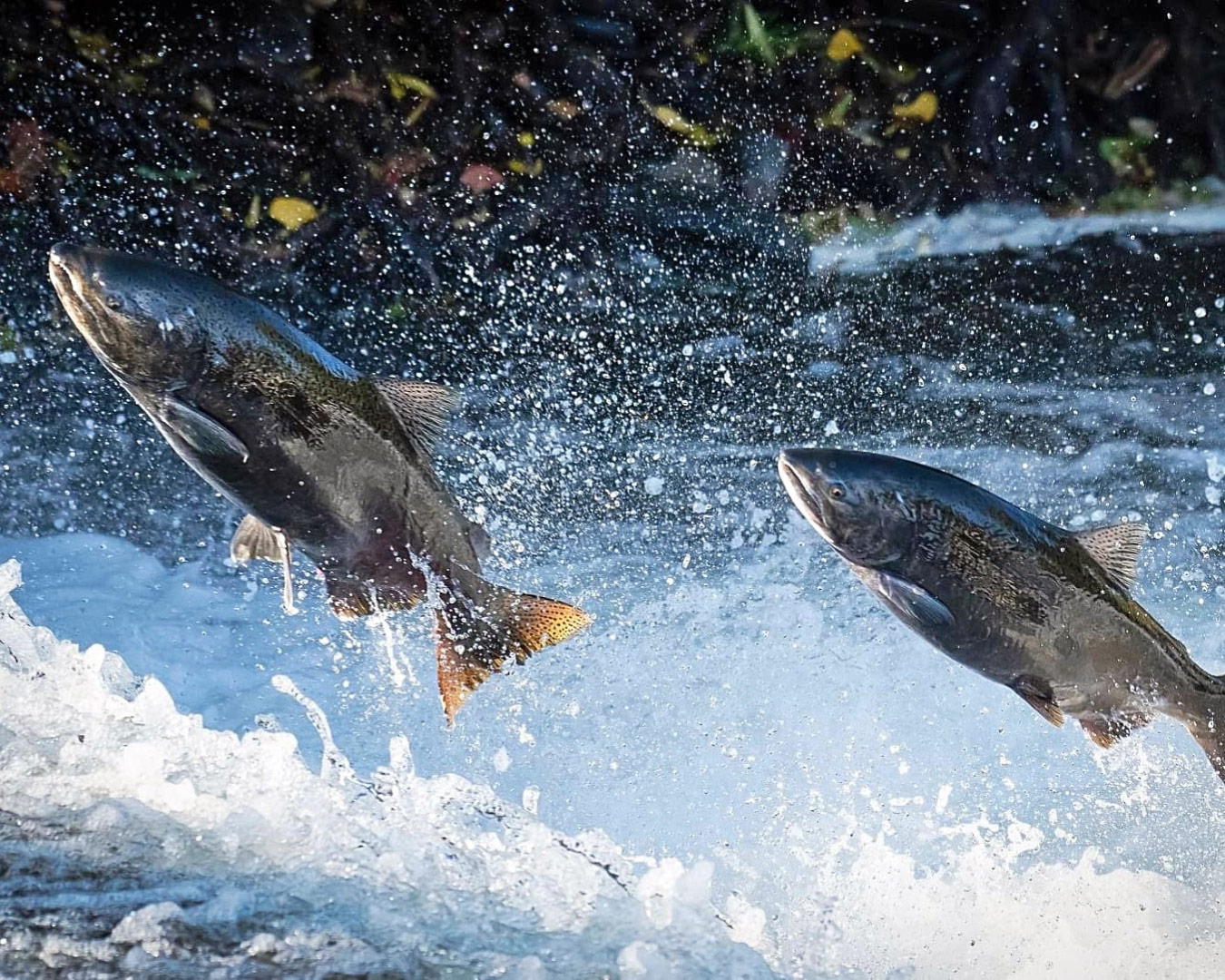
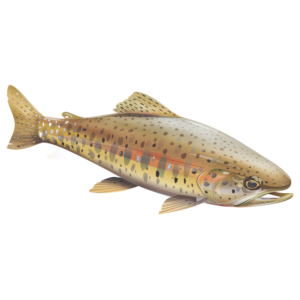
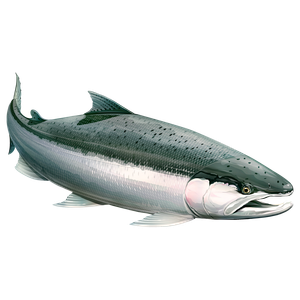
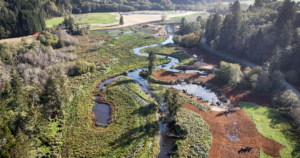
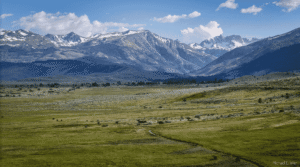
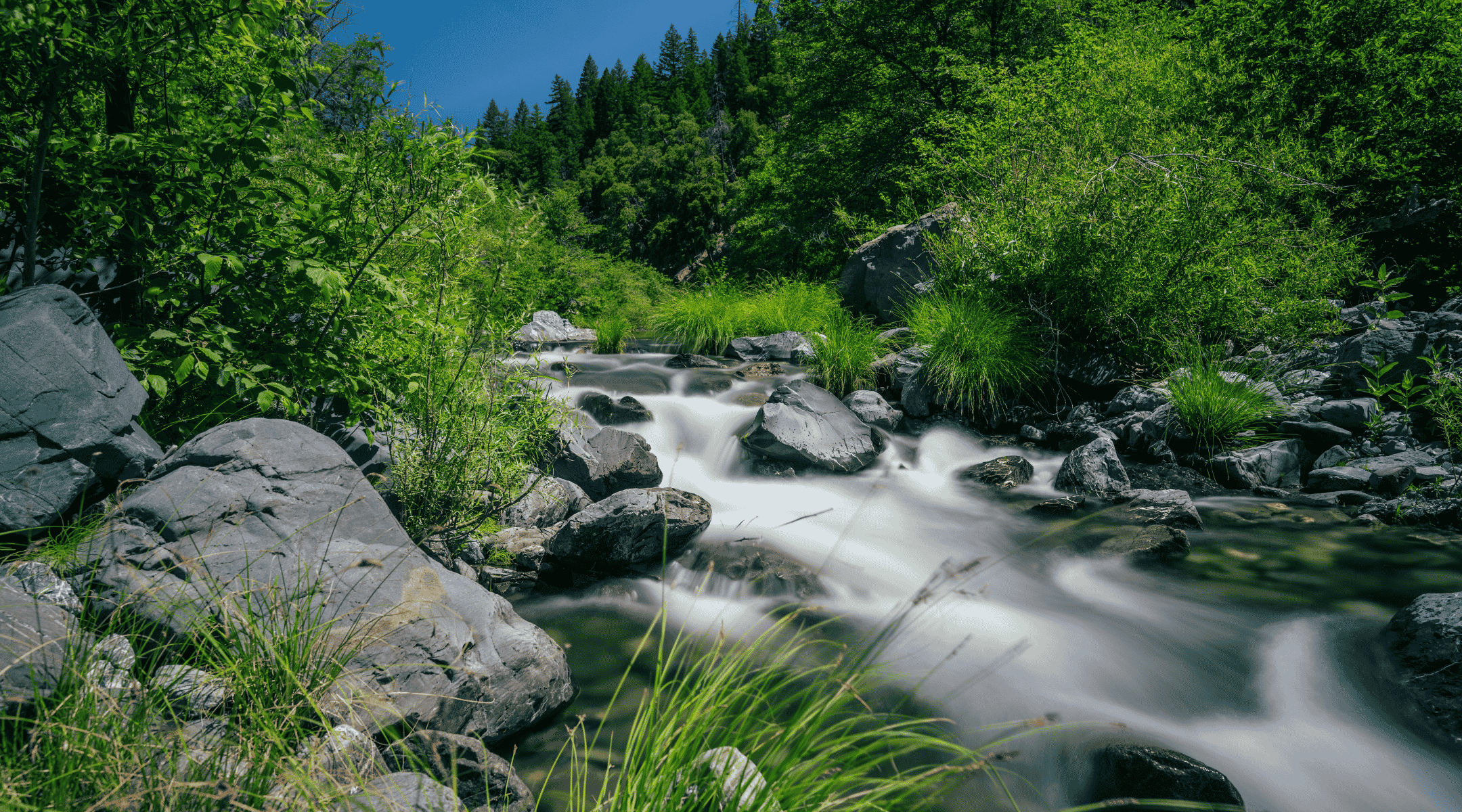
Spanning five northern counties and 3,684 square miles, the Eel River historically supported the third-largest runs of salmon and steelhead in California. Research from UC Davis estimated that combined runs of Chinook salmon, coho salmon, and steelhead likely totaled more than a million adult fish annually in good years. The Eel River holds tremendous potential for salmon recovery and, after this year, the Eel River is one step closer to becoming the longest free flowing river in California.
Over a century ago, Scott and Cape Horn dams, were constructed on the Eel River – blocking off the river’s headwaters and causing cascading effects on the ecosystem’s health, the fish swimming within its waters, and the people living nearby. Elsewhere in the watershed, the impacts of historic overharvest, intensive logging and illicit cannabis further degraded habitat.
This year was a turning point for California’s third-largest watershed. After decades of advocacy and planning, the Eel River, is poised to follow the Klamath River’s lead in dam removals. CalTrout and partners are also implementing dozens of restoration projects, leading impactful scientific studies, and are planning efforts to help recover fish abundance, restore watershed health, and improve the economy and safety of surrounding communities.
A Watershed Moment…Literally
In July, PG&E officially submitted its License Surrender Application and Decommissioning Plan for the Potter Valley Hydroelectric Project to the Federal Energy Regulatory Commission (FERC). This filing launched the formal process to remove Scott and Cape Horn dams, a critical step that will reconnect hundreds of miles of spawning and rearing habitat for Chinook salmon and steelhead, while also including provisions for a modern, reliable water supply for Russian River farms and communities.
Thank you to everyone who participated in the FERC open comment period. Every one of us is part of watershed restoration and this period was vital for driving this project forward.
But dam removal is just one piece of Eel River watershed recovery. As we enter Phase 2 of our Eel River Watershed Restoration and Conservation Program, we’re taking a comprehensive approach, working from source to sea to ensure every link in the watershed will support thriving ecosystems and communities. CalTrout and our partners in the Eel River Forum, including over 22 public agencies, Tribes, and conservation organizations, are working together on high-priority projects throughout the watershed, which you can read more about below.
Hear from Charlie Schneider, CalTrout Connectivity Program Manager, about how he is restoring natural processes in the Eel River watershed:
Tracking the Journey: South Fork Eel River Fish Monitoring
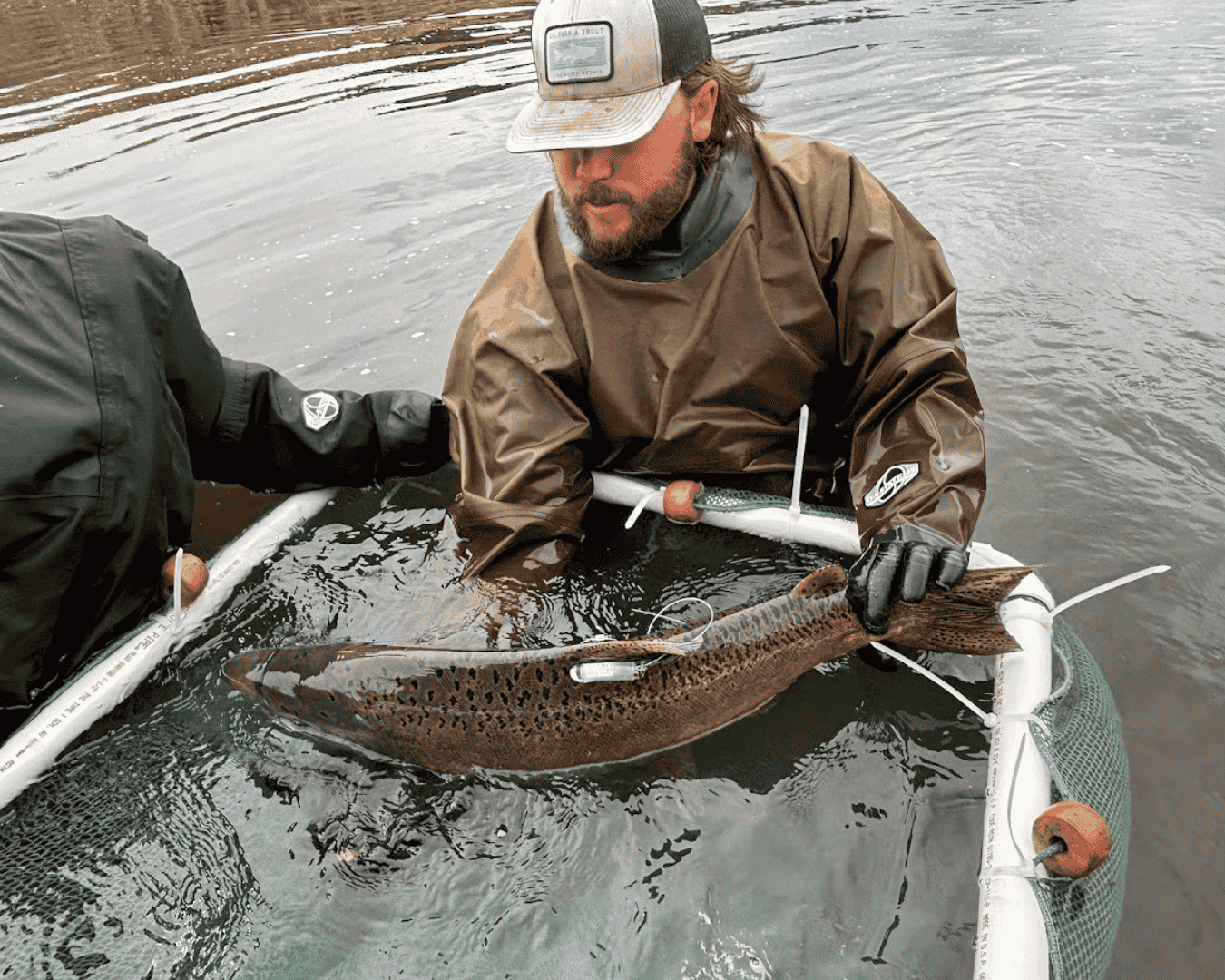
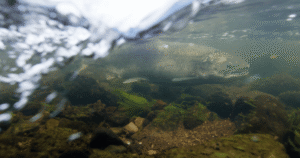
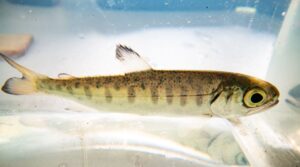
Understanding what threats and obstacles salmon face during their migration is crucial to restoration success. That’s why CalTrout’s North Coast team, alongside the California Department of Fish and Wildlife, UC Berkeley, Stillwater Sciences, and the Wiyot Tribe, tracks juvenile salmon and steelhead throughout their journey from headwaters to the ocean. Through our Adopt-a-Salmon program, many of you were able to follow along too, “adopting” a fish, giving them a creative name, and receiving updates on their perilous journey from inland rivers all the way out to the ocean.
Salmon in the Eel River watershed have long faced many threats including overfishing, mechanized logging, dams, water diversion, and drought. Today they have another threat to contend with: the invasive Sacramento pikeminnow. Pikeminnow compete with, prey on, and alter behavior of juvenile salmon – all of which impacts salmon recovery. Pikeminnow were introduced to the Eel River in the late 1970s and have spread throughout the watershed. The Wiyot Tribe has been leading pikeminnow monitoring and suppression efforts in the Eel River for years and CalTrout, UC Berkeley, CDFW, and Stillwater Science have been working with the Tribe to understand how pikeminnow suppression affects salmon recovery.
Before we can address the problem, we must understand how, where, and when pikeminnow are affecting salmon. By tracking a portion of these juvenile fish, we gain critical insights about where to target pikeminnow suppression efforts. We can identify mortality hot spots, or places where salmon are most vulnerable to pikeminnow predation, and once we identify those hot spots, we can figure out how to address them. The results of this year’s tagged cohort was recently revealed to Adopt-a-Salmon participants, and our teams analyzed the data, leading to a few key findings. This year’s results revealed both encouraging progress and sobering challenges for juvenile coho salmon in the South Fork Eel River.
The Good News
- Overall survival for the cohort in 2025 was nearly 11%, which is a slight improvement over both 2023 and 2024 — driven almost entirely by the strong performance of early‐migrating fish.
- Our earliest‐migrating fish fared exceptionally well: for example, juvenile coho released from Sproul Creek in early April 2025 achieved a 56% survival rate all the way to Cock Robin Island — the highest survival of any release group we have measured, and higher than in 2023 or 2024.
- Fish are leaving at different times throughout the season, showcasing life history diversity, a positive indicator of population resilience.
The Not-So-Good News
- Fish that migrated later in the season did much worse. In particular, late‐April migrants in 2025 survived at lower rates than comparable groups in 2023 and 2024.
- Juveniles emigrating in May had virtually zero survival to the ocean, echoing what we’ve seen in past years.
- These patterns strongly suggest continued habitat impairment and predation from invasive fish in the mainstem river and estuary corridor — bottlenecks that are limiting success for mid‐ and late‐season migrants.
All this to say, we remain optimistic moving forward. For one, all of the coho from this year’s study migrated before our expanded pikeminnow suppression work (May–October 2025) was fully underway. That means next year’s cohort should be even better positioned to benefit from those invasive predator‐control efforts. Additionally, with targeted action in the mainstem river (e.g., recovering lost “spring stopover” habitat) and estuary (e.g., recovering estuary floodplain habitat), plus continued pikeminnow suppression, and monitoring differences in migration‐timing, we believe we can recover the survival and diversity of the Eel River’s juvenile salmon population.
Tackling the Predation Problem
This year, our pikeminnow suppression efforts hit record levels. Working with the Wiyot Tribe and UC Berkeley in our seventh year of pikeminnow surveys, our crews removed 1,770 pikeminnow with an average length of 13.5 inches. Meanwhile, our highly successful Pikeminnow Derby engaged the community in removing an additional 1,118 fish over two months on the South Fork Eel River – shout out to everyone that participated! Together, that’s 2,888 pikeminnow removed, more than double past years’ efforts.
The results are significant. Since conducting our population surveys, we’ve removed 547 fish over 300mm (more than 30% of the surveyed population in that size class) and 60 fish over 450mm (37.5% of the surveyed population in that size range). By targeting these larger, more predatory pikeminnow, we’re directly reducing predation pressure on juvenile salmon and steelhead during their vulnerable migration period. Finally, we have also learned that pikeminnow exhibit “sexual dimorphism” in which the larger fish are predominantly females; thus removal of these larger fish not only reduces predation but also reduces reproduction.
Hear from Philip Georgakakos, UC Berkeley Project Scientist, about his work addressing the various threats facing salmon populations in the Eel:
Hear from Ross Crowne, UC Berkeley Research Associate, about his efforts to restore balance in the Eel River watershed:
Hear from Raven McAdams, Cal Poly Humboldt Master’s Mustudent and Researcher, about how she combines her scientific expertise with a deep cultural connection to control invasive populations in the Eel River:
Restoration Across the Watershed Strengthens Each Salmon Life Stage
Our holistic approach extends throughout the system, recognizing that healthy salmon populations require healthy habitat at every life stage. In the Eel River estuary, we’re restoring 950 acres of tidal marsh to ensure juvenile salmon have healthy rearing habitat. In key tributaries, like Cedar Creek and Woodman Creek, we’ve removed barriers to allow access to cold water habitat. Through legal advocacy, we’re seeking Outstanding National Resource Water (ONRW) designations to protect its exceptional water quality and habitat for salmonids in Cedar and Elder Creeks, providing long-term protections.
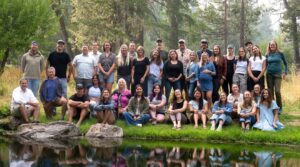
And to engage North Coast communities, this spring, we hosted our first-ever Eel River Expo with the Rotary Club of Eureka – a celebration that brought together scientists, students, ranchers, biologists, and community members all dedicated to revitalizing this incredible river system. The Expo was full of incredible speakers, such as Congressman Jared Huffman, a photo contest, hands-on activities, and even a salmon parade with a marching band.
Hear from Darren Mierau, CalTrout’s Science Program Director, about CalTrout’s comprehensive efforts to restore the Eel River ecosystem:
Join the Movement Towards a Flourishing Eel River Watershed
We are grateful for everyone that has worked so hard to make the accomplishments of this year possible. Soon, the Eel River will flow free again, creating a cornerstone for North Coast salmon recovery benefitting the entire region’s ecologic and economic resilience.
However, we’ve got lots of work ahead of us. Restoring each part of the Eel River watershed will continue to take hard work, advocacy, science, and supporters like you! Funding for scientific monitoring and on-the-ground restoration is critical to ensuring a revitalized Eel, self-sustaining native fish populations, and thriving local communities.
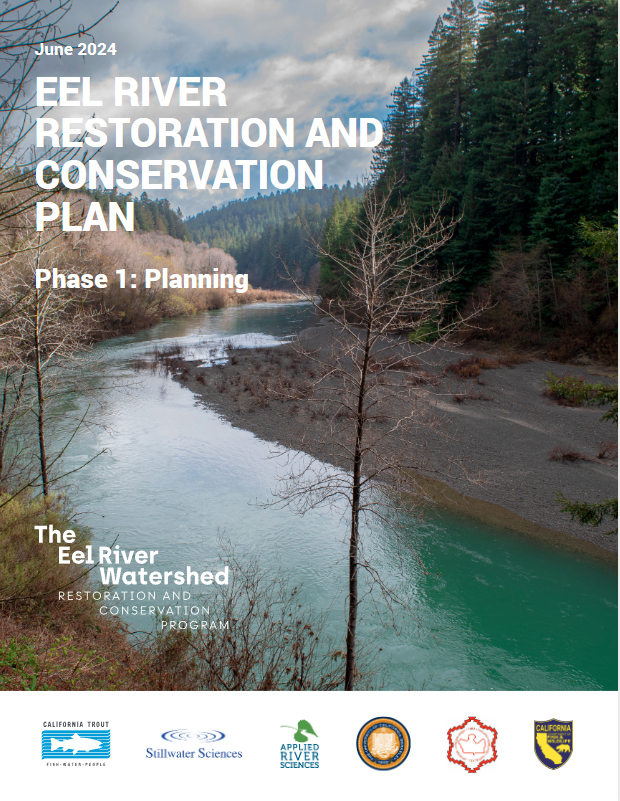
VIEW THE PLAN
Eel River WATERSHED Restoration & CONSERVATION PROGRAM Plan
A blueprint for restoration on California’s third-largest watershed.
View the report below prepared by CalTrout, Stillwater Sciences, Applied River Sciences, UC Berkeley, and the Technical Advisory Committee with representatives from National Oceanic and Atmospheric Administration (NOAA), National Marine Fisheries Service (NMFS), U.S. Forest Service (USFS), Bureau of Land Management (BLM), UC Berkeley, CDFW, the Wiyot Tribe, and Eel River Forum participants.

COALITION OF WATERSHED action
The Eel River Forum
The Eel River Forum, led by CalTrout and comprised of 22 public agencies, tribes, non-profit conservation organizations and other stakeholders, convenes regularly to forward holistic watershed restoration progress.