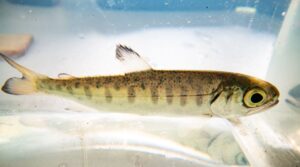
We are excited to announce that five CalTrout projects to improve trout habitat and passage are moving forward thanks to funding from the California Department of Fish and Wildlife (CDFW), California Wildlife Conservation Board, and National Fish and Wildlife Foundation. Government grants make up 35% of our operating budget, allowing us to execute large-scale and significant programs that benefit wild fish and people in California.
CDFW’s Proposition 1 Restoration Grants Program is funding three CalTrout projects. Proposition 1, the Water Quality, Supply and Infrastructure Improvement Act of 2014, was passed by voters in 2014.
Little Shasta Fish Passage Project – $474,114 award from CDFW Proposition 1
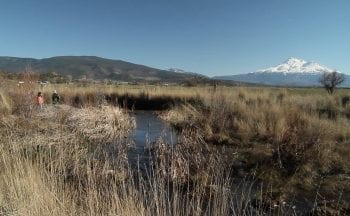
Our Shasta office is continuing their work on the Little Shasta River which will result in the complete elimination of a temporal migration barrier that is currently blocking access to up to 7 kilometers of ideal cold-water spawning and over-summering habitat for juvenile coho salmon habitat. The project will also result in habitat enhancement, improved ecological function, and improved stream flow at critical times of the year for out-migrating juveniles.
Specifically, the project includes (1) removal of the existing concrete dam, fish screen and old fish ladder walls; (2) construction of approximately 105 lineal feet of roughened channel at three percent grade to provide fish passage (3) construction of a new cast-in-place concrete diversion structure with fish screen and fish return bypass that meets current NOAA and CDFW fish protection criteria; and (4) revegetation of the channel restoration site.
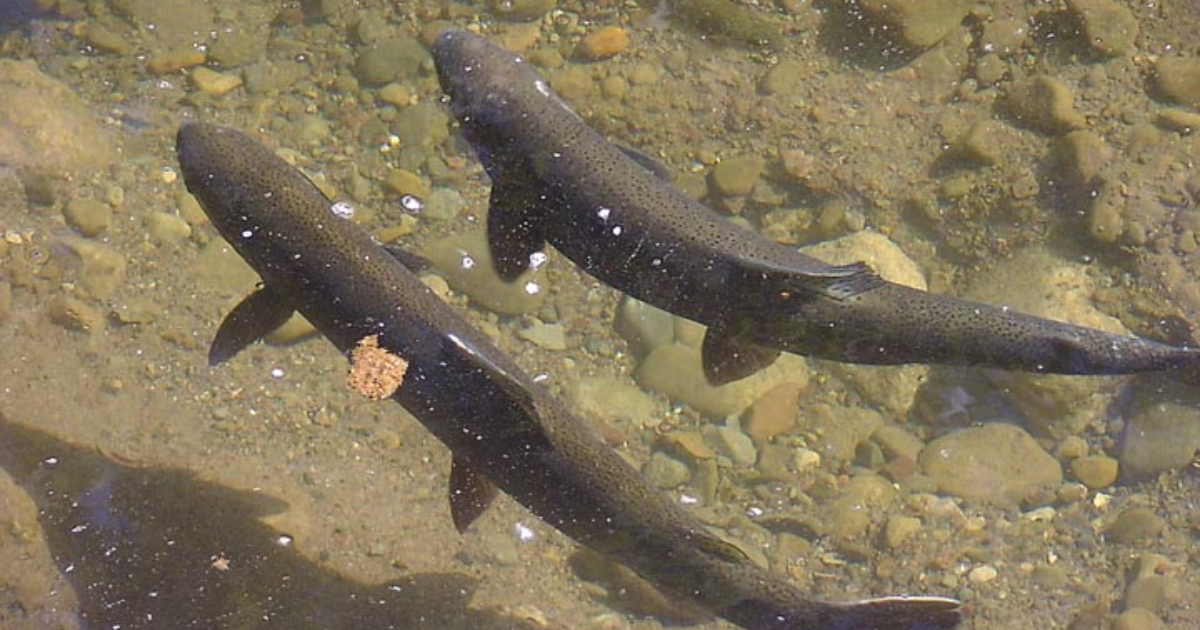
The Shasta River was historically one of the most productive salmon streams in California. However, after more than a century of aquatic and riparian habitat degradation, dramatic declines in wild salmon populations have been observed, particularly with federally threatened coho salmon.
Rose Valley Lakes System Alternatives Analysis and Feasibility Study – $194,708 award from CDFW Propositon 1
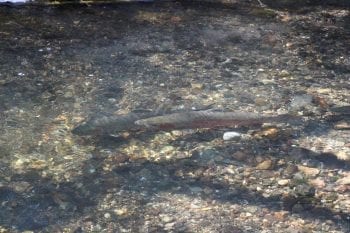
The Santa Clara River Steelhead Coalition, led by CalTrout, will be conducting a restoration project in Rose Valley Lakes, a prime spring-fed tributary to Sespe Creek which hosts the most diverse steelhead habitat in all of the Santa Clara River watershed. However, the Sespe Creek system has been invaded by illegal introductions of predatory, non-native aquatic species from Rose Valley Lakes that are rapidly out-competing native species, such as federally endangered Southern steelhead.
This funding will allow us to develop a study with the purpose of eliminating and preventing further spread of exotic fish species in Sespe Creek. In addition, we are creating a plan for the removal of four fish passage barriers, restoration of riparian and instream habitat, and improvement of instream flow, all aimed at the recovery of listed aquatic species.
This project supports recovery of the federally-listed endangered Southern steelhead in the watershed and increases native species resiliency to future disturbances, such as drought and fire. The Coalition has been working on this project for many years and we are thrilled that it is fully funded!
Mill-Shackleford Creek Fish Passage Restoration Project – $522,949 award from CDFW Propositon 1
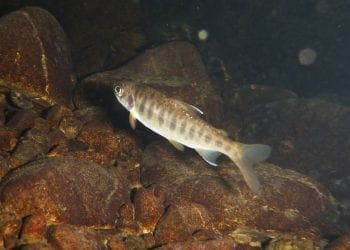
CalTrout’s Shasta team are addressing a heavily used, degraded ford/low water crossing structure on Mill-Shackleford Creek that creates a partial barrier for juvenile coho salmon in search of rearing habitat. Mill-Shackleford Creek is an important tributary to Scott River- one of four major tributaries of the Klamath River and an important native coho salmon river. With the decommission of the human-made crossing, replacing it with a 66-foot free-span prefabricated steel bridge just upstream, juvenile coho salmon will have unimpeded passage during all life stages at all water flow levels. Furthermore, critical coho salmon spawning and rearing habitat will be more protected with the removal of the ford as it contributes to chronic sediment inputs and degrades floodplain interactions with the natural stream channel.
I-5 Bridge Array Fish Passage Project on Trabuco Creek – $522,762 award from WCB

A grant from the California Wildlife Conservation Board is allowing us to move forward with a significant fish passage project on Trabuco Creek, a major tributary to San Juan Creek in Orange County. The stream channel runs below an array of five bridges and is present as a concrete flood control channel spanning a quarter of a mile. This will benefit Southern steelhead, a federally-listed endangered species. The award will enable CalTrout to utilize 65% engineering designs to 1) construct and test large-scale physical models of the preferred alternative, and 2) pursue environmental documentation and permitting that tracks the project into construction in 2021. (Read more about CalTrout’s efforts to restore Southern steelhead.)
Upper Shasta Coho Habitat Restoration – $175,255 award from NFWF
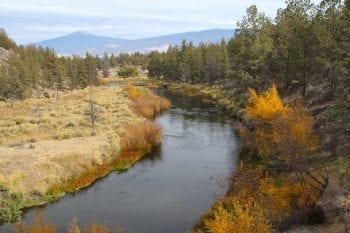
As part of CalTrout’s Shasta Safe Harbor Agreement program, our Shasta office will be conducting habitat restoration for coho salmon on the Upper Shasta River, thanks to a grant from the National Fish and Wildlife Foundation’s Klamath River Coho Salmon Enhancement Fund. We have been engaging landowners and regulatory agencies to secure long-term instream benefits for Southern Oregon/Northern California Coast (SONCC) coho salmon in exchange for legal protections against incidental take of a listed species (coho). The focus is from the Shasta River below Dwinnell Reservoir to approximately 1.5 river miles downstream – with the participation of three landowners – specifically implementing improvements in habitat complexity and channel structure in the reach downstream of Dwinnell Reservoir. The short-term benefits to SONCC coho salmon will be to increase the extent of cold water refugia by enhancing a new spring water alcove, and improving overall spawning and rearing opportunity for coho with addition of large woody debris and spawning gravel throughout the reach.