

The Mt Shasta office of CalTrout has been closely following Crystal Geyser’s efforts to reopen the dormant Dannon/Coke water bottling facility. Given protecting wild trout is an important part of our mission; we know the area’s cold water springs are critical to local fish populations. And, while trout fishing is an important economic driver in the area, it doesn’t necessarily mean that we can’t find pragmatic solutions to water issues that can also provide a meaningful economic stimulus to our local community. Protecting cold water sources and providing jobs do not necessarily have to be mutually exclusive.
In a recent San Francisco Chronicle article (Source of Conflict, February 19th), Crystal Geyser’s CEO said the public’s concern about the project were “overblown”. The issue of water bottling plants, however, has been a contentious one in many parts of the country. This is especially true right now during a drought period when people are even more sensitive to potential impacts to water supply. No doubt, water bottling facilities have impacted water resources in other parts of the country.
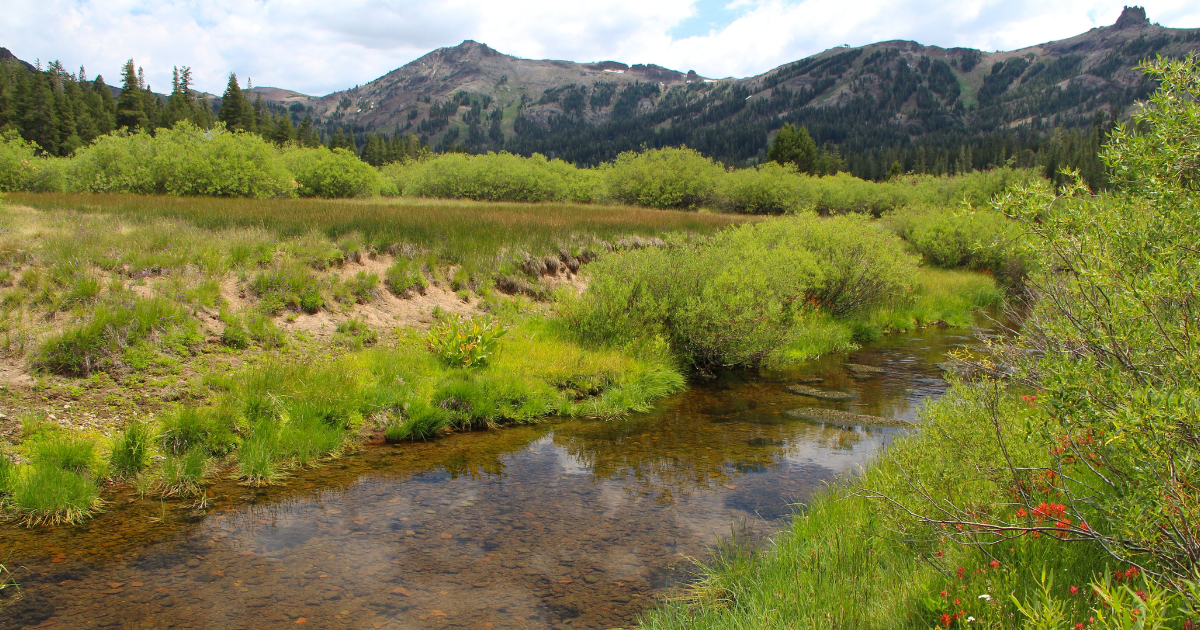
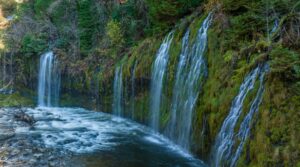
In December of 2013, CalTrout established a stream gauge on Mt. Shasta Big Springs in the City Park in cooperation with the Parks and Recreation Department to establish baseline of flow and temperature conditions. The current flow of the creek is 19 cubic feet per second and the temperature is 45 degrees F. In a previous study, we found evidence that the majority of Mt. Shasta Big Springs water is sourced from areas above 8,000 feet on the mountain and the water may be underground for 50 years or more before emerging at the spring. More studies are needed to fully understand these complex spring resources.
Here are a couple of important things to note:
1) Crystal Geyser is proposing to use 115,000 gallons per day and potentially as much as 365,000 gallons per day. We know that one cubic foot per second of water equals approximately 646,000 gallons per day. Mt. Shasta Big Springs produces 19 cubic feet per second which amounts to the spring producing approximately 12,274,000 gallons per day. So Crystal Geyser is proposing to use 1% of the spring discharge at 115,000 gallons per day or 3% at the proposed maximum use of 365,000 gallons per day.
2) While the proposed volumes are small and impact on stream flow minimal, Crystal Geyser should take an active role in addressing potential impacts to Mt. Shasta Big Springs. CalTrout suggests the following model: a) develop baseline temperature, flow and water quality conditions, b) monitor these conditions, and c) adjust project operations if impacts are detected. For example, Crystal Geyser could establish a monitoring program on Mt. Shasta Big Springs for temperature, flow and water quality and if impacts are detected adjust the amount of water they use for bottling.
Is this a significant amount of water use and will it impact the springs and the water supply? The best way to answer that question is by collecting data and keeping a pulse on the spring flow and water quality. This would not be difficult to do and Crystal Geyser should be proactive in this effort.
The issue of the legal requirement for an EIR remains unclear. Regardless, Crystal Geyser should be transparent in their plans and be active in efforts to monitor their potential impacts to Mt. Shasta Big Springs. And Crystal Geyser should actively engage the community—this will build trust and promote a solution that will promote resource protection and economic growth.