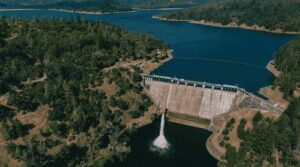
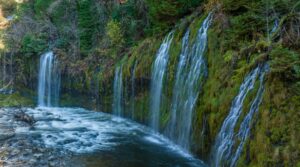
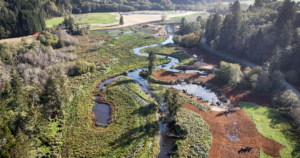
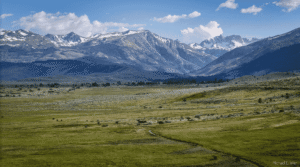
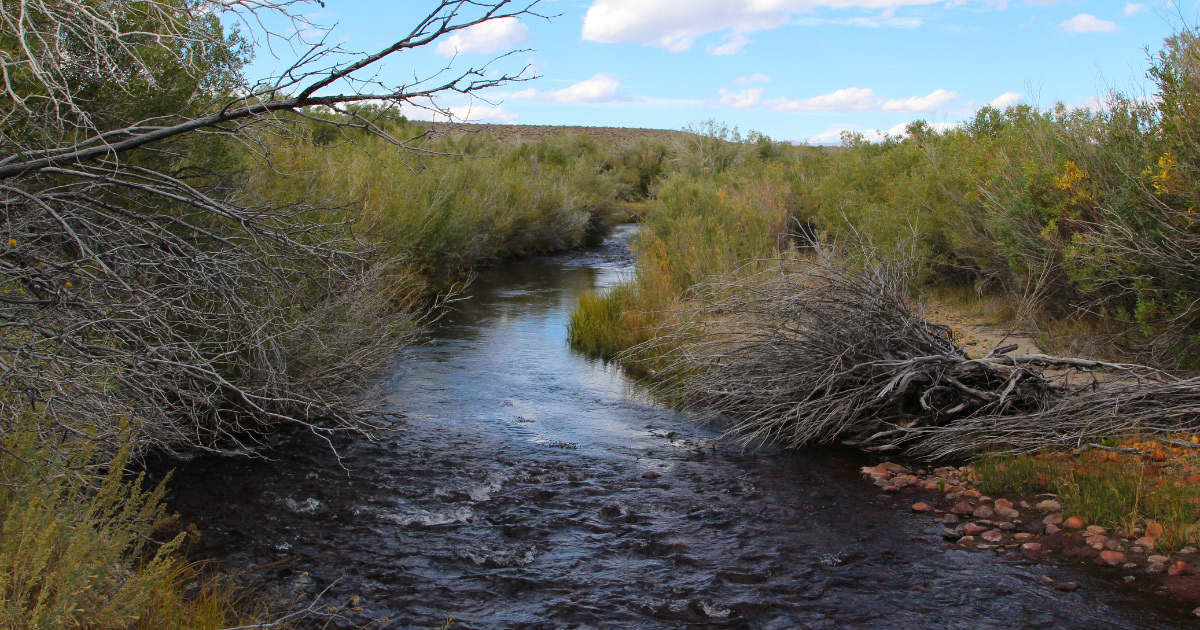
In October 2021, the California State Water Resources Board issued Order 21-86 to amend the water rights of the Los Angeles Department of Water and Power (LADWP) in the Mono Basin. Mono Basin stream habitat was damaged through the years by excessive water diversions by LADWP to Los Angeles. This order formalized a prior stream restoration agreement and new operational requirements for flows and diversions were established. As a result, twenty miles of stream and Mono Lake benefit from science-based restoration.
Monitoring Team Forms
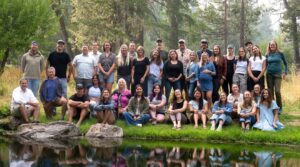
After the Settlement was completed, a Monitoring Administration Team (MAT) was formed with representatives of the Agreement parties including Mono Lake Committee, CalTrout, California Department of Fish and Wildlife, and LADWP. The MAT selected the National Fish and Wildlife Foundation as the fiscal administrator overseeing survey work paid to consultants by LADWP as part of the Settlement.
As required under Order 21-86, monitoring is a key element which covers the areas of stream, waterfowl, and limnology (the study of inland waters). The purpose of the post-Settlement monitoring is to evaluate the effectiveness of the Stream Enhancement Flow (SEF) regimes and make recommended changes to these flows, adjusting their timing and magnitude as needed.
First Fisheries Monitoring Report Reveals Insights
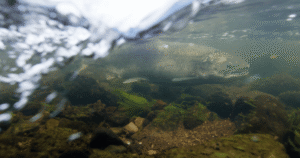
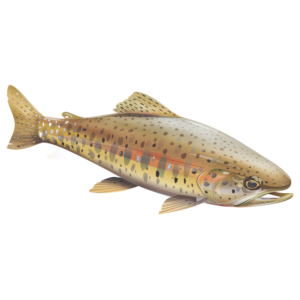
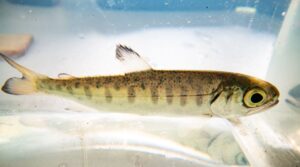
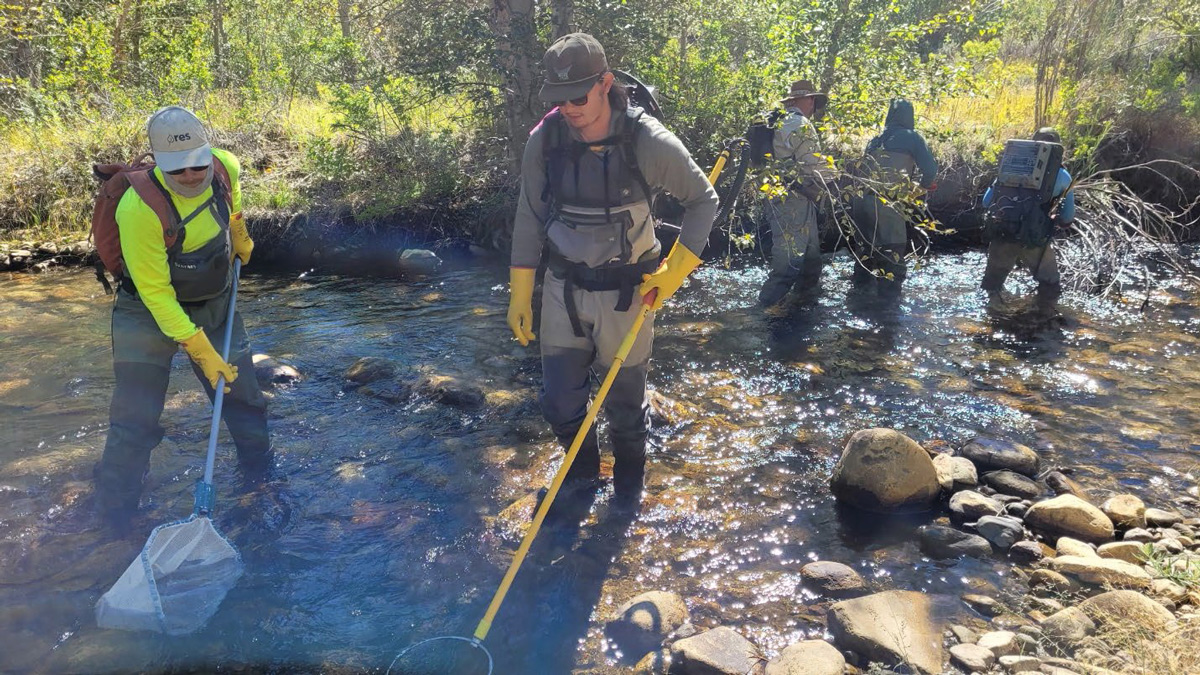
The 2022 Report of Fisheries Sampling – conducted by Ross Taylor and Associates (RTA) – was the first report under Order 21-86 and covered fisheries monitoring in Rush, Lee Vining, and Walker creeks. The annual monitoring metrics for fisheries included trout population estimates, density estimates, condition factors, growth rates, and survival metrics.
Variance in different size classes of brown trout was observed depending on location and size, with a decrease in large trout indicating recovery still in progress for multi-year survivors. The overarching theme of these data is that trout populations respond better to wetter runoff years than they do to average-to-drier runoff years.
As climate change continues to alter the thermal regimes of cold-water fish habitat, we will learn how sub-lethal water temperatures affect trout growth, and how growth limitations may influence fish distribution patterns.
As RTA points out in their study, periods of drought will most likely continue to negatively impact the Rush Creek brown trout fishery in terms of population size, growth rates, and condition factors. However, after the recent five-year drought, the fishery exhibited resiliency and experienced quick improvements in the numbers of fish, growth rates, and condition factors.
Thus, changing climate and variable snowpack conditions in the eastern Sierra will most likely dictate the long-term fate and viability of Rush Creek’s brown trout fishery. However, continued SEF releases, maturation of the riparian canopy, nine more years of annual monitoring, and adaptive management may push the restoration of the creeks and the trout fisheries in a positive direction.
The Long-Term Health of Mono Lake
While the Water Board was instrumental in finalizing the long sought-after voluntary water agreement with LADWP in 2021, it was clear from a recent workshop led by Mono Lake Committee on Mono Lake diversions that there is still strong concern about the long-term health of Mono Lake. Recurring severe droughts punctuated by excessive precipitation for which modern models have better predictive accuracy, demonstrates that additional measures are needed to protect the lake, wildlife, public health and local tourist economy for the long term.
Balancing conflicting uses of a limiting resource appears intractable. While one approach is to further restrict water diversions from Mono Lake, a collaborative approach can also be pursued to further diversify Los Angeles’s water supply and compensate for reduced diversion volumes. Technologies such as stormwater capture, water reclamation, indirect potable reuse and community conservation can reduce the city’s dependence on water destined for Mono Lake. Many water-smart approaches are already in place that do not create more habitat-fragmenting reservoirs. It’s a matter of scaling up the technology and infrastructure, leveraging best practices and wisely using state and federal funding to implement projects that benefit both Los Angeles and Mono Lake.
For recent developments see: https://caltrout.org/news/restoration-work-makes-strides-in-mono-basin
More on Mono Lake Committee: https://www.monolake.org/today/setting-stream-restoration-into-motion/
More on history of Mono Basin Agreement: https://caltrout.org/50th/mono-lake