

Written by Kara Glenwright, Communications Associate
Attending the Salmonid Restoration Federation Conference
Santa Cruz is a beautiful place to talk about fish! This April, I had the opportunity to attend the annual Salmonid Restoration Federation (SRF) conference in Santa Cruz, CA. The conference, held mere steps from the beach, inspired, educated, and connected me to this vast body of fish-focused work.
The conference opened with a powerful and inspiring speech from Yurok and Karuk Native American and Stanford University graduate student, Brook Thompson. Klamath dam removal was the main subject of Thompson’s remarks, and she wove together the history of her Tribes and a call for the social justice that the Klamath dams obstruct. I found it especially powerful when Thompson addressed the conference hall, brimming with passionate and accoladed researchers, scientists, and professionals, and she asked us to look around the room and notice who was not here today. Many people were missing from this room, Thompson noted, including young people, specifically those under 18, and people of color.
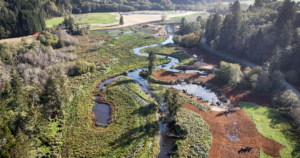
Field tours were also offered through the conference. I had the chance to travel some miles north up the coast, to Pescadero, where the San Mateo Resource Conservation District, CDFW, CA State Parks, and more partners led a tour of the interconnected watershed system there consisting of Pescadero and Butano Creeks. The creeks converge in Pescadero Marsh before spilling out into the ocean. The marsh is the site of a recent large scale restoration project to address anoxia and prevent fish kills.
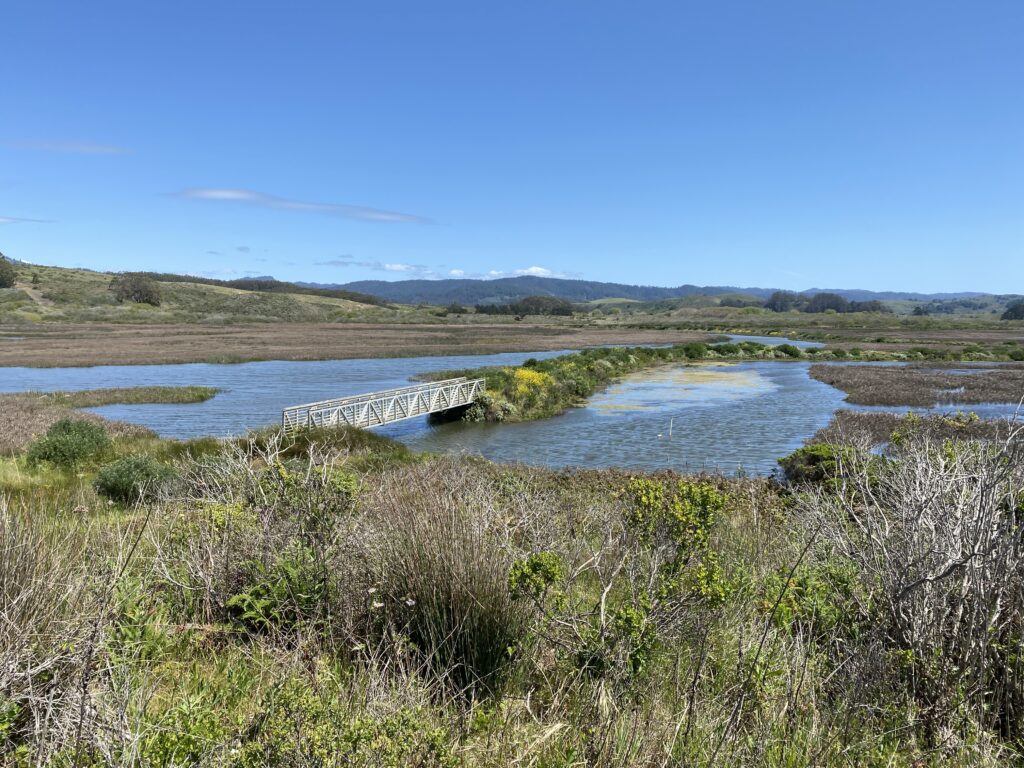
Looking out over Pescadero Marsh.
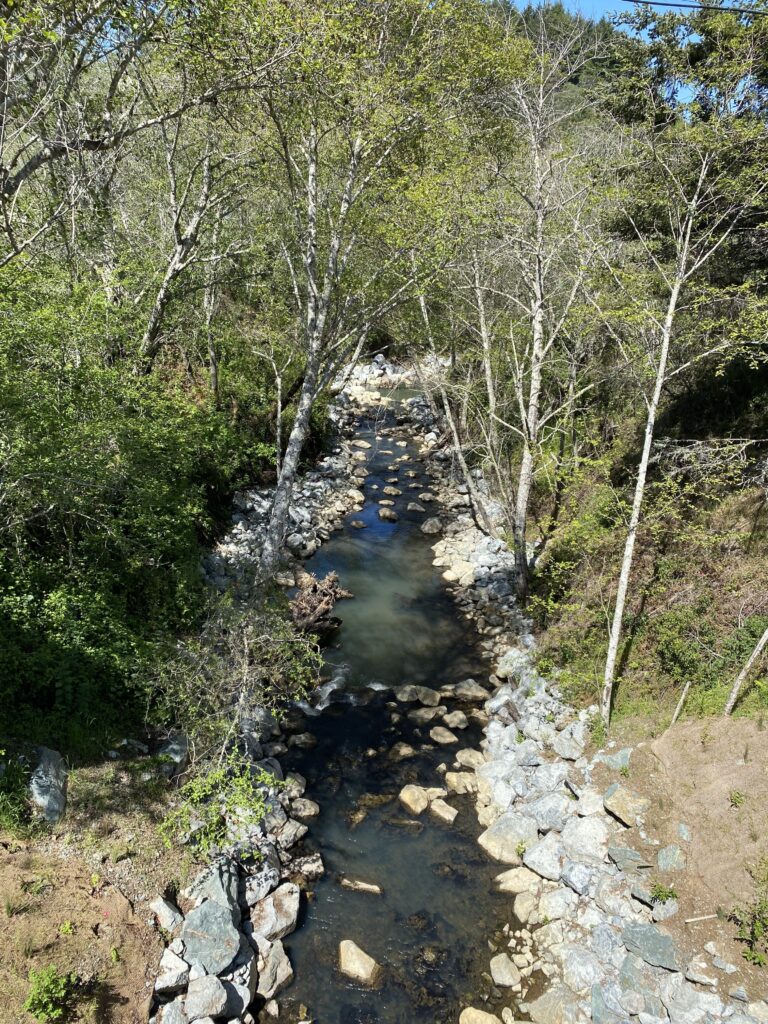
Looking down at Butano Creek.
Throughout the next two days, dozens of sessions occurred highlighting topics ranging from lagoons to community collaboration. CalTrout’s presence at the conference was impressive with five speakers, two moderators, and many more attendees. While the wealth of knowledge I gained from this conference is too broad to share in a single blog post, below I will share with you my top six fun facts and key takeaways from SRF 2022!
Top 6 Fun Facts and Takeaways from SRF:
- The US produces the most plastic pollution of any country, and many salmonids ingest microplastics. Margaret Spring, Chief Conservation and Science Office of the Monterey Bay Aquarium, shared this fact, bringing the ocean’s story into focus in a largely freshwater centric space. She went on to share a solution to this pollution: a California plastic waste reduction initiative that will appear on the ballot this November.
- Over the last ten years, there has always been some portion of California in drought conditions. Dan Wilson of NOAA’s California Coastal Office shared this fact in the discussion on drought response led by CalTrout’s Redgie Collins. Drought really is the new normal, which is why drought response is so important!
- Researchers can see when fish from Scott Creek, in Davenport, CA, travel to Pescadero Creek, roughly 20 miles north. The creeks both have PIT tag detection arrays, which means that fish are tagged and uniquely identified when they swim over a certain spot in the creek. Researchers, including CalTrout’s Patrick Samuel, can share data and monitor fish originating in one creek’s movements to the other creek. One of the many benefits to collaboration in science!
- Redwood Creek estuary is 25% of its historical area due to levees cutting off the floodplains and disrupting the stream estuary ecotone. Why do we care about this? Well, Prairie Creek, a tributary of the estuary is a stronghold for three independent populations of federally listed salmon and steelhead. These specific populations are core to recovery of the species at large.
- We can build collaborative relationships in conservation by asking for opinions instead of giving information. This one might seem like a no-brainer, but it’s worth sitting with that for a second. Thanks to Mary Burke of CalTrout and her co-presenter Leslie Wolff of NOAA Fisheries for sharing this.
- Sandia Creek Bridge is the last remaining fish passage barrier in the Santa Margarita River. CalTrout’s Sandra Jacobson shared plans for the replacement of the current bridge. Constructing a new bridge is multi-benefit: it will allow passage of endangered Southern California steelhead, protect the public from floods, enhance quality of riparian habitat, and support local economies by providing over 150 local jobs.
Bonus fun fact: Did you know that there are Pacific Lamprey in Pescadero? Biologists discovered them in the Pescadero Marsh during the restoration project there!
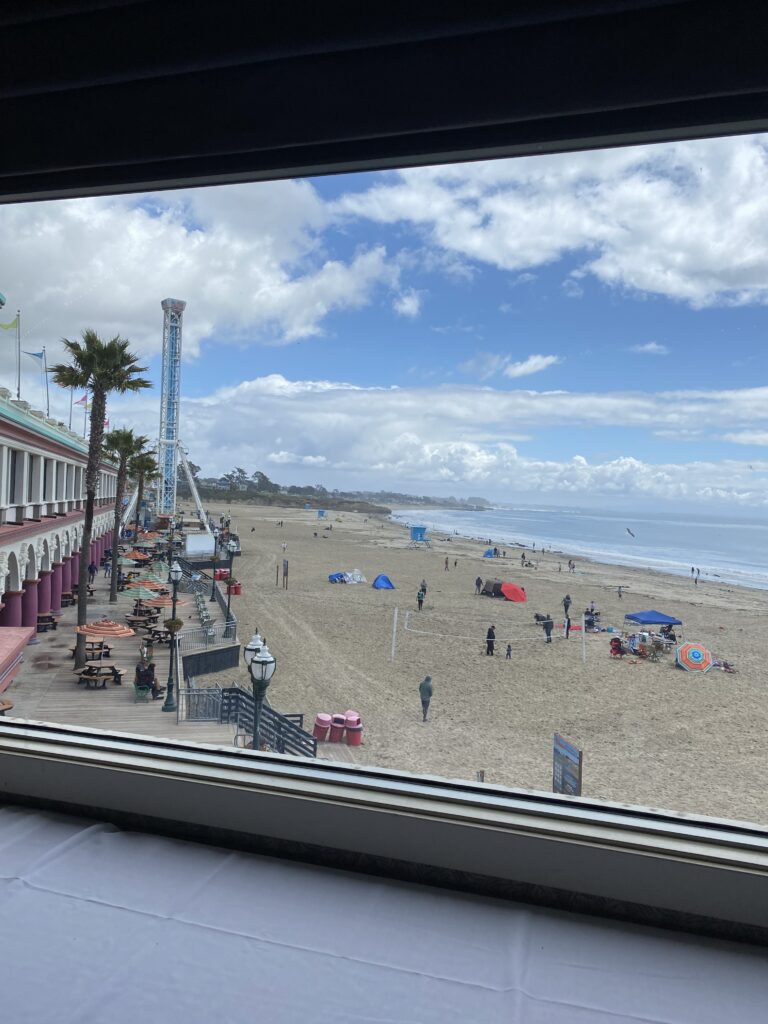
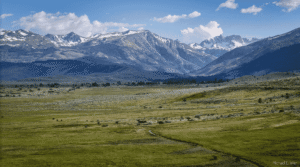
The view outside of the conference hall window.
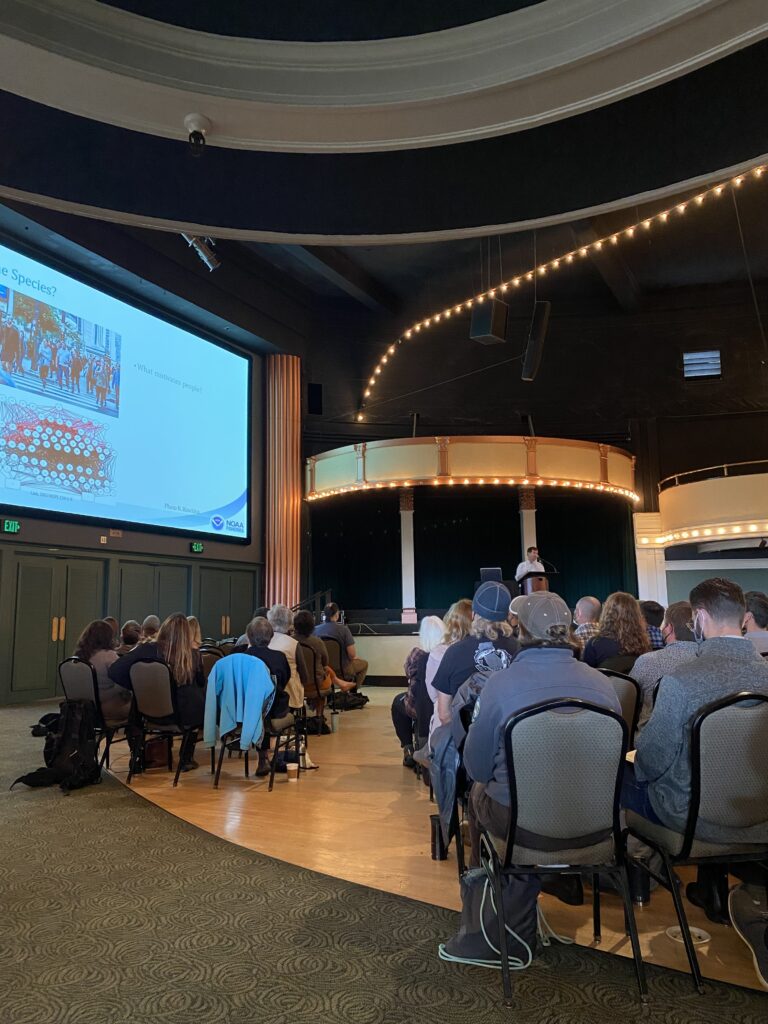
A speaker from the opening plenary session.