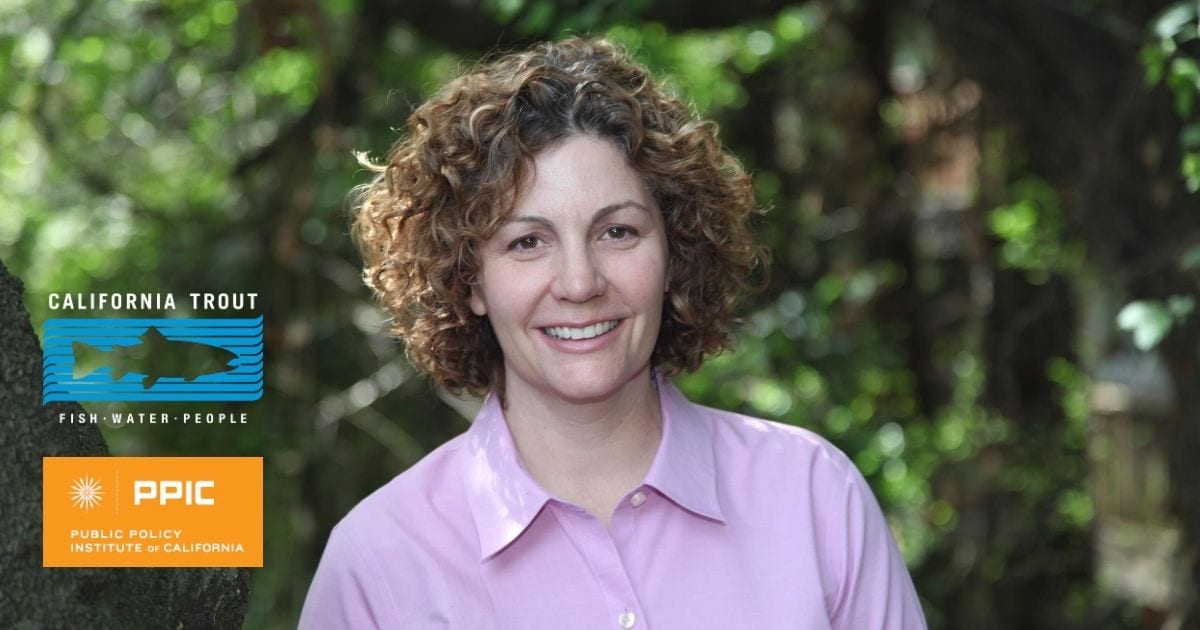
We are excited to introduce Letitia Grenier — Senior Scientist at the San Francisco Estuary Insitute and Aquatic Science Center — as the second appointed Public Policy Institute of California (PPIC) CalTrout Ecosystem Fellow! We recently got to know her through an interview. Check out her answers in our latest post. Thanks to the donors that helped us launch this program: Gary Arabian, the Morgan Family Foundation, Nick Graves, John Osterweis, and the Rosenberg Ach Foundation.
Read her latest PPIC blog “How Permitting Slows Ecosystem Recovery and Climate Resilience Projects”
Education: BA in Biology and Film/Video from Middlebury College, VT; PhD in Environmental Science, Policy, and Management from UC Berkeley, CA
Hometown: Solana Beach, CA
1. How does it feel to be the second CalTrout Ecosystem PPIC Fellow?
Very exciting. I feel honored to be given this opportunity! The chance to think at a higher level, synthesize across many successful projects, and connect with people who have innovated in the realm of ecosystem restoration is unique and precious. I feel like I am getting the opportunity to learn in a new area and apply my knowledge and experience in a new way.
2. What will this fellowship allow you to do that you might not have been able to do without it?
The entire project would not be possible without this fellowship. This support makes it possible to spend time delving into smart permitting for ecosystem restoration, which is a meta issue that is related to but not the focus of my usual work in environmental science. One thing all conservation biologists are aware of is that we need to move faster in restoring ecosystems and their functions that benefit people and wildlife. It’s no good putting out the science, unless that information can be translated into projects on the ground in a timely manner. Climate change is accelerating our need to restore ecosystems, but the permitting process can still be very slow.
3. What will you research and might it benefit fish, water, and people?
The laws that guarantee the protection of the environment are important for all of us, and they are very robust in California compared to other places. However, it can be easier to get development permitted, compared to getting permits for an ecosystem restoration project. Figuring out smart ways to navigate the permitting process for ecosystem restoration is critical to restoring ecosystem functions that people, fish, and other wildlife need. With this fellowship, I will be collecting successful examples of smart permitting and then look for patterns within those examples to identify ways to improve the process. The idea is to see if we can share knowledge of what has already been proven to work to make permitting more efficient in the future, without sacrificing environmental protection.
4. What sparked your interest in researching water-related issues?
I grew up in Southern California and was lucky enough to live next to one of the many coastal lagoons in San Diego County. I would walk my dog on the paths next to the lagoon and go tide pooling for fun. We would also go camping in the mountains, where I learned the best spots are always near a creek! The adventure and discovery that I found exploring in nature was then, and remains now, unparalleled. Over the course of my life, biodiversity and the health of ecosystems has plummeted around the planet. As an ecologist, I am acutely aware of how much both people and wildlife need healthy ecosystems to support our survival and wellbeing. I want to be part of helping nature thrive into the future, and water is a fundamental and critical resource for doing that.
5. What advice do you have for people wanting to follow a similar path in science like yours?
I would say, if you have the passion for this work, then go for it. This is not the easiest career, both in terms of the emotional toll of environmental degradation and the financial challenges of going to school for a long time and not earning a big salary. However, it pays off in terms of getting to do intellectually interesting work that is good for the world. It feels good to know you have spent the hours of your life doing something that matters. I would really encourage people from groups that are less represented in environmental science (people of color, women, LGBTQ, etc.) to work in this field if you have the drive for it. We desperately need greater diversity in our ranks!
6. What’s your favorite place to fish/visit outdoors?
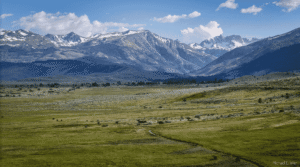
Wow. This is a really hard question to answer. There are so many places that are amazing to visit, and new places are often the best! One place I am missing a lot lately is a creek in the Big Horn Mountains of Wyoming where I got to live backcountry camping for a summer. The willows on the creek were all exactly the same height (about 1 foot), which I learned was how low a moose can browse when on dry land. I like to think of watching the moose mow the willows to a perfectly manicured height while the fog lifts off the creek at dawn. That’s a great antidote for coronavirus stress!