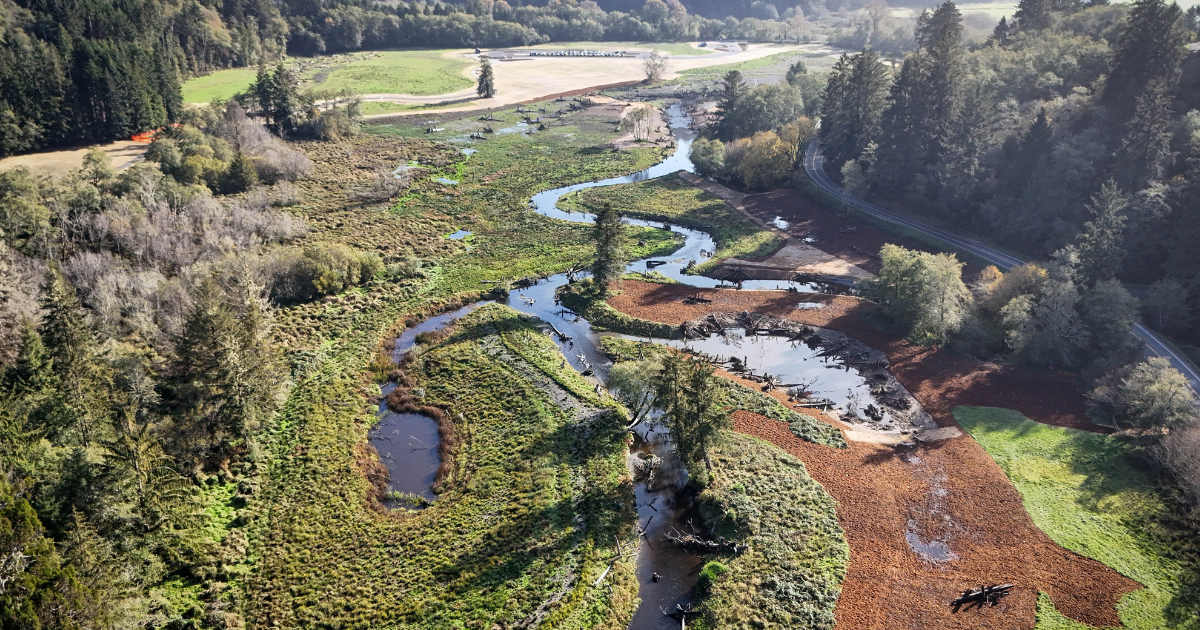
This summer marks the culmination of a decades-long effort to reconnect people and wildlife with place, and with one other. The gates at the new ‘O Rew Redwoods Gateway officially opened to the public on August 1st, welcoming the community into an ecosystem restoration project grounded in a deep understanding of the land’s history—both its beauty and its injustices.
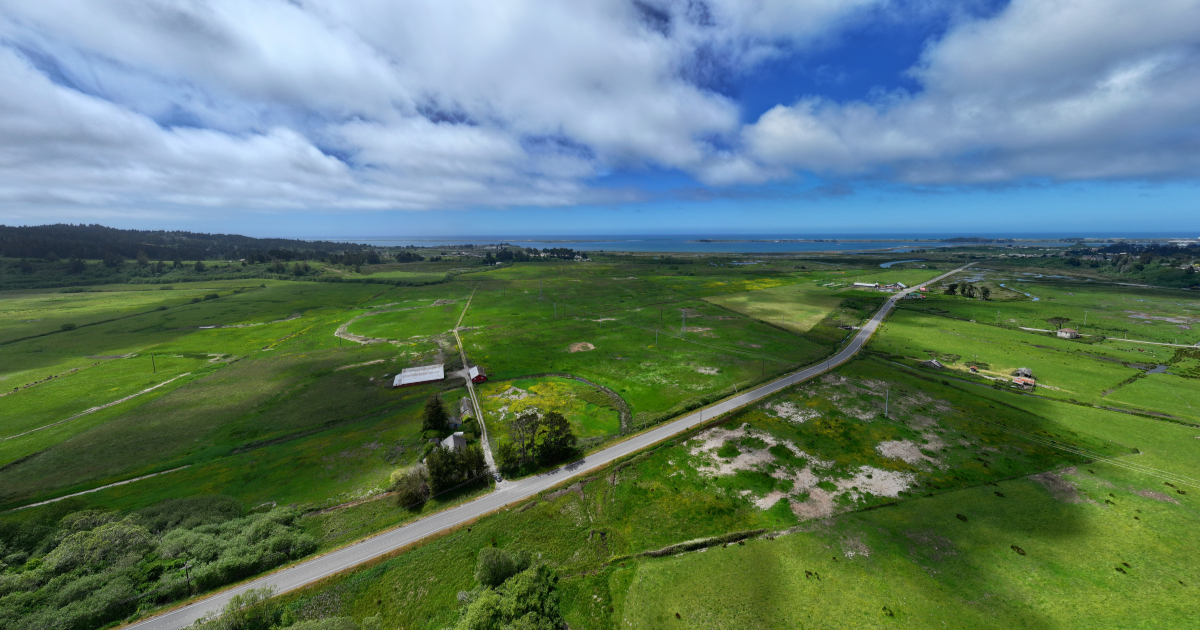
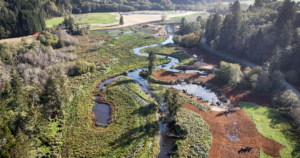
The 125-acre site along Prairie Creek in Humboldt County has held many identities: the ancestral home of the Yurok Tribe, a working mill site, and later a construction zone. Now, as the property opens its doors to the public, ‘O Rew represents both renewal and return—restoring connection with its original stewards, the Yurok Tribe. The next chapter holds the promise of growth and revitalization, an invitation to the greater public to understand and learn from traditional stewardship of the land. It offers a model for what community-centered conservation can look like when people come together across cultures, recognizing that to understand the land, we must first learn to understand one another.
Restoration as a Community Act
From the get-go, this project was built on the premise that the health of a watershed and the health of a community are inseparable. Orick, the small, rural town at the heart of the Redwood Creek watershed, has faced mounting economic hardship. Its economy has long been tied to natural resources, and as the timber industry declined, opportunities dwindled. Today, median household incomes remain well below the California average.
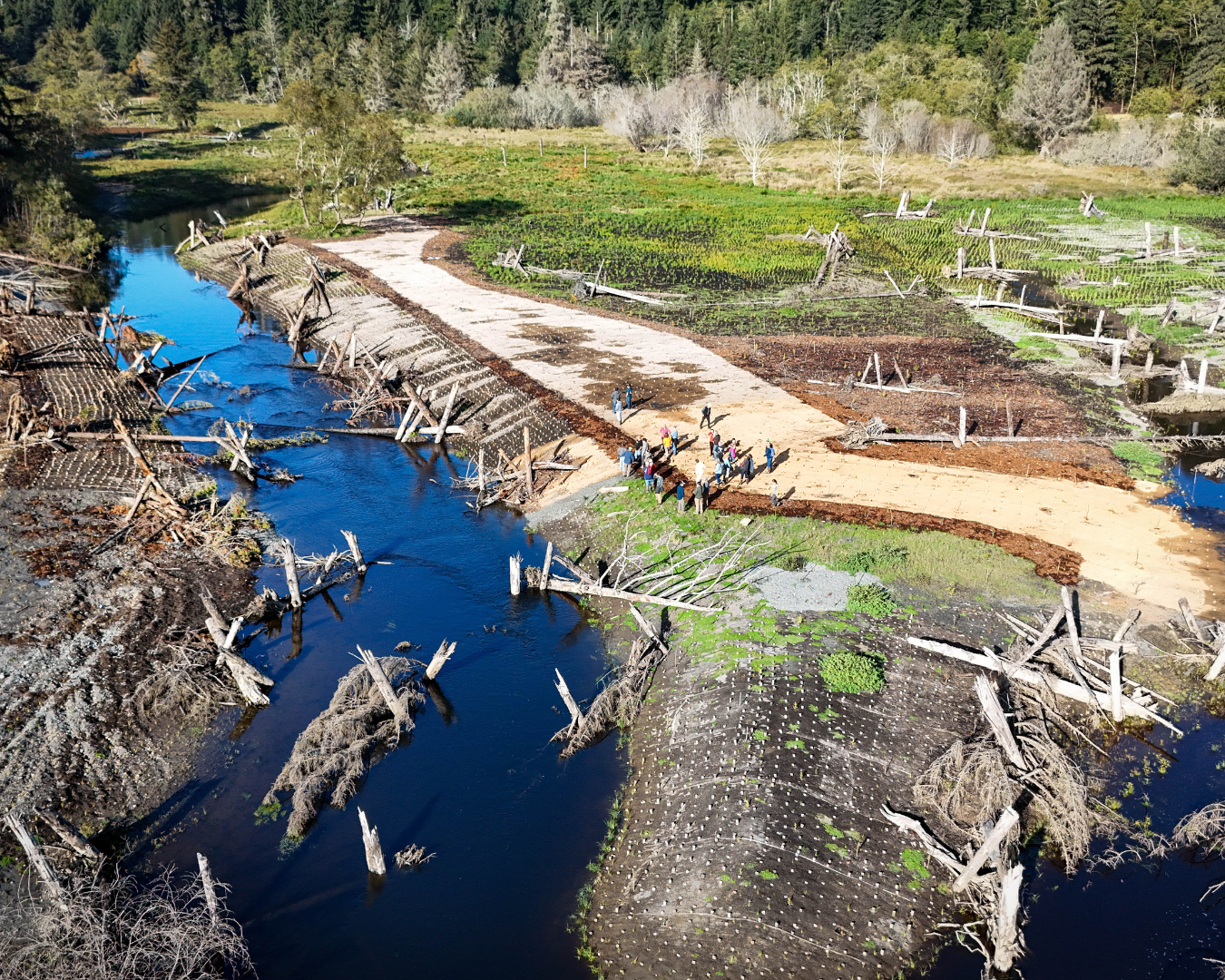
The project provided a surge of economic opportunity in the region for people across a range of specialties, all united by a common belief in its necessity. The $33 million investment supported human and fish communities alike — rebuilding a flow of stability into both salmon habitat in lower Prairie Creek and the local economy. It provided steady work for the local design team and even enabled a few Yurok Tribe Construction Corporation workers to become first time homeowners.
The Yurok Tribe Fisheries Department Revegetation Crew has been funded to steward the site for the next three years, sustaining ongoing employment rooted in ecological knowledge and cultural practice. Meanwhile, a new job training center at the former Prairie Creek fish hatchery — developed in partnership between the Yurok Tribe and the National Park Service — is expanding workforce development opportunities across the valley.
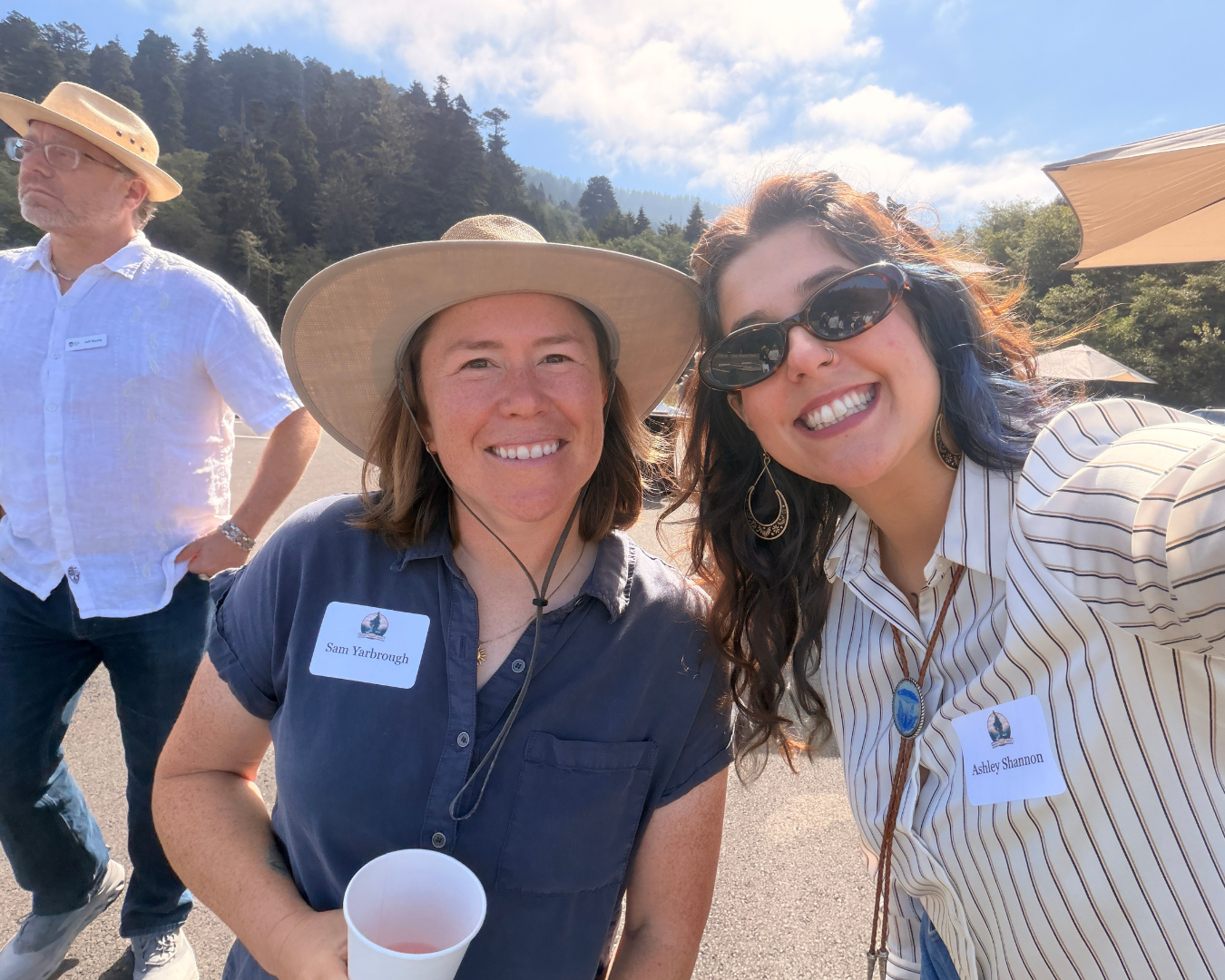
“This project has meant so much more than the ecological wins, which are already extraordinary,” says Ashley Shannon, CalTrout North Coast Project Manager. “Watching this public investment move through the local community — providing job opportunities, exciting scientific discoveries, and a sense of trust in collective action — I’ll always carry it with me. We built something together, and now it can be experienced by everyone.”
A Partnership Rooted in Trust
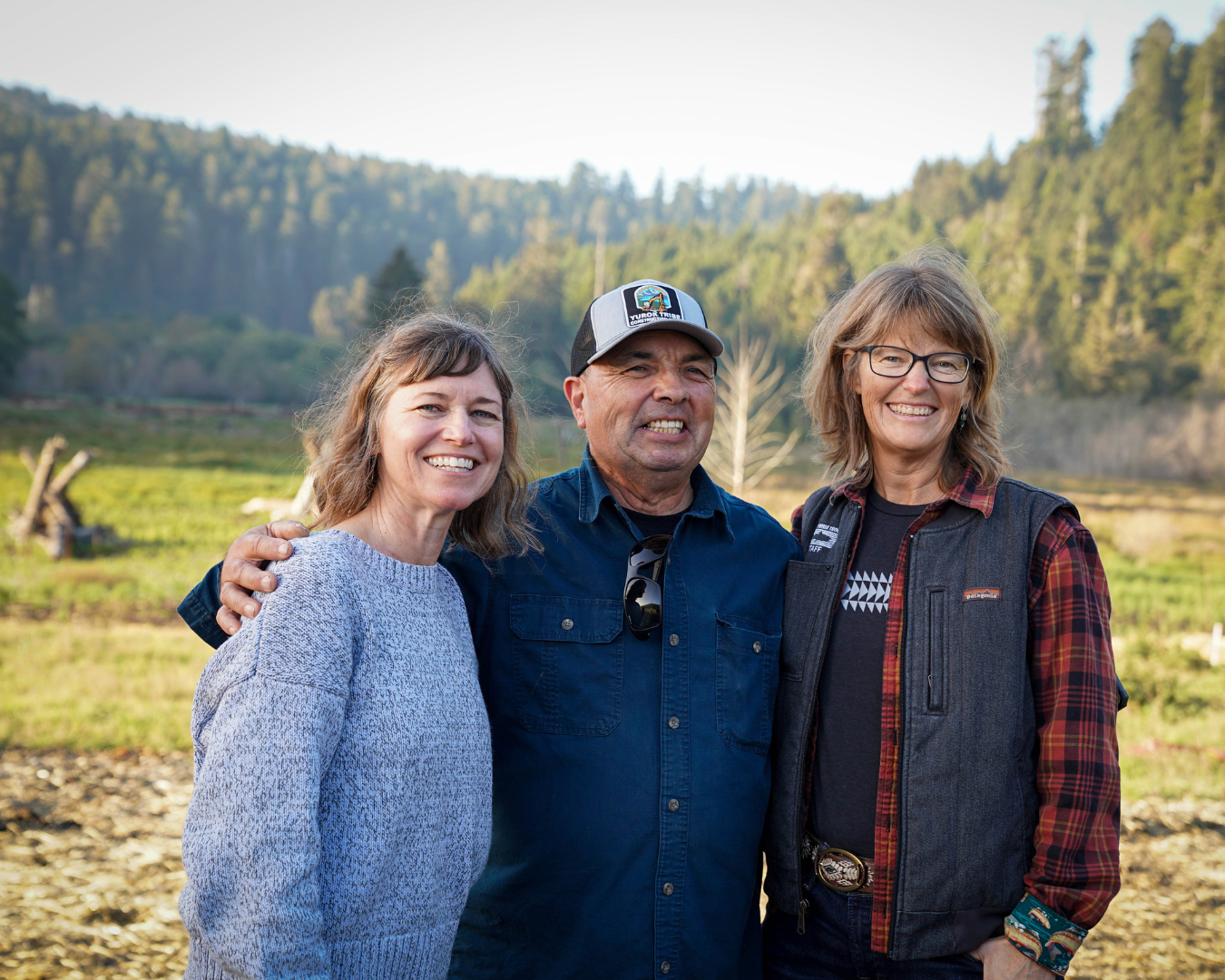
Projects of this scale could never happen through the sheer willpower of one organization. The Prairie Creek Floodplain Restoration Project brought together CalTrout and its team of local consultants, the Yurok Tribe, Save the Redwoods League, NOAA Fisheries, the U.S. Fish and Wildlife Service, the National Park Service, CA Coastal Conservancy, CA Wildlife Conservation Board, and CA Ocean Protection Council, and more, and at times connected with private landowners and the broader Orick community.
“This project represents a new standard for collaborative conservation, one that advances ecological restoration while honoring Tribal stewardship and improving community well-being.We hope its success inspires similar efforts across the nation. Our heartfelt thanks go to every partner who helped bring this transformational vision to life.”
Joseph L. James/Yurok Tribe Chairman
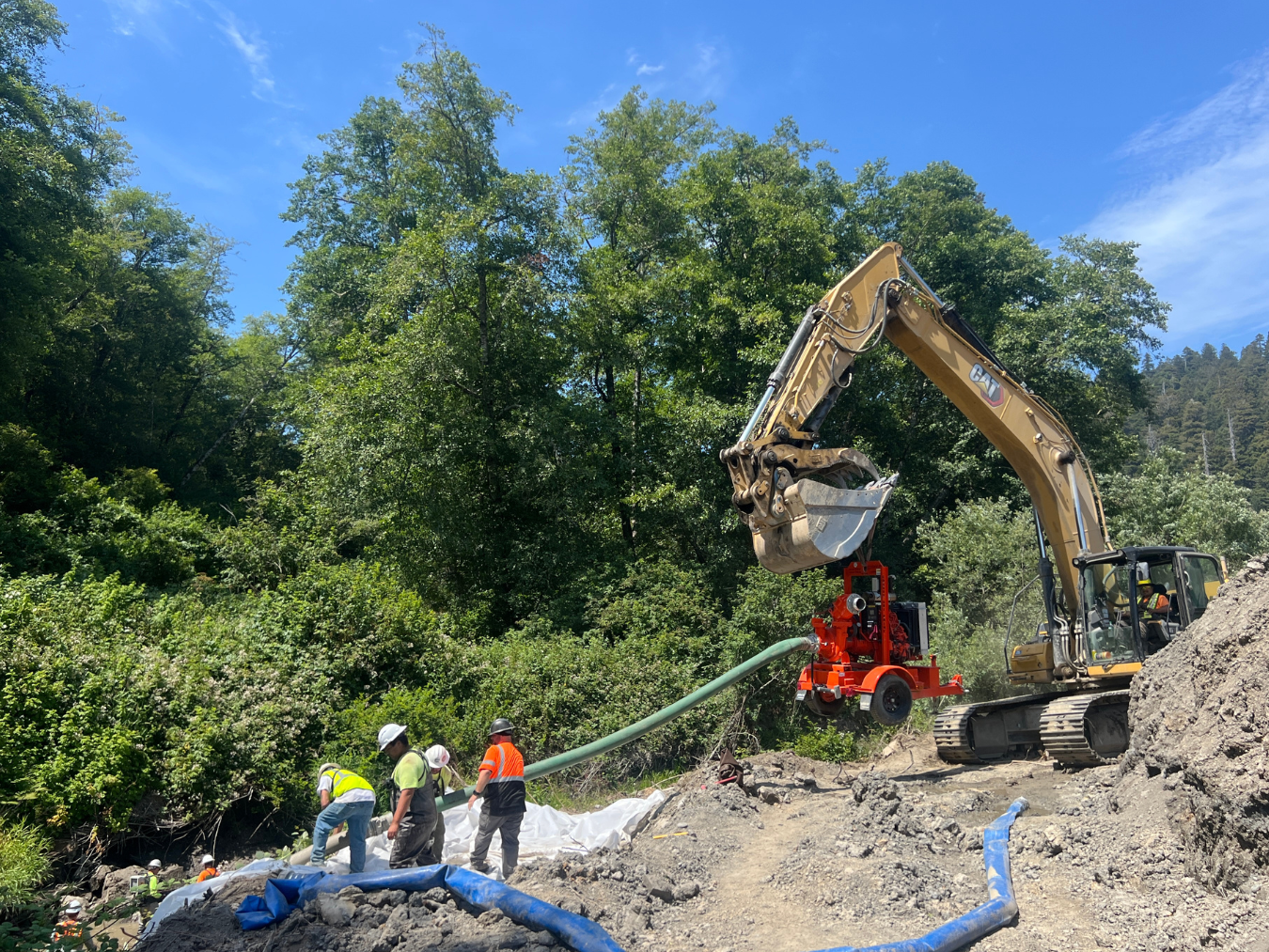
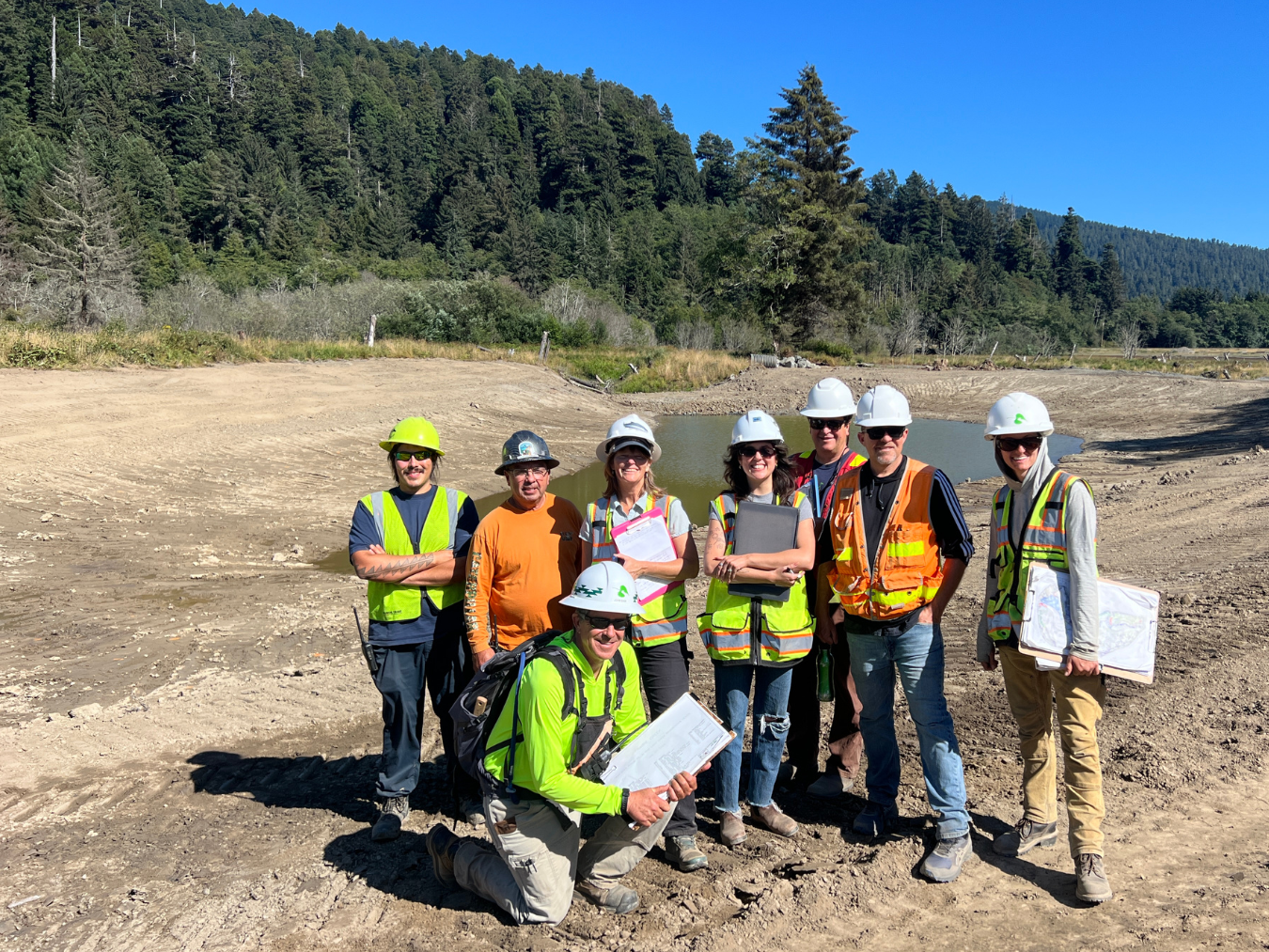
That partnership was built over years of consistent effort — showing up in weekly project meetings, in coordination calls, in shared learning and decision making about how to approach culturally sensitive land with care and respect, and ultimately, showing up at the restoration site day in and day out. The Yurok Tribe was part of the process from the beginning, at first as a technical advisor, and when construction started the Yurok Tribe literally moved mountains through the expertise of their Fisheries Department and Construction Corporation. And now, as the land’s returning stewards.
The Gateway Opens
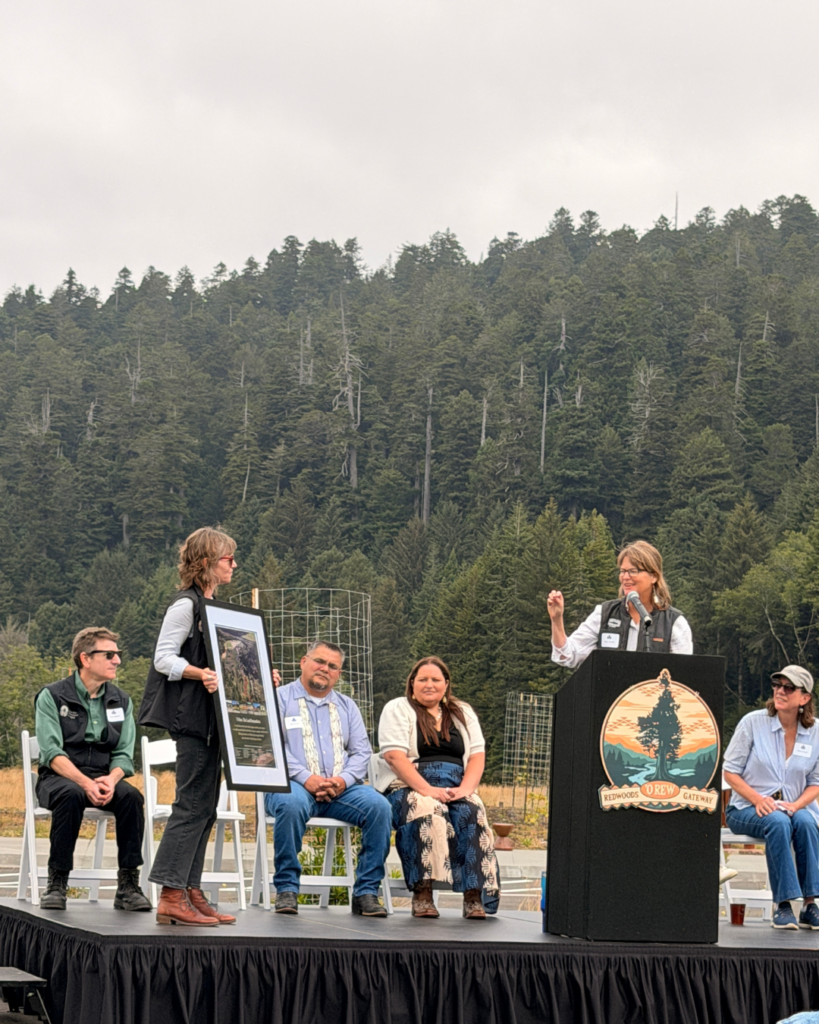
Now, the public will finally experience what years of work have made possible. The ‘O Rew Redwoods Gateway — serving as an entry point to Yurok Country and Redwood National and State Parks — features accessible trails, a pedestrian plaza, parking areas, and interpretive exhibits. These elements tell the story of the restored landscape and the living Yurok culture that continues to shape its care. A new segment of the California Coastal Trail runs through the site, threading old-growth redwoods into a larger network of accessible connection.
The land officially opened to the public on August 1. This is a place where the first people of this land tell a story and now, we can all learn and experience it.
“Returning this land to the Yurok Tribe and opening it to local communities and the visiting public is the culmination of years of careful planning and close collaboration. One of the things I find most exciting about ‘O Rew Redwoods Gateway is the opportunity to introduce so many people to what Indigenous partnership and stewardship looks like,” said Jessica Carter, Save the Redwoods League Senior Program Director. “More than one million people visit Redwood National and State Parks every year, and ‘O Rew is the perfect gateway for these visitors to step into this timeless redwood ecosystem and learn about the Tribe and their conservation leadership.”
What’s Next for the Redwood Creek Watershed?
The opening of ‘O Rew is an incredible accomplishment, but our work in the Redwood Creek watershed is far from done. CalTrout and our partners are now turning our attention to the broader watershed, working to develop a coordinated community centered restoration framework that will partner with private landowners to advance critical tributary restoration, uphold a commitment to estuary recovery, and forward salmon stronghold protection across all 179,000 acres alongside the people who live there.
That work, too, will uplift the community values through a commitment to accessible involvement opportunities like public forums and community events, and a critical attention to keeping Orick and the Yurok Tribe at the center of decision-making. If ‘O Rew has shown us anything, it’s that values-based restoration is the most effective and sustainable path forward.
“A critical value of this program is the idea that the healing of people and place happens through intentional engagement opportunities and a genuine interest in identifying shared understanding of one another’s values and interests,” said Ashley Shannon.
Read more about this momentous accomplishment in the Los Angeles Times!
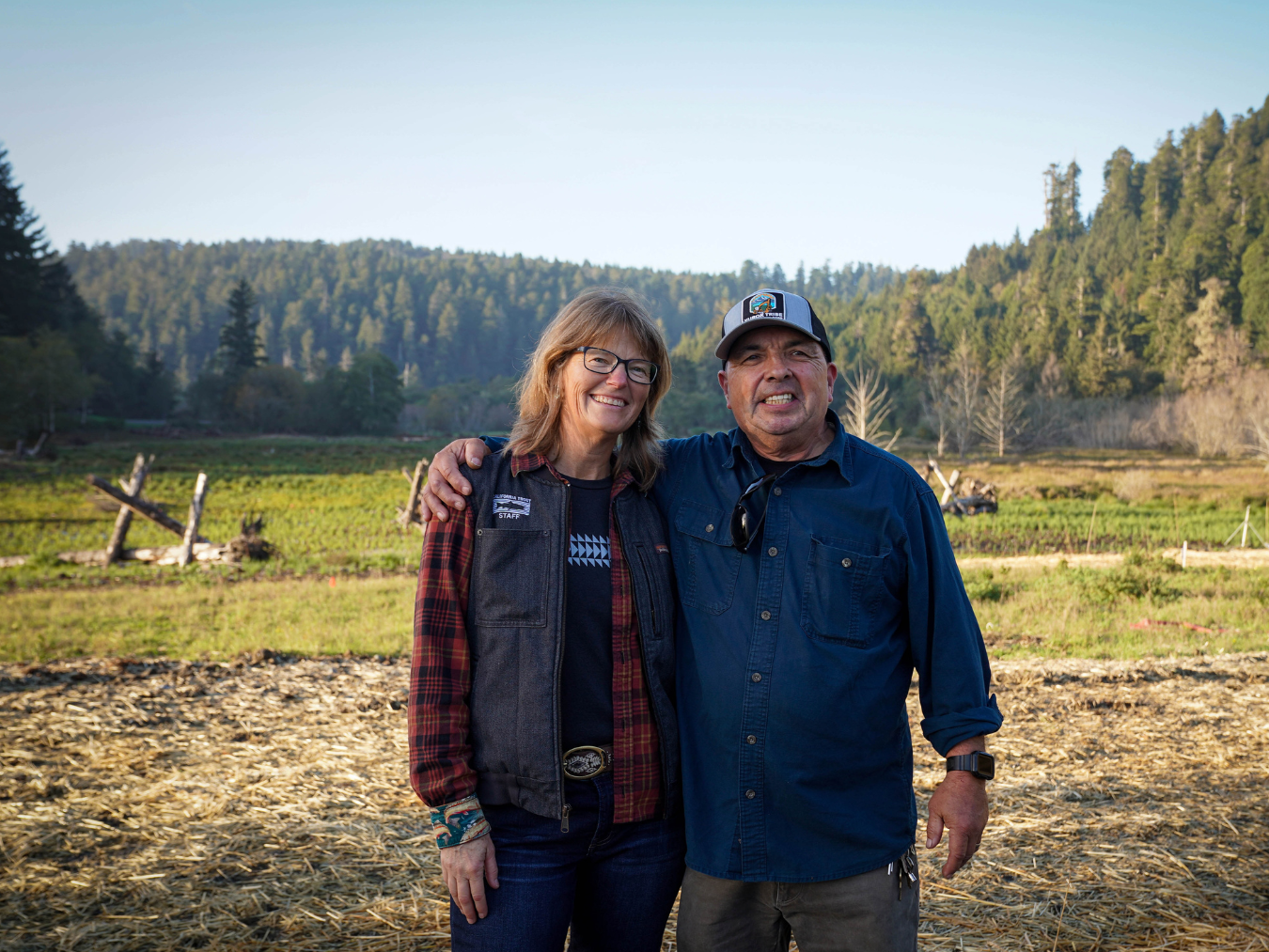
Hear more from Mary Burke, CalTrout’s North Coast Regional Manager, who helped lead this incredible project from beginning to end:
Outcomes
What this project has accomplished:
13,310
Chinook salmon tracked migrating upstream of the former Iron Gate Dam in 2025
88%
Of their historic range, reoccupied by Chinook salmon
360
Miles from the ocean of river accessed by salmon
22+
Partners working together on this project