Hatchery Killing Salmon To Prevent Mixing of Spring, Fall Runs
California’s Feather River Hatchery is killing salmon instead of harvesting and breeding them — a counter-intuitive practice for a hatchery — but the move is partially the result of a report which said California’s hatcheries have been harming the fish populations they’re supposed to support (from the Sacramento Bee):
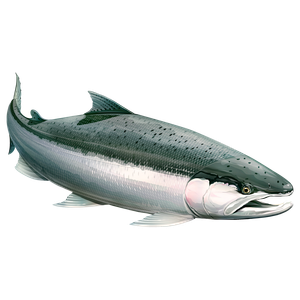
Since Sept. 17, the Feather River Hatchery in Oroville has been killing all salmon that enter the hatchery near the base of Oroville Dam. These fish are not being bred to make more salmon, as has been standard practice for decades, but instead are being donated to area food banks. The reasoning is rooted in new efforts to strengthen the species. The California Department of Fish and Game, which operates the hatchery, says it can’t be sure whether the fish entering the hatchery at this time of year are fall- or spring-run salmon. Rather than breed them anyway, as it has in the past, Fish and Game is culling them from the population based on research that shows it’s healthier for the species to keep the two runs genetically distinct.
Since Sept. 17, the Feather River Hatchery in Oroville has been killing all salmon that enter the hatchery near the base of Oroville Dam. These fish are not being bred to make more salmon, as has been standard practice for decades, but instead are being donated to area food banks.
The reasoning is rooted in new efforts to strengthen the species. The California Department of Fish and Game, which operates the hatchery, says it can’t be sure whether the fish entering the hatchery at this time of year are fall- or spring-run salmon. Rather than breed them anyway, as it has in the past, Fish and Game is culling them from the population based on research that shows it’s healthier for the species to keep the two runs genetically distinct.

The report driving this sea change in hatchery operation says California’s hatcheries lack the protocols and monitoring to understand the effects they’re having on wild fish populations, especially in light of revelations that hatchery fish can wreak havoc on wild fish populations (from the Sacramento Bee
The $2 million study, released Tuesday by state and federal wildlife agencies, concludes nearly two years of work by a panel of fishery experts. It found, among other things, that the state lacks standard protocols to manage the 40 million salmon it produces each year at eight hatcheries. It also does not do enough field monitoring to fully understand the fate of all those fish. The hatcheries, most of them on the Sacramento River and its tributaries, were built to atone for the spawning habitat eliminated by dams. But artificial breeding can also weaken the wild salmon that remain, making the entire population more vulnerable to environmental disruptions. To avoid those negative effects, the study proposes big changes to strengthen individual salmon runs and improve what managers know about them, including:Hatcheries should end a longstanding practice of trucking juvenile salmon to San Francisco Bay for release. Instead, all salmon should be released into the rivers at the hatcheries where they are raised. This will prevent them from “straying” into other rivers when they return from the ocean to spawn as adults. All the juvenile salmon produced at hatcheries should be marked with a coded-wire tag to better track their fate. Currently, just 25 percent are tagged. The percentage of the Sacramento River fall-run Chinook salmon population allowed to be harvested by commercial and recreational angers may be too high. Protocols used to set the harvest rate are inadequate and should be revised.
The $2 million study, released Tuesday by state and federal wildlife agencies, concludes nearly two years of work by a panel of fishery experts. It found, among other things, that the state lacks standard protocols to manage the 40 million salmon it produces each year at eight hatcheries. It also does not do enough field monitoring to fully understand the fate of all those fish.
The hatcheries, most of them on the Sacramento River and its tributaries, were built to atone for the spawning habitat eliminated by dams. But artificial breeding can also weaken the wild salmon that remain, making the entire population more vulnerable to environmental disruptions.
To avoid those negative effects, the study proposes big changes to strengthen individual salmon runs and improve what managers know about them, including:
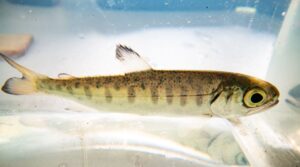
- Hatcheries should end a longstanding practice of trucking juvenile salmon to San Francisco Bay for release. Instead, all salmon should be released into the rivers at the hatcheries where they are raised. This will prevent them from “straying” into other rivers when they return from the ocean to spawn as adults.
- All the juvenile salmon produced at hatcheries should be marked with a coded-wire tag to better track their fate. Currently, just 25 percent are tagged.
- The percentage of the Sacramento River fall-run Chinook salmon population allowed to be harvested by commercial and recreational angers may be too high. Protocols used to set the harvest rate are inadequate and should be revised.
Fisheries experts have suggested that California’s hatchery system has replaced the Central Valley’s four distinct Chinook salmon runs (the only place in the world with four) with what amounts to a hatchery-supported monoculture).
A monoculture is far more susceptible to environmental fluctuations, and is probably responsible (in part) for the current “Boom or Bust” cycle we’re seeing in California’s salmon populations.
Managing hatcheries to help wild populations (or simply to do less harm) is perfectly in line with the hatchery system’s stated mission of mitigating for the loss of spawning habitat for wild salmon and steelhead.