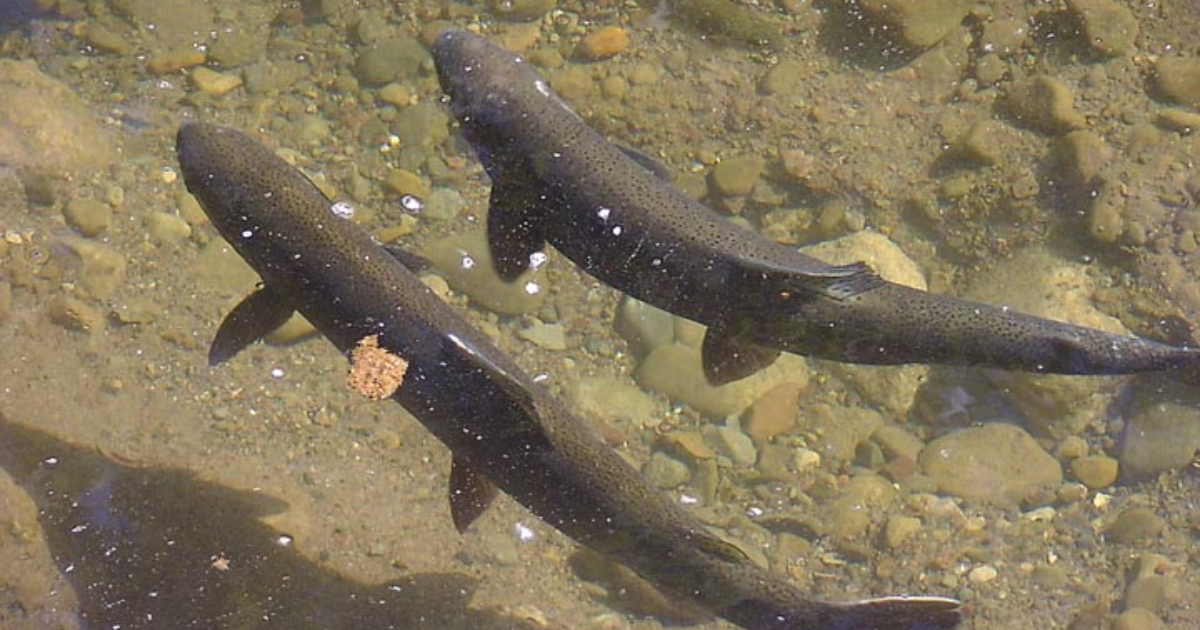
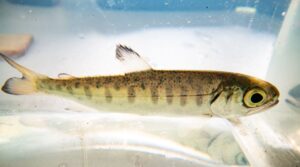
For the last several years, Jacob Katz, CalTrout’s Central California director, working in partnership with farmers, the Department of Water Resources and the UC Davis Center for Watershed Sciences, has been demonstrating how salmon reared on flooded rice fields grow bigger and heartier than their river-reared brethren for their journey to the ocean.
That work, known as the Nigiri Project, and the science behind has inspired the formation of the Central Valley Salmon Partnership which aims to put that science into action on a much larger scale. The online publication Water Deeply interviewed Jacob about the work and plans for the Central Valley Salmon Partnership.
This isn’t rocket science. The carbon that is the foundation of the food web, gets made out on the floodplain, not in the river channel. Unless we can start to spread water out so we can get that carbon back into the aquatic food web, you’re basically starving salmon and smelt populations. One aspect of what the Central Valley Salmon Partnership can do is become a venue to get all the necessary entities to agree on the science, and a framework, to put all that science into action.
This isn’t rocket science. The carbon that is the foundation of the food web, gets made out on the floodplain, not in the river channel. Unless we can start to spread water out so we can get that carbon back into the aquatic food web, you’re basically starving salmon and smelt populations. One aspect of what the Central Valley Salmon Partnership can do is become a venue to get all the necessary entities to agree on the science, and a framework, to put all that science into action.
To read the full Water Deeply article, click here. If you’d like to read more about CalTrout’s Nigiri Project, see the article in The Current below.
[joomag width=420 height=272 title=the-current-magazine-spring-2015 magazineId=0024027001423511360 ]