


by Megan Nguyen and Sandra Jacobson.
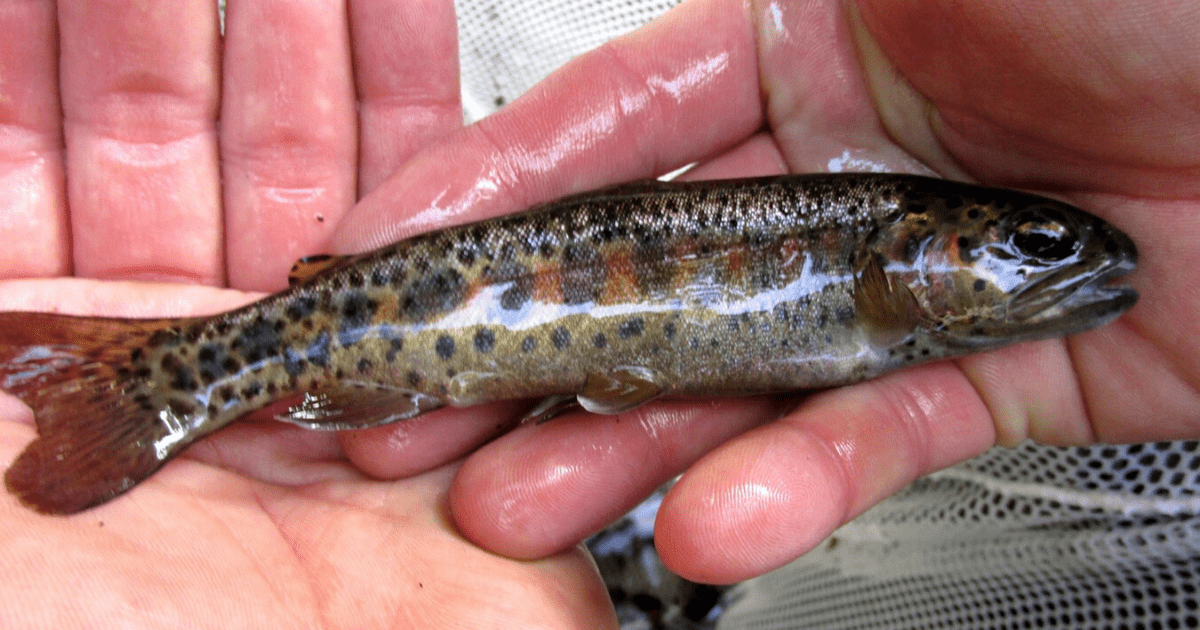
CalTrout is using spatial analysis in collaboration with the Pacific States Marine Fisheries Commission and California Department of Fish and Wildlife to plan for relocating native trout if they become threatened by wildfire or drought. Thanks to our project funding partners, the Fisheries Restoration Grant Program and Southern California Edison, this project will start in in 2020 to preserve the remnant populations of steelhead that have survived in remote areas of Southern California as resident rainbow trout.
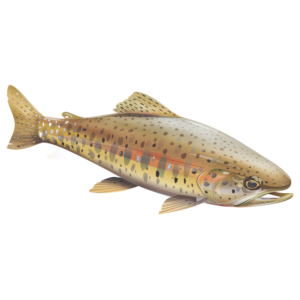
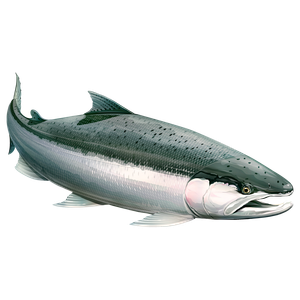
Southern steelhead represent the southern edge of the species’ range and are critically vulnerable to climate change. CalTrout’s project, the Native Rainbow Trout Project, will increase resiliency of native rainbow trout populations in Southern California and facilitate recovery of endangered southern steelhead. The four high priority rivers targeted for restoring anadromous steelhead populations are the San Luis Rey, Santa Margarita River, San Mateo Creek and San Juan Creek.
Southern steelhead populations are in danger of extinction within the next 25-50 years due to anthropogenic and environmental impacts threatening their recovery such as major dams and fish passage barriers, urbanization, and estuary alteration. (SOS II: Fish in Hot Water Report)
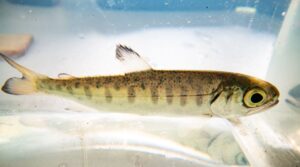
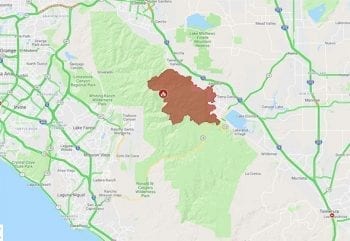
A growing threat for these sensitive species is fire as seen with the Holy Fire in August 2018 which burned a total of 23,000 acres in Orange and Riverside Counties. The fire burned Coldwater Canyon, which held one of two remaining native rainbow trout populations of steelhead descent left in this part of Southern California. Most of the trout survived the intense fire and were relocated to a regional hatchery for short-term safety. However, a long-term plan for relocating these rare and special native trout as they face a similar situation remains to be developed. There are only a handful of places that have all the needed characteristics.
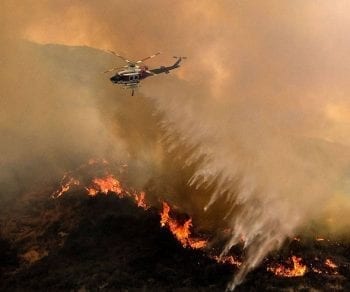
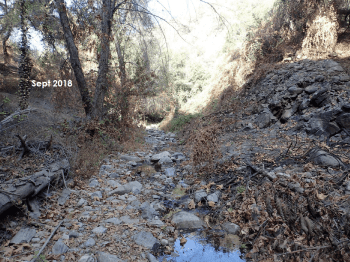
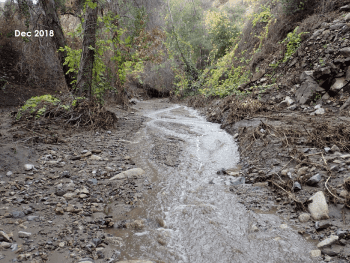
While historically wildfires have a long term positive impact for salmon, “Changes in the frequency and intensity of wildfire combined with a general loss of population diversity across the landscape may inevitably, create a phenomenon where salmonids lack the tools to recover and ultimately adapt to the new wildfire regime we are currently witnessing California.”
With additional threats arising, CalTrout is developing a plan using GIS-based analysis followed by ground-truthing to determine the optimal place of refuge for relocating and protecting native rainbow trout. The goal is to enhance population diversity and adaptive capacity in order to improve species resilience and provide these emblematic fish with the help necessary to adapt to a rapidly changing landscape. Once more populations are dispersed throughout Southern California, there will be less of a need to actively rescue and relocate the existing ones.
This analysis will consider:
- Rainbow trout presence, abundance, and genetic lineage
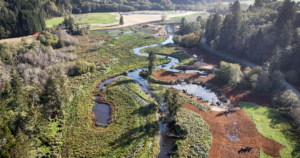
- Habitat characteristics (water temperature, water quality, stream gradient, canopy cover, natural springs location for consistent water flow)
- Fire interval maps for assessing fire susceptibility and history
Learn more about this project here: https://caltrout.orgprojects/native-rainbow-trout-protection