


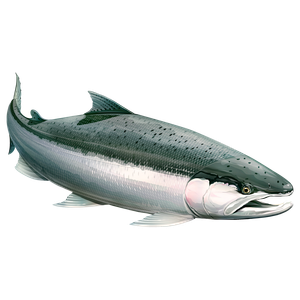


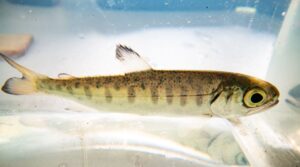
Researchers are reporting that hatchery-bred steelhead and salmon (West Coast) are far less productive in the wild than wild fish, and that the “domestication” of steelhead takes place at an extremely rapid pace — often in a single generation.
It’s yet another
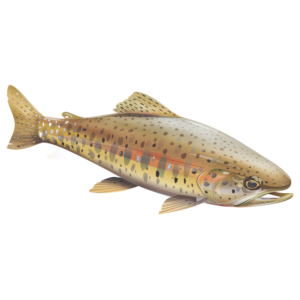
Researchers created an enormous fish family tree using genetic samples from 12,700 steelhead trout (which are in the same family as salmon) returning from the sea to Oregon’s Hood River to spawn. This fishy pedigree revealed the fish that spawned well in hatcheries had offspring that spawned poorly in the wild. “They’re adapting to captivity in a single generation,” study scientist Mark Christie, a postdoctoral researcher at Oregon State University, told LiveScience. In other words, the fish rapidly became domesticated, Christie and his colleagues reported Monday in the journal Proceedings of the National Academy of Sciences.
Researchers created an enormous fish family tree using genetic samples from 12,700 steelhead trout (which are in the same family as salmon) returning from the sea to Oregon’s Hood River to spawn. This fishy pedigree revealed the fish that spawned well in hatcheries had offspring that spawned poorly in the wild.
“They’re adapting to captivity in a single generation,” study scientist Mark Christie, a postdoctoral researcher at Oregon State University, told LiveScience. In other words, the fish rapidly became domesticated, Christie and his colleagues reported Monday in the journal Proceedings of the National Academy of Sciences.
What’s happening?
The traits that allows steelhead and salmon to thrive in hatcheries are not the same traits that allow them to thrive in the wild:
They found when fish produced higher-than-average numbers of offspring in the hatchery, the offspring of those offspring had just 71 percent the number of babies as fish born in the wild. In other words, whatever it is that makes baby fish thrive and survive in the hatchery is not beneficial in the real world.
They found when fish produced higher-than-average numbers of offspring in the hatchery, the offspring of those offspring had just 71 percent the number of babies as fish born in the wild. In other words, whatever it is that makes baby fish thrive and survive in the hatchery is not beneficial in the real world.
Scientists have long argued that hatcheries — while propping up populations — were actually harming the overall productivity of west coast steelhead and salmon, and that management for wild fish populations is needed.
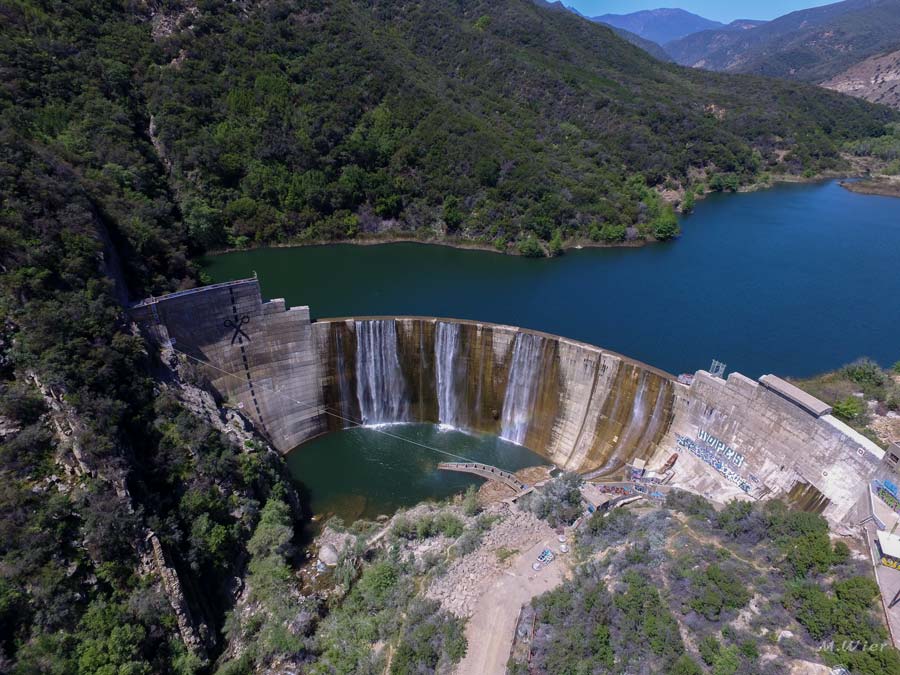
It’s also an argument for dam removal where native populations are cut off from spawning habitat and hatchery fish are used to bolster fish numbers — the situation on the Klamath River’s severely impaired salmon and steelhead populations.
Over the long term, hatchery fish genes will damage the productivity of the population as a whole.