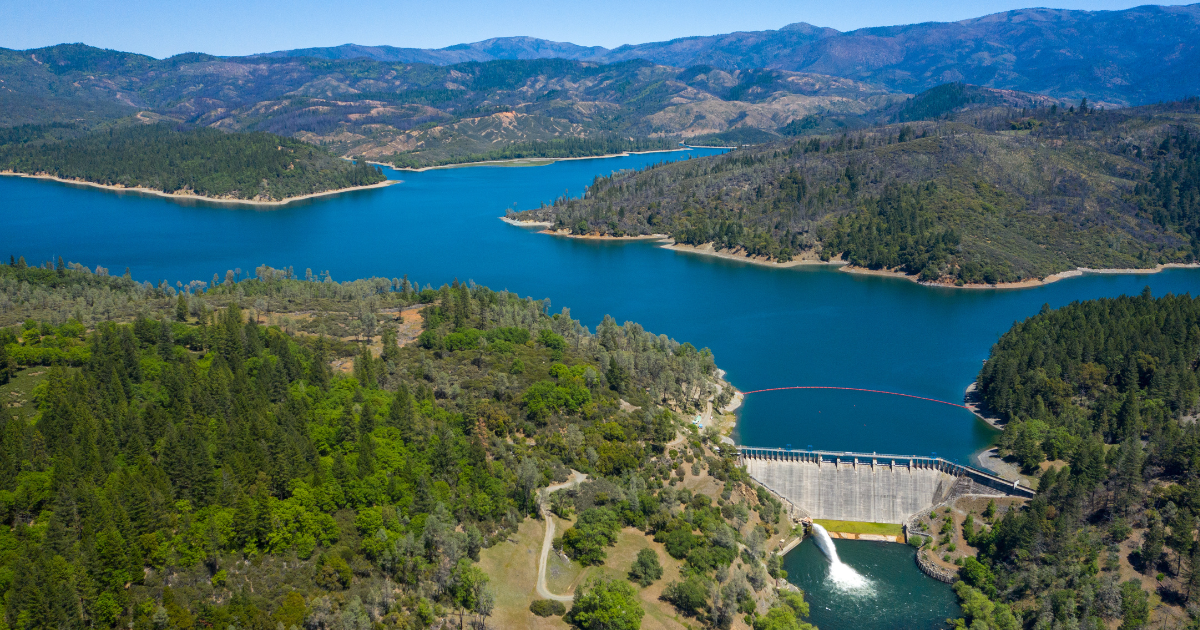
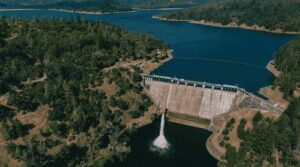

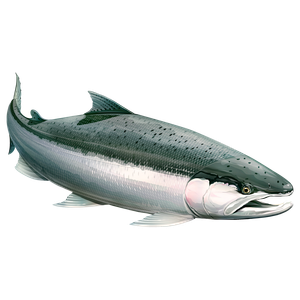
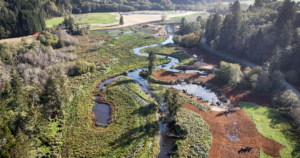


The Klamath is a river in peril, plagued by dangerously poor water quality and collapsing salmon populations. That could start to change as early as 2022, when four dams are likely come down on the river — the biggest dam-removal and river-restoration project in history. Dam removal is expected to help solve many, but not all, of the river’s challenges, and understanding the change that does happen is crucial to planning the next steps for improving the river’s health.
Robert Lusardi, CalTrout’s cold-water fish scientist, is pursuing a new research endeavor in collaboration with Rachel Johnson, a pioneering fisheries biologist with NOAA Fisheries West Coast. They plan to better understand fish movement by studying fish ears, or otoliths.
Otoliths are a piece of calcium carbonate in the inner ear of fish which keeps a record of a rare element, called strontium, that’s found in the water. Different parts of the river and different tributaries have different values of strontium in the water.
“If there’s a difference there, then the fish that rear in those locations will incorporate those different strontium values into their ear bones,” explains Lusardi. When an otolith is pulled from a fish, scientists can understand its life history by seeing the changing strontium values and better understand where it traveled in the watershed.
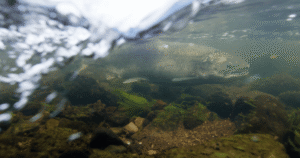
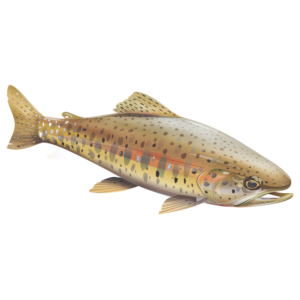
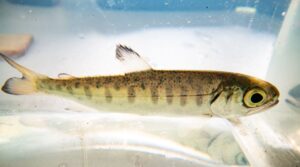
Their goal is to look at where juvenile salmonids are currently rearing below their current stopping point at Iron Gate Dam and track how that will change with dam removal as historical habitat is recolonized by salmon post dam removal.
“If it all works out, it will be mind-blowing,” says Lusardi. “It’s one of the coolest kinds of science I think I’ll be able to work on in the Klamath.”