Last Thursday, California lost one of its coldwater fishery conservation giants, and the Trinity River lost perhaps its biggest “friend.”
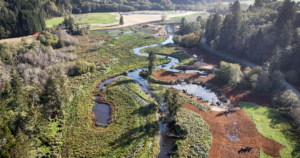
CalTrout is saddened to learn of the passing of Byron Leydecker, who — two decades ago — become stuck in the mud while fishing the Trinity River. Angered by the damage to the river caused by diversions and an ill-planned restoration project, Leydecker formed the Friends of the Trinity River.
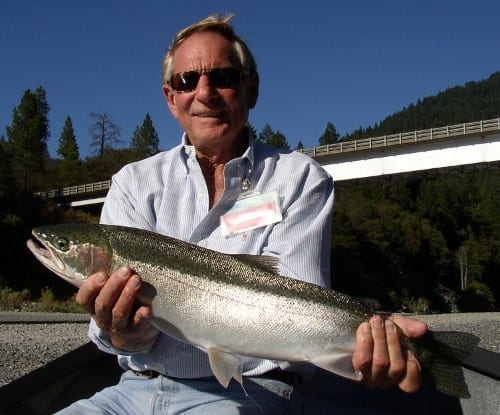
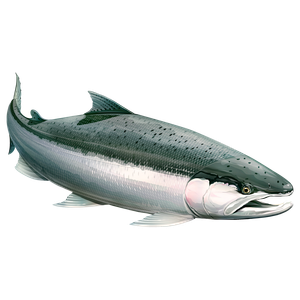
Over the course of nearly two decades, the Friends of the Trinity River was instrumental in convincing legislators to restore some of the Trinity’s historic flows (diverted for agricultural use), and in recent years, the Trinity has once become one of California’s strongest steelhead fisheries.
CalTrout Executive Direct Jeff Thompson said “You can’t fish the Trinity River today without taking a moment to thank Byron Leydecker for his efforts in restoring what is one of California’s most valued and appreciated rivers.”
Leydecker served on the California Trout Board of Directors from 2001 to 2003, and was the recipient of several CalTrout Awards:
- Joe Paul Award; October 2000 (For individual volunteer efforts to protect and restore wild trout and steelhead.)
- Roderick Haig-Brown Award; 2006 (For conservation of wild trout, steelhead and their habitat.)
- Richard May Award; 2011 (For significant, personal contributions to the growth, improvement, and advancement of CalTrout)
In addition, Byron Leydecker was recently honored by many other groups; (this from the Marin Independent Journal):
In January, Mr. Leydecker was honored for his efforts by the Humboldt County Board of Supervisors, the U.S. House of Representatives and the California Legislature. He was also named an honorary citizen of Trinity County.
Former CalTrout North Coast Regional Manager Thomas Weseloh was quoted in the Eureka Time-Standard about his relationship with Leydecker:
Tom Weseloh, who was the regional manager of California Trout in 1992, said he also received a call from Leydecker after the banker’s mud-spoiled fishing trip, but didn’t think much of it at the time.
”I would get calls all the time,” he said. “But very few of (the callers) went on to form a nonprofit and spend 19 years of their life trying to change the way things were and trying to restore a river below a federally financed dam.”
Over the coming years, Weseloh came to know Leydecker better than most, serving next to him on the Friends of the Trinity River board of directors.
Leydecker never had much of an ego, Weseloh said, pointing out that instead of calling himself founder, chairman or president of Friends of the Trinity River, Leydecker preferred the title “junior clerk trainee.”
”It was never about him,” Weseloh said. “It was always about restoring the river.”