
Fish kill illustrates dangers to isolated populations of even protected species
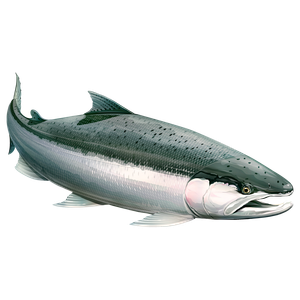
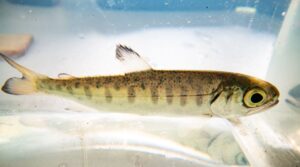
Steelhead are typically associated with big, wild rivers on the North Coast, but a few remnant populations still cling to footholds in urban areas, which is why it’s so heartbreaking to read about a burst water pipe which poured drinking water into San Mateo Creek at the rate of 1,000 gallons per hour — killing all the fish in the creek, including protected steelhead trout.
Drinking water leading to a fishkill? Sadly, yes. Drinking water is often treated with chlorine or chloramine (a combination of ammonia and chlorine), and is highly toxic to fish (via the SF Chronicle):
The dead fish began floating to the surface Saturday when a thousand gallons a minute of chlorinated water flowed down a forested hillside into the creek about a half-mile below Crystal Springs Reservoir, according to utility officials and residents.
Utility officials located the break in a 60-inch-diameter pipe next to a concrete bridge adjacent to Crystal Springs Road, near the border of Hillsborough and San Mateo. It took them eight hours to cut off the flow along a 4-mile section of pipeline, but water was still leaking out Monday at a rate of 200 gallons a minute, officials said.
“It’s bad,” said Stephen Rogers [ED: Stephen Rogers serves on CalTrout’s Board of Directors], a local resident who stood along the shaded banks looking at the streambed. “The fish here are an indicator species – like the canary in the coal mine. As long as the canary’s alive, things are fine, but when something like this happens, things are not fine.”
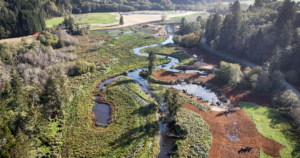
The Bay Area is riddled with streams that still support steelhead trout, though a number of previous spills prove suggest those fish are vulnerable.
Caltrout has been in contact with both NMFS and DFW, and Executive Director Jeff Thompson said “Our goal at this time is to understand the full extent of incident. Have we lost everything in the stream — fish and macroinvertebrates?”
“We’re looking to partner with the agencies to recover the stream and its threatened fish populations. We want to do what’s necessary to ensure incidents like this don’t happen again.”
Healthy, diverse fish populations can weather fish kills, but when species become isolated, a single event can have a catastrophic impact on distinct populations.
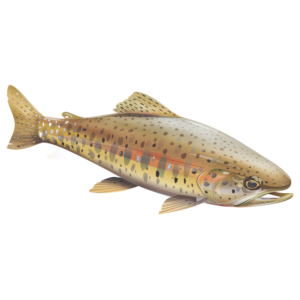
The San Francisco Bay Area isn’t the only example of an isolated population in California; Southern California steelhead trout (a distinct group which can survive higher water temperatures), McCloud Redband trout (which exist only in a few small streams on the flank of Mt. Shasta), Lahontan Cutthroats and many others still exist, but in small, isolated populations that could wink out in a second.
Once that occurs, they’re lost forever.