The Women of CalTrout
In this new series, our Communications Associate, Kara Glenwright, sits down for conversations with the women on our Conservation and Policy/Legal teams. Follow along as these women share their own stories and experiences as women in conservation and science at CalTrout.
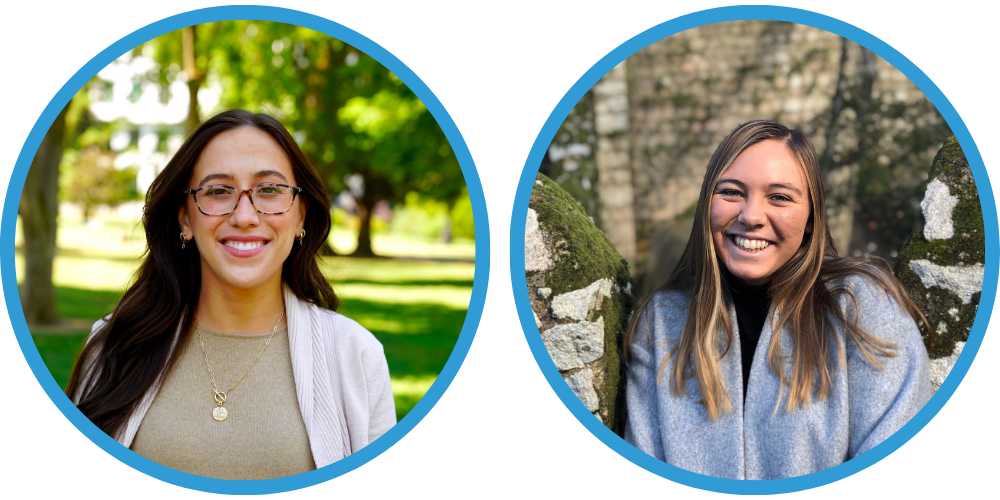
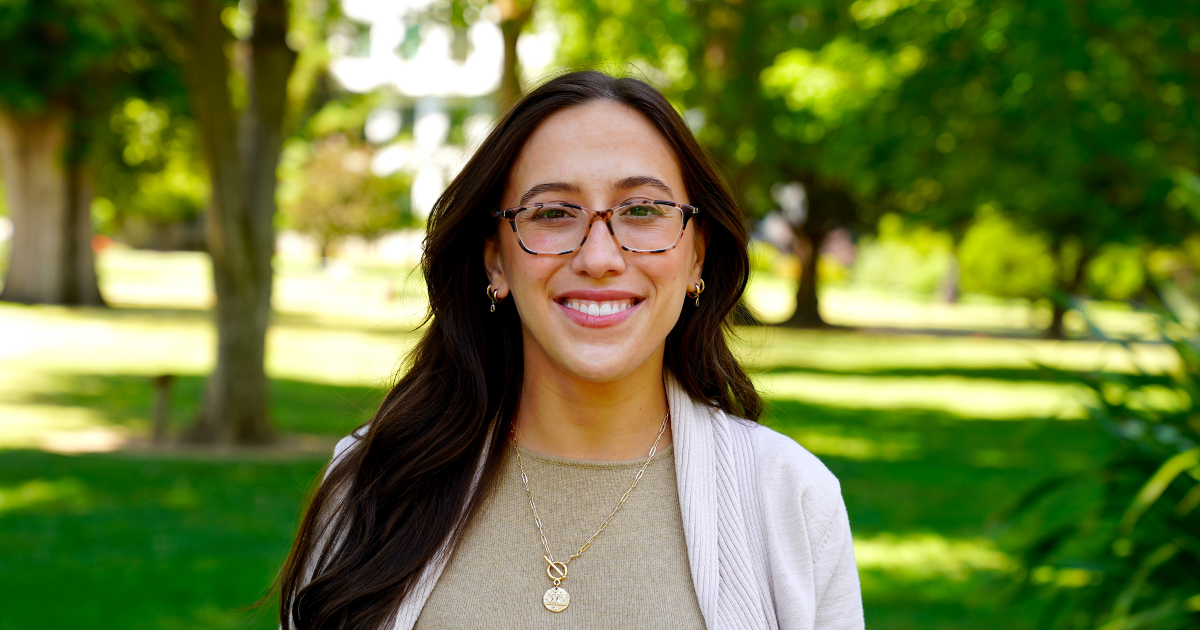
Analise Rivero, Associate Director of Policy, and Kara Glenwright, Communications Associate
KG: What is your position at CalTrout and what communities in California do you work most closely with?
AR: I am the Associate Director of Policy at CalTrout. A lot of the policy we work on touches across the state — I work mostly statewide.
KG: What inspired you to pursue a career in conservation?
AR: I always like to think that working on animal issues and conservation is in my blood. My family has a legacy of appreciation for animals. My grandma started the first SPCA of Puerto Rico, back in the day. Another relative in Puerto Rico, started a zoo in San Juan. Conservation is something that I’ve felt so strongly about for as long as I can remember: it has been imbued in my whole life. After my family moved from Puerto Rico to DC, my grandfather became a high-powered lobbyist. And now I’m a lobbyist! I have these generational commonalities with parts of my family and that is something that I am really proud of. I really feel it in my family history – I was always going to be doing something in the field of conservation.
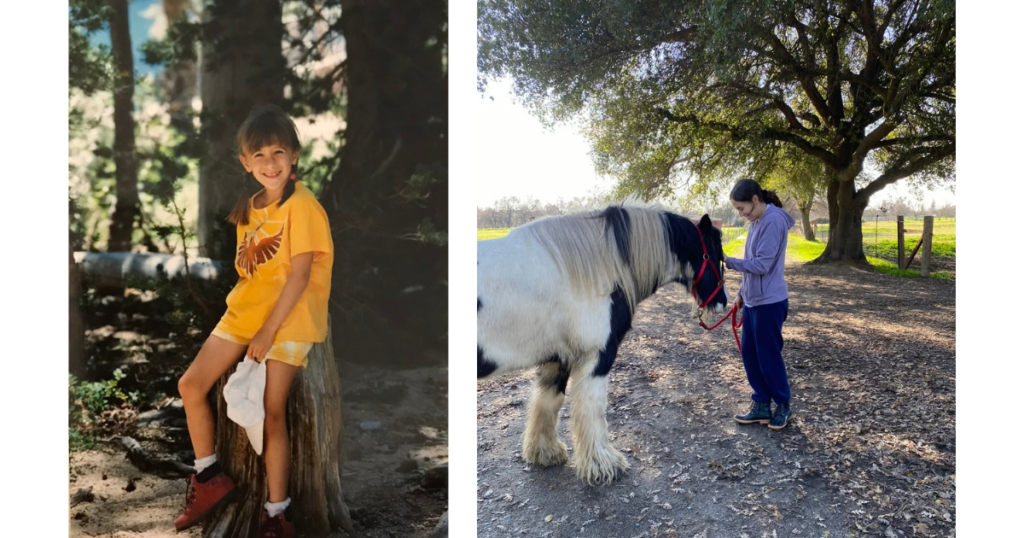
Left: Analise as a child, enjoying nature. Right: Analise with her mom’s horse, Charlie.
KG: Are there any historical or contemporary women figures in conservation (or outside of conservation!) that you feel particularly inspired by?
AR: I so very much look up to my mom. She has her own business and is a single mother by choice. She very much taught me how to be fearless even if I wasn’t necessarily feeling fearless – to push through and to be confident in my ideas and concepts. In the conservation space, I really look up to Wangari Maathai. She is a Kenyan environmentalist and the first African woman to win a Nobel Peace Prize. Something that I find really cool about her was that she incorporated multiple of her passions into one. For her, it wasn’t just the environment, it was women’s rights and social justice too. Today, a lot of conservation groups are figuring this out – you can incorporate multiple good acts into your work. That’s something that’s really cool about CalTrout as well and I think that’s where we’re moving.
KG: What is your favorite part of your job? Could you share with me some of the most rewarding moments of your work?
AR: I love having the opportunity to speak with legislative staff about issues that they weren’t previously familiar with and impart some of my passion to them to help them become passionate about it too. My job is to help bridge that connection to someone who lives in the middle of LA or the middle of Sacramento, someone who has never fished before, and to make them see why CalTrout’s work matters to all of us. It’s not just for anglers, it’s for everybody. It’s so rewarding to see when that connection is made — you can see it in their eyes.
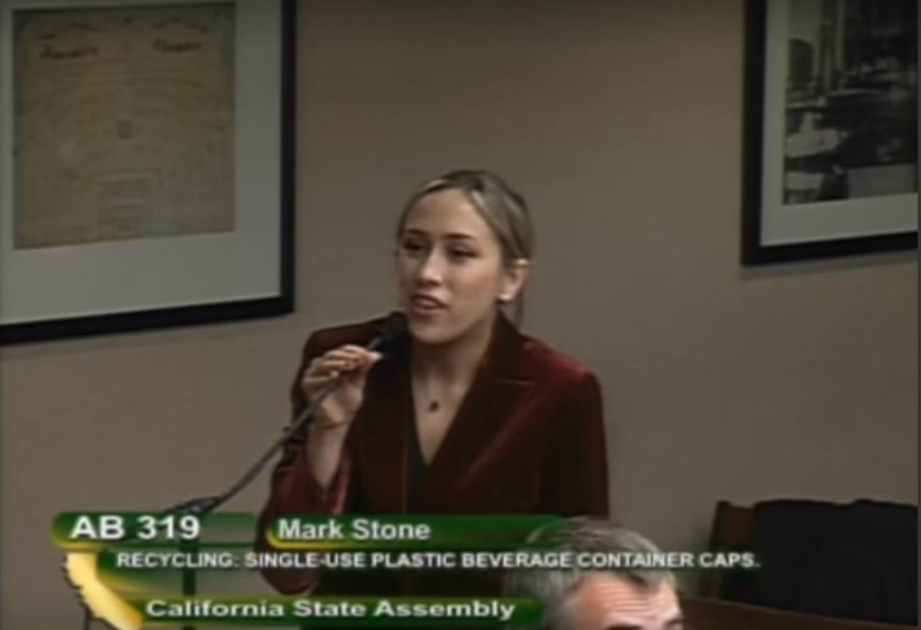
Analise testifying for the first time in from of the Legislature.
KG: What does it mean to you to be a woman in this field?
AR: The policy space, for a long time, was really male dominated. Especially in the hooks and bullets category (a classic term for groups that work on fishing and hunting issues) that can be very male dominated. I think that’s changing, but for me, it’s an honor to be a woman in conservation. I’m following in the footsteps of these amazing women that came before me, but I’m also making sure to reach behind and to bring those along with me. I want to uplift other young women coming into this space, and I feel so passionate about this because that’s what was done for me. Especially in the conservation space, young people are our future. It’s our duty to encourage that passion.
KG: What message would you share with younger women who hope to pursue a career in conservation someday?
AR: It’s ok to not have a straightforward path. Initially, I thought I wanted to be a veterinarian. But I realized that perhaps science wasn’t my strong suit. I could do it, but wow was it going to be an uphill battle. For me, it was about figuring out how do you marry your passion with your natural skill set. I found that my natural skill set was more in the reading, writing, and talking arena. Figuring out how I could combine those two passions was huge – and I think can lend itself to more job satisfaction. For me, it was definitely a windy road of figuring out how to approach all of this. Don’t be hard on yourself if at any point in your career you’re not quite sure what you’re doing – its ok to keep figuring it out!