The Women of CalTrout
Join us for the return of our profile series featuring remarkable women shaping the conservation landscape! Our Communications Associate, Claire Bergerson, sits down for conversations with the women of CalTrout, who are contributing their experience, talents, and time to preserve the home of humans and wildlife. Follow along as these women share their journeys and perspectives, inspiring a new generation of women to challenge the status quo.
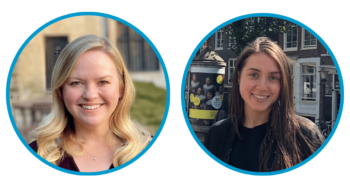
Sarah Trenschel, CalTrout Member, and Claire Bergerson, Communications Associate
What sparked your passion for exploring California’s outdoors and how did you find yourself drawn to the world of fly-fishing?
I grew up on the coast of Santa Barbara, so I’ve always been very outdoor-oriented, from spending time at the beach to playing golf competitively. Since then, I’ve learned how diverse the landscapes of California are and how much they have to offer.
While I always fished conventionally, I got into fly-fishing over the last 10 years thanks to my partner, Russ, and dug into California’s outdoors through the California Heritage Trout Challenge, a program through the CA Department of Fish & Wildlife. It took me to all the different corners of the state and places that I didn’t know existed and also exposed me to the environmental challenges many fish in California have experienced, as well as how much work has gone into improving and stabilizing habitat for our native trout.
One place that I really learned a lot about fly casting and teaching is through the Golden Gate Angling and Casting Club, where I’ve been lucky to have amazing mentors and teaching opportunities as we get hundreds of people that come to the club every month to learn to cast.
How did you first hear about and get involved with CalTrout?
My partner, Russ, introduced a fly-fishing class at Stanford University, which I helped teach. We reached out to CalTrout to come in and talk to the class as an opportunity to introduce Stanford students to conservation and all CalTrout’s important work.
Since then, I’ve been involved in more CalTrout events and met a bunch of amazing folks and have helped with casting instruction.
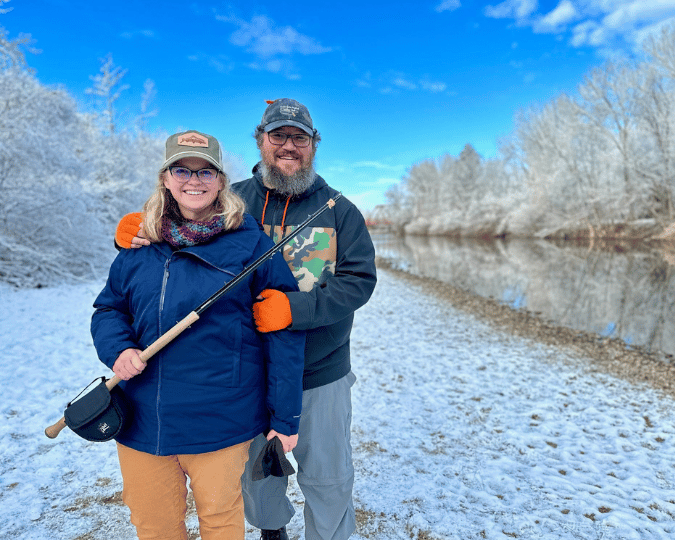
Sarah and Russ in Idaho casting Spey rods and teaching casting
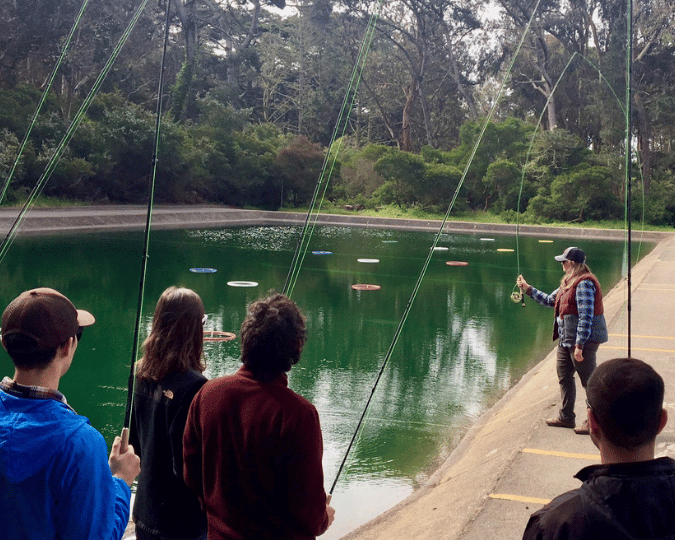
Teaching a Stanford University fly-fishing class
Could you tell us a little bit about the fly casting programs you helped develop and what motivated you to create them?
While helping teach the Stanford class, it dawned on me that for every 15 or 20 students we got, we’d be lucky if two women joined. This didn’t seem right because I believe fly-fishing should be for everybody and I love the sport so much I wanted to share it with others. Through that experience, a light bulb went on and I made a declaration to become an expert in fly casting and instruction and fly-fishing so that I could help bring more women into the sport.
Over the next few years, I worked to become a better caster and certified casting instructor so I could share my enthusiasm and knowledge with others and give back to the sport that has given me so much. Through Fly Fishers International (FFI), Russ and I both used the Fly Casting Skills Development Program, and we helped with iterations of that program to get it to where it is today. Now, we’re working on globally rolling it out to train people at fly clubs about how best to use it, and to bring more people into fly casting, fly-fishing, and ultimately, conservation. The program is about making fly casting fun for people, which makes time on the water more rewarding, and increases their connection to nature and leads to more conservation awareness.
What do you find most inspiring about CalTrout’s work?
It’s hard to pick just one! One of the more recent bodies of work is seeing all the energy and persistence that’s gone into the dam removals to return rivers to their wild state. It’s so important both environmentally and culturally
Beyond that, I really value the structure of CalTrout. I love the regional approach to what’s going on in different areas of the state – it’s not one size fits all. I especially love hearing about what’s going on in Southern California or different regions that I’m not normally exposed to. Thank you for all that you do!
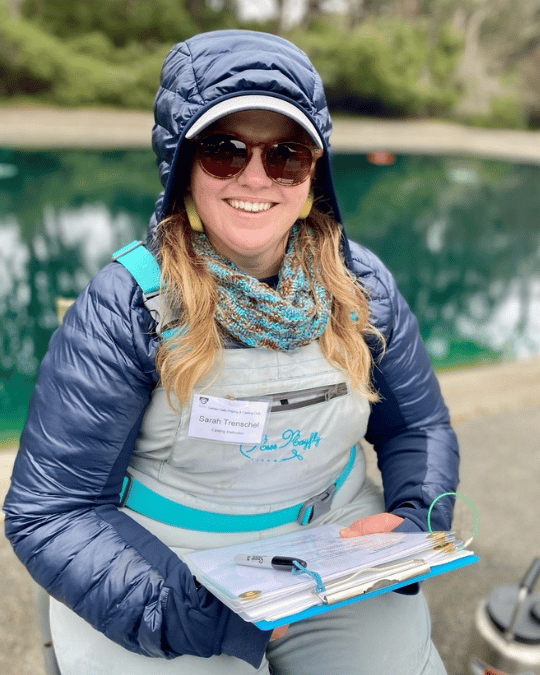
Teaching a Spey class at Golden Gate Angling & Casting Club
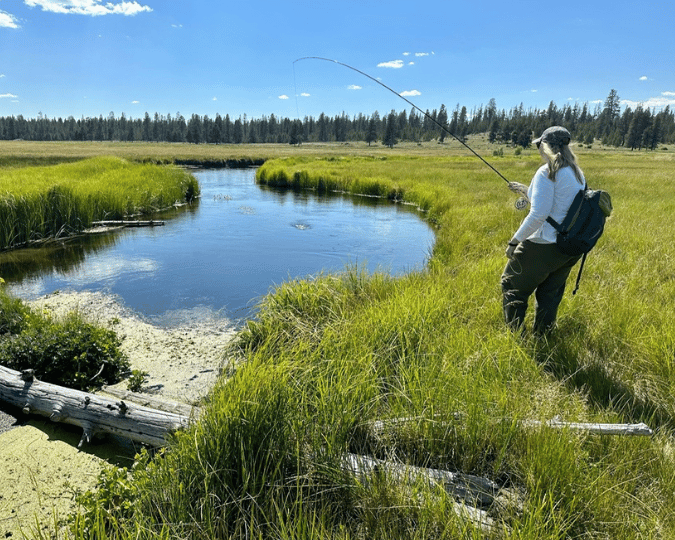
Fishing in Oregon on the Williamson
How do your environmental interests and activities fit in with your other priorities?
Russ is a teacher at UC Davis and I work in HR at a mission-driven company to power a more effective and accountable government. We don’t have a family of our own and love devoting our free time and energy towards fly-fishing and fly casting. I’m very lucky and proud of how much Russ and I have achieved together and we both find it very rewarding to learn about fly casting and to teach others; we especially value teaching teachers these days.
What does it mean to you to be a woman in this field?
Traditionally, you see a lot more men involved in fly-fishing and fly casting. I’ve learned that if you want to be a role model or just reach more people in the field as a woman, it helps to be really good at both casting and teaching. It can feel like there are more eyes on you and there are higher expectations at times, and that challenge has fueled me to be the best I can be. The fly-fishing and casting community is wonderful and I’ve had great experiences with men and women in the sport and am grateful for the opportunities I’ve had.
Since getting into fly-fishing, I’ve seen a lot of positive changes that support women from the adoption of more women’s fishing programs to companies investing in women-specific gear, clothing, and waders which is great.
To celebrate the “history” part of Women’s History Month—is there a woman from history that you find especially inspiring? Or perhaps a mentor from your own life?
The one that is very near and dear to my heart is my good friend Amy Terra. She has been a president of a fly-fishing club and is constantly investing what little free time she has towards women in fly fishing. She brings a next-level approach to inclusion and care for everything she does and goes above and beyond to advocate for women in the sport and ensure they have access to resources. She always takes the high road and does everything she can to empower and enable women and kids, and bring more diversity into the sport. She’s an awesome steward of both fly-fishing and the environment. Her persistence and tenacity to teach others and introduce them to fly-fishing is something I truly admire.
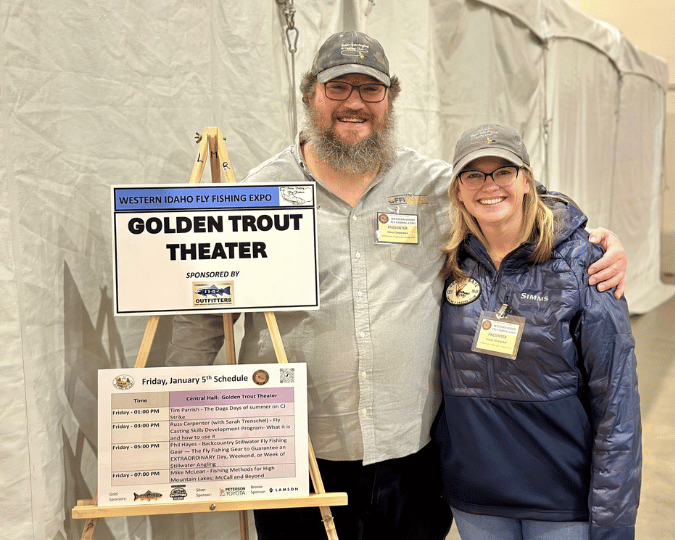
Russ and Sarah in Boise, Idaho teaching the FFI fly casting skills development program to anglers and training on being a program facilitator
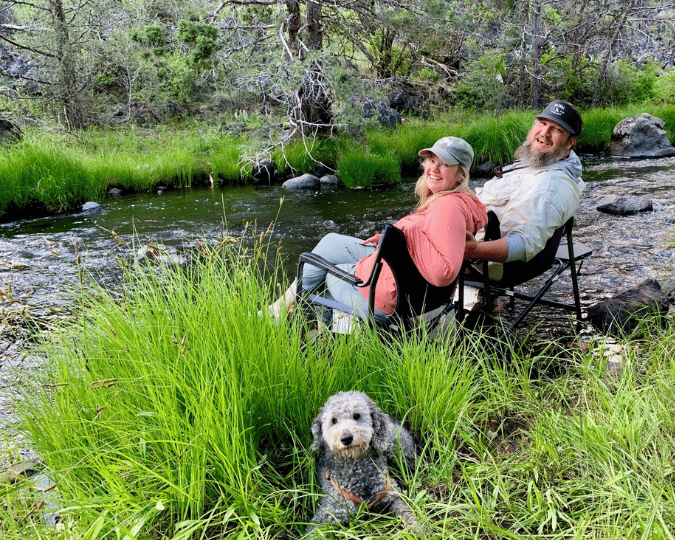
Family camping trip
What message would you share with younger women who hope to pursue a career or hobby in conservation or fishing?
Just get out there and explore! From a fly-fishing perspective, finding a local club or group to help build community is important. From a casting perspective, I can’t help myself from saying – go practice, get good because your time on the water will be more fun and valuable. If you’re better at casting, you’ll have more time to look around and enjoy birds and nature. Also, empower each other, specifically empower other women and bring them into the sport!
Bonus question: do you have a favorite fish/river/body of water in California?
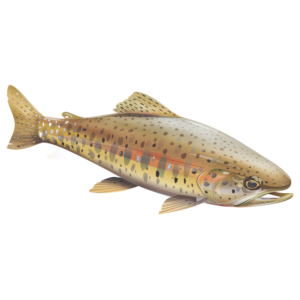
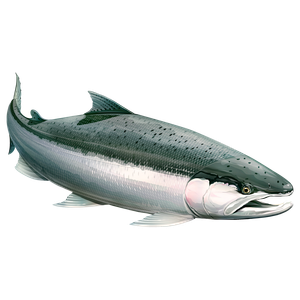
My favorite fish in California is the coastal cutthroat trout, which I learned about through the Heritage Trout Challenge and fishing in the Redwoods. I love fishing the lagoons in Humboldt. One of my most memorable fish was a sea-run coastal cutthroat trout that hit my fly so hard, I almost fell down and I’ll never forget that brief connection with a unicorn.