CalTrout Provides Cooperative Funding for Innovative Salmon Research
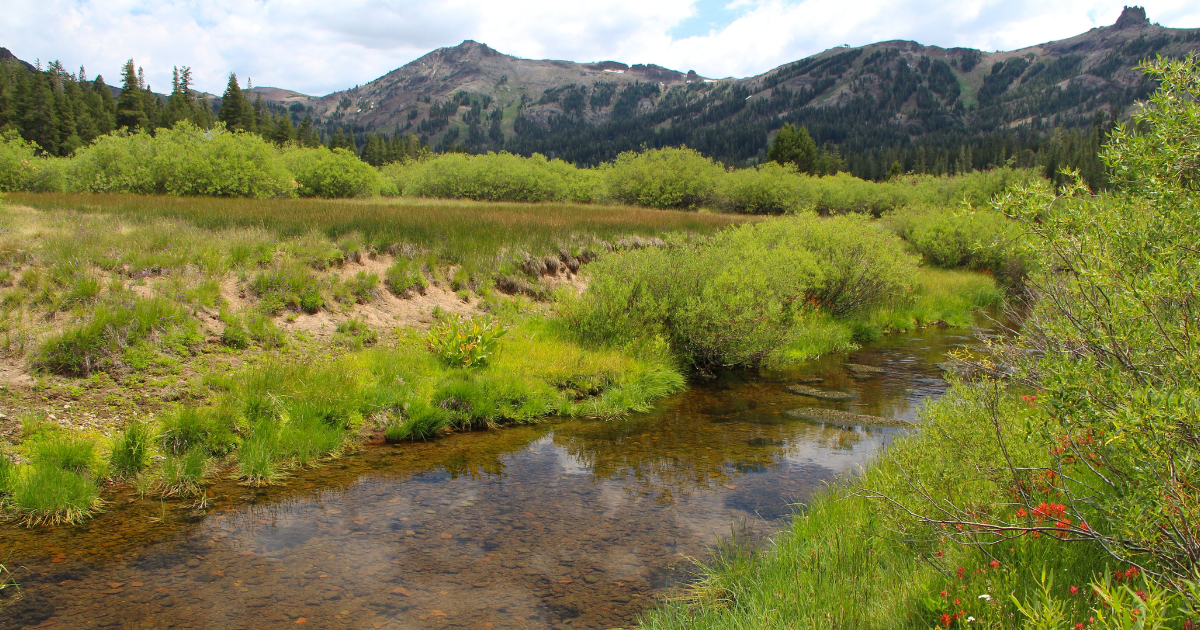
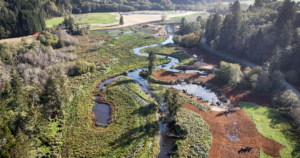
The California Central Valley was once dominated by marshes that flanked the Sacramento River and its tributaries, extending over hundreds of thousands of acres of the valley floor.
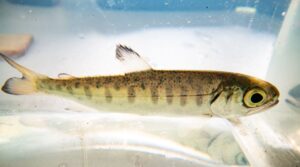
During most winters, the valley’s rivers could be counted upon to overflow their banks and spread out, creating a vast seasonal wetland. Juvenile salmon were carried by flood waters onto the floodplains — where they were sheltered from the main river current and presented with rich food resources, growing large and strong.
Simply put, floodplains represent near-perfect rearing habitat.
Today, only 5% of these floodplains remain.
Floodplains A Key To Salmon & Steelhead Restoration
Central Valley salmon and steelhead restoration represent one of California’s biggest challenges. Efforts are underway to improve the Delta, provide fish passage above dams that ring the valley floor, and improve flows below these dams.
These efforts are important, but providing juvenile fish access to historic floodplain habitat is an often-ignored element driving the health of Central Valley steelhead and salmon.
Substantial scientific evidence tells us bigger juvenile salmon are far more likely to survive entry into the ocean and return to spawn as an adult.
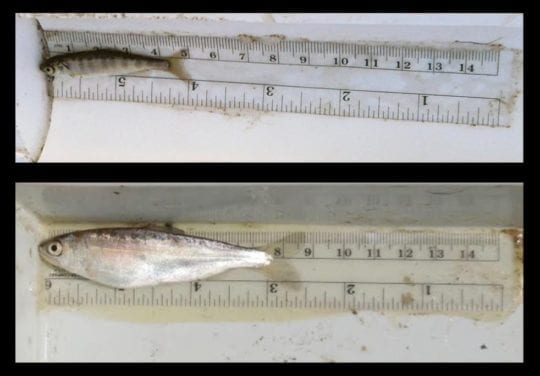
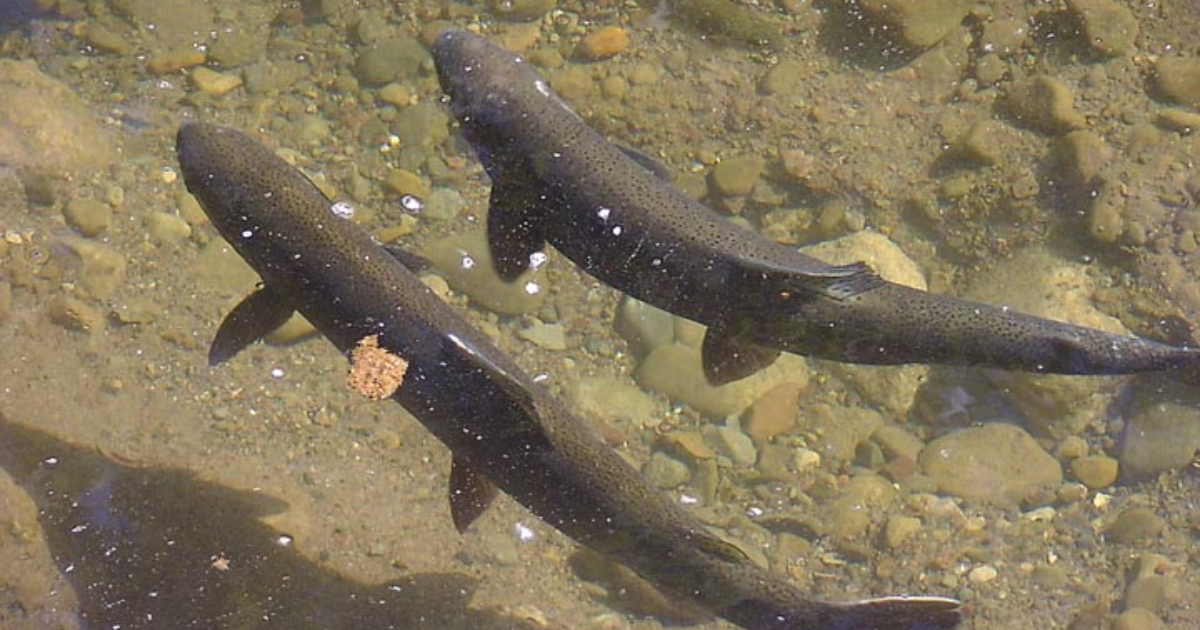
Floodplain habitats allow juvenile salmon to grow large and strong, especially during the winter and early spring months. Young salmon that rear in off-channel habitats are larger and in better condition when they head out to sea than are fish confined to the main river channel.
Floodplains Protect Our Cities
For some time, a Central Valley Flood Protection Plan has been in development because the state’s current system is vulnerable to catastrophic events that could flood Sacramento and other cities in the Central Valley.
In fact, Sacramento is the United States’ most vulnerable metropolitan area; the chances of a catastrophic flood occurring within the next 100 years is 50%.
A Department of Water Resources analysis shows that simply fixing the existing levees is not an answer. They simply funnel higher flood waters downstream at levels which the levees, even with repairs, simply can’t handle.
The current state-driven effort to develop a Flood Protection Plan provides an opportunity to ensure the needs of steelhead and salmon are being met. CalTrout is working with a group of partners to ensure the plan includes certain measures which will help the fish.
Specifically, we are advocating for levees setbacks and increased capacity of flood bypasses. This will accomplish two important things:
- Increased capacity of the flood system will improve public safety, the highest priority for the Flood Plan
- Increased floodplain capacity will provide more floodplain habitat for steelhead, salmon and other native fish of the Central Valley
Central Valley Flood Plan Adopted
An important first step in implementing progressive floodplain management was achieved on June 22, 2012 when the Central Valley Flood Protection Board approved the Flood Protection Plan.
CalTrout will continue to work with partners and the Board to actively guide planning efforts so that the plan’s ambitious vision can become a reality. Developing this plan is the first step in what is sure to be a long and valuable process in improving habitat conditions for Central Valley steelhead and salmon.
To read the final adopted plan, click here.
Study: The Knaggs Ranch Agricultural Floodplain Pilot Study
The Knaggs Ranch project demonstrates that fish, waterfowl and agriculture can profitably coexist on the same parcel of land.

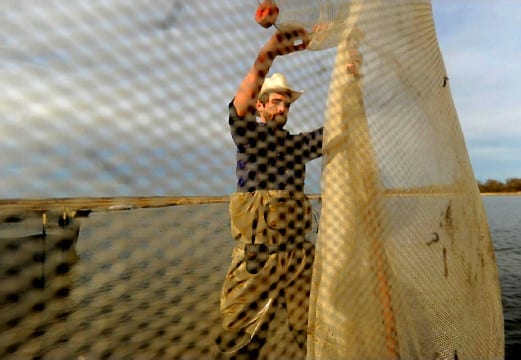
The Knaggs Ranch is an agricultural property in the Yolo bypass — an important component of California’s flood control infrastructure. Located approximately five miles west of the city of Sacramento, the entire area is covered by floodway easements held by the State of California, and is managed seasonally for native fish and waterfowl habitat as well as rice production and flood control.
This study managed the growth of juvenile Chinook salmon in the Knaggs Ranch’s flooded agricultural fields; approximately 10,000 two-inch juvenile Chinook salmon were reared in winter and early spring in a harvested 5-acre rice field.
What Happened?
Growth rates for juvenile salmon on average tripled in weight during the six week experiment.
That’s a remarkable growth rate, and illustrates the potential for managing seasonally inundated habitat for Chinook salmon.
Today, with only 5% of the floodplain habitat remaining, it means that most juvenile salmon are much smaller when they reach the ocean than they would have been historically. A chain is only as strong as its weakest link and floodplain rearing habitat is a vital (and missing).