Voices of Klamath River Watershed: Dr. Ann Willis
by Kara Glenwright, CalTrout Communications Associate

Dr. Ann Willis currently serves as the California Regional Director for American Rivers. Her former position was Senior Research Engineer at the UC Davis Center for Watershed Sciences.
While dam removal on the Klamath River is now certain, what happens after the dams come out is less certain. A dam removal and river restoration project of this scale has never been done before. As a scientist, Dr. Ann Willis is excited to see just how dramatically we may have underestimated the potential of the Klamath once the river is freed.
“These rivers are so complex. The different pieces of them come together in such a mysterious and miraculous way. It’s foolish to try and predict the outcome of [dam removal], and I think it’s almost more magical to be surprised by it and to choose to be open to learning what we don’t know,” Willis said.
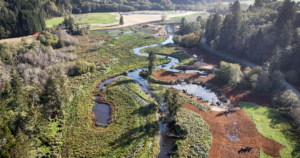
As a former Senior Research Engineer at the UC Davis Center for Watershed Sciences, Willis spent much of her time researching California rivers to inform statewide water management. Her research delved into watersheds across the state including the Shasta River, a tributary to the Klamath River, and the Little Shasta River which feeds into the Shasta. Both the Shasta and Little Shasta rivers are located within the larger Klamath River watershed. Today, Ann serves as California Regional Director for American Rivers where she will continue important watershed work across the state.
“Dam removal [on the Klamath] is exciting because it’s such an obvious next step,” Willis said. In addition to the economic unviability of the Klamath River dams, infrastructure that cannot be maintained is risky, she added. Unmaintained dams can pose significant public safety threats. And the benefits that dam removal can provide for rivers are tremendous – not just in the Klamath, but in its tributaries as well.
“When you consider how disruptive dams are on rivers, and how rapidly we’ve seen rivers recover after dam removal, my sense is that all the benefits that we see in the Klamath will also translate to benefits in the Shasta. You’re going to have more pieces of this ecological puzzle that are functioning, and when we put these pieces together, they really outperform as a group what they do individually,” Willis said.
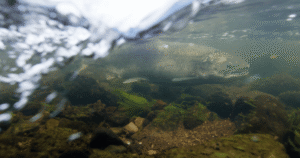
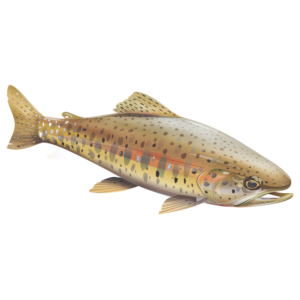
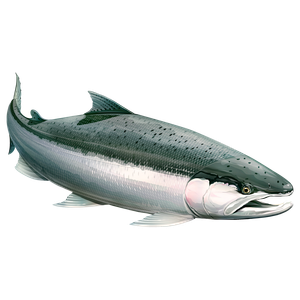
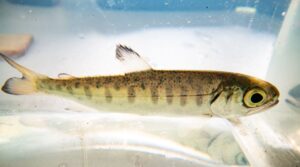
Historically, the Shasta River contributed about 1% of the total annual flow to the Klamath River. But not all streams are created equal, and some have a much greater ability to support cold-water ecosystems and the fish that depend on that cold water, Willis explained. Of the salmon that make their way into the Klamath River, the Shasta historically contributed about 50%.
“It’s useful to recognize that some tributaries have a huge impact, even if they are relatively modest in terms of their flow contributions and the amount of habitat they provide, because it helps us focus our efforts on a place where we can really have an impact,” Willis said.
In Northern California, CalTrout collaborates with Willis and UC Davis on several different projects including work in the Upper Shasta and Little Shasta rivers. In the Shasta watershed, science plays an integral role in guiding the community through difficult water management questions. Because so much of the watershed is privately owned (roughly 80%), the only way to achieve large scale conservation success is to work directly with these landowners, Willis explained.
In the Little Shasta, Willis first got involved with CalTrout’s work partnering with the Hart Ranch. Sections of the river had run dry, and the project was able to improve irrigation efficiencies on the ranch to leave more water instream in those dry sections of the river.
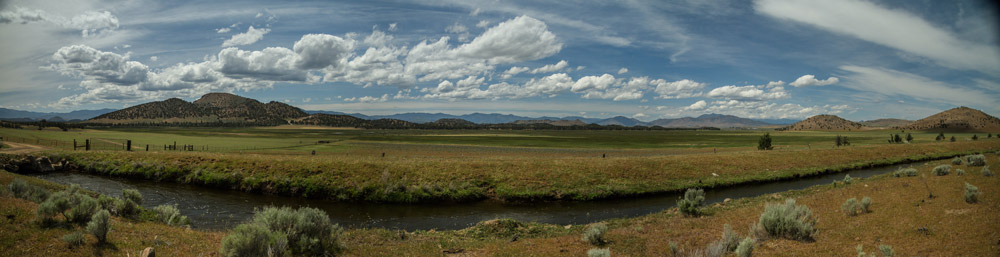
While most rivers are fed by either snowmelt, rain, or springs, the Little Shasta is fed by all three. This makes the river a dynamic habitat that can support many different types of ecosystems, and its diversity is resilient to local disturbances and bigger ones like climate change. “You’re in a place where normally if fish were to get stuck, there aren’t a lot of opportunities for them to persist,” Willis said. “The Little Shasta provides opportunity.”
In the Upper Shasta, Willis and UC Davis worked with CalTrout and rancher Frank Cardoza to improve his ranch’s diversion to be more efficient and ecologically friendly. The improvements included opening up passage to some of the most important cold-water tributaries on the portions of the Upper Shasta that run through Cardoza’s property.
“I went on a tour with [Frank Cardoza], regulators, and other landowners, and [Frank] spoke specifically about these projects,” Willis recalled. “He said they changed his life. Efficiencies have made things easier and more manageable for him to do what he wants to do while also being aligned with the environment — and that was so meaningful to him.”
For too long, the dominant mindset viewed rivers through an extractive lens — something to take, something to use, and something to extract value out of without recognizing the inherent value that rivers offer, Willis said. Through CalTrout and UC Davis’s work to restore rivers and connect communities with them, Willis hopes we can convey that the landscape isn’t an “other”. Natural spaces are not separate from how we live our day-to-day lives, but instead they are all part of an environment that we are participating in. Within human community, this shift in how individuals view natural places is not necessarily new, especially within Indigenous Californian communities.
“I was raised and educated with language that referred to rivers as resources, but others might say they were raised to see rivers as relatives. Seeing that recognition of a different perspective, and the buy in and truth to the reality of that perspective, gives me a lot of hope,” Willis said.
Having healthy functioning ecosystems, watersheds, and fish populations will enhance the health of our human communities and our human livelihoods. And there is perhaps no better case study for this than on the Klamath.
“I can’t begin to tell you how excited I am to see the Klamath dam removal because I believe it is going to validate what we have come to advocate about rivers — that free rivers function better and that free rivers can heal communities and ecosystems,” Willis said. “We’ve never seen anything happen on this scale, and as scientists we have almost always underestimated what we think the outcomes will be. I’m so eager to learn how this plays out.”