Voices of Klamath River Watershed: Robert Lusardi, Ph.D.
by Alisan Theodossiou, CalTrout Senior Communications Manager

Robert Lusardi, Ph.D., is the CalTrout-UC Davis Wild and Coldwater Fish Scientist
Rivers are the lifeblood of a watershed. “I think of rivers as like the arteries in your body. Arteries deliver blood and oxygen throughout the human body, similar to how rivers deliver organic matter throughout the watershed,” explains Robert “Rob” Lusardi, Ph.D., who holds the Wild and Coldwater Fish Scientist position with CalTrout and UC Davis. “What happens when an artery is blocked- that’s like when rivers are blocked. When a river is severed by a dam, the river can no longer function as it did for thousands of years. This has major implications for the ecosystem.”
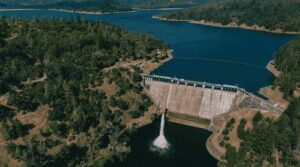
Historically, the Klamath river was one of the most productive rivers on the entire west coast, particularly for spring-run Chinook salmon. There was a huge diversity of fish, many native fish which is important to ecosystem health. But then the river experienced an unfortunate watershed moment with the construction of the lower Klamath dams over 100 years ago, resulting in “a complete breakdown of how the river operates and strong declines in fish abundance and density of fish, regardless of the run,” says Lusardi.
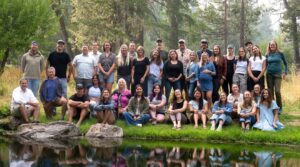
According to Rob’s website, “his research program focuses on the ecology of salmonids and other native fishes and the physical and biological processes that support them at multiple spatial and temporal scales.” Rob and his team, including fellow researchers at UC Davis Center for Watershed Sciences and Yurok Tribe biologists, have been studying the Klamath River for several years now pre-dam removal to monitor the river, which will then be applicable in establishing how post-dam removal efforts are faring.
He explains in more detail: “The Klamath will need adaptive management. This is where science comes into play. We are studying how the river is now, then how it changes, how the runs change, how fish change- especially looking at when they’re coming back- so if we see issues with the river, we can look at our data and adaptively manage the river moving forward.” The team is studying various aspects of the river including temperature, water chemistry, food webs, aquatic insects, and any changes in the ecosystem. “The science is key here to move all of these efforts forward surrounding dam removal,” states Lusardi.
The mainstem is of course critical to include in data collection and its release from the dam will be momentous, though it’s important to not forget about the Klamath tributaries. As Robert explains, “the big tributaries, the Shasta and the Scott, are critical to examine and restore as well in that their health greatly affects the health of the mainstem Klamath River. The whole system [i.e., the Klamath watershed] will not work unless every piece is figured out.”
The Shasta River especially is interesting because it is very different than other systems; it’s a volcanic spring-fed river from Mount Shasta and is incredibly productive. Despite accounting for less than 2% of the annual discharge of the lower Klamath River, the Shasta River historically accounted for greater than 50% of the entire Klamath River Chinook run. “Getting enough cold water to the Shasta and having enough flow is critical if we want to restore the Klamath basin back to abundance,” says Lusardi.
As part of their research in the tributaries and the mainstem, Lusardi and researchers from UC Davis Center for Watershed Sciences, the Yurok Tribe, and Fish and Wildlife Service, have been studying fish ear bones from fish carcasses to establish fish birth origins and movement throughout their life, especially as juveniles. “We are studying these fish to see where they hang out as juveniles- which tributaries especially. Then when they return as adults, after the dams have been removed, we can then study where the fish are going now that the upper mainstem is available to them- looking at how they move around, which tributaries they’re using and maybe which ones they’re not. Our data is going to show us all this.”
Rob is hopeful that his research will aid in securing a free-flowing healthy future for the Klamath River. And now that the FERC project license for the dams has been transferred to new owners, dam removal is on the horizon. “We’ve been waiting for this moment, and now- it’s imminent.”
For more on Robert Lusardi’s thoughts on the Klamath River’s watershed moments, please view his video from Reconnect Klamath.