Update: April 11, 2023
On April 6, 2023, the Pacific Fishery Management Council officially closed ocean commercial & recreational salmon fishing season along much of the West Coast. The closure extends from Cape Falcon in northern Oregon to the California-Mexico border. Off the Southern Oregon coast, limited recreational salmon fishing will be allowed in the fall. This is only the second time in state history that California has cancelled salmon fishing season.
For at least the next year, commercial and recreational ocean salmon fishing will not be allowed in California in an effort to help recover struggling salmon populations.
On March 10, officials in California made the difficult yet pragmatic decision to cancel ocean salmon fishery season openers through May 15. Beyond that time period, the Pacific Fishery Management Council (PFMC) has produced three regulatory options for May 16, 2023 through May 15, 2024 – all of which will result in a ban on ocean salmon commercial or sport fishing off California’s coast until April 2024.
In the Sacramento and Klamath rivers, Chinook salmon numbers have approached record lows due to recent drought conditions. The cancelled opener and proposed regulatory options will give these salmon a chance to recover. In the meantime, CalTrout will work to create other opportunities for salmon population resiliency and recovery throughout our watersheds.
The current ban, which extends along the entire California coast, was issued by the National Marine Fisheries Service with support from the Golden State Salmon Association, Pacific Coast Federation of Fishermen’s Associations, and the Northern California Guides and Sportsmen’s Association. PFMC will hold a public hearing on March 21, 2023, in Santa Rosa to receive public comment on their three proposed regulatory alternatives for extending the ban beyond May 2023 and will adopt final regulations in early April. Learn more about PFMC’s three alternatives here.
Fishery managers issued the ban and regulatory alternatives after determining that the number of salmon in the ocean right now is so low that any impacts of fishing could affect the population’s ability to reproduce and yield adult returns for the next season. These regulatory actions will have a devastating impact on commercial and sport fisheries, but they will also provide hope for the future as we watch the effects of this ban carry throughout salmons’ lifecycles.
What About All the Rain?
It’s undeniable that the magnitude of rain California has received this season is a good thing for our fish. But even with all the rain this year, salmon are still suffering from the past few drought-stricken years. This is because salmon have a three-year lifecycle. The low population numbers we see today are a product of the freshwater ecosystem conditions when these fish were spawned throughout the past three years – all years when we saw significantly less rain.
What do Salmon Need?
Right now, we believe that the commercial salmon fishing ban is what our salmon need to ensure population numbers do not dip to unrecoverable lows. As we look to future population resiliency, there are so many other things these fish need, and our teams are working hard to make them happen.
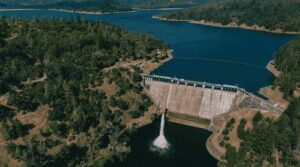
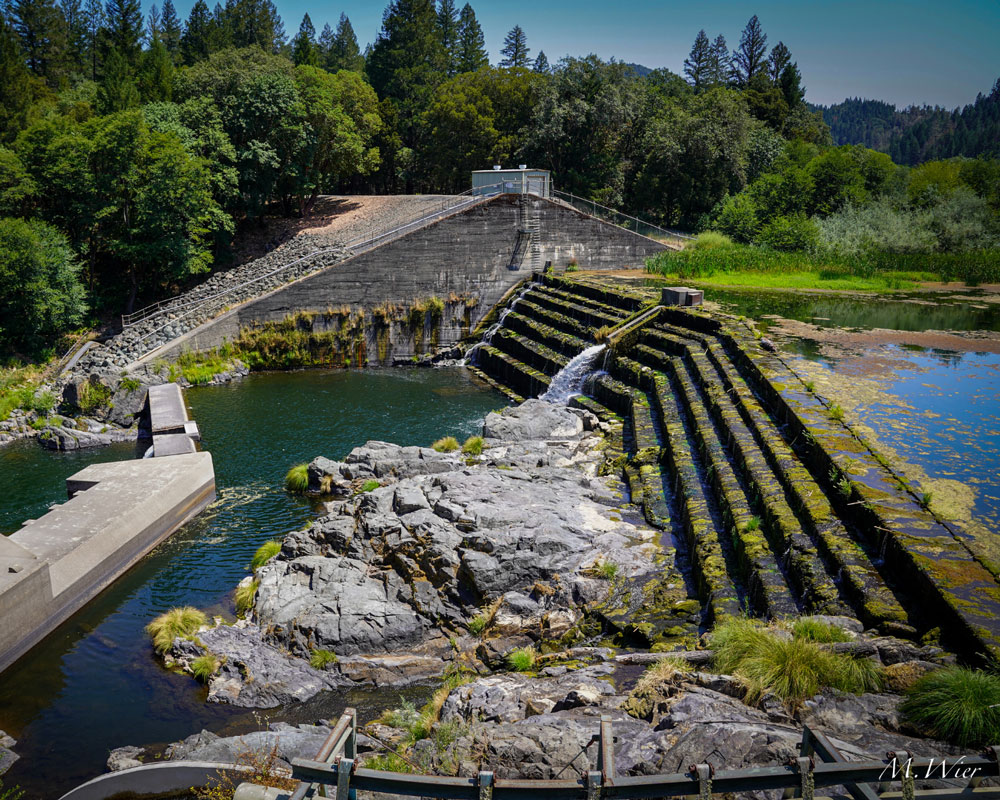
CalTrout works from ridge top to river mouth to get salmon populations unassisted access to each link in the chain of habitats that each of their life stages depends on. This includes efforts to allow returning adult salmon to access cold, headwater habitats blocked behind dams on the Eel River and Battle Creek. On the Eel River, dam removal would open almost 300 miles of habitat to salmon and steelhead. On Battle Creek, the focus is cold water – and lots of it. Dam removal could restore access to 42 miles of historic cold water habitat that would give salmon a place to take refuge when water heats up in nearby watersheds.
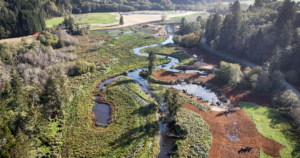
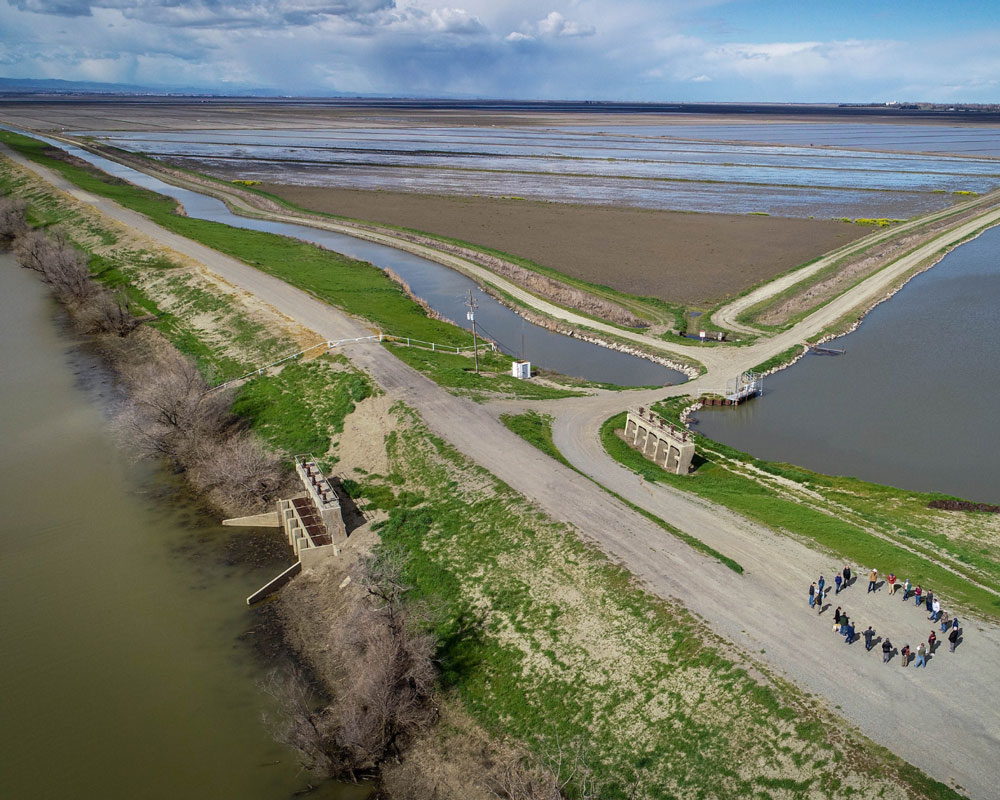
Young salmon born in those headwater habitats then need access to food on their downstream journey to the sea. Wetlands, where much of a river system’s food is made, have been drained and separated from river channels by levees cutting off fish from their food. Our science shows that when young salmon get access to the abundant fish food produced in inundated floodplain wetlands they rapidly grow big and healthy and are much more likely to return as adults. In the Central Valley, our team is working to expand access to floodplain habitats at landscape scale in places like Yolo and Sutter Bypasses. We are also working with farmers to flood farm fields (primarily rice) in winter and then drain the abundant aquatic food webs that grow in the shallow, fertile water back into the fish food-scarce river channel where young starving salmon can feed. This year we have flooded and drained almost 70,000 acres through our Fish Food project. And next year, we will expand even further.
Investments in headwaters passage and floodplains are both critical, and just as importantly neither is sufficient on its own. Longitudinal (upstream-downstream) passage over barriers and dams facilitates adult salmon access to holding and spawning habitats while lateral (side to side) connectivity between river channels and wetland rearing habitats improves the survival of the juveniles spawned by those adults. If we invest in high quality headwater habitat access for adult salmon, then we will see the results as they spawn and produce more offspring. And if we invest in floodplain connectivity for our juvenile fish, then we will see the results in the next generation of adults as they return to our rivers.
Water is something we all need, and CalTrout believes in a balanced approach to managing water for both fish and people. Salmon need enough water to be left in-stream to produce the high-quality aquatic habitats they require to survive – especially under dry conditions. Our Legal & Policy team is hard at work supporting legislation that will make this balance a reality. We are co-sponsoring bill AB 460, which will ensure that the law is enforced when fish need water most. To plan for future drought, we are co-sponsoring AB 1272, which will focus specifically on critical salmon and steelhead headwaters. And to ensure that our future restoration efforts are well-informed and appropriately focused, we are co-sponsoring AB 809 which will help us keep an accurate count of our salmon to understand where and how our work is effective — and where more work is needed.
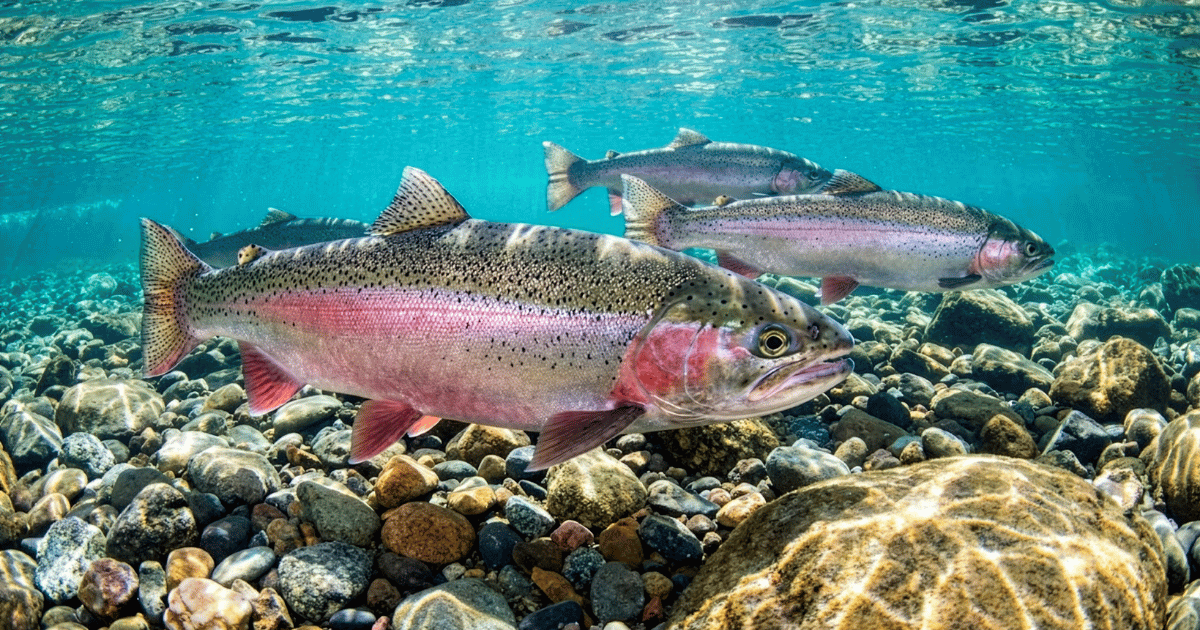
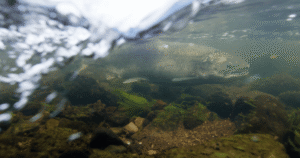
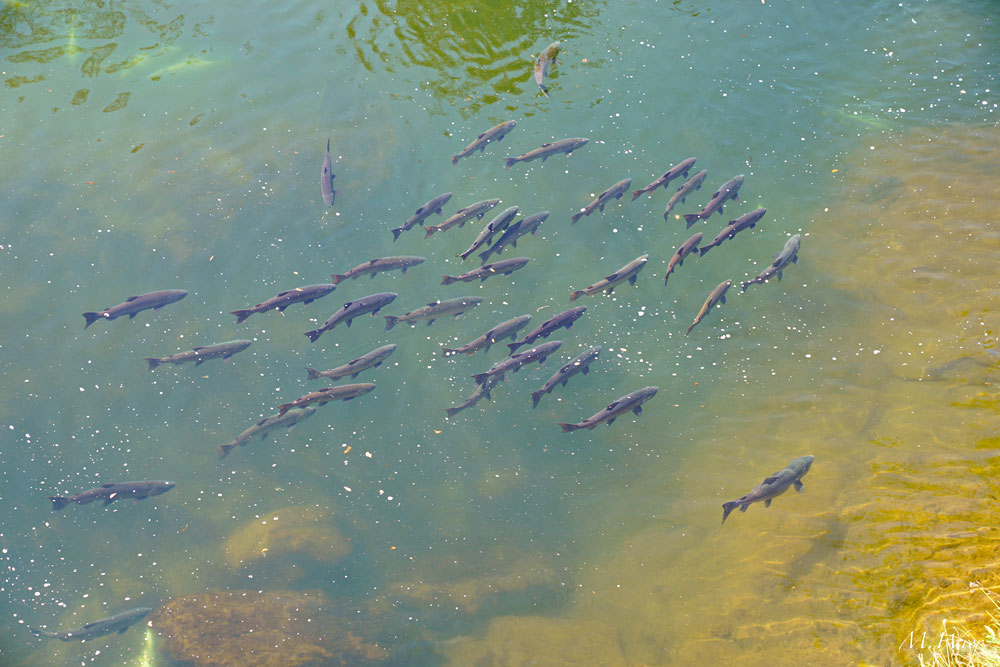
Cover Photo: Chinook salmon in Battle Creek by Jane Dysert