CalTrout Thinks New BDCP A Step Forward, But One Plagued With Questions, Not Answers
Governor Brown and Interior Secretary Salazar recently announced a new Bay-Delta Conservation Plan (BDCP), the centerpiece of which is the construction of a pair of 35 mile-long tunnels designed to convey water from the Sacramento River to the south end of the Delta.
The new BDCP is clearly an improvement over the previous BDCP plan (which would have only hastened the downward spiral of the Delta and its fish), but in this case, the details will define the project.
And there are precious few details available.
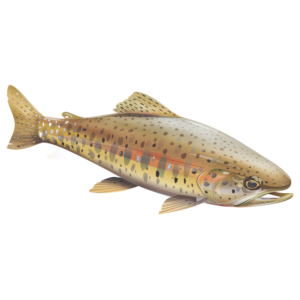
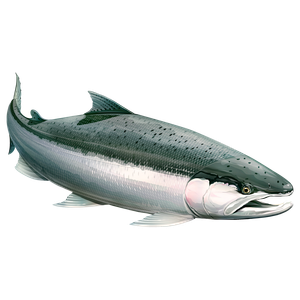
CalTrout’s mission is to protect and restore California’s trout, steelhead and salmon populations, and while the new BDCP offers some potential to reverse the Delta’s decline and help resolve the uncertainty surrounding California’s water, the BDCP is more framework than plan, and many questions remain unanswered.
The Recovery Process
While the capacity of the conveyance (the tunnels) and removal site seems to have already been determined, the amount of water needed to protect and restore the Delta and its fisheries isn’t clear, and no mechanism for insuring the proper flow regimes appears to be in place.
The Delta Reform Act of 2009 mandates less reliance on Delta water supplies, and while a new conveyance promises greater water security to agriculture, it obviously won’t restore the Delta if unsustainable amounts of water are withdrawn from the Sacramento River above the Delta.
It’s entirely possible to develop a sound, science-based water plan while construction moves forward — provided a transparent process is in place that guarantees the integrity of the final outcome. Right now, we don’t see such a process.
No one familiar with the fiasco on the Trinity River — where sufficient water for fish was guaranteed from the start, and reinforced by several court decisions — should be willing to accept a smile as a guarantee that California’s fish and rivers will be fully protected in the absence of a clear-cut process.
All state and federal requirements concerning recovery of endangered and threatened species — backed by specific biological goals and objectives — should be met.
Adaptive, Holistic Management
Additionally, in its recent dam relicensing projects, CalTrout has insisted on an adaptive management process that uses science-based feedback to adjust flow regimes to protect fisheries. This is proving successful, and implementing a similar system here — spanning the 50 year license — is needed to meet environmental needs in the face of growth and climate change.
Finally, it’s clear the Delta alone cannot sustainably meet the state’s water demands; the BDCP must work in parallel with conservation projects. Plus, the BDCP must fit into a restoration framework which includes extra-Delta habitat projects like floodplain restoration (the Yolo Bypass), regional water management plans, habitat enhancement and other mitigation.
Simply building tunnels to transport water under the Delta solves problems only for water users and fails to meet the state’s “dual goals” of water security and restoration. Fish need habitat and water to survive, yet the new BDCP plan — as it currently stands — guarantees neither.
Who’s Paying?
Legally, the cost for construction and operation of the facility is absorbed by those benefiting from its construction. Additionally, water users should contribute to the protection and restoration of fisheries damaged by previous pumping efforts, and also fund mitigation to new impacts.
The new BDCP is sketchy in this arena, and we’re further concerned about the source of long-term restoration funds over the 15 year construction project and the 50 year term of the license.
Once the tunnels are built and water deliveries begin, will money be available to protect and restore habitat and fisheries? With construction alone spanning several state and federal administrations, the source of restoration money can’t be left to an uncertain future.
Of grave concern to even water users is the $14 billion cost of construction (the separate cost of meeting environmental needs is $9-$10 billion). Will water diversions make financial sense? Will water users apply pressure to increase water exports beyond what’s healthy for the Delta in order to make the project “pencil out?”
The Next Steps
We agree that the status quo is not working (our partners at UC Davis explain the need for a remodel of the California water system). The Delta’s ecosystem is collapsing under the weight of habitat losses and excessive pumping, and the Central Valley’s salmon populations are under pressure. The decision to dump the “old” BDCP process — the analysis of which suggested only more damage to fish and habitat — is a good one.
The details of the new BDCP plan are yet to be determined. Before we can endorse any multi-billion dollar conveyance (even one paid for by water users), we need to see answers to questions about:
- Long-term funding for restoration (in addition to construction)
- Allocation of costs
- Transparent management and recovery process
- Specific recovery goals
- Inclusion of the BDCP into broader programs (floodplains, regional water plans, etc)
——
California Trout’s mission is to protect and restore wild trout, steelhead, salmon and their waters throughout California.