A Field Note from Double Bunk and Horse Meadows in the Southern Sierra Nevada
by Kam Bezdek with Marrina Nation
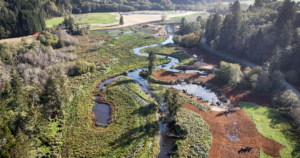
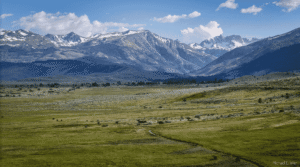
In mid-October of this past year, CalTrout Sierra Headwaters Project Manager Marrina Nation and I ventured to Double Bunk Meadows and Horse Meadows, near the Trail of 100 Giants in the southern Sierra Nevada. The goal of the trip was to accomplish some field work before the winter season and to enhance my policy and advocacy work for CalTrout by learning more about the Sierra Meadows projects and the restoration practices involved.
In preparation for some of the policy work I was beginning to delve into, I researched CalTrout’s work in the Sierra and read through the WRAMP protocols. SM-WRAMP stands for Sierra Meadows Wetland and Riparian Area Monitoring Plan. This Plan is a set of field protocols designed to quantify the success of mountain meadow restoration projects by assessing pre- and post- restoration conditions. SM-WRAMP was developed according to a statewide framework by the Sierra Meadows Partnership. CalTrout spearheaded the effort to bring these complex guidelines into a cohesive working document to standardize data collection and reporting. I was so excited when CalTrout Sierra Headwaters Director Sandra Jacobson suggested that I make a trip to the meadows to see CalTrout’s restoration work in person.
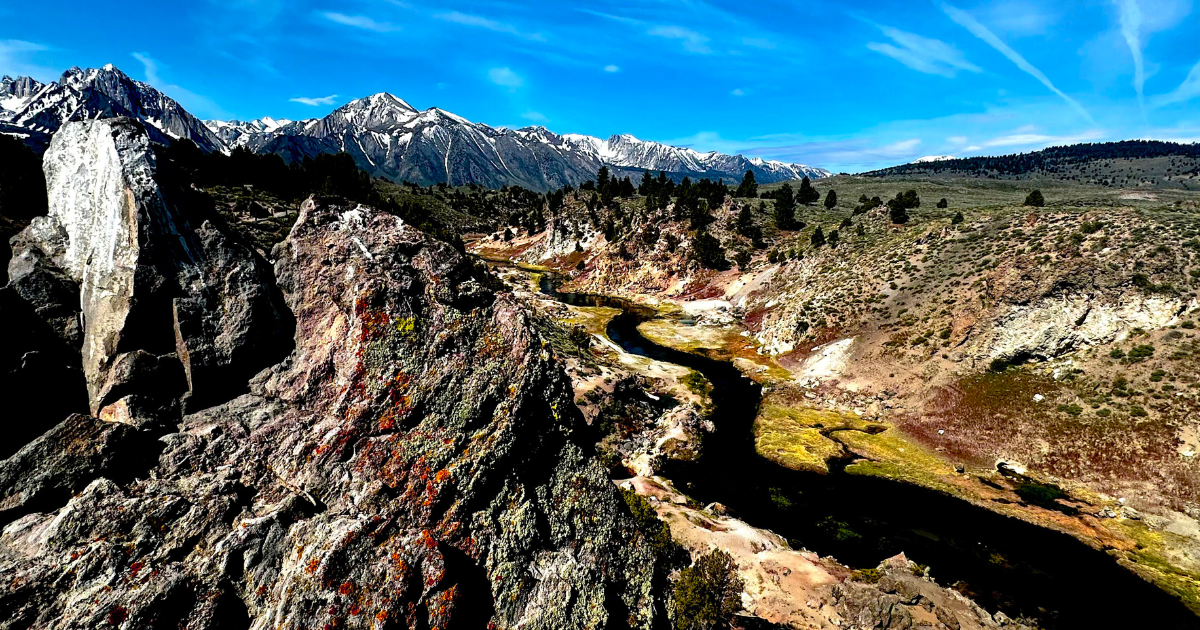
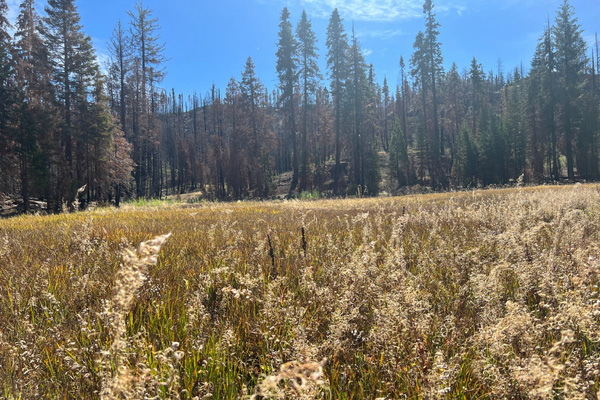
My flight to Sacramento took me across the Eastern Sierra, where I could see the tapestry of fall colors and landscapes from the plane. After meeting up with Marrina and Vanessa Velasco, senior environmental scientist from the Department of Water Resources, we started the drive from Mammoth to set up camp near Horse Meadow. Most of our drive prior to the mountains was through desert and farmland, but as we neared the meadow, we were greeted with traces of changing leaves and my excitement grew. Turn after turn, we climbed higher and higher in elevation. I’ll admit, my nerves weren’t too eager to let my eyes wander during the drive, but I rolled down my windows to smell the fresh, pine filled air. We positioned our camp on the edge of Horse Meadow that was only partially affected by the Windy fire in 2021. The meadow had low surface flow, and the grasses were beginning to dry and turn brown in preparation for the winter season. Our field work began the following day.
Collecting Carbon Cores
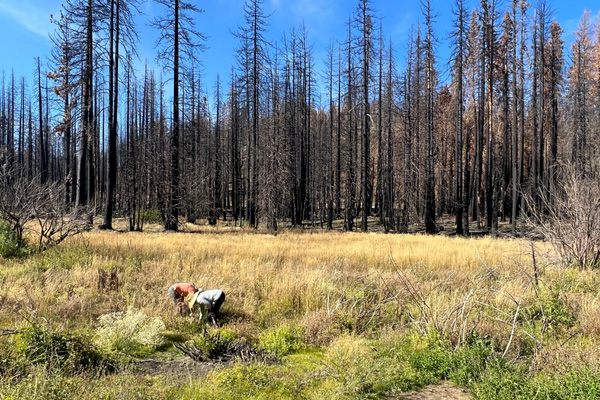
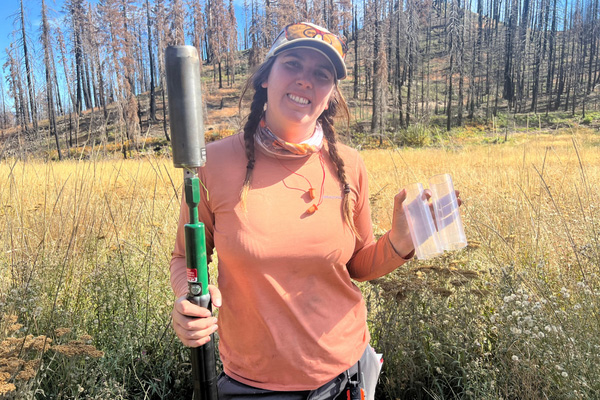
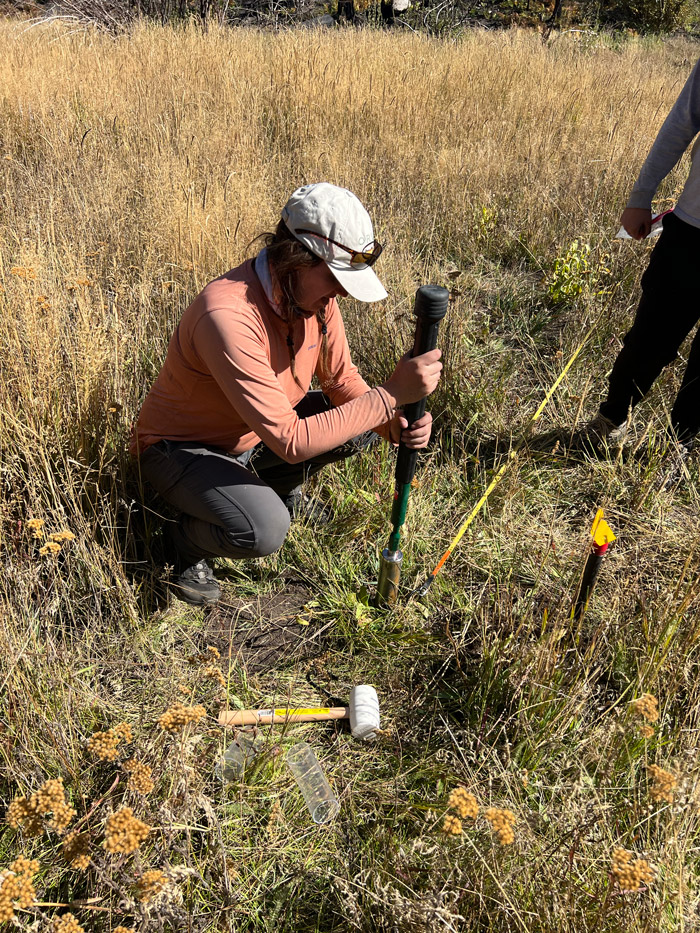
Our first task was to collect carbon core samples from specified locations within Double Bunk Meadow. We followed the protocols that were presented in the SM-WRAMP. We worked in a grid and sampled soil from three different depths (0-15 cm, 15-30 cm, and 30-45 cm). Using slide hammers, we drove the head of the hammer, which held a plastic cylinder container, into the ground. When pulled from the ground, the plastic cylinder contained a sample of soil. We collected and labeled the samples, as we worked to collect around 36 different samples. The grid spanned the meadow, and our samples came from a variety of locations: areas near the brush, areas covered in tall grass, and mossy locations by the stream. The diversity of what seemed to be a small patch of land was both surprising and incredible.
Marrina showed us how to put the plastic containers into the slide hammers and how to use the equipment. After a few tries, we got the hang of it, but the work was difficult. Depending on the dampness of the soil, the hammer could be easily driven in or sometimes quite difficult. Then, there was the process of removing the hammer from the ground. This proved to be the most difficult part of this protocol with some sample locations becoming incredibly stuck, while others came up with no dirt in the container. The woods were pristine, and with our deeper pulls we could hear a satisfying release of pressure similar to opening a Ziploc. Some samples were dry, but the group was thrilled to see moist dirt in the sample containers.
We did this work at around 6,000 feet in elevation in a remote area. I have so much respect for those who do this work frequently, as I was definitely winded after taking the first 10 samples. We were blessed with incredible weather the entire trip, which was key to some of our success.
The soil core sampling allows us to quantity how much carbon is beneath the ground. Healthy wet meadows typically have greater capacity to store carbon in below-ground root biomass. Meadow restoration often seeks to restore the water carrying and releasing capacity of meadows and to promote healthy vegetation that supports these key centers of biodiversity.
eDNA Sampling Begins
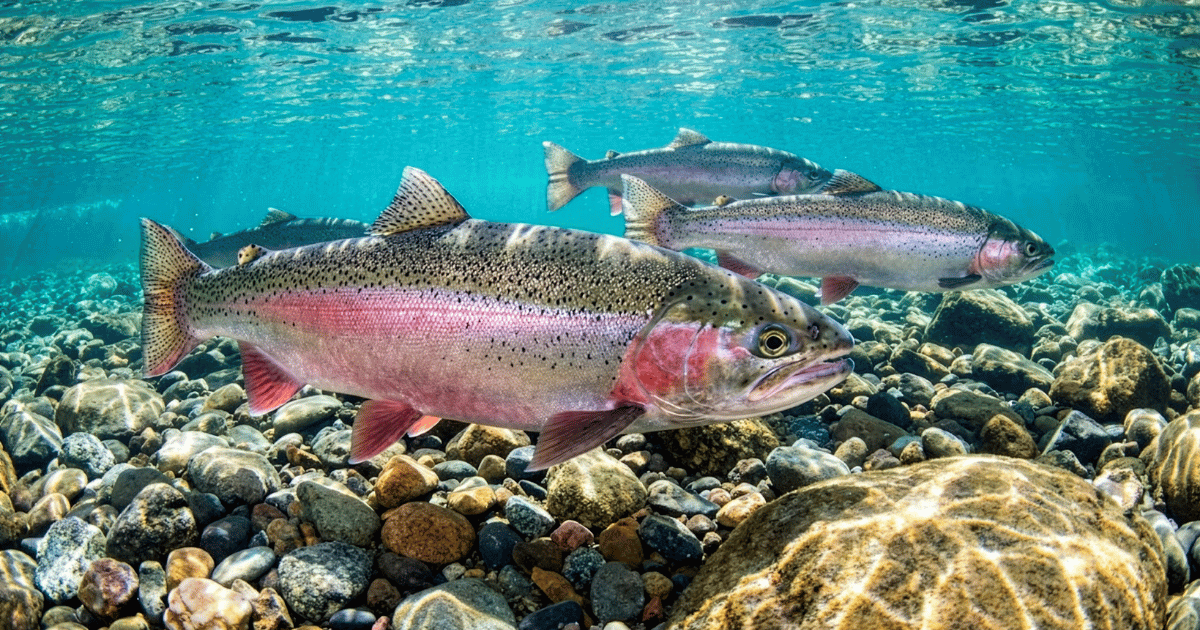
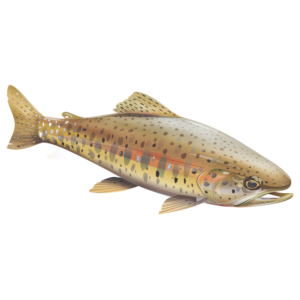
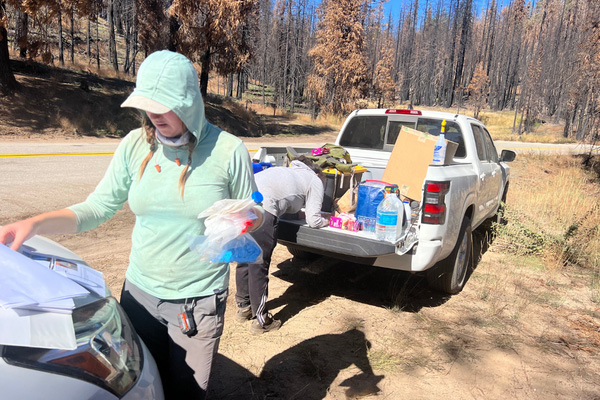
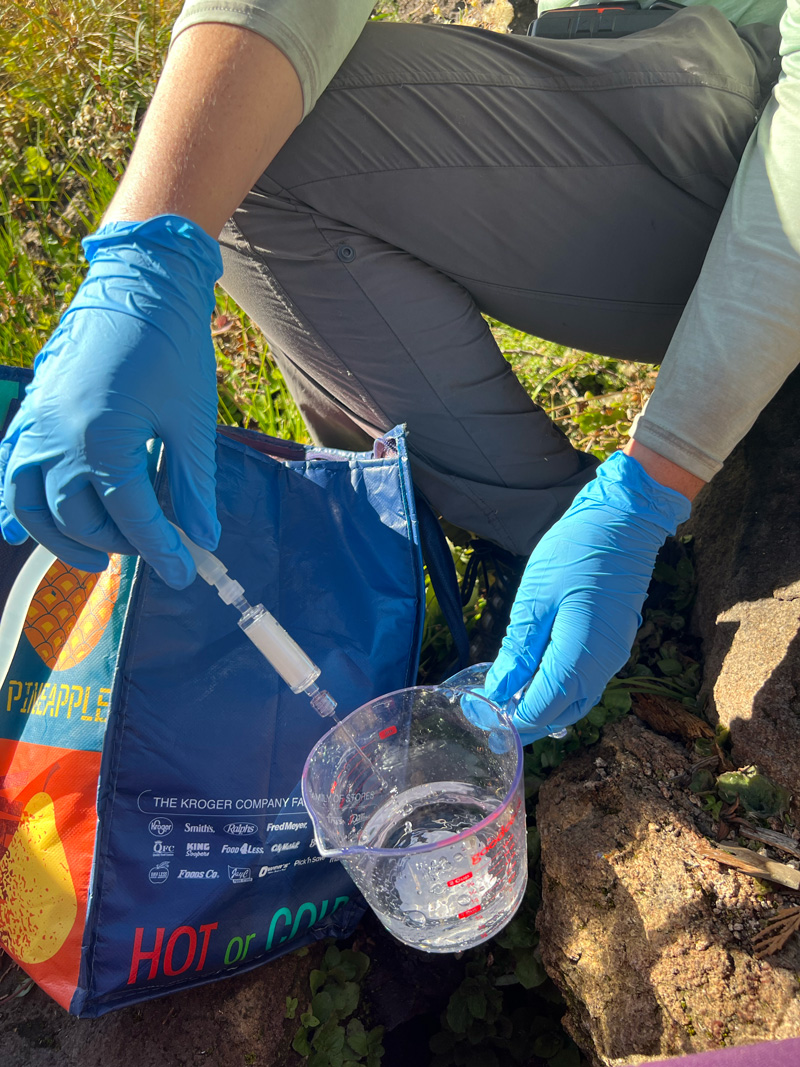
On the second day of our trip, we began environmental DNA (eDNA) sampling to move from land-based to water-based protocols. As aquatic species move around, they shed DNA which can be captured in a filter and then analyzed for which species are present. These samples are important because they can tell us if a rare species is present even within a large stretch of river. The alternative is to do snorkel survey or electrofishing to visually identify fish and other species, which is difficult to do over long stretches of river. In order to ensure our samples were useful, we had to set up something akin to a sterile lab in the back of Marrina’s truck. Marrina explained how incredibly delicate the samples would be, and instructed us to spray the truck with bleach and wipe it clean. Marrina was the only person in contact with the filter (“clean hands”), while I used the drill to pump about a liter of water through the filter, which would trap the free DNA, while Vanessa held the collection tube. After a few hours, our sampling was complete. Once we returned from the field, the samples would be sent to GENIDAQs to process for specific aquatic species like rainbow trout, and inform us of the results. In this way we can measure success of restoration when more wildlife and aquatic species are able to live there.
Policy in the Field
The ability to witness and participate in a field project firsthand was invaluable to me and to the work I engage in with other lobbyists and policy specialists. In Sacramento, much of our Policy team’s work is to explain to decision-makers and stakeholders why these projects are important. Sometimes we have to justify why they require the amount of funding they do. In many ways, my role is to be a communicator for the work that Marrina and others at CalTrout do and also to advocate for them in front of people who juggle many interests and requests.
Having participated in the work, I now not only understand it better, but I have gained a new perspective that I can draw from. Our work revolves around storytelling, and CalTrout is in a unique position to tell the stories of our restoration projects to others throughout California. We can use our experiences like my own in the Sierra Meadows to draw others into the world of restoration and advocate for what we believe in: a better California for fish, water and people.