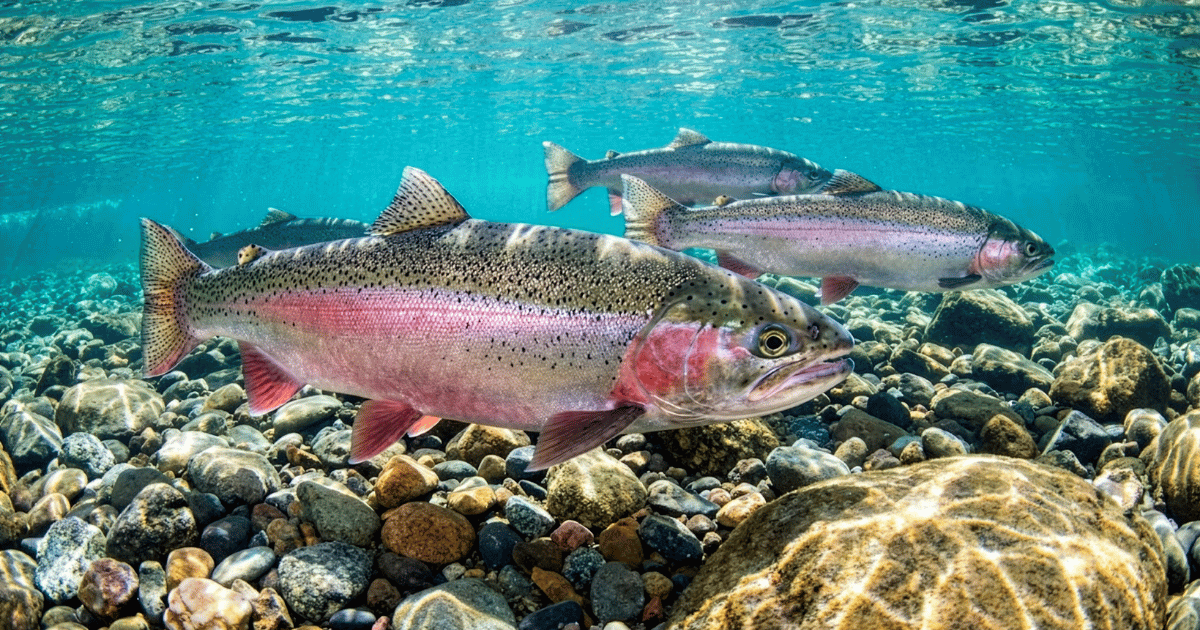
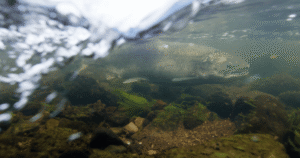

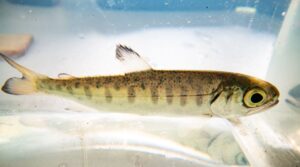
Our 2016 Nigiri Project, raising salmon over rice, is winding down after great success. As Jacob Katz, CalTrout Central California Director, and other researchers caught, measured, documented and released Chinook fingerlings that were grown for a few weeks in the project, it was clear that the innovative approach is effective. Ideally, the project’s research findings will help shape California’s water management and policy in the future.
For salmon it’s all about return rates. Every year, federal and state hatcheries release thirty million young salmon. About one percent come back to spawn. The rest fuel the food web. Katz and other researchers on the project are optimistic that by recreating natural cycles with seasonal flooding, that ratio could significantly increase. That’s because bigger fish have a better shot at survival. “Really, what we want to do is make them as fat as we can in the shortest amount of time possible so that when they hit the ocean they have their lunch packed,” said Carson Jeffres, field and lab director of the UC Davis Center for Watershed Science.
For salmon it’s all about return rates. Every year, federal and state hatcheries release thirty million young salmon. About one percent come back to spawn. The rest fuel the food web.
Katz and other researchers on the project are optimistic that by recreating natural cycles with seasonal flooding, that ratio could significantly increase. That’s because bigger fish have a better shot at survival.
“Really, what we want to do is make them as fat as we can in the shortest amount of time possible so that when they hit the ocean they have their lunch packed,” said Carson Jeffres, field and lab director of the UC Davis Center for Watershed Science.
To read or listen to the full story on North State Public Radio, click here.
To learn more about the history and goals of the project visit our Central Valley Fish and Floodplains web page.