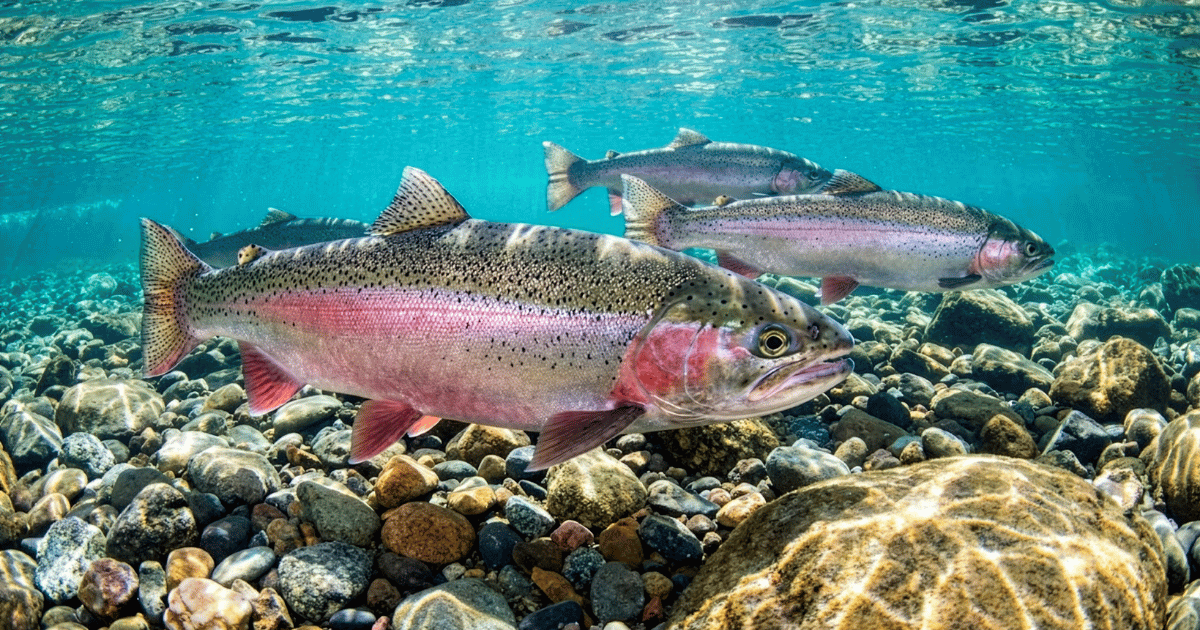
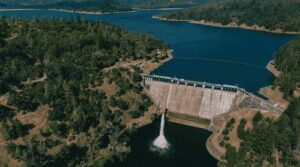
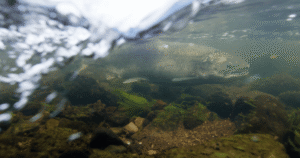
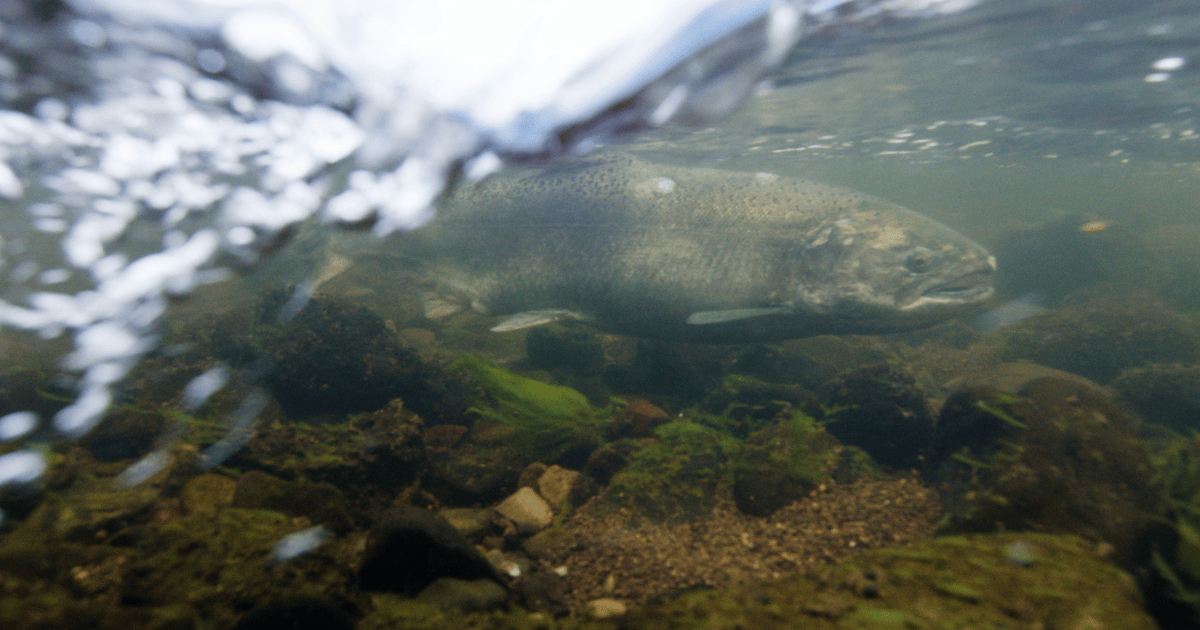
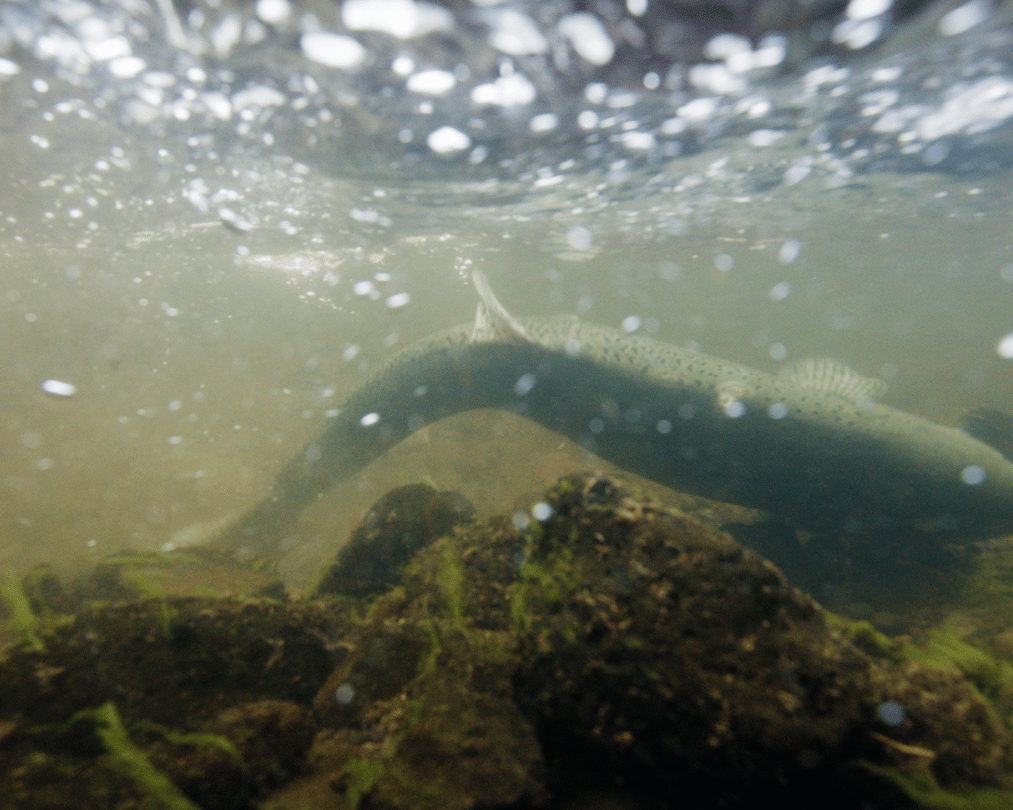
In October 2024, scientists with CalTrout and our partners documented the first Chinook salmon to migrate above the former Iron Gate Dam site on the Klamath River into previously inaccessible habitat. After decades of advocacy by Tribes and river advocates, the recent removal of four Klamath River dams opened over 400 miles of habitat for Chinook salmon, coho salmon, and steelhead. Construction activities wrapped up earlier this month on what is widely regarded as the largest salmon restoration project in history. This is the first confirmation that salmon are using the newly reconnected habitat as the effort intended. Since then, many more sightings have occurred as salmon continue to recolonize the river.
CalTrout, alongside our state, federal, Tribal, and NGO partners, launched a comprehensive monitoring program on the river to track how fish will respond to dam removal and record fish migration through the former dam sites, informing the success of dam removal and long-term restoration efforts.
“It’s been over one hundred years since a wild salmon last swam through this reach of the Klamath River” said Damon Goodman, Mt. Shasta/Klamath Regional Director for California Trout. “I am incredibly humbled to witness this moment and share this news, standing on the shoulders of decades of work by our Tribal partners, as the salmon return home. While dam removal is complete, recovery will be a long process. This individual represents the beginning of the next chapter of recovery for Klamath River fish and for the communities that depend on the watershed.”
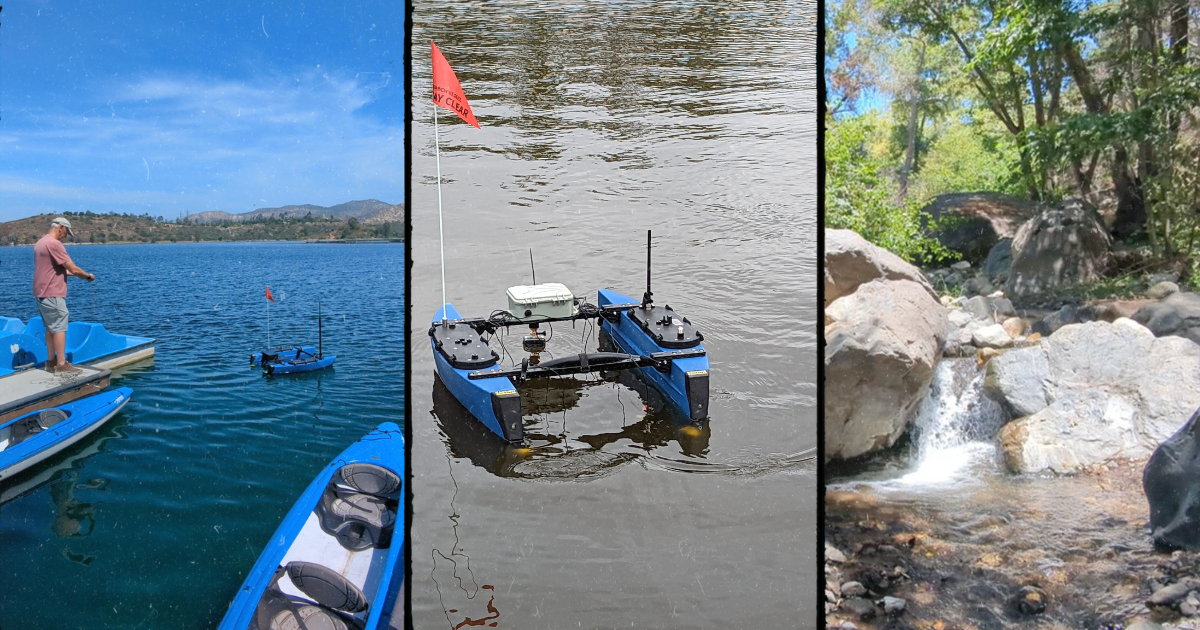
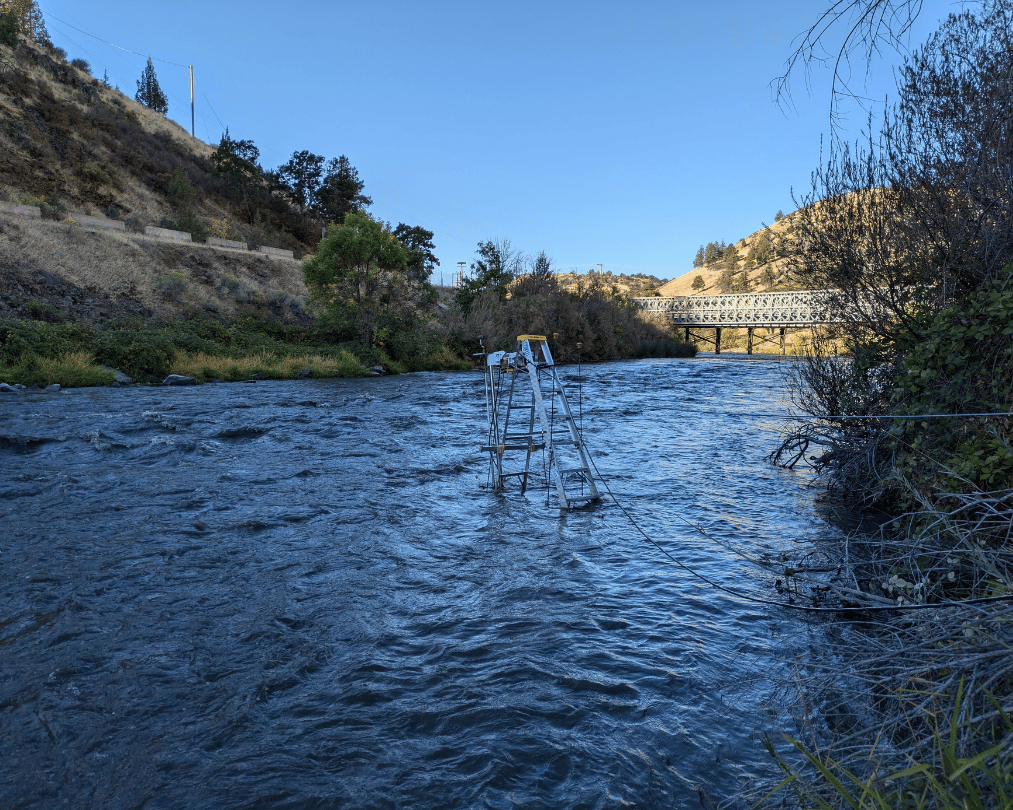
Goodman and CalTrout lead the Klamath River Monitoring Program which employs sonar technology to record movie-like imagery, generated by sound waves, of passing fish on a continuous basis. Goodman and his team have been anticipating the arrival of migrating fish this fall and tracked the data closely to successfully identify the first fish to pass the site post dam removal.
“While documenting the first fish is incredibly meaningful and important, the sonar station will continue to capture the movement of fish at the site, providing important data on the river’s healing process,” said Goodman. “We wouldn’t be where we are today, setting up a monitoring station where a dam used to stand, without the tireless effort and hard work of so many, most especially the Klamath River Tribal peoples.”
Chinook salmon will continue their upstream migration through the end of the year. Coho salmon and steelhead will begin to move upstream later in the fall. The project team will be ready to capture and record these migrations as they transpire.
About CalTrout’s Klamath River Monitoring Program
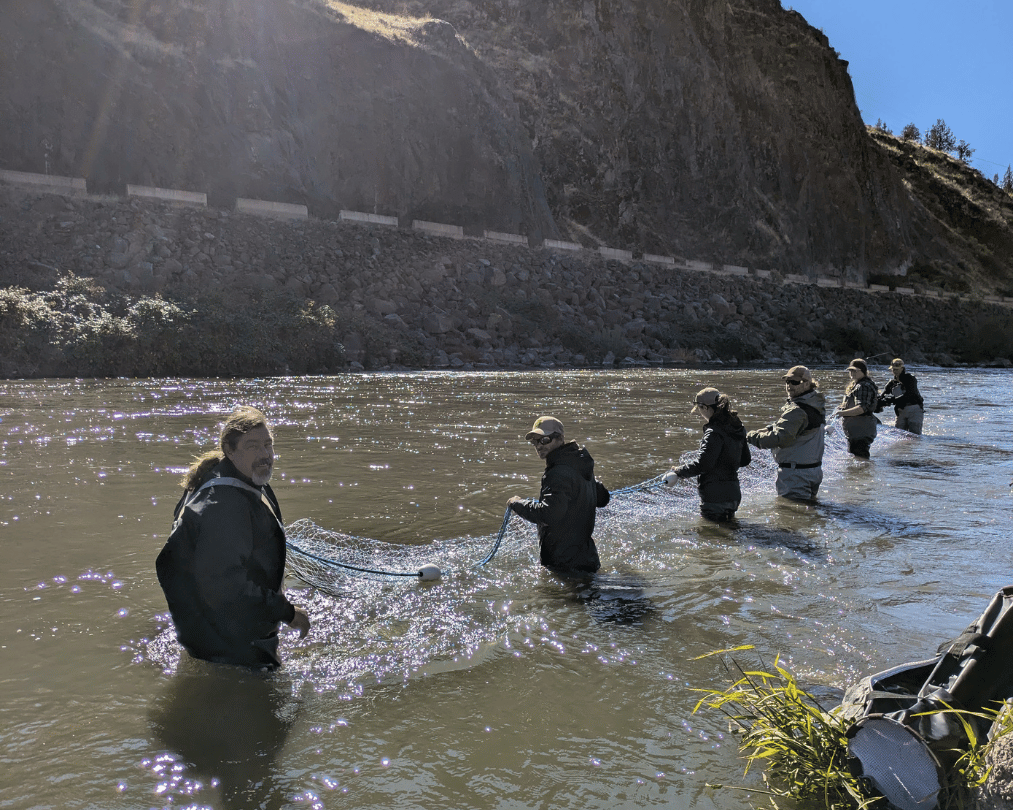
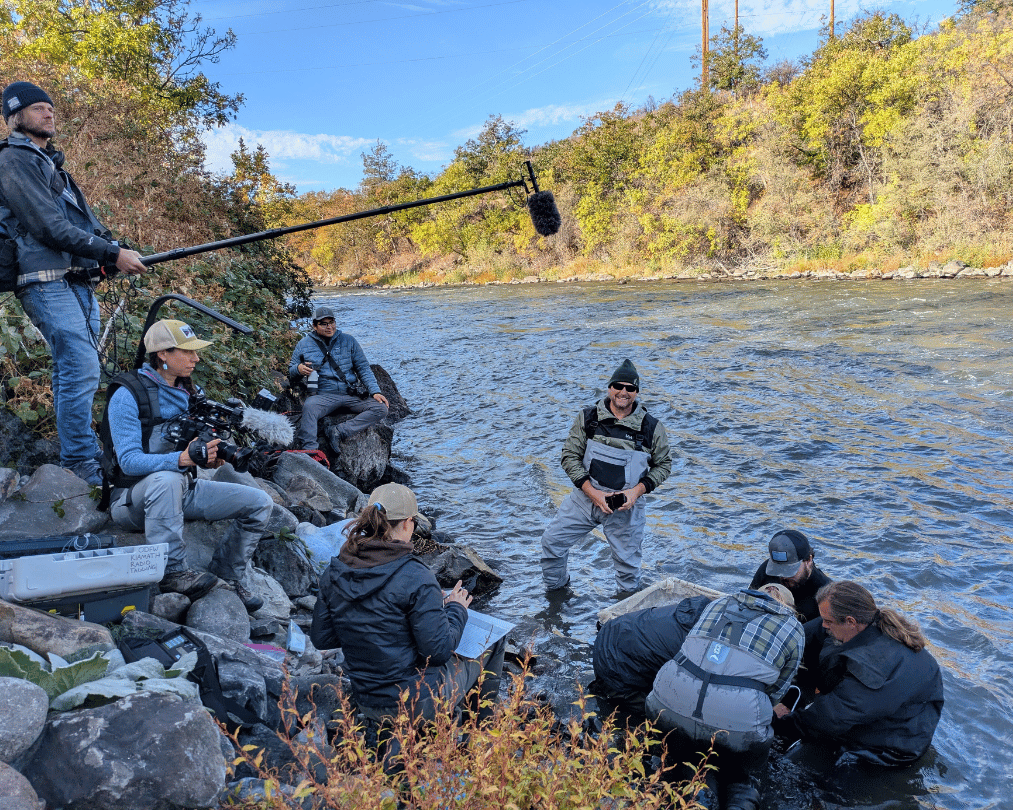
In July 2024, CalTrout and partners launched the Klamath River Monitoring Program to better understand the outcomes of dam removal, including how fish repopulate newly opened habitat and how they recover from landscape level restoration. In addition to SONAR imaging, theProgram employs methods including netting, radio telemetry, and spawner surveys. Netting will document fish species assemblages, age, length, and genetic information and allow the team to attach tags to fish. Radio telemetry will help track fish migration into the 400 miles of newly re-opened habitat. Spawner surveys will provide information about fish nesting locations. Together, these methods will follow the fish to uncover how they are responding to dam removal and inform how to focus future restoration efforts.
On October 25, our team tagged their first Chinook salmon and steelhead marking another incredible milestone in this groundbreaking river restoration story as we continue to unravel the impacts of dam removal. Our network of radio and PIT receivers stands ready upstream, waiting to track these magnificent fish as they journey into ancestral waters.
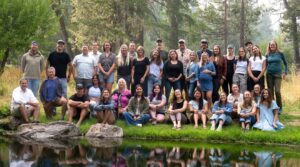
The project team consists of dedicated individuals representing the Karuk Tribe, Klamath Tribes, Yurok Tribe, Ridges to Riffles, California Department of Fish and Wildlife, Oregon Department of Fish and Wildlife, NOAA Fisheries, Bureau of Reclamation, U.S. Fish and Wildlife Service, Cal Poly Humboldt, U.S. Geological Survey, Resource Environmental Solutions, and CalTrout. Themonitoring program is funded by Humboldt Area and Wild Rivers Community Foundation, Bella Vista Foundation, Bureau of Reclamation, U.S. Fish and Wildlife Service, and NOAA Fisheries.
Salmon Spotted in Tributaries Above Former Iron Gate Dam and as Far Upstream as Oregon
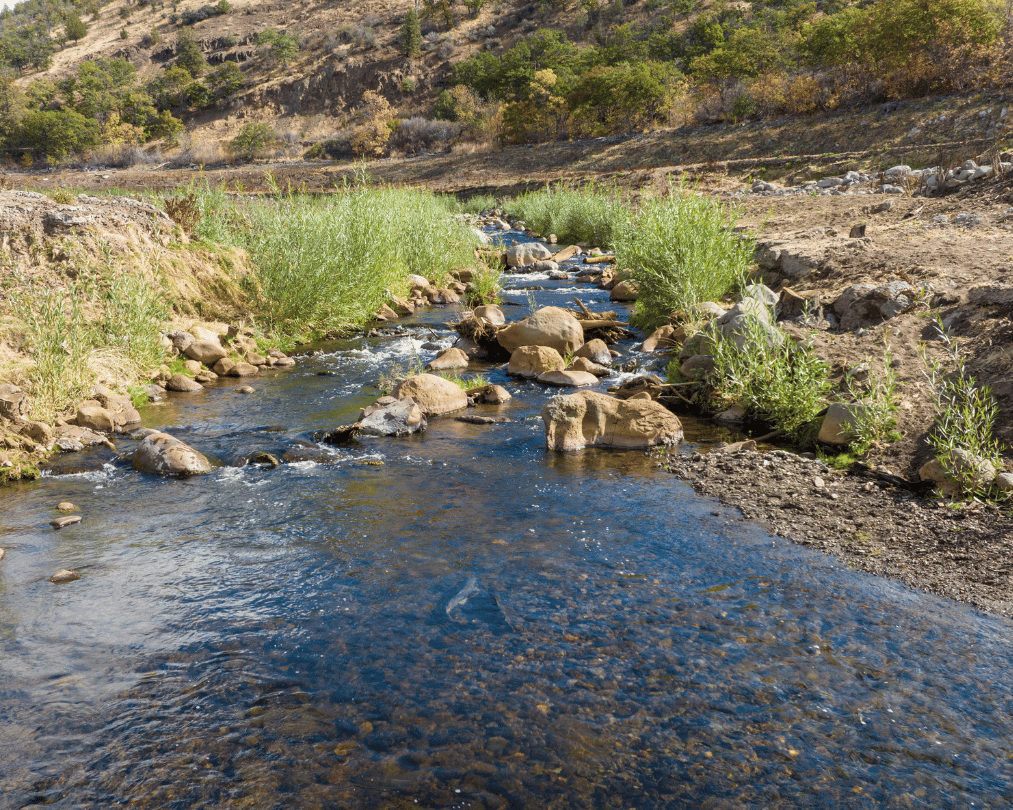
According to the California Department of Fish and Wildlife: On Oct. 15, spawning fall-run Chinook salmon were observed in Jenny Creek, a Klamath River tributary 4.3 river miles upstream of the former Iron Gate Dam location, the southernmost barrier of four dams removed from the Klamath River. Additionally, adult fall-run Chinook are starting to return to CDFW’s newly rebuilt Fall Creek Fish Hatchery on Fall Creek, a formerly inaccessible tributary about 7.5 miles upstream of the old Iron Gate Dam.
These are the first observations of anadromous fish returning to California tributaries upstream of the former Iron Gate Dam since 1961.
According to the Oregon Department of Fish and Wildlife (ODFW): On October 16, a fall-run Chinook salmon was identified by ODFW’s fish biologists in a tributary to the Klamath River above the former J.C. Boyle Dam, becoming the first anadromous fish to return to the Klamath Basin in Oregon since 1912 when the first of four hydroelectric dams was constructed, blocking migration.
The salmon and others likely traveled about 230 miles from the Pacific Ocean to reach the tributary only months after four Klamath River dams were removed to ensure fish passage from California to Oregon.
CalTrout and our partners will continue our monitoring efforts as we work to build a science-based picture of how dam removal impacts salmon and steelhead.
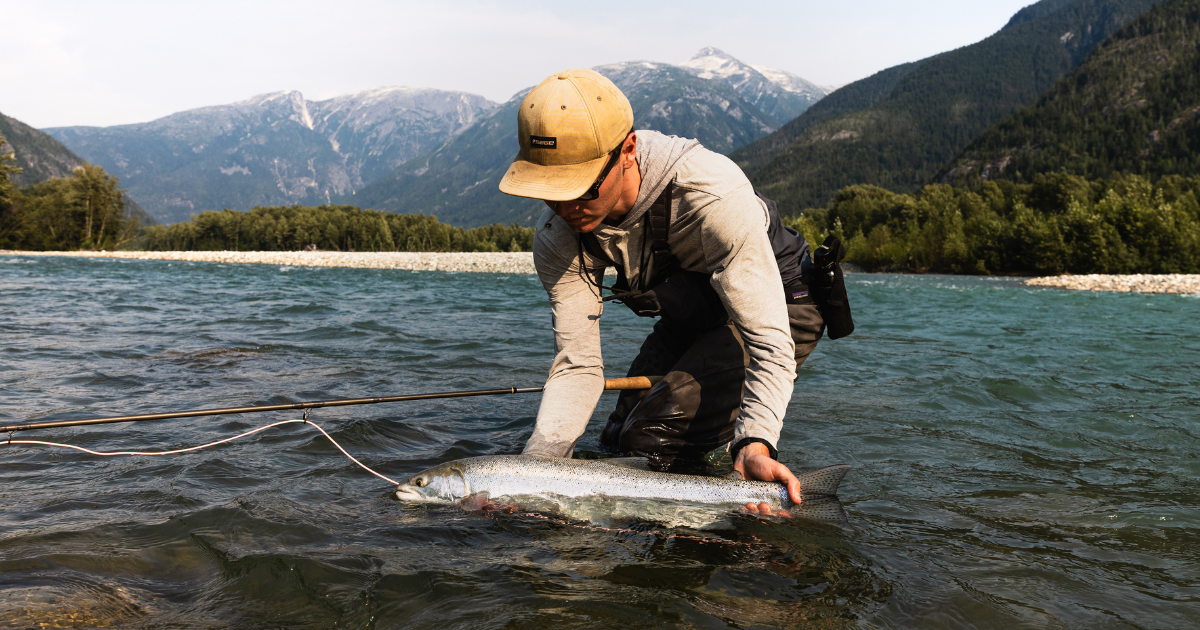
Cover Photo Credit: Swiftwater Films