
Voices of Walker Creek Watershed: Patrick McLaughlin & Kris Jacobsen
by Alisan Theodossiou, CalTrout Senior Communications Manager

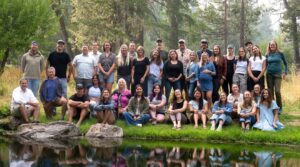
Patrick McLaughin serves as Ranch Manager and Outdoor School Principal for Walker Creek Ranch, and Kris Jacobsen is the Assistant Ranch Manager.
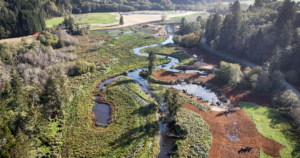
Except for a tiny portion in Sonoma County, Walker Creek watershed’s 76 square-mile drainage lies in northwestern Marin County. The watershed contains some of western Marin County’s wildest, most undisturbed landscape, along with some of the most degraded, ironically.
“Walker Creek became channelized over the past many years due to older practices that are mostly abandoned, thankfully,” explains Kris Jacobsen (he/him), Assistant Ranch Manager at Walker Creek Ranch. Since European settlement, land use has been almost exclusively agricultural and nearly all the watershed is in private ownership. Cattle ranching has been and still is the predominant industry along with a few sheep ranches and dairies.
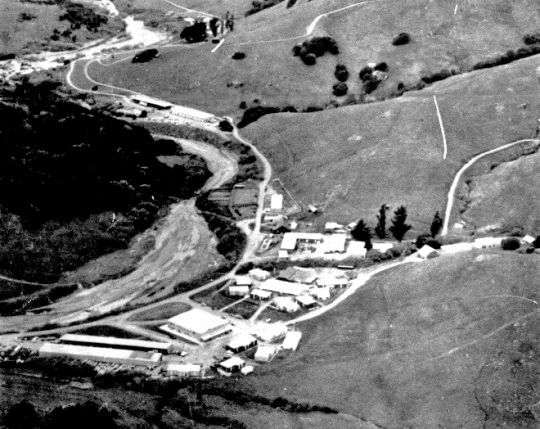
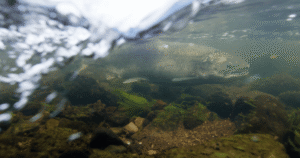
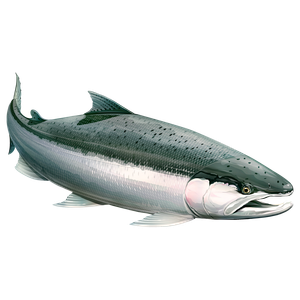
In the 1990s, significant restoration to Walker Creek transformed the degraded area back into a thriving habitat. Restoration activities included large-scale “creek-cleanups” and plantings of native species, which allowed the creek to begin its journey towards a healthy ecosystem again. Today, it is a water source and habitat for many species, particularly the federally endangered coho salmon.
Restoration of Walker Creek watershed remains a priority for agencies, conservation organizations, and the surrounding community. For instance, for Walker Creek Ranch, an outdoor school and conference center located on 1,700 acres of mixed agricultural and wild land in the heart of the watershed, the creek itself is the defining feature of the Ranch. The Marin County Outdoor School at Walker Creek Ranch hosts over 4,500 5th and 6th grade students in a typical year, providing them with quality instruction within a special learning environment that inspires and motivates students to achieve an appreciation of the natural world.
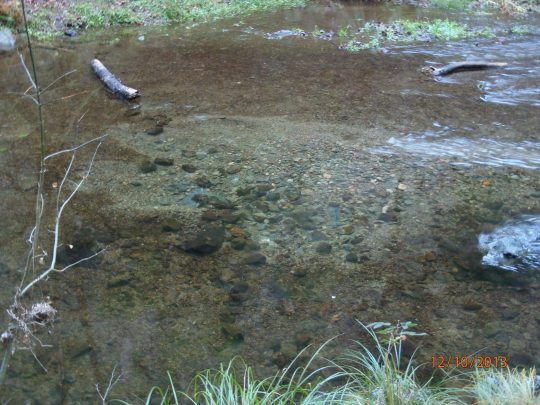
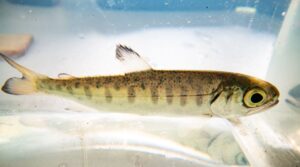
Patrick McLaughlin (he/him), Ranch Manager and Outdoor School Principal at Walker Creek Ranch, share more on their educational activities: “One component of our curriculum that we recently added is studying the creek and trying to answer the question of why salmon and steelhead are found here. Also looking at areas where redds are found, and questioning why redds are located on specific sections of the creek. So, we have the students journey down to the creek to do their investigations, then they focus on coming up with the answers and solutions, and even create scientific modeling based on that. That’s one of the main focuses of our current science curriculum and we’re excited about it.”
Walker Creek Ranch has been a dedicated landowner and partner in the restoration of Walker Creek and helping salmon thrive in the area. Throughout Patrick’s 10+ years working at the ranch, “I’ve seen the surrounding land of the creek become much more wooded which is important to maintain good habitat. That’s been through some of our efforts working with agencies and organizations such as CalTrout. We’re seeing a lot of hope with salmon returning to good conditions as water temperatures are dropping.” Kris points out, “we’ve organized our students in planting redwoods to improve riparian habitat for wildlife, and will be planting Big Leaf Maples soon, as well.”
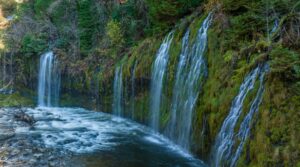
Walker Creek watershed may be on the smaller side compared to other nearby watersheds, but its importance in providing key habitat for endangered species and being a mostly undeveloped area so close to the built-up Bay Area is significant. “I believe that for a lot of people, Walker Creek watershed is not on their radar. Partly that might be because the vast majority of it is not accessible to the public, except through private property. When we bring students and guests here, they are astonished by its beauty.”
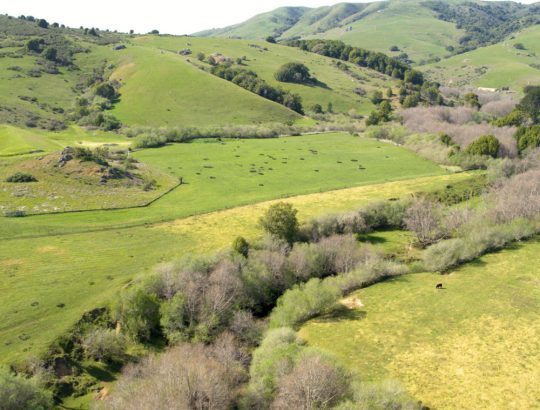
Outdoor education and getting students outside in nature is an important part of the mission of Walker Creek Ranch. The ranch has the open space to provide these opportunities, and while there, students are able to foster lasting connections with the natural environment, leaving with a richer sense of self and community.
Kris further explains, “The physical activities of restoration are a lot of work, such as planting trees. But then the students arrive, and it doesn’t feel like work anymore. Having that younger generation here and being able to share our knowledge of the importance of the environment is amazing. Some of them are engaging with the land in a way that they’ve never done before. That produces a sacred feeling.”
Patrick adds, “Being part of such a unique place such as Walker Creek watershed and connecting kids to nature makes me feel very fortunate and blessed to have this as my career.”