


The call for increasing California’s water storage is ongoing, yet how much does the state stand to benefit — and at what cost?
Jay R. Lund, The Ray B. Krone Chair of Environmental Engineering, University of California, Davis, explores the options at the California Water blog, and a couple of statements stand out.
First, on the scale of the state’s proposed expansion:
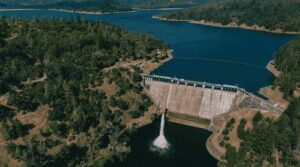
All combined, proposed state expansions of surface storage facilities would add less than 3.3 maf of new capacity (Sites: 1.3-1.8 maf, Temperance Flat: 0.43-1.3 maf, Los Vaqueros: 60-175 taf). This is not much relative to existing capacities
And second, on the realities of expanding surface storage:
Storage investments should be a business decision. Water managers will always prefer more storage capacity, especially if it is free. But surface storage has substantial costs (financial, environmental, legal), and political controversy. Is more storage at a particular location a good system investment, relative to other uses of scarce money (and political attention)?
Better management and conservation remain the cheapest methods available for extending the state’s overcommitted water supplies, and any expansion of water storage should be closely scrutinized.