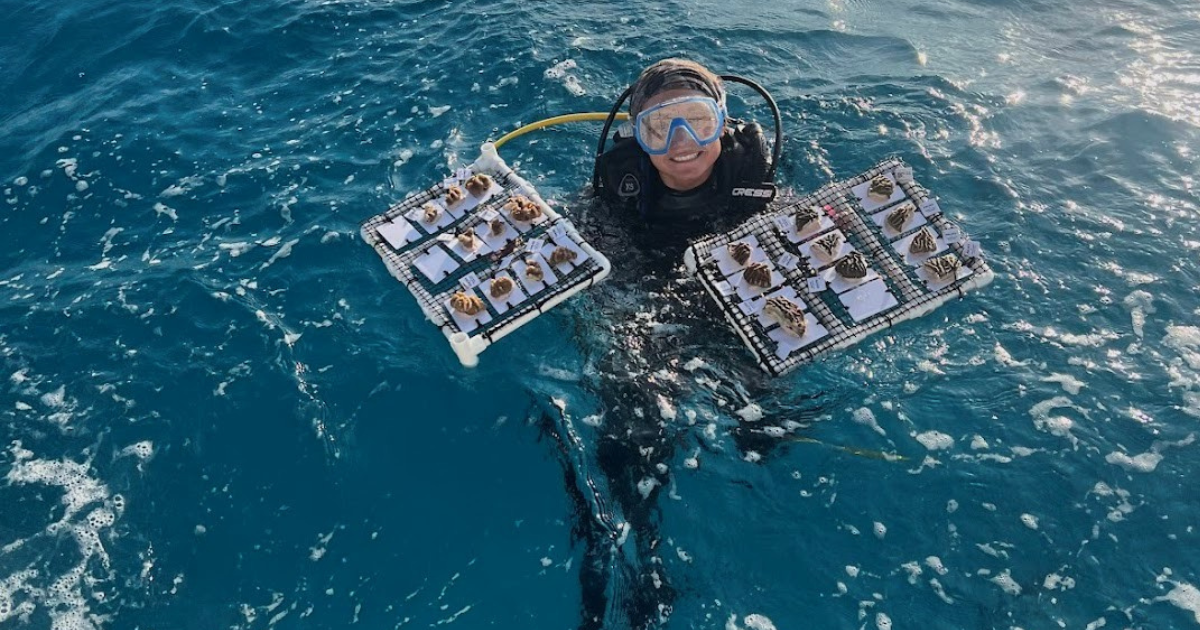
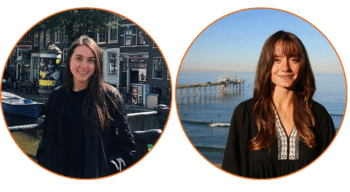
Tess Noone, Graduate Policy Researcher & Master’s Student at Scripps Institution of Oceanography (right) and Claire Bergerson, CalTrout Communications Manager (left)
At CalTrout, we believe partnerships are the engine driving conservation. We get especially excited about the opportunity to work with students, who are the next generation of restoration leaders. They often provide new perspectives, challenging traditional ways of thinking, and bring an enthusiasm that is contagious. That is exactly how we feel about our partnership with Tess Noone, Graduate Policy Researcher and Master’s Student at UC San Diego’s Scripps Institution of Oceanography, on her capstone project, interdisciplinary research that combines restoration, infrastructure, and environmental policy.
Through her capstone project, Tess is partnering with CalTrout to track California’s Environmental Quality Act (CEQA) projects across the state that intersect with CalTrout’s suite of projects. Our restoration efforts are often intertwined with the CEQA process, so understanding the intricacies and statuses is essential to completing restoration projects most effectively. Additionally, Tess will empower community members by creating an interactive digital StoryMap that will walk the public through how the CEQA process works in practice and clarify what different CEQA statuses mean for a project. It will also highlight when and how the public can participate in review and comment periods that influence outcomes for local rivers. More public participation can ensure that conservation is a priority, encourage thoughtful development, and contribute to positive conservation outcomes.
You can learn more about her research here. We were so excited to catch up with Tess and hear a little more about her path into this field.
Could you share a little about where you’re from, your background, and how you came to partner with CalTrout as part of your Graduate Program?
I grew up on the coast of Connecticut, where I spent many days on the water sailing, fishing, exploring tidepools, and hiking in the forests surrounding the Long Island Sound. That is really where my love for the environment began. Much of that time was spent exploring where rivers met the ocean, and I became curious about how connected those systems are, which stuck with me from a young age.
During undergraduate studies, I studied Human Dimensions of Natural Resources at Colorado State University, where I had the chance to participate in a marine resources study abroad program in Turks and Caicos. That program led me to do research on fly fishing, which was the first time I really saw how important recreational fisheries are for conservation. I remember spending long days near the water talking with local guides and seeing firsthand how much knowledge and care goes into maintaining those fisheries. It made conservation feel much more tangible and community-driven than I had previously understood it to be.
From there, I went on to work internationally on coral-related projects at the community level and found myself increasingly drawn to governance and management. Seeing how policy, management, and local stewardship come together to protect fisheries is what ultimately drew me to partner with an organization like CalTrout.
What inspired you to pursue Graduate School at Scripps, focused on marine biodiversity and conservation?
The interdisciplinary nature of the Master of Advanced Studies in Marine Biodiversity and Conservation program really drew me to Scripps. It is a place where you can explore a wide range of interests while having strong support along the way. You are surrounded by people working on completely different kinds of projects, from writing books to studying deep sea organisms to developing new coral restoration technology — being in this environment allows you to constantly learn from the people around you.
Coming to Scripps also gave me the chance to get more involved in the environmental policy landscape at both the state and federal level. I have had opportunities to learn directly from professionals working in this field, and even speak with state legislators about some of our most pressing ocean-related issues, like this year’s California Oceans Day. This program has pushed me to grow in ways I did not fully anticipate when I started, and I am very grateful to be here.
How did you first hear about and get involved with CalTrout?
I heard about CalTrout through a fellow Scripps program alum, Nate Yancheff, South Coast Project Manager at CalTrout.
We were initially talking about grant writing and how it tied into his work at CalTrout, and he proposed the idea of doing CEQA-related research for the organization. What started as a conversation grew into the full project it is today, and Nate has been an incredible mentor throughout, both for this work and across my time in the program.
Could you share a little about your capstone project and how the work will be used going forward?
My capstone centers on policy-related research around CEQA, the California Environmental Quality Act. It started with a focus on CalTrout’s South Coast Region and has since expanded to be organization-wide, tracking CEQA projects across the state that overlap withCalTrout’s work or critical habitat for sensitive native fish species.
From there, I built a GIS map to create a visual of where these projects are happening relative to CalTrout’s work on the ground. A lot of that work involves reading through public notices and project documents to understand what is happening and where it overlaps with conservation priorities, which has been both challenging and rewarding. Alongside that, I am developing public outreach materials in the form of a StoryMap to help explain what CEQA is and how people can get involved in the review process. California’s environmental review system is remarkably thorough, and many people do not realize they can have a voice in it.
I recently worked on a blog post with CalTrout discussing the importance of this work in the context of creating urban environments where both wildlife and humans can thrive. It’s very doable, we just have to be intentional about the process!
Was anything involved in the process of your capstone project surprising or unexpected?
I did not expect my capstone to go in this direction, but I am so happy it did. I think I imagined I would be doing fieldwork out on the water somewhere, but this work has been rewarding in ways I did not anticipate. I have learned more about California’s environmental policy landscape this year than I ever expected, and I have been especially impressed by how thorough the environmental review process is in California. It is a significant amount of information to sort through, but it reflects how seriously the state takes the protection of its natural resources.
“Working with California Trout allows me to think about [oceans and mountains] at once because both rely on the other to thrive, and that balance is something that matters deeply to me.”
Why does this work matter?
I think there are two sides to this. On the technical side, the CEQA process, as thorough as it is, can make it difficult for organizations to identify every project that might influence their work. For example, the CEQA process can ensure that large-scale construction projects in priority habitats incorporate the proper measures to protect these sensitive environments and the surrounding communities. The StoryMap I’m building out creates a living, visual tool that gives CalTrout a clearer picture of what is happening alongside their work statewide.
On the community side, getting involved in environmental review can feel intimidating or inaccessible. I hope the public-facing piece of this project helps lower that barrier. When people understand the process, they use their voices, and that is tremendously important.
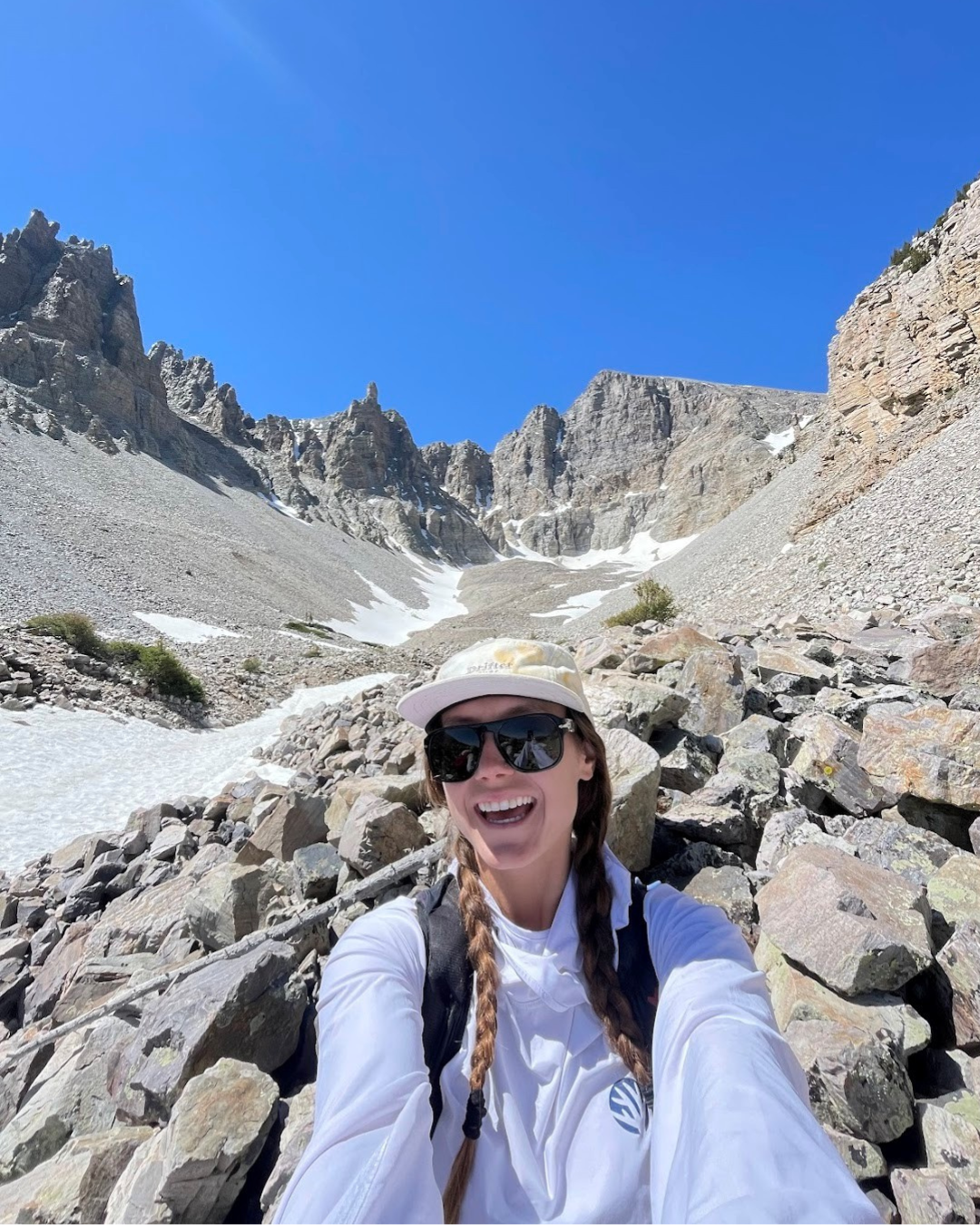
What has always driven me is an equal love for the ocean and the mountains, and while my professional background has largely been in marine environments, those two worlds have never felt separate. Working with California Trout allows me to think about both at once because both rely on the other to thrive, and that balance is something that matters deeply to me.
Do you have a favorite body of water and a favorite memory associated with it?
For saltwater, I can’t pick just one. The Long Island Sound in New York is where my curiosity for the ocean began, but places like the Caribbean, Indian Ocean, and now California are where that curiosity has continued to grow. Each place holds such different life and faces different pressures, and I feel very fortunate to have explored these areas and hope to keep doing so throughout my life.
In terms of my favorite body of freshwater, it is the North Fork River in Montana. I spent a summer living next to this river on the border of Glacier National Park, and it holds a special place in my heart. I saw incredible wildlife and spent time in and around that water learning and working as an environmental educator, and it gave me an appreciation for freshwater resources that I carry with me in everything I do now.
Do you have any advice for younger folks hoping to pursue a similar academic or career path?
Follow what you are genuinely interested in and give yourself time to figure things out as you go. It does not all need to be planned from the start. And if there is someone doing work you admire, reach out to them! Those conversations can feel like a small step, but they often lead to new opportunities or perspectives you would not have found otherwise.