Building fish passage that lasts
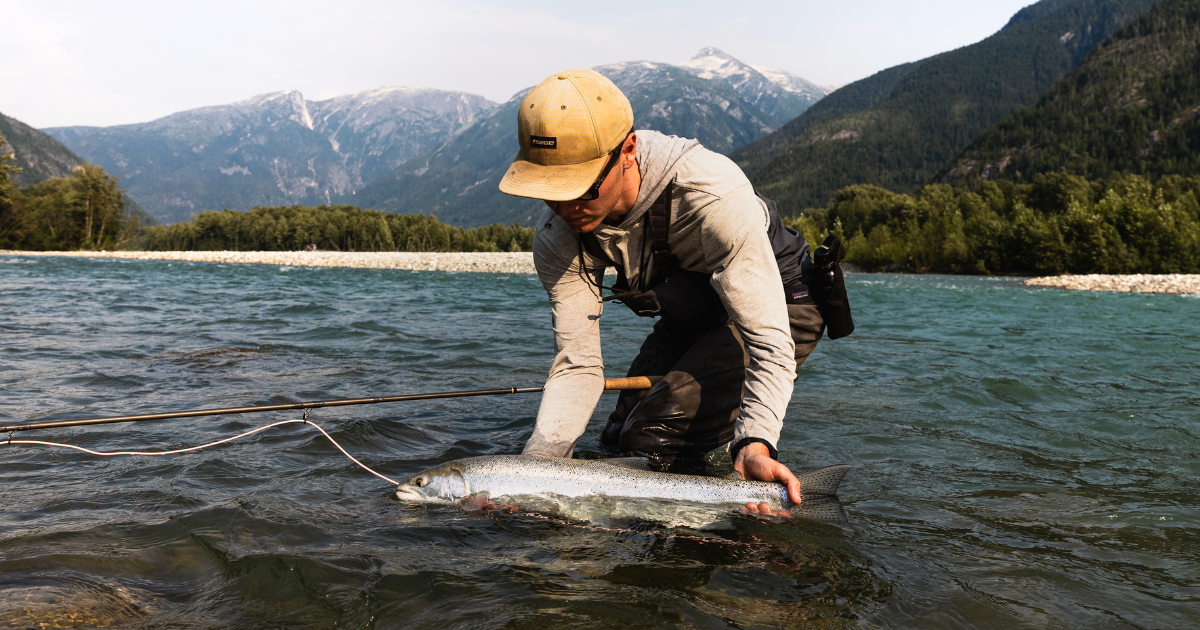
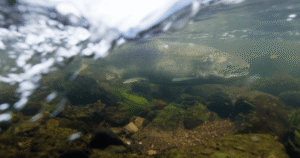
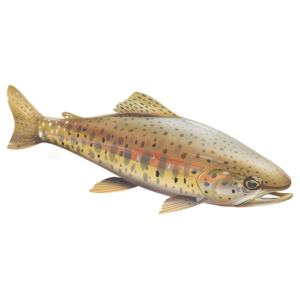
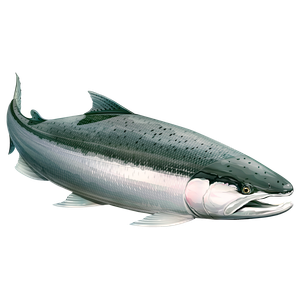
Southern California Steelhead are among the most resilient fish in North America. They evolved in rivers that can rage with winter floods, move enormous boulders, and shrink to isolated pools during long, dry summers. Their survival depends on moving between the ocean and cool headwater streams where they spawn and find refuge. These fish have adapted to survive fire, flood, and drought.
But dams, diversions, and other infrastructure block Southern steelhead from reaching essential habitat. Restoring these connections is critical to preventing their extinction. In powerful, unpredictable rivers like Santa Paula Creek in Ventura County, the challenge is much greater than just restoring fish passage – the challenge is to also ensure the sustainability of these solutions.
Restoration must work with the natural forces that shape the river. That’s why CalTrout is using physical scale modeling to test and improve the design of the Santa Paula Creek Stream Stabilization Project.
A Century of Change at Harvey Diversion
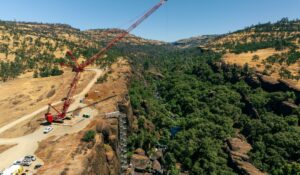
Built in the early 1900s to supply agricultural irrigation water, Harvey Diversion has become a major obstacle to steelhead migration on Santa Paula Creek. Over the past century, the presence of the diversion and changes in the downstream watershed have contributed to erosion that lowered the creek bed. Santa Paula Creek transformed the diversion from a roughly six-foot barrier into a 30-foot wall. Previous efforts to restore fish passage failed when major storms further eroded the channel.
To address the underlying causes of these failures, CalTrout and our partners are developing a solution to restore and stabilize approximately 4,000 feet of Santa Paula Creek. The project must restore fish passage, allow sediment to move naturally, maintain agricultural water deliveries, and avoid increasing flood risks to the local community.
Building a River in the Laboratory
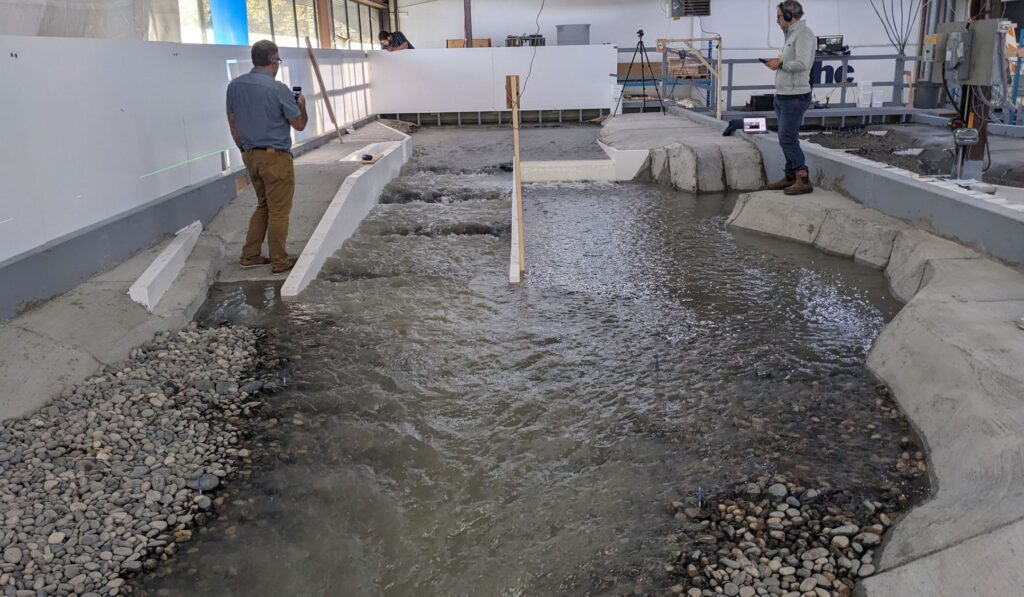
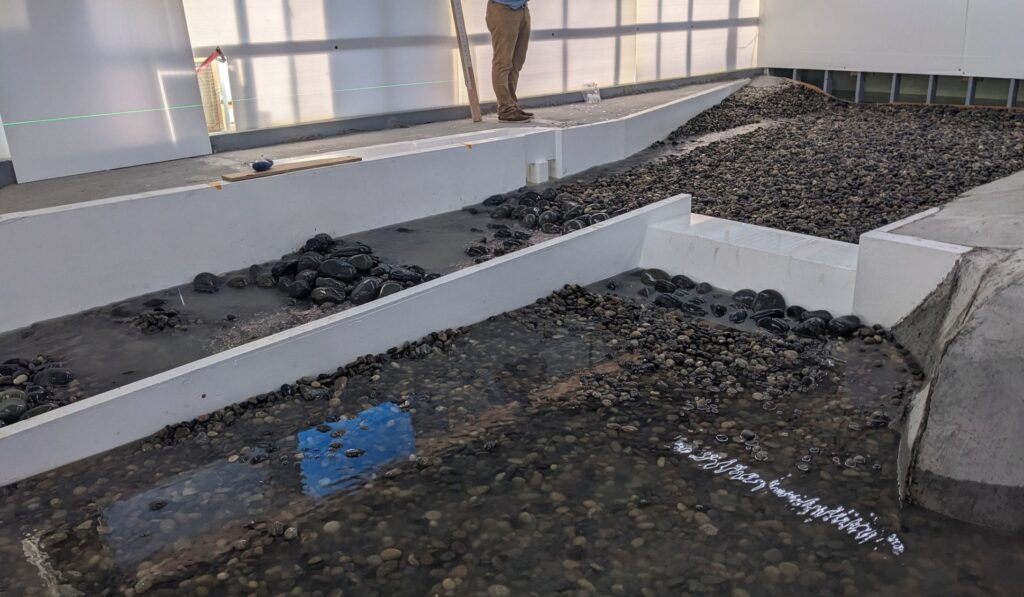
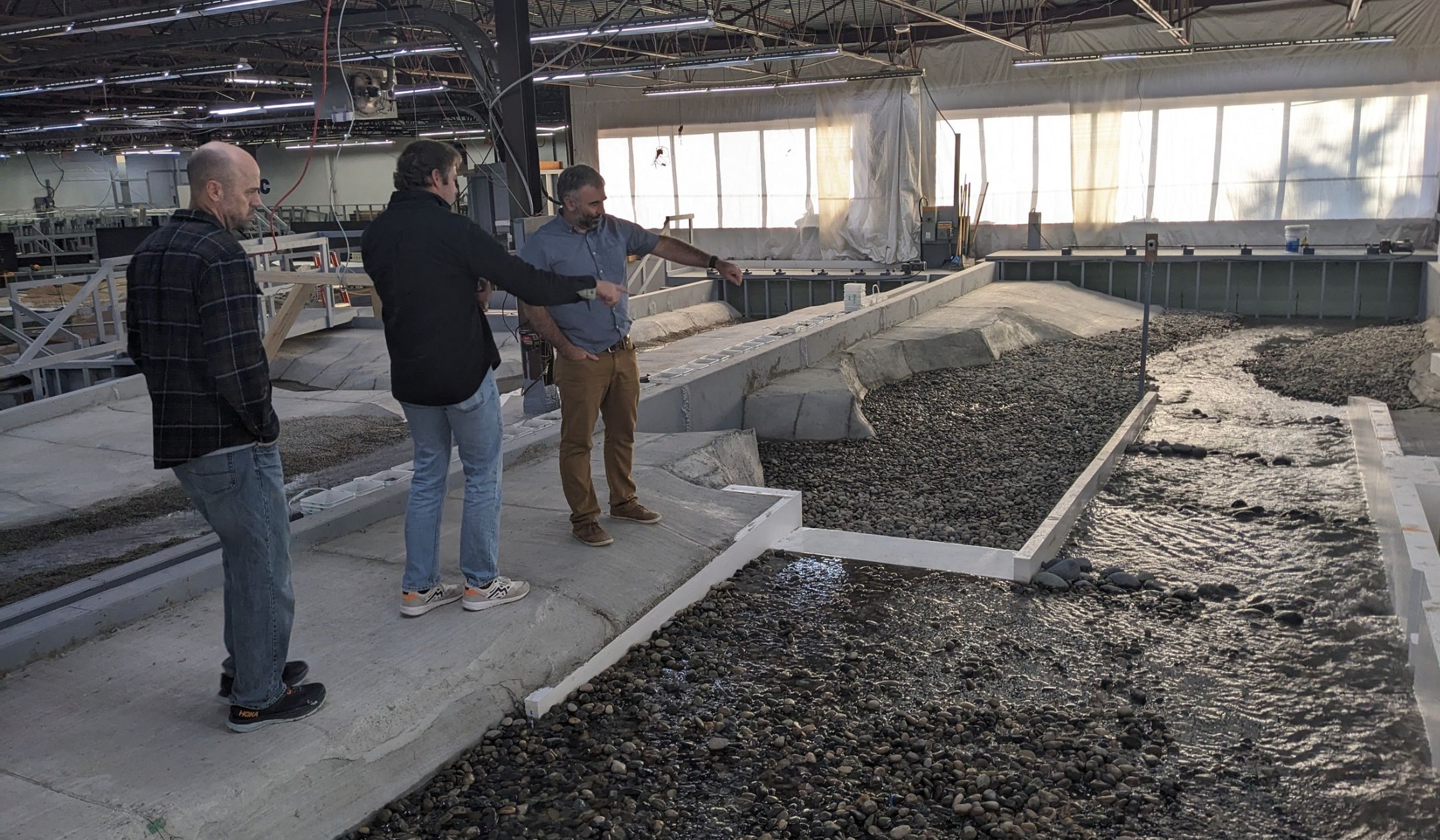
To understand how the proposed design will perform under changing river conditions, CalTrout’s engineering lead, Northwest Hydraulic Consultants (NHC), built two scale models of Santa Paula Creek at its laboratory in North Vancouver, British Columbia.
Unlike computer simulations, physical models use flowing water, moving sediment, and physical structures to recreate river conditions. A larger model tests channel stability during major floods. A second model focuses on water depths, velocities, and flow patterns at the proposed diversion to evaluate fish passage for adult and juvenile steelhead past the new diversion facility under a range of acceptable fish passage flow conditions.
Together, these models allow engineers to observe how the river responds, identify weaknesses in the design, and test solutions before construction begins.
When Science Changes the Design
Early testing revealed that proposed boulder structures were less stable than computer modeling had predicted. Under simulated flood conditions, large boulders moved downstream, threatening the stability of the restored channel. Engineers refined the design and tested it again, demonstrating improved stability.
This iterative process continues, with each round of testing informing further design refinements and building confidence that the restored channel can withstand the forces that have undermined previous fish passage efforts. This process demonstrates science at work – directly informing decisions and adjustments to build sustainable infrastructure.
Designing for a River That Moves
Santa Paula Creek will always be a powerful stream. Major storms will reshape its channel and carry everything from sand to massive boulders downstream. A restoration project should not try to eliminate this behavior. These natural processes create and renew the complex and diverse habitats that Southern steelhead, California red-legged frogs, and southwestern willow flycatchers depend on. The dynamic nature of the river is what makes it so ecologically valuable.
Water will always win, so we need to create solutions that work with nature, not against it. The goal is not to control the river, but to provide a lasting fish passage solution while restoring the natural processes that sustain and connect habitat. Physical modeling helps us find that balance and informs how we manage the restored channel over time, allowing us to develop a solution that is both durable and adaptable.
Physical modeling is another tool in CalTrout’s toolbox for rewilding Southern California’s rivers. By observing how Santa Paula Creek responds and evolves at a smaller scale, we deepen our understanding of how the river works. We can apply what we learn to reconnect habitat while preserving the dynamic character of the rivers that have shaped Southern steelhead for thousands of years.