The Women of CalTrout
In this new series, our Communications Associate, Kara Glenwright, sits down for conversations with the women on our Conservation and Policy/Legal teams. Follow along as these women share their own stories and experiences as women in conservation and science at CalTrout.
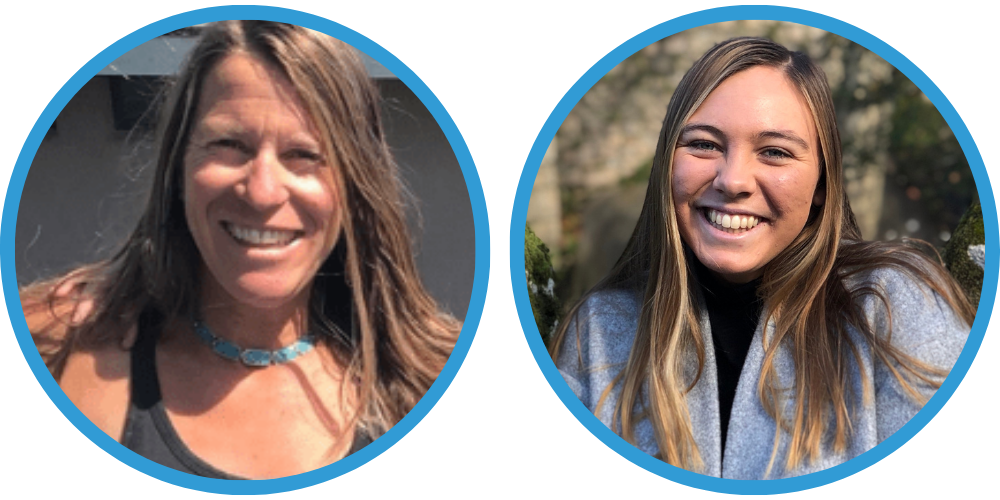
Allison Dodds, Sierra Headwaters Project Manager, and Kara Glenwright, Communications Associate
KG: What is your position at CalTrout and what communities in California do you work most closely with?
AD: I’m the project manager for CalTrout’s Sierra Headwaters region. I manage CalTrout’s June Mountain fuels reduction project. Geographically, I am mostly in the Eastern Sierra, and I cover the areas from around Kern River to Bridgeport.
KG: How did you come into this position at CalTrout?
AD: I’m originally from the Mammoth area, and I have a background in biology. Prior to working at CalTrout, I worked for another nonprofit organization here locally that partnered with CalTrout on many projects. It’s a small, tight-knit nonprofit world here. We all know each other and work on similar projects. I got involved with CalTrout through that, and I met people via other organizations in the area and projects we worked together on.
KG: What inspired you to pursue a career in conservation?
AD: I grew up in Mammoth, surrounded by nature, and I was always connecting with nature. It was a natural path for me to want to know more about life and the study of life. That desire to learn more led me into biology, and then that later led into real jobs in conservation. It all sparked out of my interest in the trees and the birds and plants.
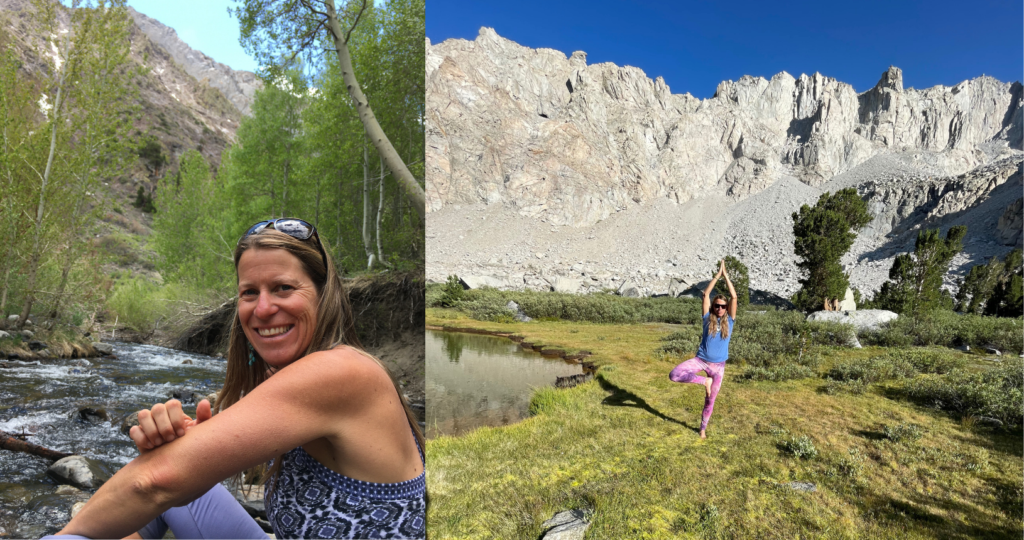
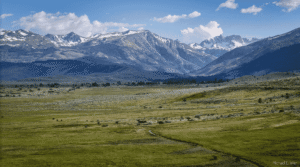
Left: Allison sitting by one of the Sierra Headwaters, McGee Creek. Right: Mountain and Meadows – University Peak (out of Onion Valley).
KG: What is your favorite part of your job? Could you share with me some of the most rewarding moments of your work?
AD: I really like connecting people with the biology and the science. Part of my work is to bring the biology down to a level that you can explain more easily, and I think that can really bring a deeper meaning of what’s going on to those that are working on the ground and those who might not have that scientific background. I really enjoy working with loggers and construction workers and having the challenge of taking the higher-level science concepts and jargon and describing those concepts in a way that is more easily understandable. I love seeing people’s passion increase as they learn what they’re doing and why they’re doing it.
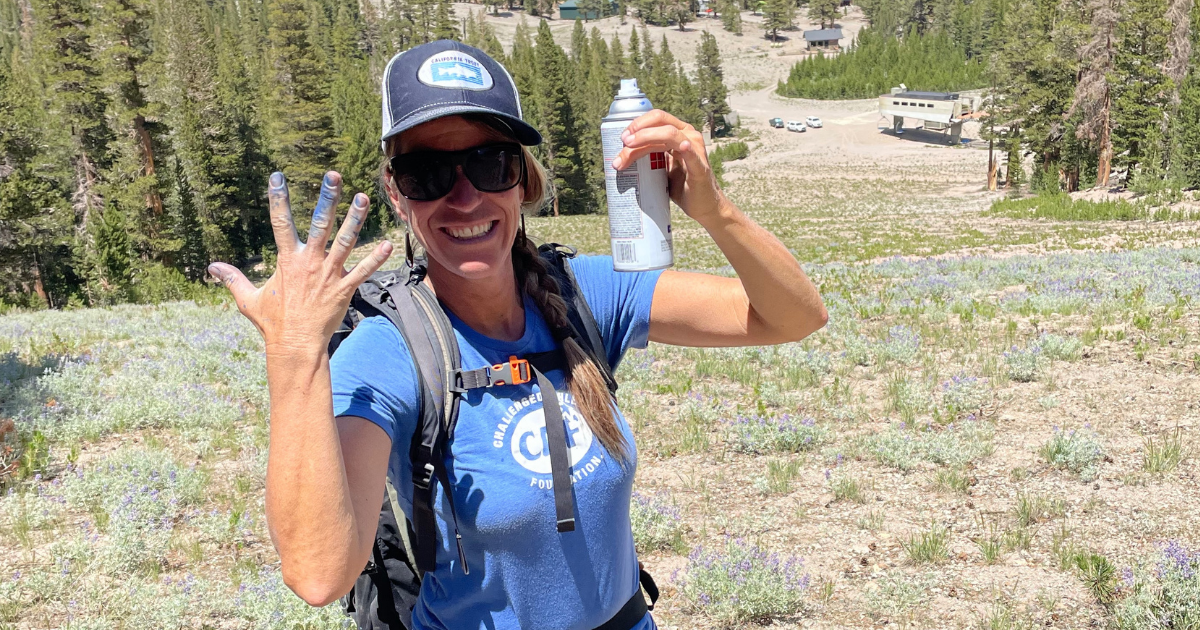
The other thing I enjoy is seeing the results. With the fuels reduction project that I work on, you can actually see the before and after of what the forest looks like. It makes me feel like I helped to accomplish something that is going to be successful, and I get to see those results.
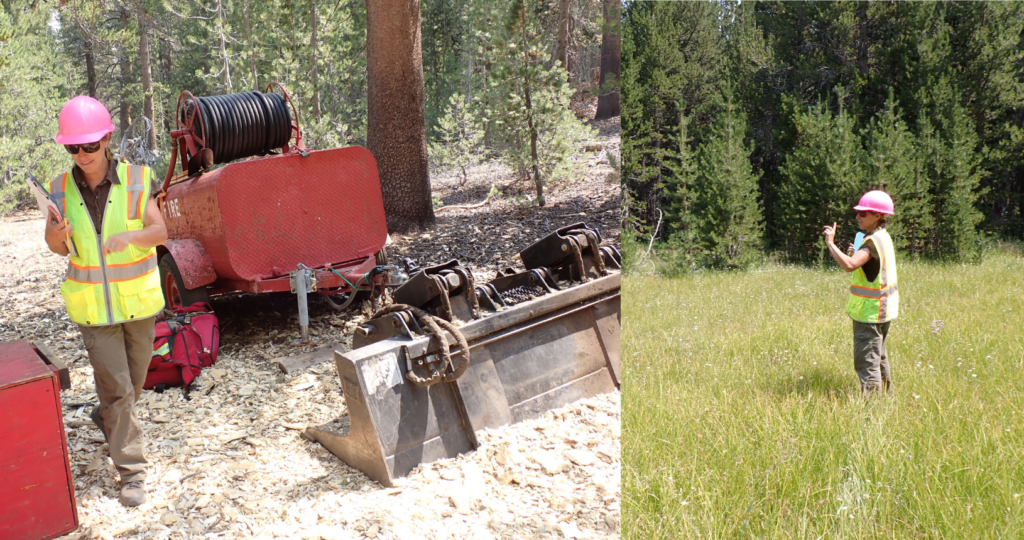
Allison managing fuels reduction work at June Mountain.
KG: What does it mean to you to be a woman in this field?
AD: I’m all about balance. At CalTrout, in particular, and in the environment I work in, it just feels like there is a balance of men and women. And I think that is really important. With this balance, both perspectives of men and women can be shared. Personally, I think this balance is what the earth needs. Just being a part of that feels like the right way to be.
KG: Could you share with me any historical or contemporary women figures in conservation (or outside of conservation!) that you feel particularly inspired by?
AD: Honestly, the friends that I have right now are women that I really look up to. It seems to me that so many people are walking the walk and starting to live the life of minimal impact. Some of my friends have organic gardens, and one of them lives in a tiny house. She has this knowledge of the native plants, traditional wildcrafting techniques, and ways of living that really honor ancient ways of living and future generations. I’m seeing it firsthand right now, and that gives me more inspiration than anything.
KG: What message would you share with younger women who hope to pursue a career in conservation someday?
AD: Learn what you enjoy learning and get an education based on that. Then apply that to conservation. So for me, for example, I learned about the birds, because I love the birds. Learn everything you can and get fired up about it, and then learn about how to save it. That seemed to be how my path went, and it worked well for me because if there was ever a time I didn’t understand the politics I could just come back to my passion of what I was originally interested in. Nowadays, you can apply almost anything to conservation because everything is so interconnected. I think you just have to start with what you enjoy learning about.
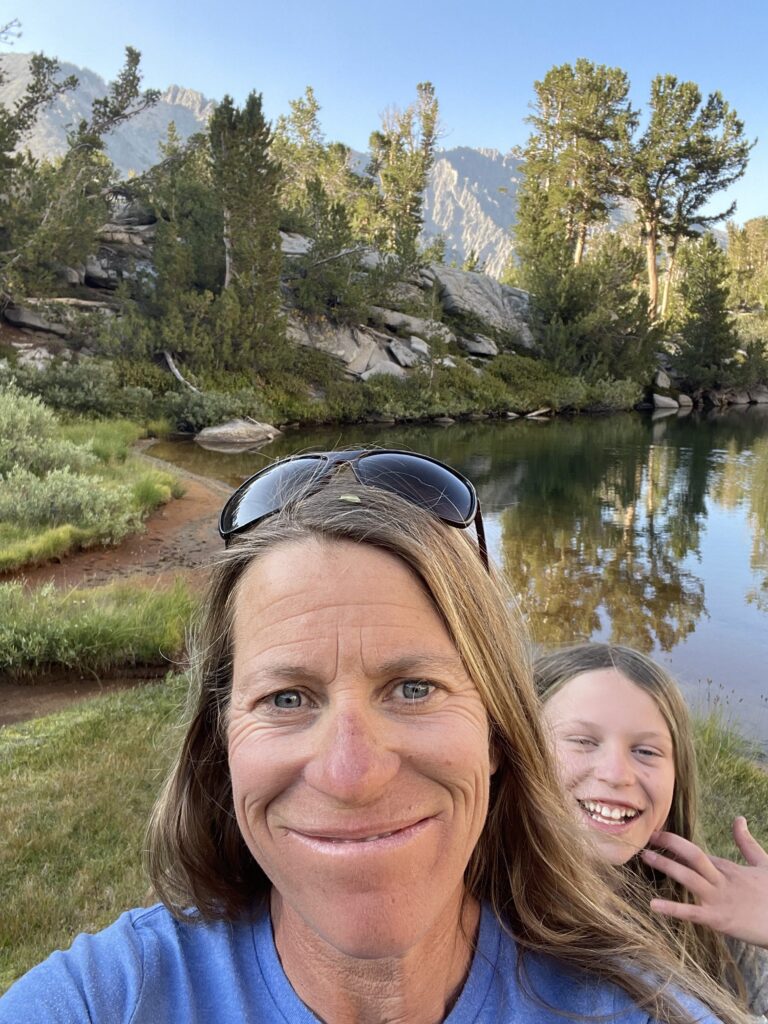
Allison with her daughter, Tyndall.
KG: Do you have a favorite fish?
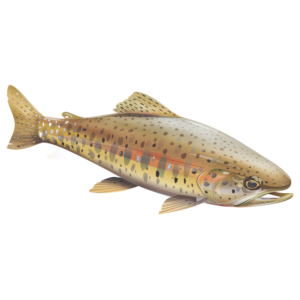
AD: I am actually new to the fish world, but I’ve been really interested lately in working with the Lahontan cutthroat trout. I’m intrigued by its historical background, and there’s so much more I want to learn about it. Right now, I’m just starting to work up in ByDay Creek in Bridgeport with the source population there, and that work has made me so excited to learn more. I don’t know enough!
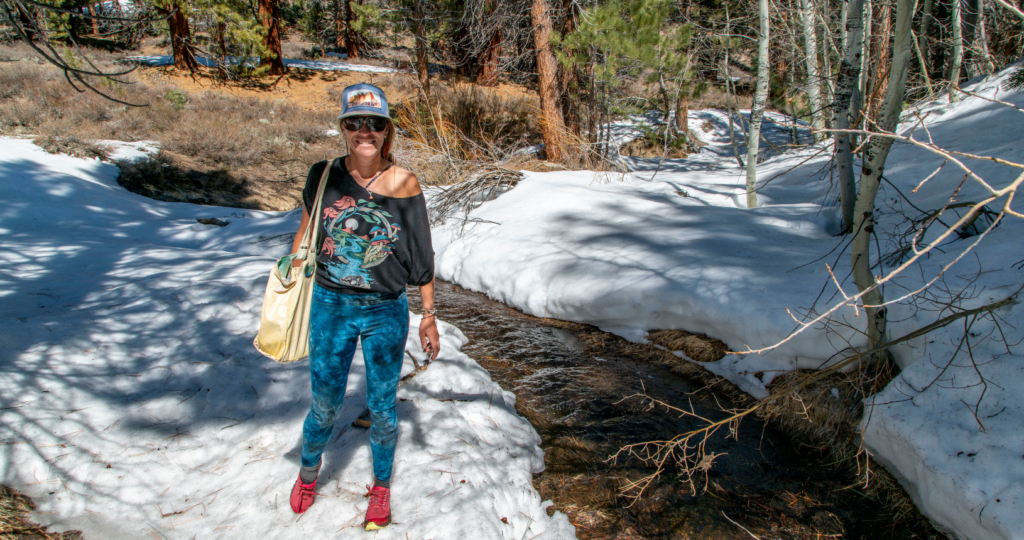
Left: Allison hiking into ByDay Creek ecological reserve.
Right: Allison skiing through the WB02 unit of June Mountain. The area was thinned last summer as part of the June Mountain fuels reduction project. The project also benefits the skiers on the mountain!