
2021 marks California Trout’s 50th Anniversary – a milestone for a conservation nonprofit that puts us in rare company. We are incredibly proud of the impact we’ve made across the state over the past five decades, and our dedicated members who make it possible.
In celebrating our first half century of watershed stewardship across California, we’re looking back at what we've accomplished over the decades–not simply to pat ourselves on the back, but to recognize the broad reaching influence that a single moment can have on the lasting future of our precious natural resources.
Like ripples in a still morning pond, the impact felt from these Moments That Write History extends much further beyond the immediate results. A simple demonstration project on 3 miles of river can turn into an entirely new model for wild fishery management; a single legislative victory can protect the public trust for generations to come; a scientific hypothesis can steer the agricultural landscape of the entire state of California, and the water policy that guides it.
But we also know our work has only begun. While we honor our past, now is the time to aim our focus on the future, toward what we will accomplish in the next 50 years as the state faces more people, more wildfires, and more threats from climate change than ever before.
Our vision is of a California where water flows free, clean and cold from headwaters to sea – a vision of watersheds teeming with native, wild fish whose resilience and diversity match that of the people throughout this great state we call home.
With all that we have accomplished in the last 50 years, just imagine the landscape-level impact we’ll be celebrating at our centennial.
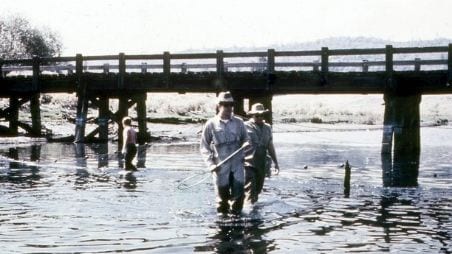
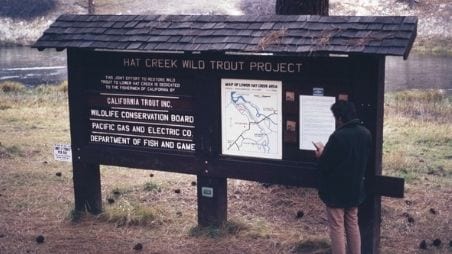
Hat Creek is, in essence, the birthplace of California Trout – where passion became purpose, where ideas transformed into action, and where a new approach to wild water conservation irrevocably shaped the way we protect California’s wild resources – for the past fifty years, and forever.
Thanks to the leadership of a nascent CalTrout–whose hard work in 1971 transformed the ethos of wild trout management into official California state policy–dozens of designated Wild Trout Waters stand a fighting chance at remaining strong fisheries for generations to come.
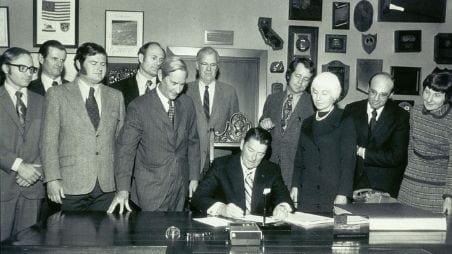
CalTrout's first legislative victory came in 1972 when Governor Ronald Reagan signed the California Wild & Scenic Rivers Act, forever prohibiting dams across thousands of miles of our precious free-flowing rivers.
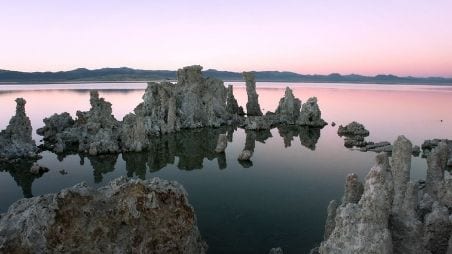
In a legal battle against the state of California, CalTrout and the Public Trust won the day for Mono Lake - and the future for our critical watersheds.
In 1997, the Southern California steelhead was officially listed as an endangered species, kicking off a much-needed recovery plan for this important living indicator of watershed health.
A 100-year contract gave Nestlé the rights to turn the fabled McCloud River—one of California's most cherished rivers—into bottled water. Until CalTrout stepped in.
CalTrout's relationship with the UC Davis Center for Watershed Sciences—integral to our approach of putting science into action—culminated with a seminal report that charts the course of conservation for the next 50 years.
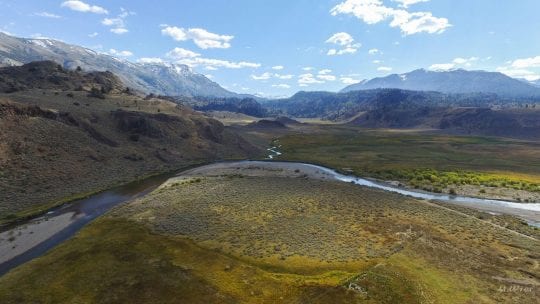
The Sierra Meadows Strategy represents an integral element of our source-waters-to-sea approach to combating the effects of drought and climate change.
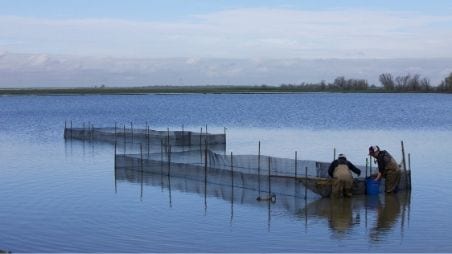
What began in a mud puddle on a Central Valley rice field has grown into a model for fixing our broken water system at a statewide scale.
Decades of work by more than 40 partner organizations are coming to fruition, with the largest dam removal project in United States history now set in motion. The end result will be 300+ miles of habitat reopened for native salmon and steelhead.
Subscribe to CalTrout emails and we'll keep you up-to-date on our current project work across California. (Don't worry; we never sell or share your information.)
We’ve seen tremendous success over our first 50 years, but our work has only begun. Together, we can protect California's clean, cold water for generations to come.
For our Future. For California. Forever.
Sign up to hear from California Trout! CalTrout’s mission is to ensure healthy waters and resilient wild fish for a better California. Hear about our work and how to get involved through our monthly newsletter, The Streamkeeper’s Blog, “Trout Clout” action alerts, article from our e-magazine, The Current, event invites, and much more! We respect your privacy and will never sell or share your information with other organizations.
The findings from this study have made it clear – the time to act is now. We can work together to ensure that California will always have resilient populations of wild fish thriving in clean, cold water streams.
Here are some things you can do today:

Peter Moyle is the Distinguished Professor Emeritus in the Department of Wildlife, Fish and Conservation Biology and Associate Director of the Center for Watershed Sciences, at UC Davis. He is author or co-author of more than 240 publications, including the definitive Inland Fishes of California (2002). He is co-author of the 2017 book, Floodplains: Processes and Management for Ecosystem Services. His research interests include conservation of aquatic species, habitats, and ecosystems, including salmon; ecology of fishes of the San Francisco Estuary; ecology of California stream fishes; impact of introduced aquatic organisms; and use of floodplains by fish.
Robert Lusardi is the California Trout/UC Davis Wild and Coldwater Fish Researcher focused on establishing the basis for long-term science specific to California Trout’s wild and coldwater fish initiatives. His work bridges the widening gap between academic science and applied conservation policy, ensuring that rapidly developing science informs conservation projects throughout California. Dr. Lusardi resides at the UC Davis Center for Watershed Sciences and works closely with Dr. Peter Moyle on numerous projects to help inform California Trout conservation policy. His recent research interests include Coho salmon on the Shasta River, the ecology of volcanic spring-fed rivers, inland trout conservation and management, and policy implications of trap and haul programs for anadromous fishes in California.

Patrick Samuel is the Conservation Program Coordinator for California Trout, a position he has held for almost two years, where he coordinates special research projects for California Trout, including the State of the Salmonids report. Prior to joining CalTrout, he worked with the Fisheries Leadership & Sustainability Forum, a non-profit that supports the eight federal regional fishery management councils around the country. Patrick got his start in fisheries as an undergraduate intern with NOAA Fisheries Protected Resources Division in Sacramento, and in his first field job as a crew member of the California Department of Fish & Wildlife’s Wild and Heritage Trout Program.

This factor refers to hard rock mining, from which contaminated tailings, mine effluents, and toxic pollutants may have been dumped or leached into streams, mostly from abandoned mines. Mercury mining, used for processing gold in placer and dredge mining, left a lasting negative impact on wildlife.

Hatcheries and releases of hatchery reared salmonids into the wild can negatively impact wild populations through competition, predation, disease, and loss of fitness and genetic diversity. Hatchery influences are especially apparent to for anadromous species where dams blocked access to spawning habitat and hatcheries were established as mitigation. Inland trout can also be impacted with stocking of hatchery fish for recreation.

All anadromous salmonids depend on estuaries for rearing during a portion of their lives. Most estuaries in the state are highly altered from human activities, especially diking, draining, and sandbar removal between the estuary and ocean. Land-uses surrounding estuaries often involve extensive wetland reclamation, greatly reducing ecological function and habitat complexity.

Harvest relates to legally regulated commercial, tribal, and recreational fisheries, as well as illegal harvest (poaching). Over-harvest can have substantial impacts on fish populations, particularly for those with already limited abundance or distributions, those which are isolated or reside in discrete habitats making them easy to catch (e.g. summer steelhead), or those that attain large adult size (e.g., Chinook salmon).

Many heavily logged watersheds once supported the highest species diversity and abundance of fishes, including anadromous salmon and steelhead. Improperly managed logging increases sediment in streams, increases solar input which increases stream temperatures, and degrades riparian cover. Stream habitat is also degraded by the extensive network of unpaved roads that supports timber extraction.

Transportation corridors such as highways confine stream channels and increase sedimentation, pollution, and habitat degradation from storm runoff and altered streamflows. Culverts and other passage or drainage modifications associated with roads often block migration and restrict fish movements, which can fragment populations.

Non-native species (including fishes and other aquatic organisms) are ubiquitous across many of California’s watersheds; their impacts on native species through hybridization, predation, competition, increased disease transmission, and habitat alteration can be severe.

Wildfires are a natural component of California’s landscape. However, fire suppression, coupled with climate change, has made modern fires more frequent, severe and catastrophic. The transition from relatively frequent understory fires to less frequent, but catastrophic, crown fires can have a severe impact on fish habitat and wipe out populations with narrow habitat ranges.

Impacts from agriculture include streams polluted by agricultural return water or farm effluent; reduced flow due to diversions which can affect migratory patterns; and increased silt and pesticides in streams. Marijuana grow operations, legal and illegal, were considered in this metric.
Dams block access to historical spawning and rearing habitats. Downstream, dams alter the timing, frequency, duration, magnitude, and rate of change of flows decreasing habitat quality and survival.

As California’s population grows, rural development increasingly encroaches along or near streams. Resulting impacts include water diversions, groundwater pumping, streambed alteration (to protect houses from flooding, construct road crossings, etc.), and pollution (especially from septic tanks and illegal waste dumping).