California Golden trout are likely to become extinct in the wild in the next 50 years. While the Golden Trout Creek (GTC) population is relatively secure, the South Fork Kern River (SFKR) population is threatened by hybridization with hatchery-origin Coastal Rainbow trout, and predation and competition from introduced Brown trout.
Threats
Alien Species
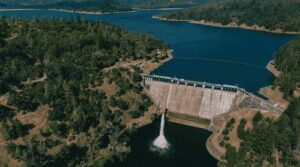
Non-native species (including fishes and other aquatic organisms) are ubiquitous across many of California’s watersheds; their impacts on native species through hybridization, predation, competition, increased disease transmission, and habitat alteration can be severe.
Grazing
Recreation
Species characteristics
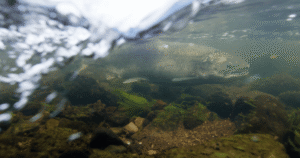
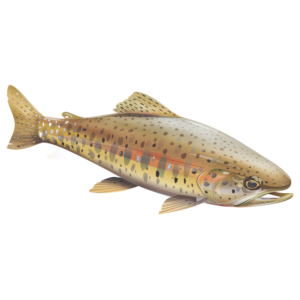
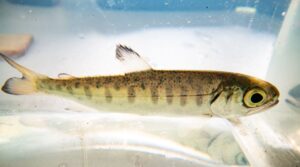
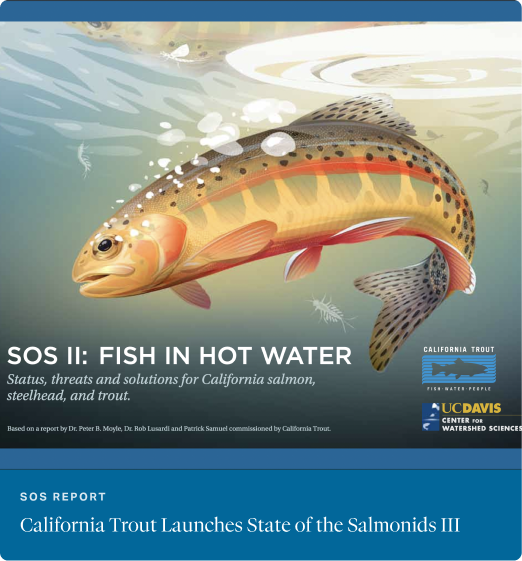
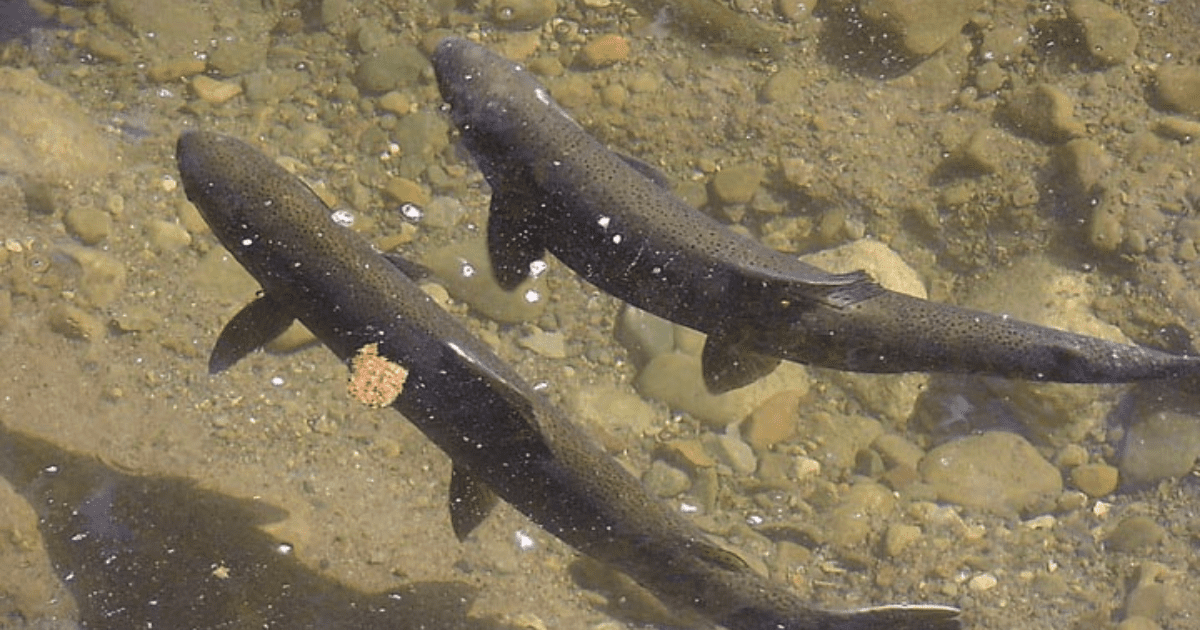
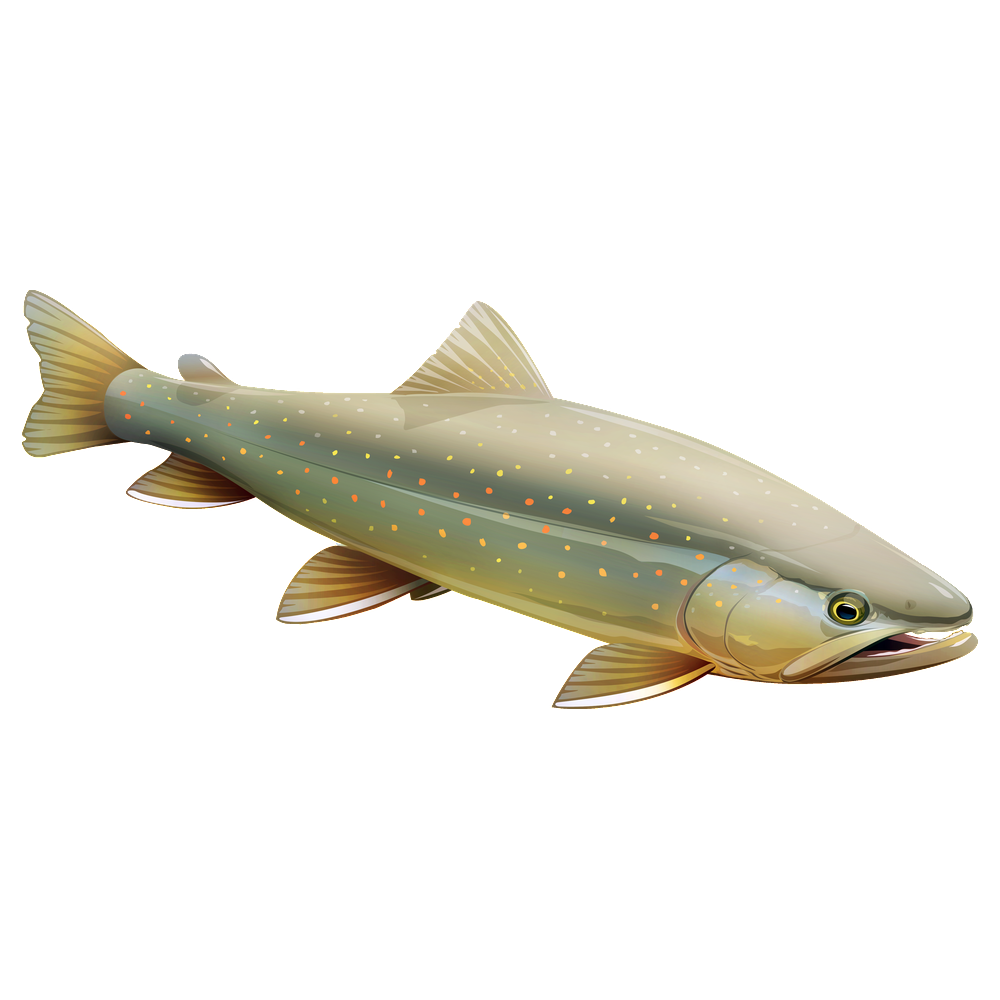
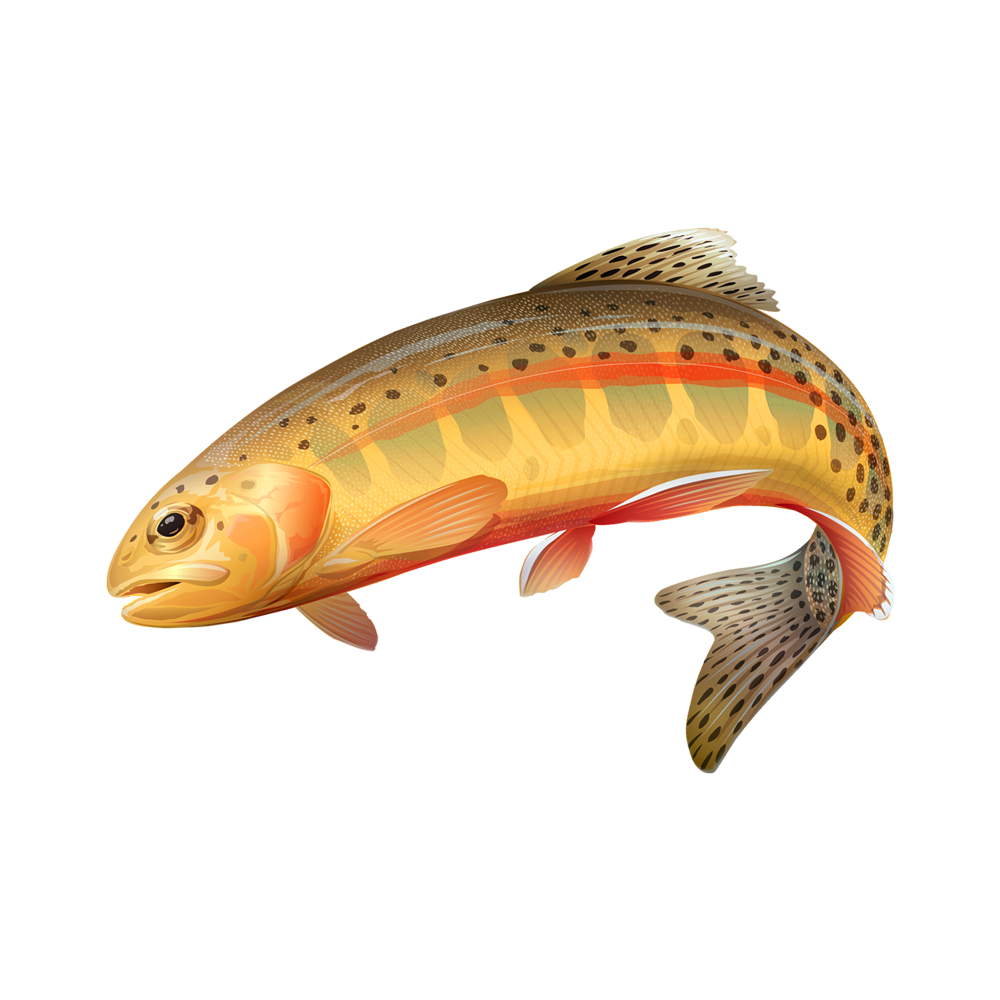
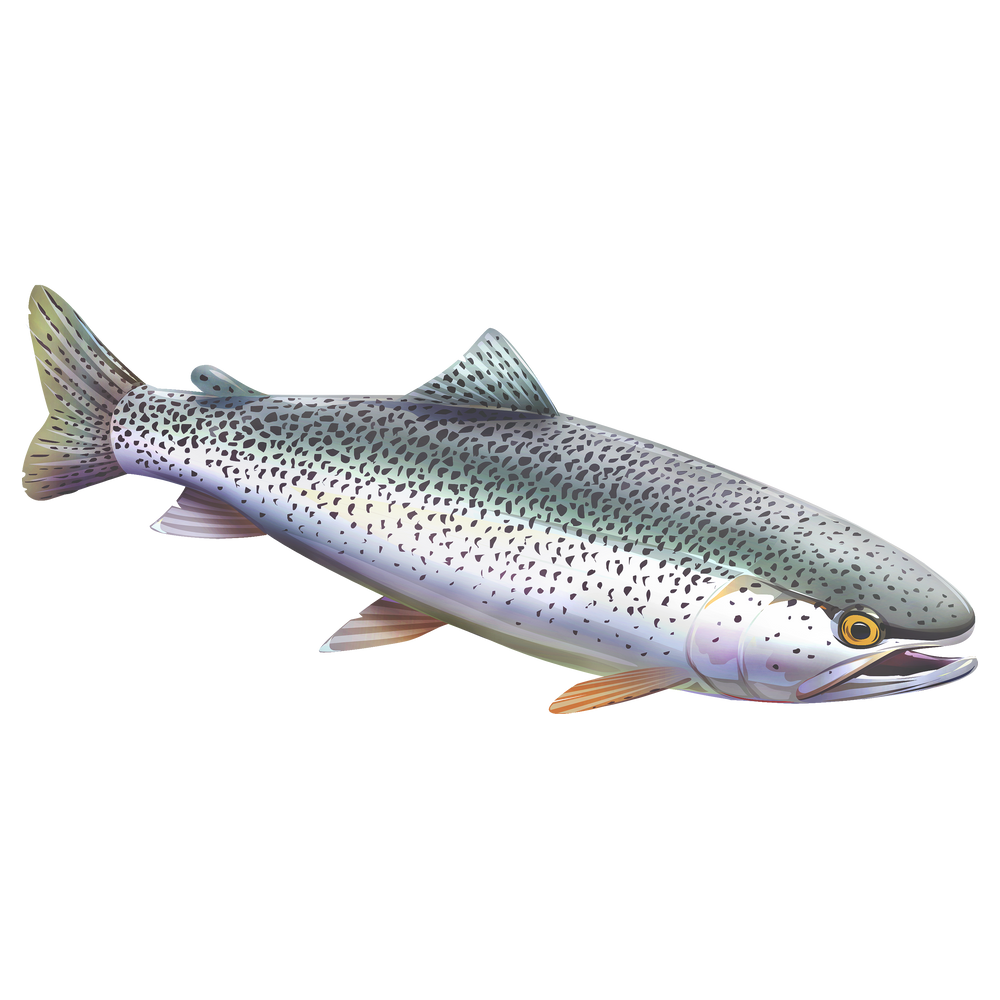
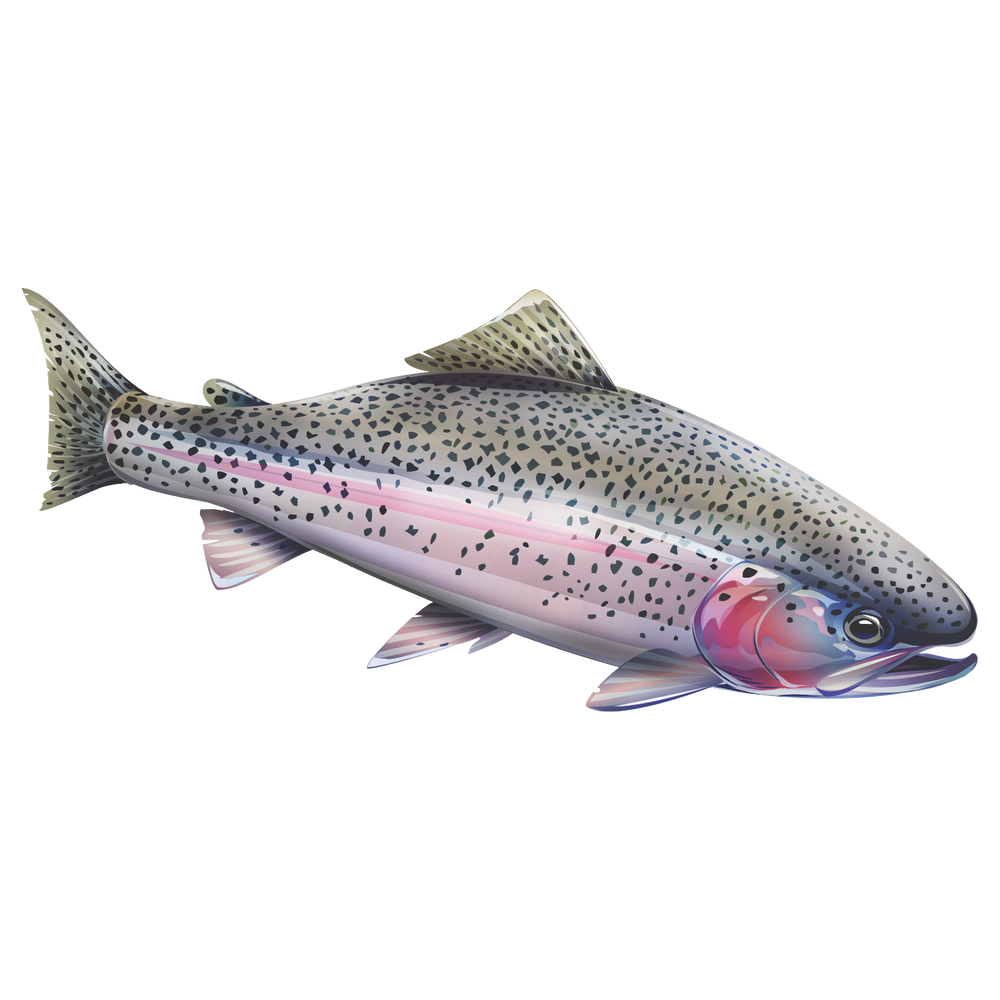
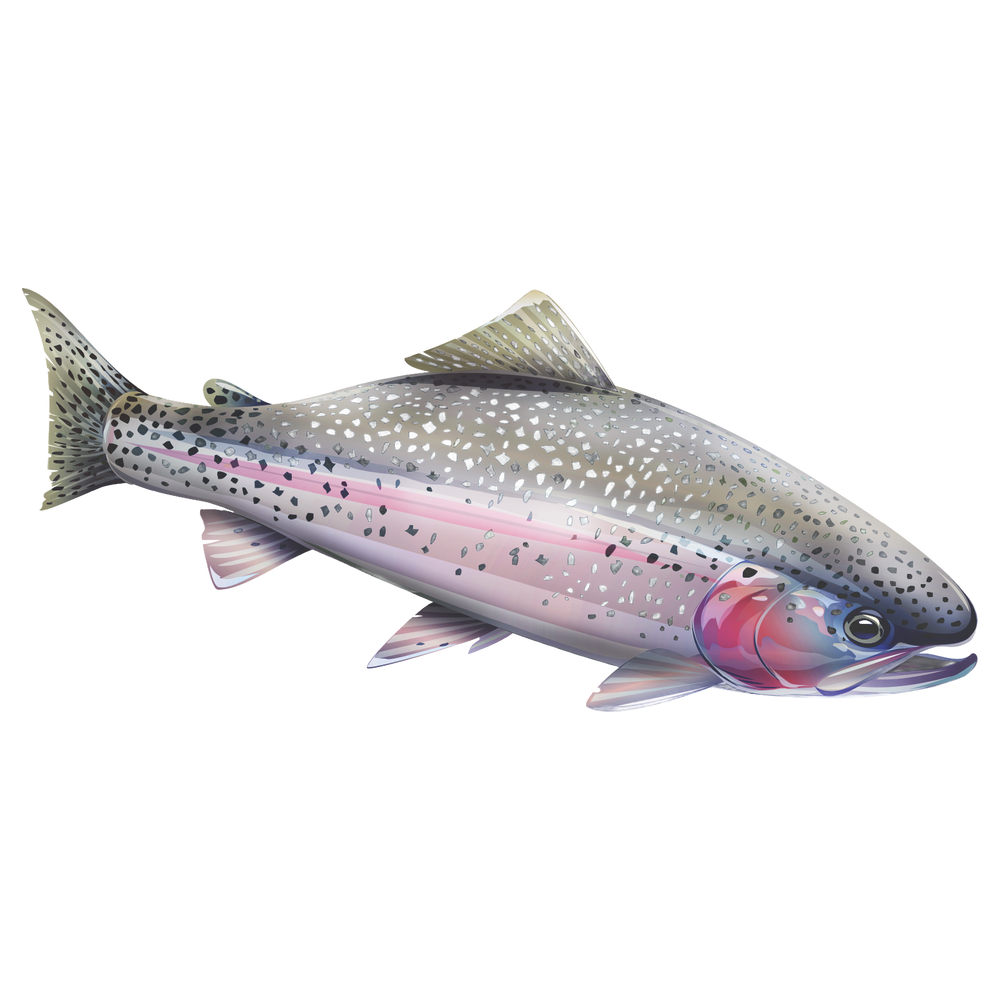
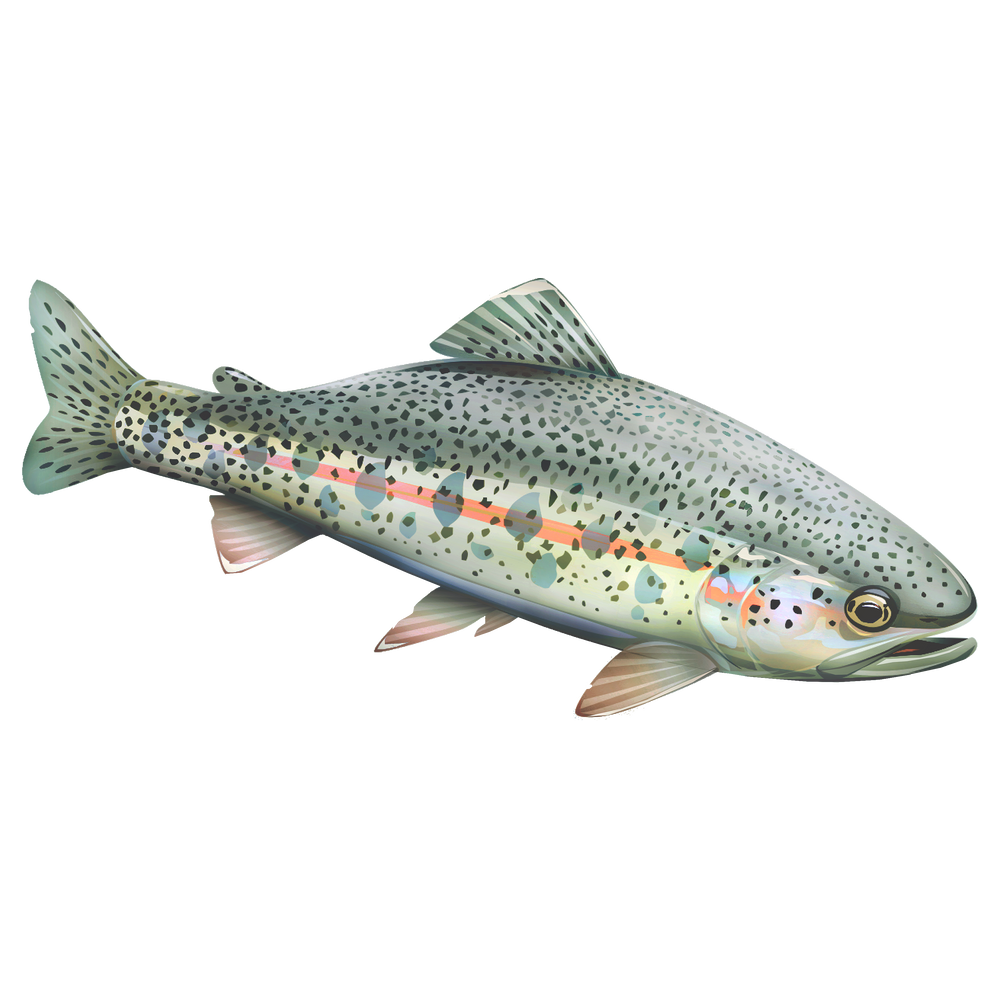
California Golden trout take their name from their bright, yellow-gold coloration. Their backs are usually copper, with brilliant golden sides and bright red bands on their flanks. Their bellies are often deep red, and even adult fish retain parr marks. They have large spots on their fins and tail, with black bands and white to yellowish tips.
They can grow to 19–20 cm (about 8 in.) and reach a maximum age of nine years in streams. They are capable of growing larger in lakes — the largest Golden trout ever caught, in Virginia Lake (Madera County), weighed 4.5 kg (10 lbs.). Their striking appearance makes them easily recognizable, and led to California Golden trout becoming the official State fish of California in 1947.
California Golden trout take their name from their bright, yellow-gold coloration. Their backs are usually copper, with brilliant golden sides and bright red bands on their flanks. Their bellies are often deep red, and even adult fish retain parr marks. They have large spots on their fins and tail, with black bands and white to yellowish tips.
They can grow to 19–20 cm (about 8 in.) and reach a maximum age of nine years in streams. They are capable of growing larger in lakes — the largest Golden trout ever caught, in Virginia Lake (Madera County), weighed 4.5 kg (10 lbs.). Their striking appearance makes them easily recognizable, and led to California Golden trout becoming the official State fish of California in 1947.
California Golden trout take their name from their bright, yellow-gold coloration. Their backs are usually copper, with brilliant golden sides and bright red bands on their flanks. Their bellies are often deep red, and even adult fish retain parr marks. They have large spots on their fins and tail, with black bands and white to yellowish tips.
They can grow to 19–20 cm (about 8 in.) and reach a maximum age of nine years in streams. They are capable of growing larger in lakes — the largest Golden trout ever caught, in Virginia Lake (Madera County), weighed 4.5 kg (10 lbs.). Their striking appearance makes them easily recognizable, and led to California Golden trout becoming the official State fish of California in 1947.
California Golden trout take their name from their bright, yellow-gold coloration. Their backs are usually copper, with brilliant golden sides and bright red bands on their flanks. Their bellies are often deep red, and even adult fish retain parr marks. They have large spots on their fins and tail, with black bands and white to yellowish tips.
They can grow to 19–20 cm (about 8 in.) and reach a maximum age of nine years in streams. They are capable of growing larger in lakes — the largest Golden trout ever caught, in Virginia Lake (Madera County), weighed 4.5 kg (10 lbs.). Their striking appearance makes them easily recognizable, and led to California Golden trout becoming the official State fish of California in 1947.
Conservation Actions
Conservation Strategy
Review and update the 2004 Conservation Strategy.
Implement revised Conservation Strategy to eliminate non-native trout species.
Monitor and evaluate barrier performance and collect abundance, distribution, and genetic data to determine Strategy efficacy.
Restrict grazing and off-road vehicles from sensitive areas.
Protect streams with pure and slightly hybridized California Golden trout as refuge populations.
Restore degraded headwater meadows to increase cool streamflows in summer and fall months and enhance species resiliency.
SOS overall score over time. Lower means greater extinction risk.
3.4
/ 7
2008
3.1
/ 7
2017
–
2027
Where to find California Golden Trout
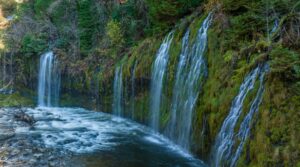
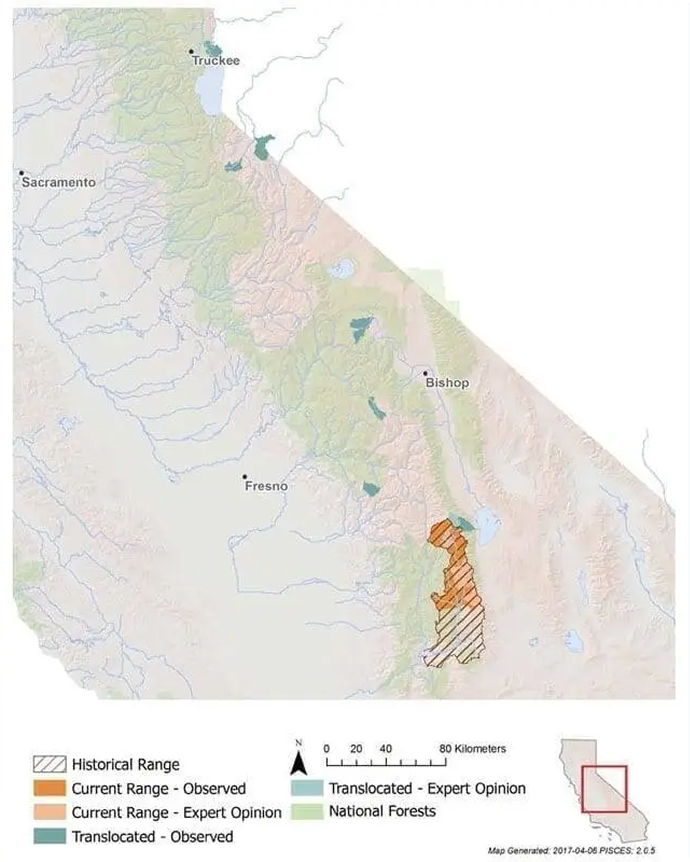
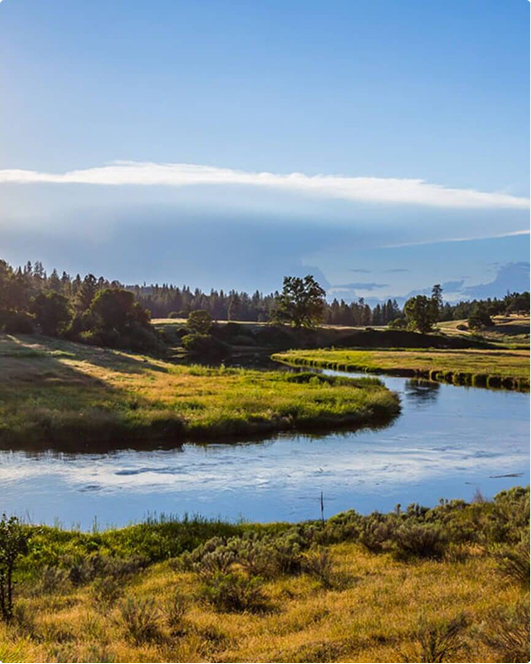
California Golden trout are native to the South Fork Kern River and its tributaries, Golden Trout Creek and Volcano Creek. As a result of extensive pack train collection and stocking efforts over the last century, they can be found in nearby Cottonwood Lakes and Mulkey Creek, as well as several watersheds in the Sierra Nevada. Expanded stocking has introduced them to more than 300 high mountain lakes and 1,100 km (about 680 mi.) of streams outside their native range, including in Utah, Wyoming, and Montana.
South Fork Kern
Golden Trout Creek
Volcano Creek
Cottonwood Lakes
Mulkey Creek
300+
HIGH-MOUNTAIN LAKES
1,100km
STREAMS OUTSIDE NATIVE RANGE
8,000ft
MINIMUM NATIVE ELEVATION
1
NATIVE WATERSHED
RANGE AND STOCKING HISTORY · NATIVE VS INTRODUCED WATERS
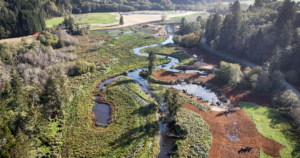
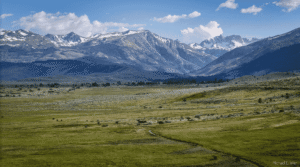
Native habitat · Cottonwood Lakes Basin, Inyo National Forest
PHOTO · CALTROUT FIELD ARCHIVE
How the California Golden Trout Scored
From Caltrout’s SOS II Report
METRIC
SCORE
JUSTIFICATION
Area occupied
1
Restricted to a few small tributaries in the native watershed.
Estimated adult abundance
3
Volcano Creek populations may be <1,000 but, if other populations with conservation value with native or near-native genotypes are added, the number would likely be in the higher numbers (10,000+).
Intervention dependence
2
Annual monitoring of barrier performance may be required. Implementation of Conservation Strategy is critical. Rescued populations from Volcano Creek will need to be re-introduced based on genetic management strategy.
Environmental tolerance
3
Generally tolerant of a wide range of conditions and habitats within their native range.
Genetic risk
1
Hybridization with rainbow trout is a constant high risk.
California Golden trout exist only in the streams and meadows of the high Sierra. Without sustained funding and policy attention, this State Fish will be gone in our lifetimes.
The Field Notes — every other Tuesday from CalTrout.
Watershed updates, project milestones, advocacy alerts, and the occasional photo from the field. No filler.
We send roughly twice a month. Unsubscribe anytime.
We value your privacy
We use cookies and similar technologies for site functionality, analytics, and marketing. You can accept, deny, or manage your preferences at any time.
Functional
Always active
The technical storage or access is strictly necessary for the legitimate purpose of enabling the use of a specific service explicitly requested by the subscriber or user, or for the sole purpose of carrying out the transmission of a communication over an electronic communications network.
Preferences
The technical storage or access is necessary for the legitimate purpose of storing preferences that are not requested by the subscriber or user.
Statistics
The technical storage or access that is used exclusively for statistical purposes.The technical storage or access that is used exclusively for anonymous statistical purposes. Without a subpoena, voluntary compliance on the part of your Internet Service Provider, or additional records from a third party, information stored or retrieved for this purpose alone cannot usually be used to identify you.
Marketing
The technical storage or access is required to create user profiles to send advertising, or to track the user on a website or across several websites for similar marketing purposes.