SCORE
1.9
CRITICAL
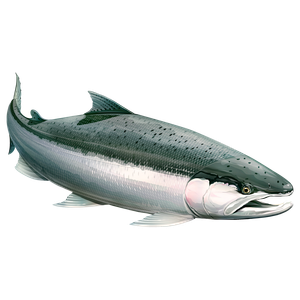
Central Valley Spring-Run Chinook Salmon
Oncorhynchus tshawytscha
Species ranges
Related projects
At a Glance
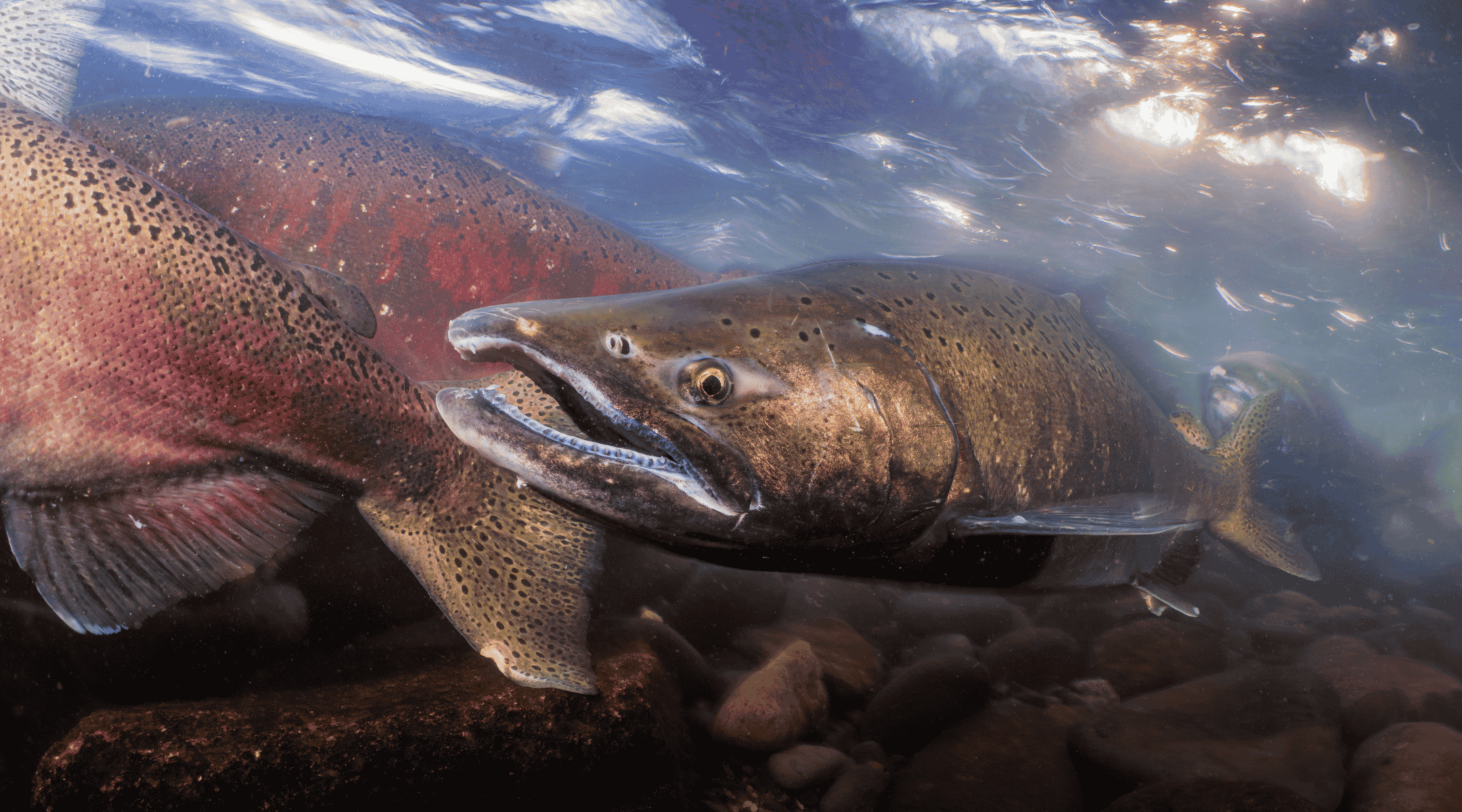
Central Valley (CV) spring-run Chinook are vulnerable to extinction in the next 50 years or less if present trends continue. Small, self-sustaining populations remain in only a few watersheds.
Species characteristics
Conservation Actions
Conservation Strategy
- Restore spring-run to the San Joaquin River watershed, where they can exploit the snowpack predicted to persist in the high southern Sierra.
- Protect and enhance cold water habitat in Deer, Mill, and Butte creeks through water acquisition or forbearance, conjunctive use of groundwater wells, water use efficiency improvements, and shifting land use practices and management.
- Remove passage barriers to spring-run Chinook salmon throughout their range, especially in Battle Creek and the Yuba River.
- Restore floodplains that serve as important nursery and feeding habitat for all juvenile Central Valley salmonids.
- Amend hatchery practices to eliminate interactions between Feather River Fish Hatchery Chinook and wild populations.
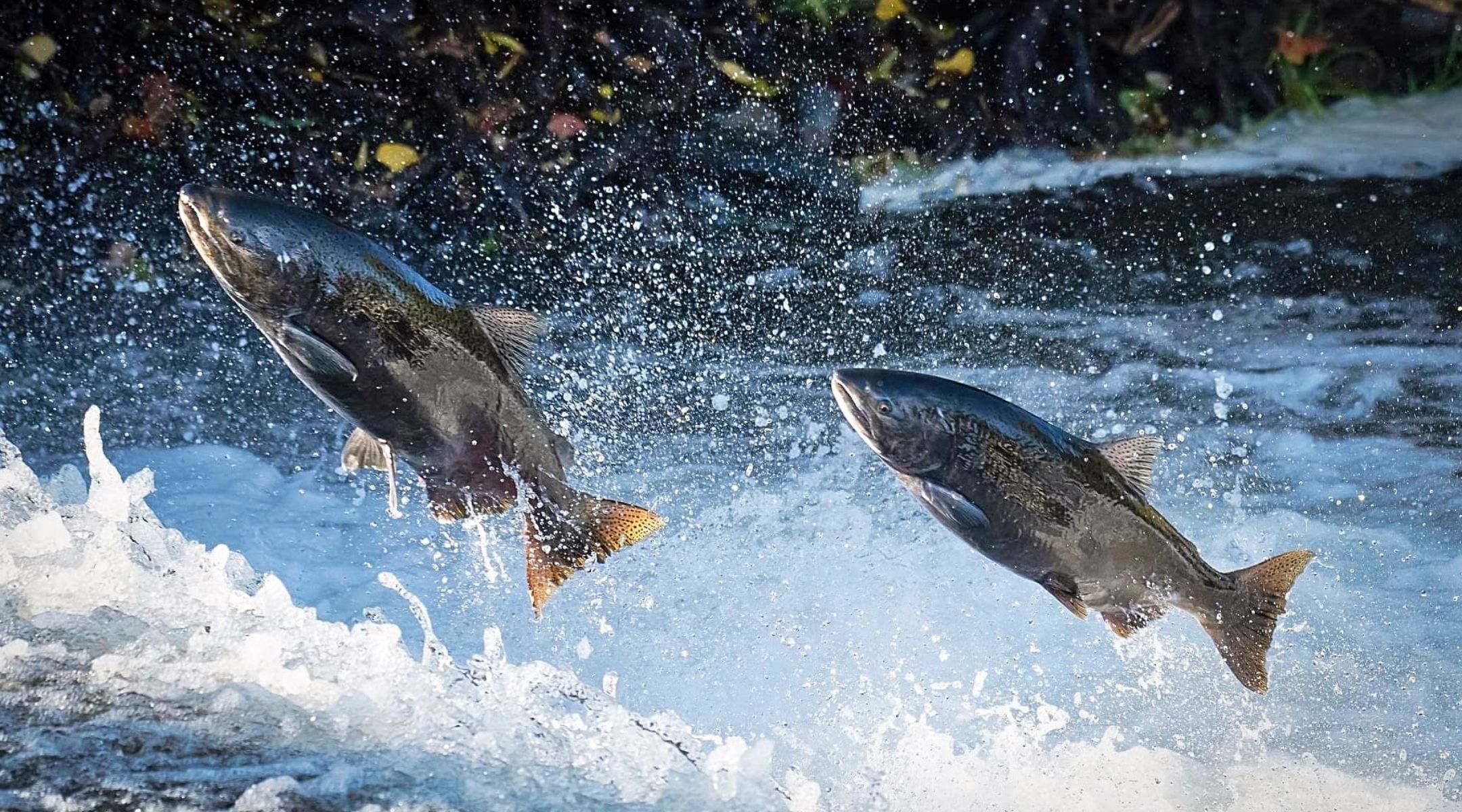
Where to find Central Valley Spring-run Chinook Salmon
Central Valley spring-run Chinook salmon historically ranged throughout all major snowmelt tributaries of both the Sacramento and San Joaquin rivers, including the Pit River (Modoc County) and the headwaters of the San Joaquin River in the south (Fresno County). Today, only the mainstem Sacramento River and Butte (Butte County), Mill, and Deer creeks (Tehama County) maintain wild spring-run Chinook. In most years, some adults return to Antelope, Big Chico, Little Chico, Beegum, Battle, and Clear creeks, but these populations are not considered self-sustaining. Recent surveys have documented very few spring-run Chinook in the Stanislaus, Tuolumne, and Merced rivers.
How This Species Scored
From Caltrout’s SOS II Report
| METRIC | SCORE | JUSTIFICATION |
|---|---|---|
| Area occupied | 2 | Self-sustaining populations are in Deer, Mill, and Butte creeks, with potential for populations in Battle and Clear creeks, as the result of restoration. |
| Estimated adult abundance | 2 | Total numbers have periodically dropped below 5,000 fish even when Feather River Hatchery (FRH) fish are counted. When FRH fish are not counted, most of the remaining fish are in Butte Creek. |
| Intervention dependence | 2 | If not for significant restoration, especially in Butte Creek, spring-run Chinook would likely already be extinct in the Central Valley. |
| Environmental tolerance | 2 | Narrow physiological tolerances in summer for both adults and juveniles. |
| Genetic risk | 2 | Butte Creek and Deer-Mill creeks populations appear to be distinct, but effect of hybridization with FRH fish unknown. |
| Climate change | 1 | Extremely vulnerable given small population sizes and range, and the already high summer temperatures in streams they inhabit. |
| Anthropogenic threats | 2 | Four High threats. |
| Average | 1.9 | LEVEL OF CONCERN: CRITICAL |
CALTROUT IN ACTION
Explore projects affecting the
Central Valley Spring-Run Chinook Salmon
Native Salmonids
Explore California’s native fish.
From steelhead to coastal cutthroat, California’s native fish are essential to healthy rivers and thriving ecosystems.
-
Bull Trout
-
California Coastal Chinook Salmon
-
California Golden Trout
-
Central California Coast Coho Salmon
-
Central California Coast Steelhead
-
Central Valley Fall-Run Chinook Salmon
-
Central Valley Late Fall-Run Chinook Salmon
-
Central Valley Spring-Run Chinook Salmon
-
Central Valley Steelhead
-
Chinook Salmon
-
Chum Salmon
-
Coastal Cutthroat Trout
-
Coastal Rainbow Trout
-
Coho Salmon
-
Eagle Lake Rainbow Trout
-
Goose Lake Redband Trout
-
Kern River Rainbow Trout
-
Klamath Mountains Province Summer Steelhead
-
Klamath Mountains Province Winter Steelhead
-
Lahontan Cutthroat Trout
-
Little Kern Golden Trout
-
McCloud River Redband Trout
-
Northern California Summer Steelhead
-
Northern California Winter Steelhead
-
Paiute Cutthroat Trout
-
Pink Salmon
-
Sacramento River Winter-Run Chinook Salmon
-
South-Central California Coast Steelhead
-
Southern Oregon/Northern California Coast Chinook Salmon
SUPPORT CalTrout
The only statewide assessment of California’s native salmon, steelhead, and trout.
CalTrout, in collaboration with academic partners, has produced two once-a-decade State of the Salmonids reports — comprehensive scientific assessments of all 32 native salmon, steelhead, and trout species in California. The third report is currently set to release in 2027.