SCORE
3.0
MODERATE
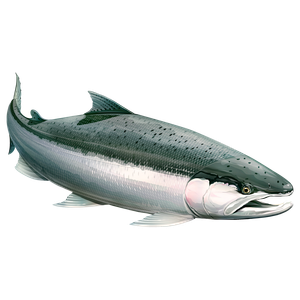
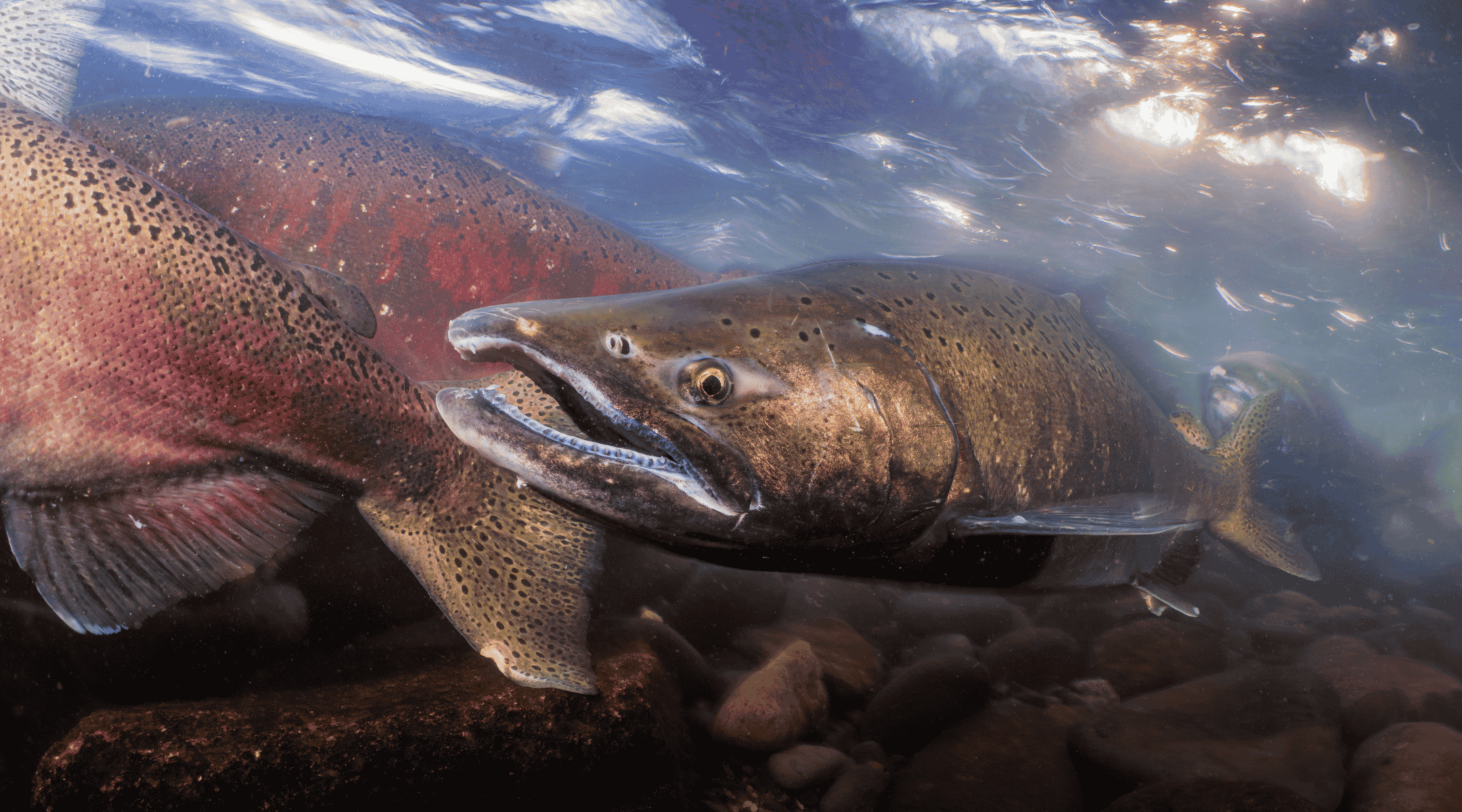
Upper Klamath-Trinity Rivers Fall-Run Chinook Salmon
Oncorhynchus tshawytscha
Species ranges
Related projects
At a Glance
Upper Klamath-Trinity Rivers (UKTR) fall-run Chinook are not in immediate danger of extinction, although their numbers have declined in recent decades. There appears to be an increasing reliance on hatcheries to maintain fisheries, and returns of hatchery-origin fish may be masking a decline of wild production in the Klamath-Trinity Basin.
Species characteristics
Conservation Actions
Conservation Strategy
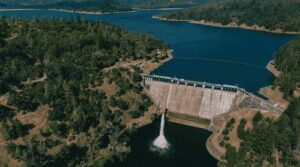
- Remove the four lowermost Klamath dams to allow fall-run Chinook salmon to access historical spawning habitat upstream. (dam removal complete)
- Adaptively manage streamflows and habitat restoration as part of the Trinity River Restoration Program to increase abundance of UKTR fall-run Chinook salmon and their habitat.
- Update hatchery practices at Trinity River Hatchery to reduce competition, predation, loss of genetic diversity, and life history diversity in wild salmonids.
- Limit harvest to only adipose fin clipped hatchery Chinook to determine hatchery impacts on wild fish and inform Chinook re-colonization efforts in the upper Klamath River Basin after dams are removed.
- Improve habitat and flow conditions in the Shasta and Scott rivers, which provide reliable cold water habitat.
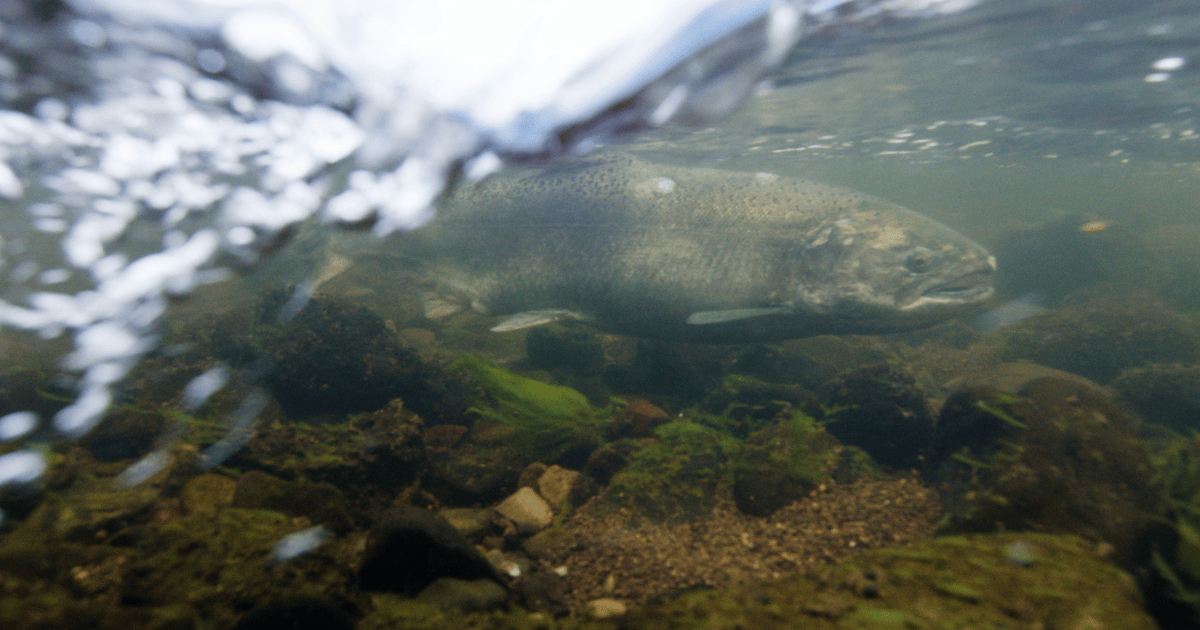
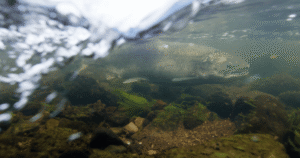
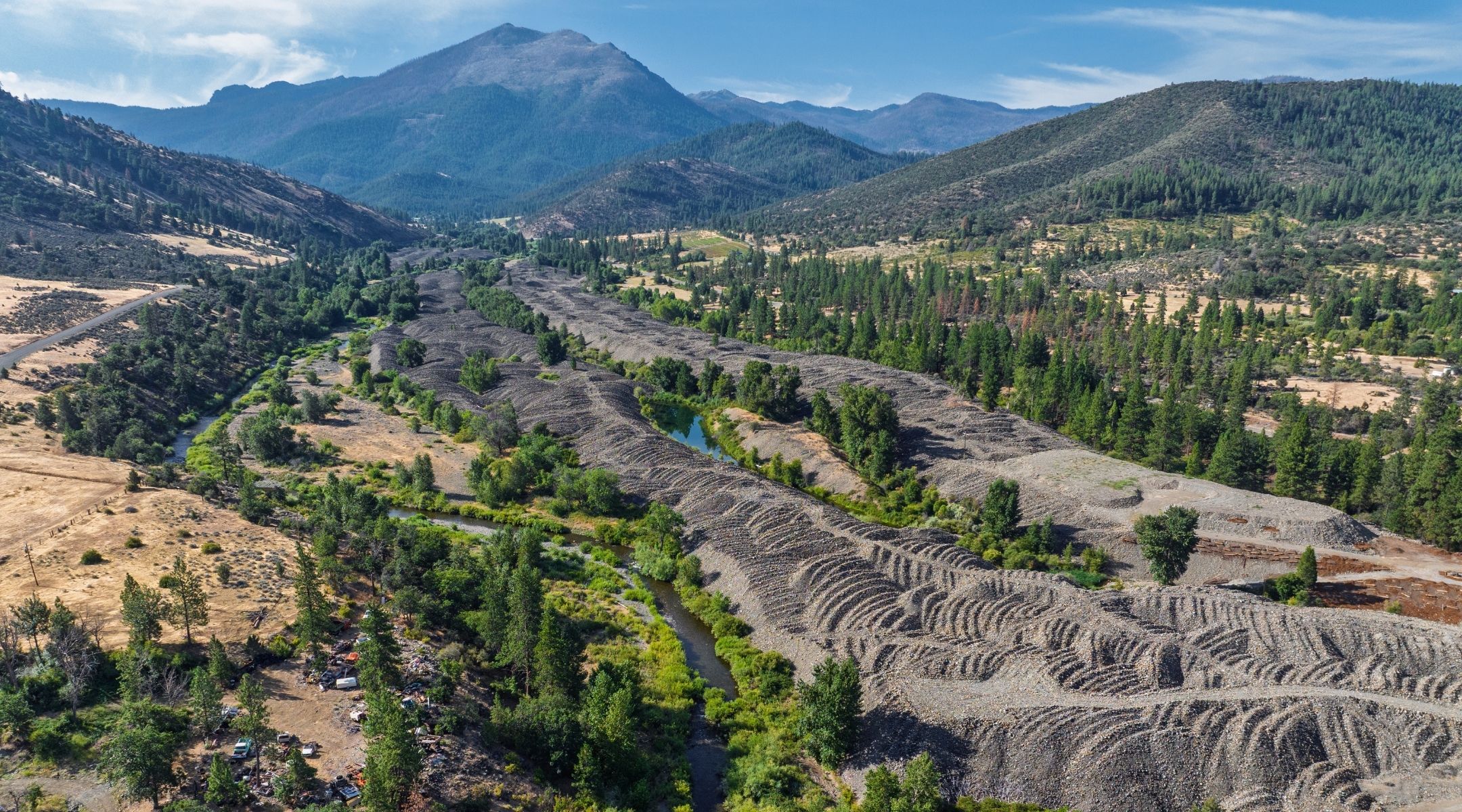
Photo: Swiftwater Films
Where to find Upper Klamath-Trinity Rivers Fall-Run Chinook Salmon
UKTR Chinook salmon are found in all major tributaries of the Klamath River upstream of the Klamath-Trinity rivers confluence.
How This Species Scored
From Caltrout’s SOS II Report
| METRIC | SCORE | JUSTIFICATION |
|---|---|---|
| Area occupied | 5 | Widely distributed in Klamath and Trinity basins. |
| Estimated adult abundance | 4 | Abundant, with several large populations, but hatchery-origin fish are a problem for wild runs. |
| Intervention dependence | 3 | Major intervention is required to maintain fisheries, primarily through hatchery propagation and flow regulations. |
| Environmental tolerance | 3 | Moderate physiological tolerance. |
| Genetic risk | 3 | Genetically diverse population but heavily influenced by hatcheries. |
| Climate change | 2 | Vulnerable to increasing temperatures in mainstem rivers, changes in flow regimes in tributaries, and variable ocean conditions. |
| Anthropogenic threats | 1 | 1 “High” and 8 “Medium.” A highly managed population. |
| Average | 3.0 | LEVEL OF CONCERN: MODERATE |
CALTROUT IN ACTION
Explore projects affecting the
Upper Klamath-Trinity Rivers Fall-Run Chinook Salmon
Native Salmonids
Explore California’s native fish.
From steelhead to coastal cutthroat, California’s native fish are essential to healthy rivers and thriving ecosystems.
-
Bull Trout
-
California Coastal Chinook Salmon
-
California Golden Trout
-
Central California Coast Coho Salmon
-
Central California Coast Steelhead
-
Central Valley Fall-Run Chinook Salmon
-
Central Valley Late Fall-Run Chinook Salmon
-
Central Valley Spring-Run Chinook Salmon
-
Central Valley Steelhead
-
Chinook Salmon
-
Chum Salmon
-
Coastal Cutthroat Trout
-
Coastal Rainbow Trout
-
Coho Salmon
-
Eagle Lake Rainbow Trout
-
Goose Lake Redband Trout
-
Kern River Rainbow Trout
-
Klamath Mountains Province Summer Steelhead
-
Klamath Mountains Province Winter Steelhead
-
Lahontan Cutthroat Trout
-
Little Kern Golden Trout
-
McCloud River Redband Trout
-
Northern California Summer Steelhead
-
Northern California Winter Steelhead
-
Paiute Cutthroat Trout
-
Pink Salmon
-
Sacramento River Winter-Run Chinook Salmon
-
South-Central California Coast Steelhead
-
Southern Oregon/Northern California Coast Chinook Salmon
SUPPORT CalTrout
The only statewide assessment of California’s native salmon, steelhead, and trout.
CalTrout, in collaboration with academic partners, has produced two once-a-decade State of the Salmonids reports — comprehensive scientific assessments of all 32 native salmon, steelhead, and trout species in California. The third report is currently set to release in 2027.
Photo: Chris Nonell